Tag: these

  • The Wolves in Robes – Predators in Spiritual Authority

    The Wolves in Robes – Predators in Spiritual Authority

    Throughout history, individuals have sought spiritual guidance and solace from religious leaders, viewing them as paragons of virtue and ethical conduct. However, lurking within the ranks of esteemed spiritual guides are those who exploit their positions of power for personal gain or, even worse, for predatory purposes. These individuals, often described metaphorically as “wolves in sheep’s clothing,” manipulate their spiritual authority to prey on the vulnerable.

    Understanding Spiritual Authority

    Spiritual authority is the power or right to influence religious teachings, practices, and the lives of followers. It can be vested in individuals, such as priests, imams, or monks, or institutions, like churches, mosques, or temples. This authority is typically derived from:

    • Doctrinal Knowledge: Spiritual leaders are often seen as experts in religious texts and traditions.
    • Moral Conduct: They are expected to live by and exemplify the moral and ethical standards of their faith.
    • Community Position: Leadership roles that enhance their influence and decision-making power within spiritual communities.

    For many, the unquestioned faith and respect accorded to spiritual leaders stem from the belief that they are chosen or anointed by a divine power. However, it is this very faith that can be manipulated by those “wolves” who don the robes of piety to conceal their true nature.

    The Mask of Piety: Manipulation Tactics

    Predators in spiritual authority often employ several manipulation tactics to exploit their position. Understanding these tactics can help communities protect themselves and ensure spiritual spaces remain safe and nurturing:

    • Charismatic Authority: Predatory leaders are often highly charismatic, using their personal charm to attract and influence followers. They may portray themselves as uniquely wise or as possessing special spiritual insights or abilities.
    • Gaslighting and Confusion: Leaders may create confusion by contradicting themselves, making followers doubt their understanding and rely even more on the leader’s “spiritual insight.”
    • Isolation: Isolating followers from their families or the broader community can reinforce the leader’s control and diminish external interference.
    • Grooming: This involves building trust and dependency over time, often by giving special attention or favor to target individuals, before engaging in exploitation.

    One alarming case is the crimes of Naasón Joaquín García, leader of the La Luz del Mundo church, who was sentenced to 16 years in a California prison for the sexual abuse of minors. Known to his many followers as “the Apostle of Jesus Christ,” García used his preeminent spiritual position to prey on the young members of his congregation.

    Victims in Spiritual Settings

    Those most susceptible to predatory spiritual leaders are often among society’s most vulnerable. Their spiritual, emotional, or social needs make them ideal targets for manipulative leaders. These can include:

    • Youth: Young people seeking guidance and acceptance are vulnerable, particularly if they have not developed a strong personal or spiritual identity.
    • Women: In many traditions and communities, women are often encouraged to be submissive, which can lead to being exploited by those in authority.
    • The Grieving: Those who have recently experienced loss often seek comfort and answers through spiritual counseling, making them more susceptible to manipulation.

    “Evil preaches tolerance until it is dominant, then it tries to silence good.” — Charles J. Chaput

    The imbalance of power inherent in these relationships means victims often fear retribution, disbelief, or stigmatization should they speak out. This is exacerbated by the respect and authority generally afforded to spiritual leaders, which cultivates an environment where predators can operate with impunity.

    Breaking the Silence: Survivors’ Voices

    In recent years, the courage of survivors has begun to illuminate the shadows where these predators lurk. Their stories are powerful tools for healing and societal change. Efforts to document and publicize instances of abuse have gained traction, giving a platform to those who once lacked a voice. Organizations such as SNAP (Survivors Network of those Abused by Priests) are at the forefront of advocating for survivors, seeking justice and institutional reform.

    Mary McAleese, former President of Ireland, has been vocal about addressing abuses within spiritual authority, particularly within the Catholic Church. She stated, “If the Church does not, as a matter of urgency, come to terms with this issue and create the [necessary] space for victims of abuse, then truly it is sleepwalking to its ruin.”

    Institutional Responsibility

    Religious institutions play a critical role in both perpetuating and preventing abuse. They must take proactive steps to safeguard their communities. This includes:

    • Establishing Clear Protocols: Instituting zero-tolerance policies regarding abuse, with clear reporting mechanisms and support systems for victims.
    • Training and Education: Providing training for leaders and members alike to recognize and respond to signs of predatory behavior.
    • Independent Oversight: Ensuring that investigations into misconduct are conducted by independent bodies to prevent bias and cover-ups.

    Pope Francis, addressing ongoing concerns within the Catholic Church, highlighted the need for perpetual vigilance: “To say ‘never again’ is not enough. Saying it is fine, but it is not enough. What is needed is the action to prepare ourselves, pastors, and those who work with them to have procedures that prevent, handle, and resolve things.”

    Toward a Safer Future

    Addressing the presence of predators within spiritual authority requires enacting comprehensive change. While the process may be arduous, the safety and sanctity of spiritual spaces depend on the vigilance and courage of entire communities.

    By empowering victims, enabling truth-telling, and enforcing accountability, we can strive to ensure that those in spiritual leadership fulfill their roles as true guides toward moral and spiritual well-being, rather than deceptive threats to it. In shining a consistent light on these issues, we echo the sentiment that darkness can only persist in absence of light, and that ignorance is the accomplice of an abuser.

    Through renewed dedication to transparency, understanding, and justice, it is possible to reclaim spiritual spaces as sanctuaries of genuine support and healing, ensuring the wolves in robes are laid bare for all to see.


  • The Burning Line – What Happens When You Cross Group Boundaries

    The Burning Line – What Happens When You Cross Group Boundaries

    In the complex tapestry of human interaction, group boundaries serve as invisible lines that define societal norms, professional alliances, cultural affiliations, and personal tribes. Crossing these boundaries can lead to profound changes, both positive and negative. But what truly happens when one steps across the burning line?

    The Nature of Group Boundaries

    Group boundaries are essential for the formation of identity and community. They offer a sense of belonging, security, and understanding among members. These boundaries can be rooted in a wide array of factors, including ethnicity, religion, occupation, political ideology, or shared experiences.

    “Boundaries are to protect life, not to limit pleasures.” — Edwin Louis Cole

    Edwin Louis Cole’s words highlight an essential truth: the boundaries create an environment where individuals can thrive within a group by offering protection. However, they also set limits and, sometimes, these necessary reports can become restrictions.

    The Outcomes of Crossing Boundaries

    When an individual crosses a group boundary, the outcomes can vary widely depending on the context and the groups involved. Below are some of the common experiences and outcomes associated with crossing these boundaries:

    • Cultural Enrichment: Venturing into a new group can offer a wealth of new knowledge, perspectives, and experiences. Cultural exchange initiatives between communities often illustrate this, showing how music, art, language, and customs can enrich lives.
    • Identity Challenges: Crossing into a new group may challenge one’s identity. The exposure to different belief systems or practices can lead to internal conflicts and a reevaluation of one’s values and lifestyle. This can be a necessary part of personal growth but is often uncomfortable.
    • Exclusion and Isolation: There can be social costs to stepping outside one’s native group. Ostracization can happen when a member abandons group norms, as established groups may view the act as betrayal or disloyalty.
    • Conflict and Tension: Often, longstanding biases and historical grievances can lead to tension and conflict when boundaries are crossed. Misunderstandings can easily arise due to differing communication styles or cultural practices.

    Historical Perspectives

    History provides numerous examples of boundary crossing. One prominent example is that of immigrants who often face the challenge of integrating into new societies. Their stories tell of the pursuit of opportunity and liberation but also of the struggle against xenophobia and isolationism.

    “We all have an obligation as citizens of this earth to leave the world a healthier, cleaner, and better environment for our children and future generations.” — Blythe Danner

    This quote can be adapted to boundary crossing, suggesting that as global citizens, expanding our understanding and bridging cultural divides is essential for building a harmonious future for the next generations.

    The Digital Frontier

    The advent of the digital age has dramatically transformed how boundaries are perceived and crossed. Online platforms blur the lines, allowing individuals to explore diverse groups freely.

    • Virtual Communities: Social media and online forums offer a platform where individuals can engage with communities worldwide, learn new perspectives, and collaborate across traditional boundaries.
    • Challenges of Anonymity: While the digital world offers the opportunity for identity exploration, it also presents challenges such as misinformation, trolling, and echo chambers that reinforce existing biases rather than foster understanding.

    Navigating Boundary Crossing

    It’s crucial to approach boundary crossing with sensitivity and understanding to maximize its positive potential. Here are some strategies to consider:

    • Empathy and Open-Mindedness: Approaching new groups with a willingness to listen and understand divergent viewpoints fosters respect and learning.
    • Education and Awareness: Understanding a group’s history, challenges, and core values before engaging can ease the transition and prevent misunderstandings.
    • Effective Communication: Building dialogue across boundaries is essential for mutual respect and learning. Engaging in thoughtful conversations and constructive debates can bridge divides.

    Conclusion

    Crossing group boundaries, metaphorically stepping over the burning line, can open a world rich with possibilities and growth opportunities. While it can challenge one’s identity and result in conflict, the potential for cultural enrichment and personal development is immense. By approaching these boundaries with empathy and curiosity, individuals can forge new connections that transcend traditional divisions and build an inclusive future.

  • Chains of Expectation – Standards Used to Control

    Chains of Expectation – Standards Used to Control

    Chains of Expectation – Standards Used to Control

    Chains of Expectation – Standards Used to Control

    In a world bustling with intricate social, cultural, and economic frameworks, the notion of “expectation” emerges as a silent yet powerful force that governs human behavior and societal norms. These expectations are like invisible chains wielded to maintain conformity and exert control. By analyzing the standards set within our communities, we can uncover how these chains limit thought, action, and potential.

    The Foundations of Expectation

    The roots of expectation are deeply embedded in human history. These expectations can be viewed as social contracts that bind individuals to collective ideals, often programmed through culture, religion, and education.

    “Men are disturbed not by things, but by the view which they take of them.” — Epictetus

    Epictetus’ insight into the subjective perception of external events reinforces the idea that the standards imposed are not inherently debilitating. It is the interpretation and internalization of these expectations that ultimately enslave or liberate the mind.

    The Machinations of Control

    • Societal Norms: Communities establish behavioral benchmarks that dictate what is considered acceptable. This process directly influences the choices individuals make, often aligning them with the collective mindset.
    • Economic Standards: Income and consumption are heavily scrutinized metrics. Society attaches value to individuals based on their economic prowess, chaining them to roles within capitalist frameworks.
    • Educational Benchmarks: Academic success is tracked through standardized testing and other metrics, often funneling intellectual potential into predefined pathways.

    These chains of expectation, once ensconced in the societal fabric, propagate through generations, clamoring for adherence and compliance.

    Control Mechanisms: Media and Propaganda

    The role of media as a powerful disseminator of the status quo cannot be understated. Via repetition and the subliminal placement of ideals, control over the masses is subtly maintained.

    “Whoever controls the media, controls the mind.” — Jim Morrison

    Media does not merely reflect cultual values, it also shapes them, continually building and reinforcing the current chains of expectation.

    The Psychological Grip

    Expectation exerts a psychological grip that can become a source of great distress. The fear of judgment and ostracism looms large, compelling individuals to conform even when such compliance stifles personal growth.

    Cognitive Dissonance

    Psychologist Leon Festinger introduced the concept of cognitive dissonance to explain the mental discomfort experienced when one’s beliefs do not align with actions. Societal expectations exacerbate this phenomenon, offering no respite for those caught in the throes of conflicting ideals.

    Social Identity Theory

    Henri Tajfel’s Social Identity Theory posits that individuals derive significant parts of their identity from the groups to which they belong. Thus, deviation from established norms threatens both personal and social identity, creating a feedback loop that further entrenches standards of control.

    Paths to Liberation

    While the chains of expectation appear unyielding, pathways to liberation exist:

    • Critical Thinking: Cultivating an analytical mindset enables individuals to question and potentially dismantle harmful expectations.
    • Self-Awareness: Recognizing personal values and differentiating them from imposed standards is crucial for personal freedom.
    • Empowerment through Education: A robust educational framework that encourages creative and divergent thinking paves a path toward emancipation.

    The Role of Philosophical Inquiry

    Philosophical inquiry allows individuals to venture beyond familiar boundaries, challenging the status quo and inviting diverse interpretations of reality. It affords the courage to question:

    “What is truth?” — Pontius Pilate, John 18:38

    Such questions encourage a continuous exploration of the expectations thrust upon individuals and communities, fostering a world where one can live unburdened by imposed standards.

    Conclusion: Unshackling the Mind

    The chains of expectation, although invisible, are formidable structures defining human experience. As each person encounters and interacts with these standards, they either consent to their power or challenge their dictates. The journey towards liberation involves recognizing these chains, understanding their origins, and bravely striving to redefine what it means to live a life unbound by external expectations.

    Ultimately, the path to break free from these chains lies within the courage to think differently, the strength to act autonomously, and the wisdom to align actions with authentic personal and collective ideals.

  • The Puppet Strings – Emotional Hooks That Keep People Bound

    The Puppet Strings – Emotional Hooks That Keep People Bound

    In the intricate dance of human emotions, certain strings can subtly keep us tethered to unhealthy situations, toxic relationships, or unfulfilling paths. Often referred to as emotional hooks, these are powerful tools that can manipulate our decisions, influence our perceptions, and keep us bound in ways that are not always immediately obvious.

    Understanding Emotional Hooks

    • Guilt: Often referred to as an internal emotional anchor, guilt can make us feel responsible for someone else’s happiness or failures. It keeps us in a cycle of trying to “fix” the situation.
    • Fear: Whether it’s fear of the unknown, fear of change, or fear of confrontation, this emotion can be a compelling reason to stay put, even when the situation is undesirable.
    • Hope: One of the most insidious hooks, hope can make us cling to “what might be” instead of facing “what is.” It convinces us that change is just around the corner.

    The Psychology Behind the Hooks

    Dr. Melanie Greenberg, a well-known psychologist, states, “Emotional hooks play on our deepest fears and desires by engaging the limbic system, which is responsible for our emotional reactions.” This interplay of brain chemistry and emotional response underscores how deeply ingrained these hooks can become in our psyches.

    “The chains of habit are too weak to be felt until they are too strong to be broken.” – Samuel Johnson

    This quote perfectly encapsulates how emotional hooks operate. Initially, these hooks might seem benign or even positive, but over time, they can form chains that are hard to break.

    Breaking Free

    • Acknowledge the Hook: The first step to freedom is recognizing that you are hooked. This requires honesty with oneself and often the help of self-reflection or a trusted confidante.
    • Reframe Your Perspective: Challenge the thoughts and beliefs that keep the hook in place. Cognitive behavioral therapy techniques can be particularly effective here.
    • Seek Support: Professional counseling or support groups can provide guidance, perspective, and the strength needed to sever these emotional ties.

    The key to liberation lies in awareness and deliberate action. By understanding the nature of emotional hooks and developing strategies to overcome them, individuals can reclaim their autonomy and re-establish healthy emotional boundaries.

    For further reading on emotional intelligence and how to manage emotional hooks, visit Psychology Today.

  • The Hidden Laws – Unspoken Rules that Govern High-Control Groups

    The Hidden Laws – Unspoken Rules that Govern High-Control Groups

    High-control groups, often referred to as cults, exhibit characteristics that make them distinctly different from mainstream organizations. These groups, which span various domains—from religious sects to political movements—share certain unspoken rules that govern their operation and influence on members. These “hidden laws” operate beneath the surface, subtly controlling and influencing the behavior and thoughts of group members.

    Understanding High-Control Groups

    Before delving into the specifics of these unspoken rules, it is essential to understand what constitutes a high-control group. Such groups are characterized by:

    • Authoritarian Leadership: A centralized authority figure who demands unwavering loyalty.
    • Isolation: Segregating members from outside influences to reinforce group ideologies.
    • Control Over Information: Restricting access to external information to avoid contradictory viewpoints.
    • Excessive Demands: Placing significant demands on members’ time and resources.

    The Power of Unspoken Rules

    High-control groups meticulously weave unspoken rules into their fabric, often without the overt knowledge of their members. These rules shape the group’s culture and the members’ psyche, governing every aspect of their lives within the group. Here are some common unspoken rules that dictate the functioning of high-control groups:

    Rule #1: Us vs. Them Mentality

    High-control groups often cultivate a dichotomy between the in-group and the out-group. This “us vs. them” mentality reinforces loyalty and creates an identity around group membership (Zimbardo, 2007). It breeds a sense of exclusivity and superiority, making members feel part of a special collective that is misunderstood or even persecuted by outsiders.

    “In conditions of extreme uncertainty, people are prone to latch onto groups that offer certainty and identity.” – Philip Zimbardo

    Rule #2: The Cult of Personality

    Leaders of high-control groups are often elevated to a god-like status in the eyes of their followers. This transcends mere admiration; it demands unquestioning allegiance. The leader’s image is meticulously crafted, with any dissent being harshly punished. In essence, the leader becomes the embodiment of the group’s ideology and practice.

    Rule #3: Absolute Conformity

    Uniformity in thoughts, actions, and appearances is often an expected norm. Members are subtly coerced into adopting group-specific jargon, attire, and behaviors, creating a homogenized identity. B. Margaret Singer, a notable psychologist and researcher, points out that such measures are often designed to suppress individualism and critical thinking (Singer, 2003).

    “Cults… strip away a person’s individuality and promote total dependency on the group.” – Margaret Singer

    Rule #4: Information Control

    Control over information is central to the operations of high-control groups. Members are discouraged from seeking information outside the group’s approved sources. This rule reinforces the group’s narrative and insulates members from external, potentially contradictory, perspectives. Such control ranges from censorship to outright propaganda.

    Rule #5: Emotional Manipulation

    High-control groups often employ emotional manipulation to maintain control. This includes deploying guilt, fear, and shame to compel members into compliance—often under the guise of care or concern. Psychologist Robert J. Lifton, in his analysis of thought reform, highlights how these groups exploit fundamental human emotions to ensure compliance and loyalty (Lifton, 1989).

    “Emotionally manipulative leaders can effectively keep their members under control, making it difficult for them to leave even when cognitive dissonances arise.” – Robert J. Lifton

    The Psychological Impact on Members

    These concealed rules invariably take a toll on the mental and emotional wellbeing of members. The constant pressure to conform, coupled with information control and emotional manipulation, can lead to various psychological challenges such as anxiety, depression, and PTSD. Members often find themselves in a perpetual state of cognitive dissonance, torn between personal beliefs and group doctrines.

    Recognizing and Addressing High-Control Group Influence

    Awareness is the first step towards addressing the influence of high-control groups. Understanding these hidden laws allows individuals and society to identify early signs of coercive control. Moreover, open dialogue and education about these groups can empower individuals, providing them with the knowledge to resist manipulation.

    Conclusion: Breaking the Chains

    High-control groups are a fascinating yet concerning aspect of human social dynamics. By understanding the unspoken rules that govern these groups, we can better protect ourselves and others from manipulation and control. As society becomes more aware of these hidden laws, there is hope that individuals will find the strength to question, challenge, and ultimately break free from the chains of coercive power.

    Promoting critical thinking and emotional resilience can serve as antidotes to the control exerted by such groups. As Robert J. Lifton poignantly notes, the capacity for personal autonomy prevails when individuals remain vigilant and informed.

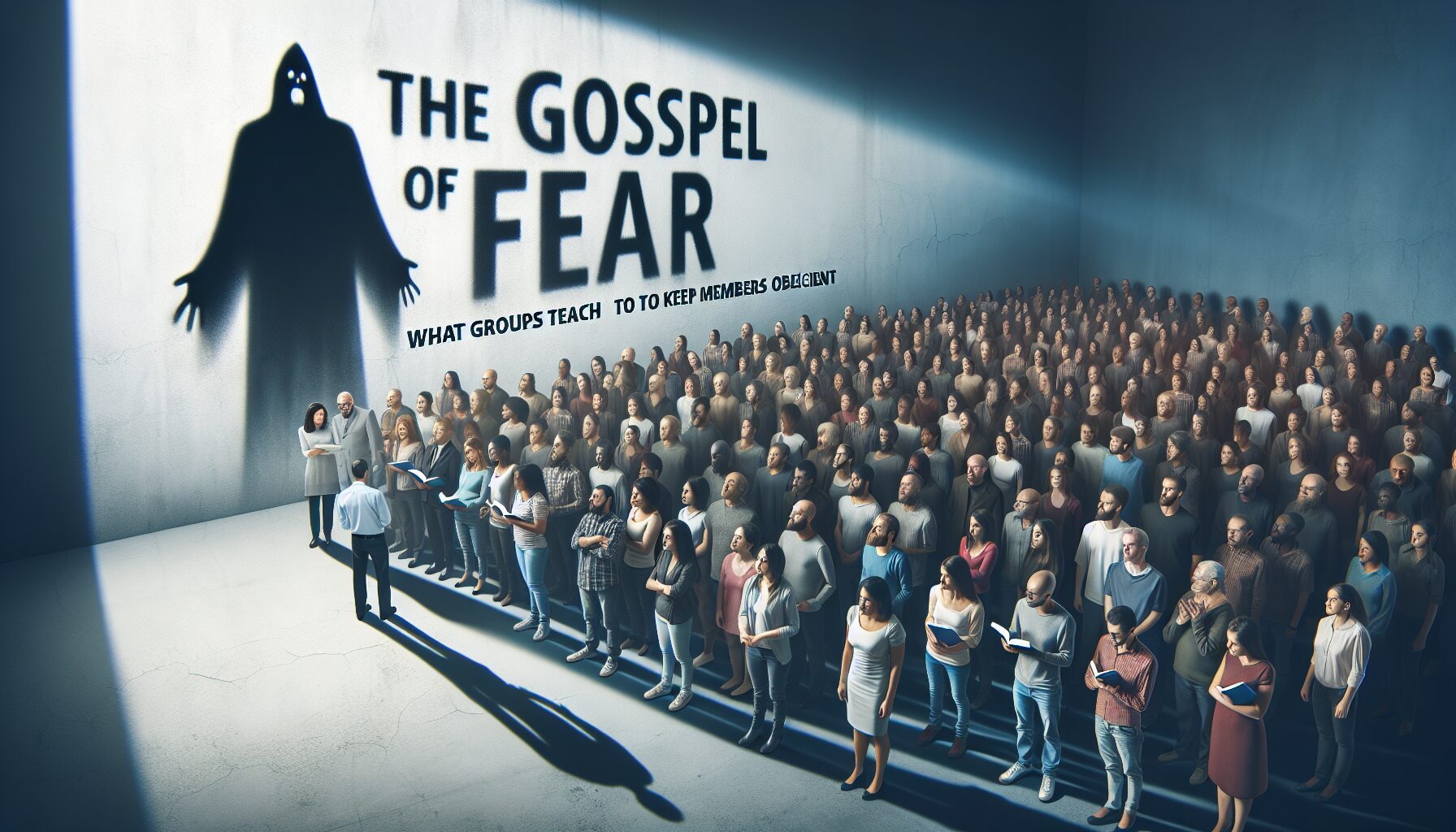
  • The Gospel of Fear – What Groups Teach to Keep Members Obedient

    The Gospel of Fear – What Groups Teach to Keep Members Obedient

    The Gospel of Fear: What Groups Teach to Keep Members Obedient

    Throughout history, groups—from religious sects to cults—have wielded fear as a powerful tool to ensure the obedience of their members. Fear, as a psychological mechanism, can hold sway over a person’s mind, compelling them to adhere to beliefs and practices they may not otherwise follow. But what exactly do these organizations preach to keep their members in line?

    The Foundation of Fear

    The use of fear by groups often begins with the establishment of a fundamental belief system that clearly distinguishes insiders from outsiders. Karl Popper, an influential philosopher, explained this dichotomy in his works: “It is impossible to speak in such a way that you cannot be misunderstood.” Groups leverage this idea by creating a narrative where being misunderstood or diverging from the established path results in dire consequences.

    Apocalyptic Predictions

    Many groups utilize fear by forecasting impending doom if members fail to comply with prescribed doctrines or commandments. Apocalyptic narratives often serve as a motivator for adherence. For instance, Christian eschatology has been a means through which certain religious groups keep followers in line through fear of the end times. In a 2018 Pew Research Study, it was found that a notable percentage of Americans believe in the biblical apocalypse, which illustrates the power and reach of these beliefs.

    Fear of Excommunication and Isolation

    The threat of excommunication or community isolation is another form of fear utilized by groups. This method plays on the human fear of loneliness and exclusion. Scriptures and doctrines are often cited to justify the cutting off of ties. A notable example can be seen in Jehovah’s Witnesses, where the practice of shunning members who dissent serves as a stark warning to maintain conformity, as documented by a BBC article.

    Fear of the Supernatural

    Fear of the supernatural and divine punishment is another tactic. Many religions preach that deviation from the set beliefs and practices will result in eternal damnation or other supernatural retributions. This notion is vividly present in various fundamentalist religious groups where hellfire and divine wrath are recurrent themes in teachings and sermons.

    “Men fear thought as they fear nothing else on earth — more than ruin, more even than death.” – Bertrand Russell

    The Cycle of Fear and Control

    • Cognitive Dissonance: Fear can lead to cognitive dissonance, where individuals perform mental gymnastics to align their fears with their beliefs. This phenomenon makes it difficult for members to critically analyze the doctrines they follow.
    • Continual Surveillance: Groups maintain constant oversight to ensure compliance, often instilling the belief that a higher power or the group itself monitors thoughts and actions.
    • Fear of the “Other”: Xenophobia and the demonization of those outside the group strengthen internal cohesion by creating a fear of external threats.

    The Role of Charismatic Leaders

    Charismatic leaders are adept at exploiting fear to maintain control. By presenting themselves as the only path to salvation or truth, these leaders reinforce members’ fears of what lies beyond the group’s teachings. Historian Margaret Thaler Singer, in her work “Cults in Our Midst”, explores how charisma paired with fear can culminate in intense loyalty and obedience.

    The Path Forward: Education and Awareness

    Understanding the dynamics of fear within groups is imperative for both current members and those studying these organizations. Awareness and education about these fear tactics can be powerful tools in resisting undue influence. Emphasizing critical thinking, fostering community, and seeking supportive interventions can dismantle the control that fear exerts.

    In conclusion, fear is a profound and practical instrument used by groups to maintain obedience among their members. From supernatural threats to social seclusion, these groups exploit fear to insulate members from outside influences and independent thought. Recognizing these tactics is the first step in escaping their grasp and forging a path toward intellectual and emotional autonomy.

  • The Spirit of the Outlaw – Mysticism on the Margins

    The Spirit of the Outlaw – Mysticism on the Margins

    The Spirit of the Outlaw – Mysticism on the Margins

    The Spirit of the Outlaw: Mysticism on the Margins

    Throughout history, the figure of the outlaw has captivated the human imagination, serving as both a symbol of rebellion and an enduring archetype of freedom. These marginalized figures, often living outside the bounds of law and society, evoke a sense of mysticism rooted in their defiance and unyielding spirit. This exploration of the outlaw encapsulates not just their actions, but the rich tapestry of myths and legends that surround them.

    The Allure of the Outlaw

    Outlaws are romanticized for their audacity and independence. They emerge in stories worldwide, embodying the tension between freedom and authority. From Robin Hood in England to Pancho Villa in Mexico, outlaws are celebrated as proponents of justice—albeit through unconventional means. This dichotomy between law and morality often endows these figures with a mystical, almost spiritual role.

    “The life of a legendary outlaw is a mirror to society’s insecurities and ideologies, amplifying the virtues and vices of an era.”

    As noted on History, the outlaw’s journey reflects broader societal questions and contradictions. They become metaphors for truths that are uncomfortable or hard to confront directly.

    Mysticism and Myth

    Many cultures have infused their outlaw tales with elements of mysticism. In doing so, they transform these real-life rebels into larger-than-life figures, blurring the lines between human and myth. These narratives elevate outlaws from mere criminals to enigmatic heroes capable of miraculous feats.

    • Robin Hood: Known for ‘robbing from the rich and giving to the poor’, the legend of Robin Hood includes miraculous escapes and an unwavering moral code, painting him as a folk hero rather than a common thief.
    • Yokai and Ninjas in Japan: Many Japanese myths include outlaw figures with almost supernatural abilities. The blurred lines between history and folklore serve to mystify figures who acted against the societal norms of the time.
    • Pancho Villa: As a revolutionary leader, Pancho Villa’s exploits are celebrated in song and story, highlighting his strategic genius and almost prophetic vision for Mexico.

    Rebellion and Redemption

    The outlaw’s spirit also embodies themes of redemption and rebellion. Their narratives are imbued with the hope that change is possible, even for those cast out by society. Mysticism often enters these stories as a vehicle for transformation and rebirth.

    Religious and spiritual elements often underscore these journeys. For instance, many outlaws in folklore claim divine justification for their actions. This intersection of spirituality and rebellion echoes the inherent human quest for meaning, justice, and truth.

    The Modern Outlaw

    In contemporary society, the spirit of the outlaw lives on through various subcultures and countercultures. Modern-day ‘outlaws’, from hackers who challenge digital boundaries to activists fighting for systemic change, continue to push against the constraints of the status quo.

    “Today’s outlaws navigate a digital frontier, challenging the status quo in ways that speak to an evolving understanding of justice and equality.”

    The Guardian notes that these digital frontiers are not just battlegrounds for technology, but for ideologies as well—embodying the essence of the mystical rebel spirit in today’s era.

    The Enduring Legacy

    The persistent allure of the outlaw speaks to a universal human longing for freedom and justice. Rooted in real-world defiance and revived through mythology, these figures remind us of the transformative power of rebellion. The mysticism surrounding them is less about magic and more about what they represent: the unyielding force of a spirit unwilling to succumb to injustice or conformity.

    The narrative of the outlaw persists because it resonates deeply within the human psyche, urging us to question the boundaries enforced by society and to consider the potential that resides within each act of rebellion, not only as a personal journey but also as a grand, mystical assertion. Thus, the spirit of the outlaw remains both a provocative symbol and an inspiring call to action for those on the margins seeking to change the world.

  • Breaking the Circle – Escaping Cycles of Control

    Breaking the Circle – Escaping Cycles of Control

    In the intricate web of human relationships and societal structures, cycles of control often manifest, entangling individuals within repetitive patterns of behavior and thought. Breaking free from these cycles is essential for personal growth and societal progress. This article explores the mechanisms of control, their impact, and methods to escape and transform these recurrent cycles.

    Understanding Cycles of Control

    Cycles of control are systems of influence where actions and reactions create repetitive loops of behavior. These can occur in personal relationships, workplaces, societal norms, and even within individual’s thought patterns. Control can be exerted through various means such as:

    • Psychological Influence: Manipulation of emotions or thoughts to steer another’s behavior.
    • Physical Constraints: Use of force or physical barriers to restrict freedom.
    • Social Pressure: Leveraging societal norms to dictate behavior.
    • Economic Dependence: Creating financial dependencies as a form of control.

    These cycles often perpetuate themselves, making it difficult for individuals to recognize and break free from them.

    The Impact of Control

    The effects of being trapped in a cycle of control can be profound and far-reaching. According to a Psychology Today article, “The longer we remain entangled in a controlling cycle, the more our autonomy and sense of self can diminish.” This can lead to:

    • Loss of Autonomy: Individuals may lose their sense of agency, feeling unable to make independent decisions.
    • Emotional Distress: Increased stress, anxiety, and depression as a result of manipulative environments.
    • Stunted Personal Growth: Lack of personal development due to recurring patterns preventing new experiences.
    • Fragmented Relationships: Relationships may suffer as power dynamics overshadow mutual respect and trust.

    Recognizing the Patterns

    To break free from cycles of control, recognizing the patterns is the first step. Here are some signs that might suggest an individual is caught in such a cycle:

    • Repeating Arguments: Cycling through the same conflicts without resolution.
    • Feeling Trapped: A constant sense of being stuck or unable to change circumstances.
    • Power Imbalances: One party consistently exerting dominance over another.
    • Restrictive Rules: Unyielding rules or norms that limit freedom.

    In her book, The Dance of Anger, Harriet Lerner writes, “Repeated patterns in life are not just random; they give us clues about how we are managing our relationships and ourselves.” Understanding these clues is crucial.

    Methods to Escape the Cycle

    Breaking the cycle requires courage and determination. Here are methods to initiate change:

    1. Awareness and Self-Reflection

    Developing an awareness of the current situation and reflecting on personal thoughts and behaviors is crucial. Journaling or talking with a trusted individual can help to clarify these patterns.

    2. Establishing Boundaries

    Setting and maintaining personal boundaries is key in regaining control and autonomy. According to Psychotherapist Amy Morin, “Boundaries aren’t about shutting people out. They’re about deciding what you’re willing to allow.”

    3. Seeking External Support

    Professional guidance can provide perspective and tools to address controlling dynamics. Therapists and support groups offer safe environments to discuss and develop strategies.

    4. Building Empowering Habits

    Introducing new habits and routines can provide a sense of control and interrupt the cycle. Learning new skills, taking on personal projects, or engaging in physical activities are beneficial strategies.

    5. Communication and Confrontation

    Communicating openly and honestly about concerns can shift dynamics. It requires assertiveness and courage, but expressing needs and boundaries can change the cycle significantly.

    6. Transitioning Environments

    Sometimes, the best solution is removing oneself from the toxic environment. Whether it’s leaving a controlling relationship or changing jobs, a new environment can provide the freedom needed for change.

    The Path Forward

    Breaking free from cycles of control is not only about escaping negative patterns but also about discovering new paths of growth and potential. It’s an ongoing journey that encompasses:

    • Rediscovering Self: Reconnecting with personal values, desires, and dreams.
    • Fostering Healthy Relationships: Building connections based on mutual respect, trust, and support.
    • Embracing Change: Welcoming new experiences and learning opportunities.
    • Ensuring Consistent Self-Care: Maintaining habits that nurture mental, emotional, and physical well-being.

    As Brené Brown beautifully captures, “Owning our story and loving ourselves through that process is the bravest thing we’ll ever do.” Breaking the cycle is not just an escape; it is a courageous step towards a more authentic and fulfilling life.

    Conclusion

    Breaking the cycle of control is both a personal and collective effort. It demands introspection, courage, and action. Whether these cycles are found in our private relationships or the broader societal framework, the liberation that comes with dismantling them paves the way for renewal and empowerment.

    For further reading, consider exploring resources like GoodTherapy for professional advice and support in making these significant life changes.

  • Shadow Communities – How Persecuted People Form New Networks

    Shadow Communities – How Persecuted People Form New Networks

    The story of human society is one of shared experiences, often marked by adversity and resilience. Throughout history, persecuted groups have found ingenious ways to survive and thrive against the odds by creating shadow communities—networks that provide support, solidarity, and safety in hostile environments. This article delves into the dynamics of these communities and the remarkable ways in which they have shaped social landscapes across the globe.

    The Foundation of Shadow Communities

    Shadow communities are often born out of necessity. Faced with systemic persecution, marginalized groups, including religious minorities, ethnic groups, and political dissidents, have historically sought to create alternative societies that operate beneath the surface of mainstream culture. These communities function as ecosystems, with their own forms of governance, economies, and cultural practices.

    One of the key features of shadow communities is their resilience and adaptability. As anthropologist Scott C. Johnson explains in his study of hidden networks, “Shadow communities are built on strong ties of reciprocity and mutual aid, which allow them to adapt quickly to changing circumstances.” These communities are constantly evolving, often blending traditional practices with new innovations to meet the needs of their members.

    Historical Examples of Shadow Communities

    • The Underground Railroad: During the 19th century, the Underground Railroad emerged as one of the most well-known examples of a shadow community. This network of secret routes and safe houses enabled enslaved African Americans to escape to free states and Canada. Key figures such as Harriet Tubman, herself an escaped slave, played a crucial role in guiding others to freedom. It highlighted the power of clandestine collaboration in combating systemic oppression.
    • The Jewish Ghettos During World War II: In the face of extreme persecution, Jews in Nazi-occupied Europe were forced into ghettos, where they established clandestine networks for education, culture, and resistance. Emanuel Ringelblum, a historian and ghetto resident, documented these efforts in what became known as the Ringelblum Archive, capturing the vibrancy and resilience of these shadow communities under dire conditions.
    • Havurot in Soviet Russia: Under Soviet rule, Jewish religious practices were suppressed. In response, Havurot, small fellowship groups, formed to secretly practice their faith, share knowledge, and celebrate Jewish culture. These communities were essential in preserving Jewish identity during times of intense religious repression.

    Mechanisms of Survival and Resistance

    The survival of shadow communities often hinges on their ability to remain imperceptible to hostile authorities while building robust internal support systems. The following mechanisms have been instrumental in achieving these goals:

    • Secret Communication: Persecuted groups develop sophisticated methods for covert communication. During apartheid in South Africa, for example, the African National Congress used encrypted messages and underground newspapers to coordinate resistance efforts and share information.
    • Safe Houses and Sanctuaries: Safe houses provide refuge and basic necessities, ensuring the safety and well-being of shadow community members. Throughout history, churches, monasteries, and private homes have offered sanctuary to those fleeing persecution. The famous Anne Frank House served as a hiding place for the Frank family during the Holocaust.
    • Cultural Preservation: Maintaining cultural identity is vital for the morale and continuity of shadow communities. In the United States, for example, the Harlem Renaissance was a cultural movement that gave African Americans a voice in a society that sought to silence them. Though not a shadow community in the traditional sense, it represented how marginalized groups found ways to preserve and elevate their cultural practices.

    The Role of Technology in Modern Shadow Communities

    In contemporary society, technology has vastly expanded the possibilities for shadow communities. The digital age has facilitated greater anonymity and connectivity, allowing persecuted groups to organize and communicate more effectively. The following are examples of how technology is shaping modern shadow communities:

    • Social Media and Encrypted Platforms: The Arab Spring demonstrated how social media could be leveraged by activists to mobilize protests and share information. Platforms like Facebook and Twitter became crucial tools for organizing in regions where traditional media was censored. Encrypted messaging apps, such as Signal and Telegram, have also become essential for secure communication.
    • Cryptocurrencies and Alternative Economies: In countries with unstable economies or where financial systems are used as tools of oppression, cryptocurrencies like Bitcoin provide alternative means of economic exchange. They allow shadow communities to operate financially without relying on traditional banking systems that may be subject to government oversight or manipulation.
    • Online Learning and Skill-Sharing: Educational initiatives like Coursera or Khan Academy have opened doors for self-education within marginalized groups. In places where formal education is restricted, these platforms provide knowledge and skills that empower individuals within shadow communities to pursue personal and collective advancement.

    The Impact and Significance of Shadow Communities

    Shadow communities play a crucial role in the broader fight for justice and human rights. By sustaining the hopes, cultures, and identities of their members, they lay the groundwork for societal change. Howard Zinn, a renowned historian, noted,

    “Small acts, when multiplied by millions of people, can transform the world.”

    Shadow communities are embodiments of such acts, often becoming the catalysts for larger movements and shifts in public consciousness.

    The existence and success of shadow communities highlight the indomitable human spirit and the capacity for innovation and solidarity in the face of adversity. They serve as a reminder that even in the darkest of times, there is light to be found in the networks of hope and aid that individuals build together. As long as persecution exists, so too will the resilience and creativity of those who forge new paths toward freedom and justice.

  • Spirit in the Wilderness – Strengths Found Only in Isolation

    Spirit in the Wilderness – Strengths Found Only in Isolation

    In the vastness of the wilderness, isolation envelops the spirit in a manner that obliges introspection and personal growth. History and nature have shown us time and again that solitude, often feared by many, kindles a unique fire of strength within those brave enough to embrace it. Whether it be the arid desert, the dense forest, or the icy tundra, these environments serve as fertile grounds for developing profound resilience.

    “In the wilderness, we rediscover purpose and strength that can be elusive in the hustle of daily life,” notes John Muir, a well-known naturalist, in his reflections about the power of solitary experiences.

    The Power of Solitude

    The power of solitude lies not just in the survival against physical elements but in confronting one’s inner self. As National Geographic elaborates, “wilderness acts as a balm in the face of modern life’s discontent, providing a spiritual and psychological boost by taking people away from their hectic environments.”

    Development of Resilience

    Isolation in nature facilitates resilience through the following ways:

    • Self-reliance: With no immediate help available, individuals are forced to depend on their ingenuity and resourcefulness.
    • Emotional endurance: Facing fears and uncertainties alone can lead to greater emotional strength.
    • Clarity and Focus: The absence of distraction allows for deep contemplation and a better understanding of one’s goals and desires.
    • Perspective: Time in the wilderness offers a chance to step back and gain a broader outlook on life, often leading to a renewed approach upon return.

    Inspirational Examples

    Throughout history, numerous figures have harnessed isolation to achieve powerful transformations. From Thoreau’s experiment at Walden Pond to Cheryl Strayed’s solo trek along the Pacific Crest Trail, narratives abound of those who have found strength and clarity through isolated journeys.

    Indeed, as author Henry David Thoreau aptly stated in his profound reflections on solitude, “I never found the companion that was so companionable as solitude.” This encapsulates the paradox of isolation—though it may seem lonely, it is in these moments alone that we often find our greatest company and strength within.

    Time spent in the wilderness, away from society’s incessant noise, may initially seem daunting but offers invaluable gifts. It is in these isolated moments that individuals connect deeply with their inner selves, revealing incredible strengths that lay dormant within.