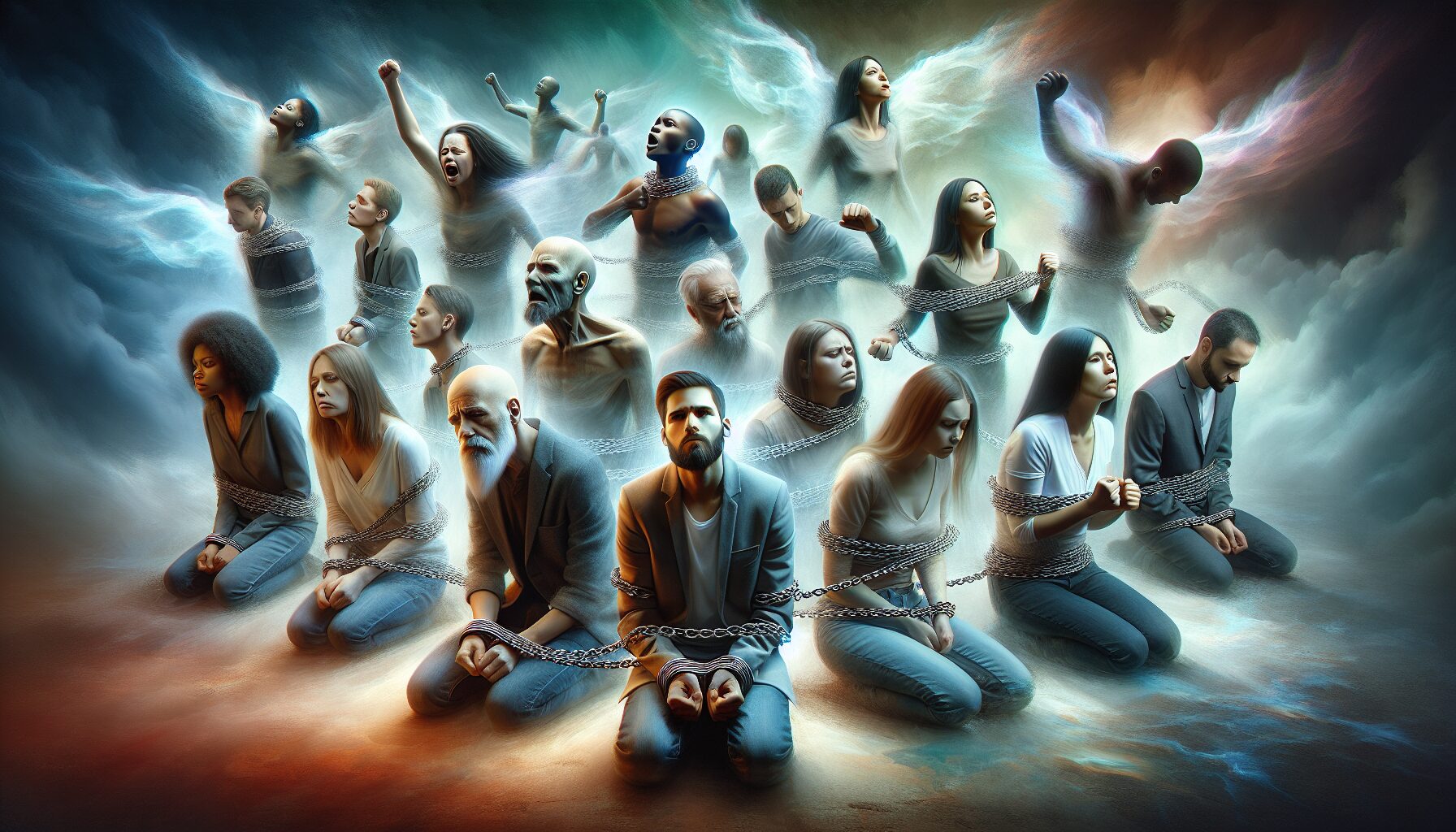
Tag: social

  • Micro-Dogmas — The everyday doctrines that divide

    Micro-Dogmas — The everyday doctrines that divide

    Micro-Dogmas: The Everyday Doctrines That Divide

    In our intricate tapestry of social interactions and beliefs, we often encounter “micro-dogmas”—small, rigidly held beliefs that might seem trivial at first glance, yet hold significant sway over our everyday lives. These micro-beliefs, ranging from the proper way to make a cup of tea to the correct order of performing morning routines, wield an outsized influence, potentially creating divides between friends, family, and even within communities.

    Defining Micro-Dogmas

    Micro-dogmas are those unwritten rules or personal beliefs deeply held and largely unquestioned by individuals. Unlike major religious or ideological dogmas that require a collective adherence to a set of doctrines, micro-dogmas manifest in everyday choices and preferences, often becoming the source of minor social conflicts.

    “These beliefs shape our daily experiences and, when challenged, can lead to surprisingly strong emotional reactions,” notes Dr. Susan Cain, a psychologist specializing in social dynamics. (Psychology Today).

    Common Examples of Micro-Dogmas

    • Food Preparation: The “right” way to prepare scrambled eggs, including whether to add milk or not, can become a surprisingly contentious issue, with each side staunchly defending their method.
    • Morning Routines: Some individuals steadfastly believe that exercise must precede breakfast to kickstart the metabolism, while others advocate for food first for optimal energy.
    • Technology Usage: The incessant debate between Android versus iOS users often goes beyond preference, entering the realm of micro-dogma with staunch defenders on both sides.

    The Impact of Micro-Dogmas

    While these small beliefs might seem innocuous, they have the potential to influence our interactions significantly. Such deeply ingrained convictions can lead to social friction, creating rifts between individuals who might otherwise share strong personal bonds. The defense of these micro-dogmas often stems from a desire for consistency or from viewing them as a reflection of one’s identity.

    As described by communication expert Stephanie Weiland, “Acknowledging and respecting the micro-dogmas of others can be an essential step toward nurturing stronger relationships.” (Communication Coach) Encouraging open discussions about these everyday doctrines can lead to better understanding and greater tolerance.

    Concluding Thoughts

    As we navigate our interactions, recognizing the power and presence of micro-dogmas can serve as a valuable tool in fostering empathy and mutual respect. By understanding these small yet impactful doctrines, we can aim not just to bridge divides but to celebrate the diversity of thought they bring to our daily lives.

  • The Cold Smile — Courtesy masking exclusion

    The Cold Smile — Courtesy masking exclusion

    In today’s interconnected world, the nuance of communication is woven through a tapestry of cultural expectations, social norms, and unspoken etiquette. One such phenomenon that has layered itself into our daily interactions is the cold smile—a polite, yet detached expression that straddles the line between genuine warmth and emotional distance. Beneath this façade lies a complex social mechanism: courtesy masking exclusion.

    The Nature of the Cold Smile

    The cold smile is an enigmatic gesture. It provides just enough facial warmth to convey politeness without fully engaging in the sincerity of the moment. Often mechanical and devoid of feeling, this subtle gesture can serve both as a shield and a sword in social dynamics.

    • Shield: It acts as a protective buffer against the uncomfortable rawness of true emotion, keeping relationships within socially acceptable limits.
    • Sword: It covertly signals disengagement, relegating individuals to the periphery of genuine interaction.

    In an article from Psychology Today, Dr. Ronald E. Riggio explains how smiles—genuine or not—are powerful social tools, influencing perceptions and interactions by signaling friend or foe, welcoming or excluding.

    Cultural Underpinnings and Social Etiquette

    Across cultures, the cold smile carries different weights of meaning and interpretation. In societies where politeness is a cultural cornerstone, such as Japan, maintaining a courteous veneer through smiles, even when insincere, is seen as a social obligation. Conversely, in cultures valuing directness and authenticity, like parts of the United States, a cold smile can be easily interpreted as disinterest or duplicity.

    Social etiquette governing the expression of emotion can vary drastically, yet the cold smile remains a universally understood cue. Whether in business meetings or casual encounters, it can subtly dictate hierarchical relationships and set the tone for inclusion or exclusion.

    Exclusion Through Courtesy

    The courtesy masking inherent in the cold smile can often lead to forms of exclusion that are less overt but equally impactful. Exclusion, in this context, happens not through overt rejection but through the deliberate withholding of warmth and openness that invites engagement.

    “While warm, genuine smiles invite us into the heart of social circles, cold smiles can keep us at arm’s length, making us feel the exclusion without a word spoken.” — Dr. Lorena A. Garcia, Social Dynamics Expert

    • Subtle Exclusion: The cold smile can subtly inform someone they are unwelcome without disrupting social harmony.
    • Professional Distance: In corporate environments, a cold smile may be used to enforce professional boundaries strictly, maintaining a status quo that prevents personal connection.

    Breaking Through the Cold Front

    Addressing the dynamics of the cold smile requires an understanding of both its use and its impact. It necessitates fostering environments where authentic connections are prioritized, and re-examining social norms that promote superficial interactions.

    Strategies for Authentic Engagement

    • Awareness: Recognize the context in which cold smiles are employed. Are they born of necessity in maintaining decorum, or are they mechanisms of exclusion?
    • Authenticity: Encourage cultural shifts toward genuine expressions of warmth, allowing for more open and sincere communications.
    • Inclusive Practices: In professional and social settings, promote practices that reinforce inclusivity and mitigate the impacts of masked politeness.

    The challenge lies in balancing the baseline politeness required in many interactions with authentic sincerity, ensuring that the smiles we share foster connection rather than distance.

    The Future of Social Dynamics

    As we continue to navigate a world where digital interactions are often favored over face-to-face communication, the complexity of social cues such as the cold smile will undoubtedly evolve. In a future where authenticity is increasingly valued, understanding the social implications of courtesy masking may pave the way for more genuine and inclusive human connections.

    Ultimately, the power of a smile—cold or warm—is a testament to the intricate dance of human social behavior. Recognizing its potential to both include and exclude is crucial in shaping a more empathetic and connected society.

  • Subtle Cruelties — The invisible harm of mild exclusion

    Subtle Cruelties: The Invisible Harm of Mild Exclusion

    In an era where overt discrimination is increasingly recognized and condemned, it can be more difficult to pinpoint and address more subtle forms of exclusion. These less obvious forms of exclusion can be just as damaging, yet often go unnoticed or unchallenged.

    The Nature of Subtle Exclusion

    Subtle exclusion operates in the shadows of social interactions, where acts of omission or indirect actions lead to feelings of alienation and inadequacy. It can manifest in workplaces, schools, and social settings, often disguised as benign neglect or passive-aggressive behaviors that leave no scars but can engrain deep wounds.

    “Subtle exclusion is like a quiet poison,” notes Dr. John Smith, a psychologist specializing in workplace dynamics. “It wears down the individual slowly, planting seeds of doubt and insecurity that can affect mental health and self-esteem.”

    Examples of Subtle Exclusion

    Identifying acts of subtle exclusion requires a keen awareness of social cues and the nuances of interpersonal dynamics. Some common examples include:

    • Unacknowledgment: Ignoring someone’s presence in a conversation or failing to greet them can signal that they are not valued or important.
    • Body Language: Actions like avoiding eye contact or facing away from someone can subtly communicate their unimportance.
    • Information Withholding: Excluding someone from an email chain or conversation where important decisions are made.
    • Underappreciation: Overlooking an individual’s contributions publicly, while acknowledging others, can undermine their self-worth.

    The Psychological Impact

    The psychological effects of these subtle exclusions can be profound. Research shows that repeated exposure to even mild forms of social rejection can lead to increased anxiety, depression, and lowered self-esteem over time. Individuals may begin to question their worth, doubting their abilities and contemplating their role in social circles.

    According to Psychology Today, “these small acts can accumulate to create environments that feel hostile, even when no single action stands out as particularly egregious.”

    Addressing the Issue

    Combatting subtle exclusion requires a cultural shift in social consciousness and awareness within organizations and groups. Here are some strategies:

    • Promote Inclusivity: Encourage open communication and ensure everyone’s voice is heard. Regular team meetings and feedback sessions can help.
    • Raise Awareness: Facilitate training sessions that help individuals identify and reflect on their own behaviors and biases.
    • Foster Empathy: Create environments where empathy and understanding are practiced, allowing people to connect and appreciate diverse perspectives.
    • Institutional Policies: Develop and implement policies that specifically address subtle exclusions, promoting accountability and support.

    Conclusion

    While tackling overt discrimination remains a priority, it is equally important to address the subtler forms of exclusion that threaten the fabric of workplace inclusivity and individual well-being. By fostering environments that prioritize recognition, empathy, and open dialogue, we can move towards a future where everyone feels valued and included.

    “The small acts of neglect that make up subtle exclusion are often invisible to those not experiencing them,” observes Susan Harper, an inclusion consultant. “Yet, acknowledging and addressing these acts can bring about profound positive change.”

    Ultimately, recognizing and counteracting subtle exclusion is not only about protecting individuals but also about creating cohesive, supportive communities where everyone can thrive.

  • The False Consensus — Agreement built on fear of exile

    The False Consensus — Agreement built on fear of exile

    The False Consensus: Agreement Built on Fear of Exile

    Group dynamics and human psychology are intricate, often leading individuals to conform to perceived majority views. This phenomenon, known as the false consensus effect, occurs when individuals overestimate the degree to which their beliefs are normal within a group. It often emerges from a fear of social exclusion, pushing people to conform rather than express their true beliefs.

    Understanding the False Consensus Effect

    The false consensus effect was first described by social psychologists Ross, Greene, and House in 1977. In their seminal study, they conducted a series of experiments demonstrating how people tend to assume that others share their beliefs and behaviors far more than is actually the case (Ross, et al., 1977). This overestimation of commonality leads to a skewed perception of social norms.

    “We do not see things as they are, we see them as we are.” — Anaïs Nin

    The Mechanisms of Fear and Conformity

    Fear of being alienated or rejected by the group can inhibit individuals from expressing dissenting opinions. Social identity theory suggests that group membership is a key part of individuals’ self-concept. As such, people conform to avoid the psychological distress associated with social exclusion.

    Conformity Studies:

    • Solomon Asch’s Conformity Experiments: These pivotal studies revealed how social pressure from a majority group could influence an individual to conform, even when the consensus was clearly incorrect.
    • Stanley Milgram’s Obedience Study: Although primarily about obedience, this study also indicated the lengths individuals might go to stay aligned with perceived authority or majority, underscoring the fear of isolation.

    The Impact of the False Consensus Effect

    The false consensus effect has far-reaching implications in various areas, including decision-making, politics, and organizational behavior:

    • Decision-Making: Individuals in a group might not voice innovative ideas if they falsely believe these ideas are not widely supported, hindering creativity and problem-solving.
    • Politics: Political groups often operate under the illusion of wide support within their rank, which can lead to echo chambers and polarization in societies.
    • Business and Organizations: In workplaces, the false consensus effect can stifle dissent and lead to poor decision-making that does not reflect the views of all stakeholders.

    Breaking the Cycle

    To counteract the false consensus effect, individuals and groups can take proactive steps:

    • Encourage Open Dialogue: Fostering an environment where diverse opinions are valued and encouraged helps reduce the false perception of consensus.
    • Awareness Training: Educating individuals about cognitive biases, such as the false consensus effect, can empower them to critically evaluate perceived norms.
    • Promote Diverse Groups: By ensuring diversity in age, gender, ideology, and background, organizations can counteract the tendency towards false consensus through exposure to different perspectives.

    Cognitive psychologist Richard Nisbett emphasizes, “We all suffer from cognitive biases, but by being aware of them, we can start to think more clearly and make better decisions.”

    Conclusion

    The false consensus effect represents a significant barrier to authentic communication and decision-making, often stemming from the fear of social exile. Being aware of this psychological phenomenon allows individuals and groups to foster more inclusive environments. By actively challenging the assumption that most others agree with us, we pave the way for richer, more productive discussions and decisions.

    Understanding the dynamics of the false consensus effect is crucial in an increasingly interconnected world. Encouraging diversity of thought and promoting open communication can help society progress beyond the limitations imposed by fear-driven conformity.

  • The Politics of Purity — Spiritual systems as social machines

    The Politics of Purity — Spiritual systems as social machines

    Throughout history, spiritual systems have played a pivotal role in shaping social norms and driving political agendas. From ancient rituals to contemporary religious movements, the quest for spiritual purity has often intertwined with the mechanisms of power, creating complex socio-political dynamics. This article explores how spiritual systems function as social machines, influencing politics through the lens of purity.

    The Concept of Purity in Spiritual Systems

    Purity, in many spiritual contexts, is considered a state of being free from sin, corruption, or anything that defiles. In Hinduism, Atman (the soul) is inherently pure but becomes clouded by attachment and desire. In Christianity, the baptismal rite symbolizes the cleansing of sin and the renewal of purity. These notions of purity serve not only as personal spiritual goals but also as collective societal ideals.

    Religious historian Mircea Eliade observed, “Every religion seeks to effect a change of level of being; all religious life is based on the experience of hierophany, the manifestation of the sacred.” This quest for purity, then, is systemic, driving sacred and social transformations.

    Spiritual Systems as Tools of Social Order

    Spirituality and religion often establish moral codes that transcend individual communities, promoting social cohesion and stability. These codes dictate behavior, reinforce hierarchies, and ensure conformity. This is particularly evident in systems where purity is associated with divine favor, positioning religious leaders as both spiritual guides and societal figureheads.

    • Hindu Caste System: A traditional example is the caste system in Hinduism, where purity stratifies society into rigid categories. Ritualistic purity determines social status, with Brahmins occupying the apex. Purity laws dictate interactions, marriages, and occupations, effectively maintaining social order through religious doctrine.
    • Islamic Law: In Islam, Sharia law encompasses a range of guidelines governing diverse aspects of life. While emphasizing spiritual purity, it influences governance and culture, creating a legal framework grounded in religious morality.

    The Politics of Purity

    The pursuit of purity often extends beyond personal spirituality, influencing broader political agendas. Political entities capitalize on spiritual sentiments to consolidate power and legitimize authority. This manipulation of spiritual purity can lead to the formation of theocratic states or policies that prioritize religious morals over secular governance.

    “Purity is political. It can be mobilized to build social boundaries, justify exclusion, or advocate for reform,” emphasizes sociologist Susan Bibler Coutin in her studies on religion and society.

    Historical Examples

    • Medieval Christianity: The medieval Church wielded the concept of purity to legitimize the power of the papacy and kingdoms. The Crusades, often portrayed as a spiritual quest to reclaim holy lands, utilized purity narratives to mobilize masses and justify warfare.
    • Tibetan Buddhism and Politics: The concept of spiritual purity is deeply embedded in Tibetan Buddhism. The Dalai Lama, as both a spiritual and a temporal leader, carries sanctity and moral authority, influencing political decisions and international perceptions.

    Modern Repercussions

    In contemporary society, spiritual systems still exert substantial influence on politics, especially where religious and cultural identities overlap. Political leaders often harness religious rhetoric to appeal to voters, instilling a sense of collective moral purpose.

    Case Studies

    • India’s Political Landscape: In India, the rise of Hindu nationalism exemplifies the intertwining of religion and politics. Politicians increasingly position themselves as defenders of Hindutva—a concept of Hindu cultural dominance—using purity as a rallying cry for political support.
    • The United States: In the United States, the evangelical movement wields considerable political power, influencing policies on issues like abortion and same-sex marriage. The narrative of spiritual purity underpins many of these political stances, rallying constituents around perceived moral imperatives.

    The Danger of Manipulating Purity

    The strategic use of purity in politics is fraught with potential for misuse. When spiritual systems serve as tools for political ends, they risk promoting division, perpetuating inequality, and justifying oppression. The focus on purity can lead to exclusionary practices that marginalize those who do not conform to established norms.

    Social Impact

    • Discrimination: Groups deemed “impure” by mainstream spiritual or political standards often face discrimination, ostracism, or violence. This is evident in the treatment of religious minorities, LGBTQ+ communities, and marginalized castes or classes.
    • Polarization: The emphasis on purity can contribute to social and political polarization, as seen in the divisive rhetoric used in many contemporary elections and policy debates.

    Conclusion

    As we navigate the complexities of modern society, understanding the role of spiritual systems as social machines becomes crucial. By examining the politics of purity, we can uncover the undercurrents shaping our ideological landscapes and critically assess the interplay between faith and governance. While spirituality can enrich personal lives and foster community, its politicization demands vigilance to ensure it does not become a tool for exclusion or oppression.

    Ultimately, the quest for purity in spiritual systems reflects a deeper human desire for meaning and order. How these desires are harnessed, however, dictates whether they serve to uplift or divide our societies.

  • When Devotion Divides — The paradox of unity through exclusion

    When Devotion Divides — The paradox of unity through exclusion

    When Devotion Divides: The Paradox of Unity Through Exclusion

    Unity, at its core, signifies harmony and togetherness. In various contexts—spiritual, social, or political—unity is often seen as an inherent good. However, the paradox arises when the pursuit of unity involves exclusion, creating an intriguing juxtaposition where devotion to a cause or belief system fosters division from the outside. This duality is significant in understanding how human societies and groups function and evolve.

    The Nature of Devotion

    Devotion is a powerful unifying force. It binds individuals together through shared beliefs and common goals. Whether in religious congregations, political movements, or social clubs, devotion provides a sense of belonging that is crucial to the human experience. As Pierre Teilhard de Chardin, a French philosopher and Jesuit priest, once said,

    “The curve of life leads us inexorably to the consideration that devotion is a directed passion, an intense feeling that operates in unity.”

    Case Studies in Exclusionary Unity

    • Religious Devotion: Many religions preach the importance of inclusivity and love. Yet, the history of religion is replete with examples where exclusion has been used to maintain purity and doctrinal integrity. The Caste System in Hinduism, despite being outlawed, led to centuries of social exclusion under the guise of religious devotion. Despite its intended purpose to retain the sanctity of religious teachings, such exclusion deeply divided societies.
    • Political Ideologies: In politics, unity based on ideology often necessitates the exclusion of dissenting opinions. The rise of populist regimes in various parts of the world illustrates how political devotion can lead to national and international tensions. By rallying around a unifying figure or idea, supporters may ignore or actively exclude those who do not align with their views. This is evident in the escalation of nationalist movements around the globe, which frequently advocate for a homogeneous identity that sidelines other cultural or ethnic groups.
    • Cultural Movements: Cultural devotion, too, can foster unity and division. Movements that aim to preserve or revive certain traditions can exclude those who do not conform to their ideals. For instance, the cultural renaissance movements in regions like the Basque Country or Catalonia emphasize unity among their people but can be perceived as exclusionary or separatist by outsiders.

    Psychology Behind the Paradox

    Understanding why unity often relies on exclusion involves delving into the human psyche. Humans have an innate affinity for categorizing their environment and allegiances into ‘us’ versus ‘them’. This is partly driven by the need for identity affirmation and security in belonging to a group. As social psychologist Henri Tajfel, who developed the Social Identity Theory, remarked,

    “Merely belonging to a group can create discrimination against those who do not share that affiliation.”

    Tajfel’s studies revealed how peoples’ self-concept based on their group identity leads them to favor their in-group over others. This categorization causes division, despite devotion being conventionally associated with collective unity.

    Modern Implications of Exclusionary Unity

    The modern world is increasingly interconnected, yet paradoxically, there is a rise in identity-based movements focusing on homogeneity. This creates challenges and opportunities regarding how societies can navigate the waters of devotion without succumbing to divisive exclusion.

    • Social Media and Community Building: With the advent of social media, community building has taken a new turn. Platforms like Facebook and Twitter have allowed like-minded individuals to connect and form tight-knit communities. However, these communities can also become echo chambers that exclude differing viewpoints. This phenomenon has contributed to political polarization and societal division, driving home the paradox of unity through exclusion.
    • Globalization Versus Local Identities: As globalization continues to blur cultural boundaries, there is a growing grassroots movement to reclaim and celebrate local identities. While this can enrich cultural landscapes, it can also nurture suspicion and resentment towards perceived external threats.

    Strategies for Fostering Inclusive Unity

    If the goal is to maintain unity without exclusion, fostering inclusive practices becomes essential. Here are some strategies:

    • Inclusive Dialogue: Encouraging open and respectful conversations that include diverse perspectives can help break down barriers created by exclusionist tactics.
    • Education and Awareness: Promoting education and awareness about different cultures, religions, and ideologies can help dispel stereotypes and foster empathy among diverse groups.
    • Promoting Common Goals: Focusing on common humanitarian goals, such as environmental sustainability or global peace, can unite disparate groups with different foundational ideologies.

    Conclusion

    The paradox of devotion leading to division highlights the complexity of human social structures. While devotion can create a strong sense of unity and purpose, its exclusionary tendencies can sow division. To progress as a global society, it is vital to strive toward inclusive unity, where devotion does not come at the cost of division.

    In the words of Mahatma Gandhi,

    “Our ability to reach unity in diversity will be the beauty and the test of our civilization.”

    This ongoing test requires vigilant effort to maintain openness, empathy, and understanding in our myriad devotions.

  • The Fracture of Meaning — How one reading can divide a thousand hearts

    The Fracture of Meaning — How one reading can divide a thousand hearts

    In an era where information flows endlessly, the interpretation of texts, speeches, and media can fracture meaning in unprecedented ways. What was once considered a unifying piece of literature, a powerful speech, or a globally broadcast message can now become a source of division, sparking intense debates and emotional turmoil.

    The Age of Ambiguity

    In her TED Talk, author Chimamanda Ngozi Adichie explains, “The single story creates stereotypes, and the problem with stereotypes is not that they are untrue, but that they are incomplete.” This captures the essence of our current predicament—multiple, often conflicting interpretations arise from a single narrative or piece of data. In a hyper-connected world, a message intended for a broad audience is inevitably dissected by diverse cultural, social, and personal lenses.

    The Impact of Digital Media

    The digital age amplifies this phenomenon. Social media platforms and digital news outlets allow individuals to instantaneously share interpretations, often with distinct biases or sensationalist spins. According to a Pew Research Center study, over 55% of Americans now receive their news from social media, where echo chambers further skew perception and understanding.

    Language as a Weapon

    Words are powerful—so powerful they can unite or divide. As content travels globally, unique interpretations can lead to miscommunication and conflict. A New York Times article highlighted how international misinterpretations of political speeches often escalate diplomatic tensions. What one culture considers a colloquial expression, another might perceive as a grave insult.

    Seeking Common Ground

    “The single biggest problem in communication is the illusion that it has taken place.” — George Bernard Shaw

    To bridge these fractures of meaning, it is essential to foster open dialogue. Experts suggest encouraging cross-cultural education and promoting media literacy to help individuals understand and appreciate multiple perspectives. Embracing ambiguity and acknowledging the fluidity of language can aid in reducing misunderstandings.

    Conclusion

    The challenge remains vast: how do we reconstruct meaning from a multiplicity of interpretations? As we navigate this complex landscape of communication, the onus is on individuals and societies to actively engage in empathy and critical thinking, aiming to transform conflicting readings into a platform for deeper connection and understanding. Only then can the divide become a bridge to shared insights and human unity.