Tag: groups

  • Why Groups Fear Difference – The Threat of the Unpredictable

    Why Groups Fear Difference – The Threat of the Unpredictable

    Throughout history, humanity has displayed a profound fear of difference. This apprehension, deeply rooted in human psychology and sociology, manifests in various forms, from cultural and racial intolerance to political resistance against ideological diversity. At its core, this fear is often driven by the threat of the unpredictable.

    The Psychology Behind the Fear of Difference

    Humans are innately social creatures, and our survival has long depended on forming cohesive groups. These bonds generate a sense of security that is deeply intertwined with familiarity. According to psychologist Henri Tajfel and his Social Identity Theory, people inherently categorize themselves and others into groups. This categorization shapes our identities by fostering in-group loyalty and often delineating out-group opposition.

    “The more we place value on the in-group, the more we tend to discriminate against the out-group,” says Tajfel, illuminating why unfamiliarity often sees its way to distrust and fear.

    The Role of the Unpredictable

    Difference introduces a variable into an otherwise predictable environment, challenging the norm and imposing the notion of the ‘unknown.’ Evolutionarily, predictability equates to safety. Our ancestors thrived by avoiding the uncertain, the unexplored; thus, modern humans carry forward a vestigial inclination to steer clear from unpredictability.

    • Adaptation and Survival: The unknown is a potential threat. Evolutionarily, avoiding unpredictability favored survival. An unrecognized animal could have meant danger, much as an unknown group or practice might be perceived as potentially harmful today.
    • Loss of Control: Groups fear what they cannot control. A lack of understanding can lead to helplessness, which is psychologically unsettling.
    • Cognitive Dissonance: Seeing differences can create a dissonance in what individuals know about their own culture and others’, often causing discomfort and fear.

    Researchers Fiske and Neuberg found that “unpredictability invoked by perceived differences often leads to increased negative evaluations of out-group members, as these are regarded as threatening” (Source).

    Cultural and Political Implications

    Cultural and political landscapes are often drawn along lines of difference, with unpredictability fueling division and conflict. Understanding this fear within political entities can reveal the mechanisms behind xenophobia or resistance to immigration policies.

    • Racial and Ethnic Tensions: Differences become the basis of discrimination and fear, leading to phenomena such as segregation and ethnocentrism.
    • Political Ideologies: Political divisions often exacerbate the fear of difference. Here, unpredictability breaches not only beliefs and values but also challenges power structures.
    • Religious Intolerance: Religious beliefs flourished within communities over centuries. New doctrines or radical interpretations are more often seen as unpredictable and hence feared rather than embraced.

    A Pew Research Center study on religious intolerance noted that “societies with high levels of religious diversity and freedom display less religiously motivated conflict” (Pew Research Center, source). This suggests that embracing diversity can mitigate the fear of difference by fostering familiarity and understanding.

    Overcoming the Fear of Difference

    Awareness and education are pivotal in overcoming the fear of the unpredictable. As individuals and communities understand and accept diversity, the fear that fuels prejudice begins to wane.

    • Education: Educational programs promoting multicultural understanding can reduce prejudice and fear. Comprehensive curricula enable students to grasp the benefits of diversity.
    • Dialogue and Interactions: Creating dialogue and shared experiences between different groups can dismantle myths and fears. These interactions facilitate empathy and understanding.
    • Policy and Integration: Supportive policies that promote inclusion and integration reinforce the societal benefits of diverse perspectives.

    Jacqueline Nelson, a sociologist known for her work on multiculturalism, once stated, “When people of varied backgrounds find common ground, they can shift from fearing the unknown to embracing it as an opportunity for growth” (source).

    Conclusion

    The fear of difference and the threat of the unpredictable are deeply ingrained in societal and individual psyches. However, recognizing and understanding these fears allows for the potential transformation of society from a state of division to one of inclusion and growth. Embracing difference not only fosters richer communities but also broadens horizons, ultimately strengthening human connections and resilience against uncertainty.

  • The Hidden Laws – Unspoken Rules that Govern High-Control Groups

    The Hidden Laws – Unspoken Rules that Govern High-Control Groups

    High-control groups, often referred to as cults, exhibit characteristics that make them distinctly different from mainstream organizations. These groups, which span various domains—from religious sects to political movements—share certain unspoken rules that govern their operation and influence on members. These “hidden laws” operate beneath the surface, subtly controlling and influencing the behavior and thoughts of group members.

    Understanding High-Control Groups

    Before delving into the specifics of these unspoken rules, it is essential to understand what constitutes a high-control group. Such groups are characterized by:

    • Authoritarian Leadership: A centralized authority figure who demands unwavering loyalty.
    • Isolation: Segregating members from outside influences to reinforce group ideologies.
    • Control Over Information: Restricting access to external information to avoid contradictory viewpoints.
    • Excessive Demands: Placing significant demands on members’ time and resources.

    The Power of Unspoken Rules

    High-control groups meticulously weave unspoken rules into their fabric, often without the overt knowledge of their members. These rules shape the group’s culture and the members’ psyche, governing every aspect of their lives within the group. Here are some common unspoken rules that dictate the functioning of high-control groups:

    Rule #1: Us vs. Them Mentality

    High-control groups often cultivate a dichotomy between the in-group and the out-group. This “us vs. them” mentality reinforces loyalty and creates an identity around group membership (Zimbardo, 2007). It breeds a sense of exclusivity and superiority, making members feel part of a special collective that is misunderstood or even persecuted by outsiders.

    “In conditions of extreme uncertainty, people are prone to latch onto groups that offer certainty and identity.” – Philip Zimbardo

    Rule #2: The Cult of Personality

    Leaders of high-control groups are often elevated to a god-like status in the eyes of their followers. This transcends mere admiration; it demands unquestioning allegiance. The leader’s image is meticulously crafted, with any dissent being harshly punished. In essence, the leader becomes the embodiment of the group’s ideology and practice.

    Rule #3: Absolute Conformity

    Uniformity in thoughts, actions, and appearances is often an expected norm. Members are subtly coerced into adopting group-specific jargon, attire, and behaviors, creating a homogenized identity. B. Margaret Singer, a notable psychologist and researcher, points out that such measures are often designed to suppress individualism and critical thinking (Singer, 2003).

    “Cults… strip away a person’s individuality and promote total dependency on the group.” – Margaret Singer

    Rule #4: Information Control

    Control over information is central to the operations of high-control groups. Members are discouraged from seeking information outside the group’s approved sources. This rule reinforces the group’s narrative and insulates members from external, potentially contradictory, perspectives. Such control ranges from censorship to outright propaganda.

    Rule #5: Emotional Manipulation

    High-control groups often employ emotional manipulation to maintain control. This includes deploying guilt, fear, and shame to compel members into compliance—often under the guise of care or concern. Psychologist Robert J. Lifton, in his analysis of thought reform, highlights how these groups exploit fundamental human emotions to ensure compliance and loyalty (Lifton, 1989).

    “Emotionally manipulative leaders can effectively keep their members under control, making it difficult for them to leave even when cognitive dissonances arise.” – Robert J. Lifton

    The Psychological Impact on Members

    These concealed rules invariably take a toll on the mental and emotional wellbeing of members. The constant pressure to conform, coupled with information control and emotional manipulation, can lead to various psychological challenges such as anxiety, depression, and PTSD. Members often find themselves in a perpetual state of cognitive dissonance, torn between personal beliefs and group doctrines.

    Recognizing and Addressing High-Control Group Influence

    Awareness is the first step towards addressing the influence of high-control groups. Understanding these hidden laws allows individuals and society to identify early signs of coercive control. Moreover, open dialogue and education about these groups can empower individuals, providing them with the knowledge to resist manipulation.

    Conclusion: Breaking the Chains

    High-control groups are a fascinating yet concerning aspect of human social dynamics. By understanding the unspoken rules that govern these groups, we can better protect ourselves and others from manipulation and control. As society becomes more aware of these hidden laws, there is hope that individuals will find the strength to question, challenge, and ultimately break free from the chains of coercive power.

    Promoting critical thinking and emotional resilience can serve as antidotes to the control exerted by such groups. As Robert J. Lifton poignantly notes, the capacity for personal autonomy prevails when individuals remain vigilant and informed.

  • The Closed Circle – Why Some Groups Fear the Outside

    The Closed Circle – Why Some Groups Fear the Outside

    The Closed Circle: Why Some Groups Fear the Outside

    In a rapidly globalizing world, where information and ideas transcend borders at the speed of light, the persistence of closed groups can appear puzzling. Yet, for many of these communities, insularity serves as a protective mechanism against a variety of perceived threats to their cultural heritage, economic survival, and collective identity.

    Preservation of Cultural Identity

    One of the primary reasons groups may choose to remain closed off from the broader world is the desire to preserve their cultural identity. As Dr. Sarah Thompson, a cultural anthropologist at the University of Cambridge, notes, “For many communities, especially those with a rich and distinctive cultural heritage, openness can lead to a dilution of tradition.” The fear of losing language, religious practices, and traditional customs to the influences of modernity can compel communities to build proverbial walls around themselves.

    Examples of such communities include the Amish in the United States or certain indigenous tribes worldwide, who strictly regulate their interactions with outsiders. These groups have often meticulously developed guidelines that dictate the extent to which they will engage with external entities.

    Economic Survival

    Economic factors also play a significant role in why some groups opt for insulation. For groups with limited resources, opening up to external competition can pose a risk to their very livelihoods. An enclosed system can often sustain a small community more effectively than one exposed to the volatility of global markets. As highlighted in an article from The Economist, small-scale economies often thrive in isolation where the balance of supply and demand remains relatively stable.

    Collective Security

    Security concerns, whether physical, social, or psychological, also contribute to the fear of the outside for many groups. Outsiders can be perceived as threats that bring potential violence, criminal activity, or social unrest. This sentiment is expressed by historical precedent, where invasions and colonization have left indelible marks on the collective memories of societies.

    “Closed societies often emerge from the scars of historical traumas, seeking solace in what’s familiar while warding off what’s unknown,” says Jonathan Arliss, a historian specializing in post-colonial studies.

    The View from Inside

    While from an outsider’s perspective, such insularity can seem like fear or paranoia, it often stems from a rational evaluation of potential threats. The decision to remain closed is frequently a strategic one—born from centuries of evolving experiences and challenges. Understanding the dynamics of these decisions requires a sensitive and respectful examination of each community’s unique history and values.

    In the end, open dialogue, mutual respect, and measured engagement may pave the way for bridging divides, allowing closed communities to experience the benefits of outside interaction without sacrificing their core values.

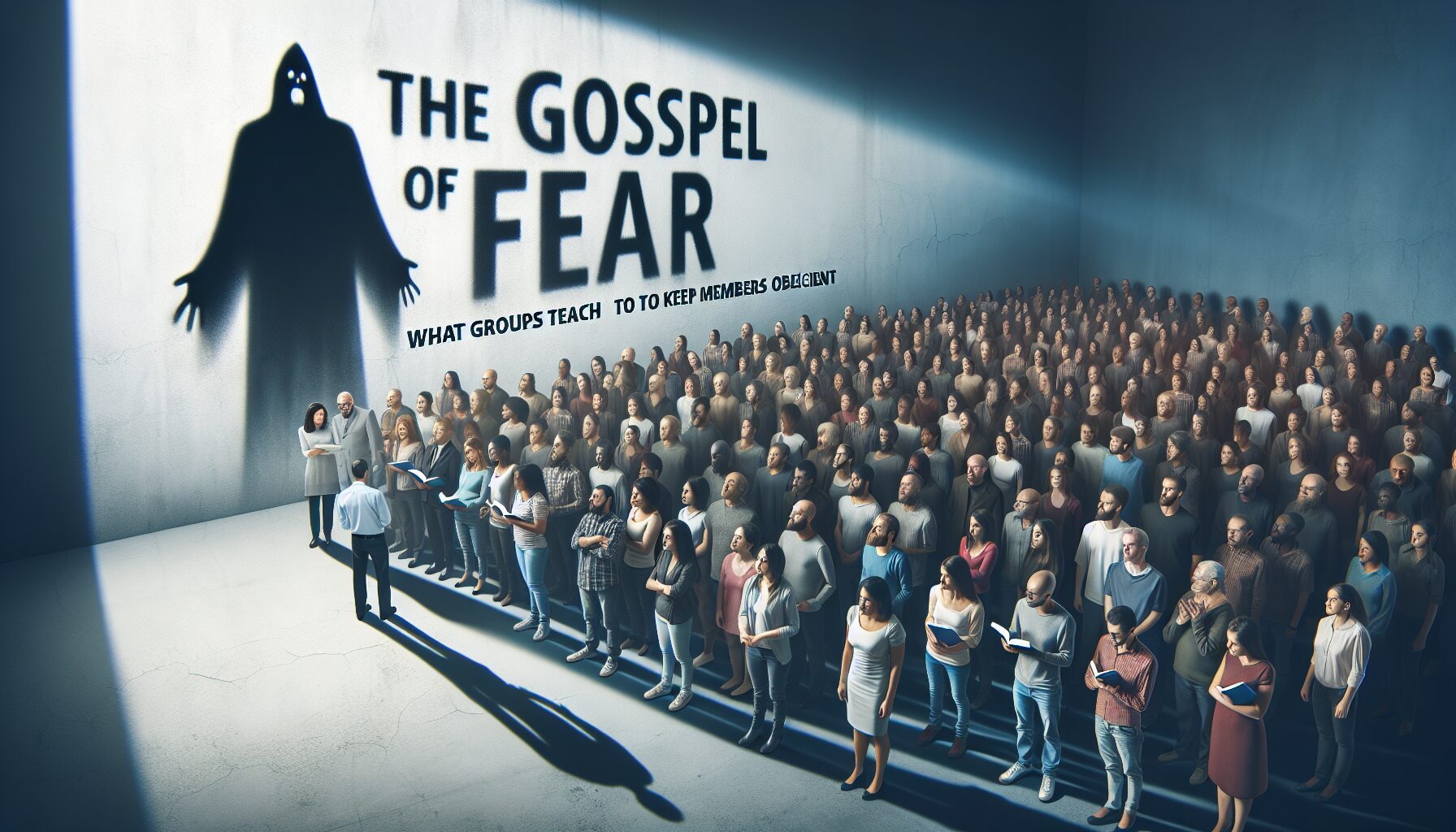
  • The Gospel of Fear – What Groups Teach to Keep Members Obedient

    The Gospel of Fear – What Groups Teach to Keep Members Obedient

    The Gospel of Fear: What Groups Teach to Keep Members Obedient

    Throughout history, groups—from religious sects to cults—have wielded fear as a powerful tool to ensure the obedience of their members. Fear, as a psychological mechanism, can hold sway over a person’s mind, compelling them to adhere to beliefs and practices they may not otherwise follow. But what exactly do these organizations preach to keep their members in line?

    The Foundation of Fear

    The use of fear by groups often begins with the establishment of a fundamental belief system that clearly distinguishes insiders from outsiders. Karl Popper, an influential philosopher, explained this dichotomy in his works: “It is impossible to speak in such a way that you cannot be misunderstood.” Groups leverage this idea by creating a narrative where being misunderstood or diverging from the established path results in dire consequences.

    Apocalyptic Predictions

    Many groups utilize fear by forecasting impending doom if members fail to comply with prescribed doctrines or commandments. Apocalyptic narratives often serve as a motivator for adherence. For instance, Christian eschatology has been a means through which certain religious groups keep followers in line through fear of the end times. In a 2018 Pew Research Study, it was found that a notable percentage of Americans believe in the biblical apocalypse, which illustrates the power and reach of these beliefs.

    Fear of Excommunication and Isolation

    The threat of excommunication or community isolation is another form of fear utilized by groups. This method plays on the human fear of loneliness and exclusion. Scriptures and doctrines are often cited to justify the cutting off of ties. A notable example can be seen in Jehovah’s Witnesses, where the practice of shunning members who dissent serves as a stark warning to maintain conformity, as documented by a BBC article.

    Fear of the Supernatural

    Fear of the supernatural and divine punishment is another tactic. Many religions preach that deviation from the set beliefs and practices will result in eternal damnation or other supernatural retributions. This notion is vividly present in various fundamentalist religious groups where hellfire and divine wrath are recurrent themes in teachings and sermons.

    “Men fear thought as they fear nothing else on earth — more than ruin, more even than death.” – Bertrand Russell

    The Cycle of Fear and Control

    • Cognitive Dissonance: Fear can lead to cognitive dissonance, where individuals perform mental gymnastics to align their fears with their beliefs. This phenomenon makes it difficult for members to critically analyze the doctrines they follow.
    • Continual Surveillance: Groups maintain constant oversight to ensure compliance, often instilling the belief that a higher power or the group itself monitors thoughts and actions.
    • Fear of the “Other”: Xenophobia and the demonization of those outside the group strengthen internal cohesion by creating a fear of external threats.

    The Role of Charismatic Leaders

    Charismatic leaders are adept at exploiting fear to maintain control. By presenting themselves as the only path to salvation or truth, these leaders reinforce members’ fears of what lies beyond the group’s teachings. Historian Margaret Thaler Singer, in her work “Cults in Our Midst”, explores how charisma paired with fear can culminate in intense loyalty and obedience.

    The Path Forward: Education and Awareness

    Understanding the dynamics of fear within groups is imperative for both current members and those studying these organizations. Awareness and education about these fear tactics can be powerful tools in resisting undue influence. Emphasizing critical thinking, fostering community, and seeking supportive interventions can dismantle the control that fear exerts.

    In conclusion, fear is a profound and practical instrument used by groups to maintain obedience among their members. From supernatural threats to social seclusion, these groups exploit fear to insulate members from outside influences and independent thought. Recognizing these tactics is the first step in escaping their grasp and forging a path toward intellectual and emotional autonomy.

  • Psychology of the Persecuted – Patterns Seen Across History

    Psychology of the Persecuted – Patterns Seen Across History

    Psychology of the Persecuted: Patterns Seen Across History

    The persecution of individuals or entire groups has been a recurring theme throughout human history. From ancient times to more contemporary examples, the psychology of the persecuted reveals remarkable patterns that transcend cultural and temporal boundaries. This article explores some common psychological responses and coping mechanisms exhibited by persecuted groups across different eras.

    Historical Examples of Persecution

    Persecution has been recorded since ancient civilizations. The Jews were enslaved in Egypt, Christians faced trials in the Roman Empire, and more recently, ethnic groups have encountered genocide in the 20th century. Each instance, while unique in its context, showcases similar psychological patterns among those targeted.

    Coping Mechanisms and Resilience

    • Identity Reinforcement: One prominent response among persecuted groups is a heightened sense of identity. When faced with external threats, these communities often respond by strengthening internal bonds. For instance, during the oppression of Jews throughout history, cultural and religious practices were emphasized to maintain identity and cohesion.
    • Adaptation: Historically, persecuted groups have shown remarkable adaptability. The African American community during the era of slavery in the United States developed rich cultural expressions, such as spirituals and storytelling, that provided psychological relief and a sense of continuity.
    • Hope and Motivation: Viktor Frankl, a Holocaust survivor, in his seminal work, Man’s Search for Meaning, articulated the importance of finding purpose even in the most dire circumstances. He emphasized that “those who have a ‘why’ to live, can bear with almost any ‘how’.

    The Psychology Behind Persecution

    Beyond the responses of the persecuted, the psychology of the persecutor is equally critical to understand. Persecution often stems from fear, ignorance, or the desire to control. As noted in Erich Fromm’s work, Escape from Freedom, individuals can display authoritarian tendencies as a mechanism to alleviate personal insecurities by projecting them onto others.

    “Human beings are the only creatures who are able to behave irrationally in the name of reason.” — Erich Fromm

    Conclusion

    Understanding the psychology of the persecuted and the persecutors provides insights into the recurring patterns of human behavior. By studying these patterns, society can better address and hopefully dismantle the structures that perpetuate persecution, fostering a more inclusive and understanding world.

  • The Weight of Being Watched – Surveillance in High-Control Groups

    The Weight of Being Watched – Surveillance in High-Control Groups

    In the intricate and often shadowy world of high-control groups, surveillance is not merely a tool but a cornerstone of maintaining power and conformity. These groups, often characterized by rigid hierarchies and unyielding dogmas, rely on a variety of surveillance methods to ensure members adhere to prescribed norms. The omnipresent gaze serves as both a deterrent and a method of reinforcing control, creating an environment where conformity is synonymous with survival.

    The Mechanics of Surveillance

    High-control groups employ a range of surveillance techniques to exert influence over their members:

    • Physical Surveillance: Direct oversight through designated enforcers or monitors who keep a close eye on individuals’ behaviors and interactions.
    • Technological Monitoring: Utilization of technology such as cameras, recording devices, and digital tracking to monitor activities and communications.
    • Peer Surveillance: Encouraging members to report on each other’s behavior, fostering an atmosphere of mistrust and paranoia.

    These methods are not only designed to catch deviations but also to instill the belief that one is always being observed, even when alone. Dr. Arthur D. Goldsmith, in his analysis on the psychological impacts of continuous surveillance, notes,

    “The mere perception of being watched can lead to self-censorship, heightened stress, and a distorted sense of reality. It molds behavior to fit the observer’s expectations, often at the expense of personal identity.”

    The Psychological Toll

    The impact of constant monitoring is profound. Members of high-control groups frequently experience a range of psychological effects:

    • Anxiety and Paranoia: The continuous threat or belief of surveillance can lead to heightened anxiety, where individuals feel perpetually on edge.
    • Erosion of Trust: As members are encouraged to monitor and report on each other, trust erodes, isolating individuals within the group.
    • Identity Suppression: Under the watchful eye of surveillance, individuals often suppress their authentic selves in favor of the persona desired by the group.

    In “Surveillance Studies: An Overview,” scholar David Lyon explains,

    “Surveillance is a foundational means of control in modern societies, reshaping interactions and the very notion of privacy.”

    This reshaping is even more pronounced in high-control groups where every action is scrutinized.

    Surveillance and Obedience

    The ultimate goal of surveillance within these groups is absolute obedience. By consistently reminding members of their watched status, leaders effectively quash dissent and encourage a homogenized adherence to ideology. The fear of being caught in an act of defiance, coupled with potential punitive measures, ensures compliance.

    Moreover, this culture of surveillance creates an environment ripe for exploitation. Leaders can manipulate surveillance data to fabricate evidence of non-compliance, further tightening their grip on power. As noted by author and cult expert Steven Hassan, “Surveillance allows leaders to create an atmosphere of fear and control, where members are too intimidated to question or challenge authority.”

    Breaking Free from Surveillance

    Escaping the cycle of surveillance in high-control groups is challenging but not impossible. The process often involves:

    • Awareness and Education: Understanding the mechanisms of surveillance and its psychological impacts is the first step towards liberation.
    • Establishing External Support: Building networks outside the group provides emotional and psychological support necessary to break free.
    • Reclaiming Personal Agency: Actively seeking to rediscover and assert one’s identity separate from the group’s influence.

    Leaving a high-control group involves managing the fear and doubt instilled by pervasive surveillance, but with resilience and support, individuals can regain control over their lives.

    Conclusion

    The weight of being watched in high-control groups is a heavy burden, crafting an intricate web of fear, conformity, and control. While the surveillance mechanisms employed are diverse, their goal remains singular: maintaining power over individuals. Recognizing this oppressive surveillance is crucial for empowering those within to reclaim their autonomy. Only through awareness, support, and the courage to challenge these constraints can members hope to see beyond the shadows cast by the unyielding gaze of high-control surveillance.

  • Shadow Communities – How Persecuted People Form New Networks

    Shadow Communities – How Persecuted People Form New Networks

    The story of human society is one of shared experiences, often marked by adversity and resilience. Throughout history, persecuted groups have found ingenious ways to survive and thrive against the odds by creating shadow communities—networks that provide support, solidarity, and safety in hostile environments. This article delves into the dynamics of these communities and the remarkable ways in which they have shaped social landscapes across the globe.

    The Foundation of Shadow Communities

    Shadow communities are often born out of necessity. Faced with systemic persecution, marginalized groups, including religious minorities, ethnic groups, and political dissidents, have historically sought to create alternative societies that operate beneath the surface of mainstream culture. These communities function as ecosystems, with their own forms of governance, economies, and cultural practices.

    One of the key features of shadow communities is their resilience and adaptability. As anthropologist Scott C. Johnson explains in his study of hidden networks, “Shadow communities are built on strong ties of reciprocity and mutual aid, which allow them to adapt quickly to changing circumstances.” These communities are constantly evolving, often blending traditional practices with new innovations to meet the needs of their members.

    Historical Examples of Shadow Communities

    • The Underground Railroad: During the 19th century, the Underground Railroad emerged as one of the most well-known examples of a shadow community. This network of secret routes and safe houses enabled enslaved African Americans to escape to free states and Canada. Key figures such as Harriet Tubman, herself an escaped slave, played a crucial role in guiding others to freedom. It highlighted the power of clandestine collaboration in combating systemic oppression.
    • The Jewish Ghettos During World War II: In the face of extreme persecution, Jews in Nazi-occupied Europe were forced into ghettos, where they established clandestine networks for education, culture, and resistance. Emanuel Ringelblum, a historian and ghetto resident, documented these efforts in what became known as the Ringelblum Archive, capturing the vibrancy and resilience of these shadow communities under dire conditions.
    • Havurot in Soviet Russia: Under Soviet rule, Jewish religious practices were suppressed. In response, Havurot, small fellowship groups, formed to secretly practice their faith, share knowledge, and celebrate Jewish culture. These communities were essential in preserving Jewish identity during times of intense religious repression.

    Mechanisms of Survival and Resistance

    The survival of shadow communities often hinges on their ability to remain imperceptible to hostile authorities while building robust internal support systems. The following mechanisms have been instrumental in achieving these goals:

    • Secret Communication: Persecuted groups develop sophisticated methods for covert communication. During apartheid in South Africa, for example, the African National Congress used encrypted messages and underground newspapers to coordinate resistance efforts and share information.
    • Safe Houses and Sanctuaries: Safe houses provide refuge and basic necessities, ensuring the safety and well-being of shadow community members. Throughout history, churches, monasteries, and private homes have offered sanctuary to those fleeing persecution. The famous Anne Frank House served as a hiding place for the Frank family during the Holocaust.
    • Cultural Preservation: Maintaining cultural identity is vital for the morale and continuity of shadow communities. In the United States, for example, the Harlem Renaissance was a cultural movement that gave African Americans a voice in a society that sought to silence them. Though not a shadow community in the traditional sense, it represented how marginalized groups found ways to preserve and elevate their cultural practices.

    The Role of Technology in Modern Shadow Communities

    In contemporary society, technology has vastly expanded the possibilities for shadow communities. The digital age has facilitated greater anonymity and connectivity, allowing persecuted groups to organize and communicate more effectively. The following are examples of how technology is shaping modern shadow communities:

    • Social Media and Encrypted Platforms: The Arab Spring demonstrated how social media could be leveraged by activists to mobilize protests and share information. Platforms like Facebook and Twitter became crucial tools for organizing in regions where traditional media was censored. Encrypted messaging apps, such as Signal and Telegram, have also become essential for secure communication.
    • Cryptocurrencies and Alternative Economies: In countries with unstable economies or where financial systems are used as tools of oppression, cryptocurrencies like Bitcoin provide alternative means of economic exchange. They allow shadow communities to operate financially without relying on traditional banking systems that may be subject to government oversight or manipulation.
    • Online Learning and Skill-Sharing: Educational initiatives like Coursera or Khan Academy have opened doors for self-education within marginalized groups. In places where formal education is restricted, these platforms provide knowledge and skills that empower individuals within shadow communities to pursue personal and collective advancement.

    The Impact and Significance of Shadow Communities

    Shadow communities play a crucial role in the broader fight for justice and human rights. By sustaining the hopes, cultures, and identities of their members, they lay the groundwork for societal change. Howard Zinn, a renowned historian, noted,

    “Small acts, when multiplied by millions of people, can transform the world.”

    Shadow communities are embodiments of such acts, often becoming the catalysts for larger movements and shifts in public consciousness.

    The existence and success of shadow communities highlight the indomitable human spirit and the capacity for innovation and solidarity in the face of adversity. They serve as a reminder that even in the darkest of times, there is light to be found in the networks of hope and aid that individuals build together. As long as persecution exists, so too will the resilience and creativity of those who forge new paths toward freedom and justice.

  • The Ritual of Exclusion – Why Groups Need Boundaries to Feel Holy

    The Ritual of Exclusion – Why Groups Need Boundaries to Feel Holy

    Throughout history, human societies have created rituals that serve to strengthen bonds within a group by establishing boundaries. These boundaries, often drawing demarcations between the sacred and the profane, are crucial in defining the identity of the group and in fostering a sense of belonging among its members. In many cultures, this has taken the form of religious rites, but the concept of exclusion extends far beyond religion. This article delves into the reasons why groups need boundaries to feel holy and examines the psychological and cultural implications of these practices.

    The Nature of Holiness and Exclusion

    To understand the interplay between holiness and exclusion, it’s important to first clarify what is meant by ‘holy’. Derived from the word ‘whole,’ holiness often suggests completeness and sanctity, something set apart for a particular purpose. As defined by Mircea Eliade in his seminal work The Sacred and the Profane, the sacred is distinct from the everyday and mundane, representing a higher reality.

    Groups, whether religious, social, or cultural, utilize boundaries to delineate what is holy to them. These boundaries can manifest physically — through places of worship, dress codes, and dietary laws — or symbolically, through shared beliefs and narratives. By creating a sense of distinction from the ‘other,’ groups can foster a deeper attachment to their identity and mission. This can be seen vividly in religions such as Judaism, where the concept of being a chosen people necessitates a lifestyle distinct from others. As Jay Michaelson notes in The Forward, “Jewish identity has always been about a set of practices and beliefs that draw borders between the sacred and the mundane.”

    The Psychological Need for Boundaries

    From a psychological perspective, boundaries serve an essential purpose in individual and group identity. By delineating who is ‘in’ and who is ‘out,’ groups provide their members with a means of understanding their place in the world. This is particularly prevalent during moments of uncertainty or existential crisis, where belonging to a group offers meaning and stability.

    • Identity Formation: Boundaries help create a clear contrast between ‘us’ and ‘them,’ which is vital for identity. As Erik Erikson posited, identity development is a crucial part of human development, impacting our beliefs, values, and choices. When individuals participate in group rituals, they often express a shared identity, reinforcing the boundaries that define the group.
    • Protection and Safety: By establishing what is considered holy, groups create a safe space for their members, insulating them from external threats. This is evident in communities that employ strict dietary laws or codes of conduct, as these rules serve not only spiritual but also communal and social purposes.
    • Social Cohesion: Shared rituals and boundaries enhance social cohesion. The collective experience of ritual often involves emotions like awe or reverence, binding individuals to a larger whole. As anthropologist Jonathan Haidt discusses, these shared moral matrices unite communities through common values and principles.

    Cultural Implications

    Examining the cultural impact of ritual exclusion reveals its role in shaping societies. Groups create narratives of exclusion and inclusion to maintain distinct cultures within the larger societal fabric. This is observed in rituals surrounding entry into adulthood, where rites of passage define new roles within the group, providing the individual with a deeper connection to their cultural identity.

    Consider the Maasai people’s Enkipaata ceremony – a significant rite of passage that marks the transition of boys to warrior class. These rituals are not merely ceremonial; they play a foundational role in perpetuating cultural continuity and societal norms.

    “Ritual, by setting up sacred spaces and times, helps to mark off our shared reality from the endless flood of experience, providing structure and meaning” – Rupert Sheldrake.

    The Dark Side of Exclusion

    While boundaries can bring groups together, they can also lead to division and conflict. The exclusionary tactics that ensure holiness within a group can create demonization or stigmatization of those outside the boundaries, leading to sectarianism or xenophobia. History is replete with examples of this division, often leading to persecution and violence. As sociologist Émile Durkheim warned, the sacred can also create social tension, as shared beliefs can become dogmatic, fracturing societies along ideological lines.

    Modern examples abound, from nationalism that excludes based on ethnicity or religion to gated communities that segregate the affluent from the rest of society. In such cases, the ritual of exclusion becomes a tool of power and control, reinforcing social hierarchies and economic divides.

    Conclusion

    The ritual of exclusion serves as a powerful reminder of human nature’s need for belonging and identity. While it fosters community and strengthens group identity, it also carries the potential for division and discrimination. Understanding the dual nature of these rituals can help societies navigate the complex interplay between sacred inclinations and the need for inclusivity. In recognizing the power of boundaries, modern groups can strive to create communities that celebrate distinct identities without resorting to exclusionary tactics that harm the broader social fabric.

    As we move forward in an increasingly interconnected world, bridging the gap between holy boundaries and inclusive unity becomes not just a cultural necessity but a moral imperative.

  • The Politics of Purity – How Groups Police Belief

    The Politics of Purity – How Groups Police Belief

    The Politics of Purity: How Groups Police Belief

    Throughout history, human societies have been organized around shared beliefs and values. While these collective ideals can inspire unity and cooperation, they often come with an intrinsic demand for conformity. This phenomenon, known as the “politics of purity,” refers to the ways groups enforce ideological homogeneity and suppress dissent.

    The Concept of Purity in Group Dynamics

    Groups, by their very nature, possess an inherent desire to maintain a cohesive identity. This identity is frequently rooted in core principles considered essential for membership. According to Psychology Today, “the politics of purity involves determining who is ‘in’ and who is ‘out’ based on an adherence to these principles.”

    Psychologist Jonathan Haidt describes this as part of the moral foundations theory, where “purity/sanctity” acts as a foundational moral value alongside others like care, fairness, and loyalty. Groups tend to prioritize purity when they feel threatened, fearing that the dilution of original ideals could lead to collapse.

    Mechanisms of Policing Belief

    The control and policing of belief within groups often manifest through several mechanisms:

    • Social Pressure: Members are encouraged to conform through both explicit demands and implicit expectations. Nonconformity can lead to ostracism or loss of status.
    • Rituals and Symbols: Participation in rituals and the use of specific symbols reinforce shared beliefs and delineate in-group from out-group members.
    • Language and Narrative: Controlling the narrative and language used within a group helps shape perceptions. As George Orwell famously noted, “Who controls the past controls the future: who controls the present controls the past.”
    • Gatekeeping: Leaders and influential members often set and enforce boundaries for acceptable beliefs and behaviors. This can include formal rules or informal judgment.

    The Role of Charismatic Leaders

    Charismatic leaders frequently play a critical role in defining and enforcing the politics of purity. Their appeal often stems from their ability to articulate a clear vision of the group’s identity and values. As described in Psychology Today, these leaders “embody the ideals of the group, serving as both the enforcer and the living symbol of purity.”

    Max Weber, the renowned sociologist, referred to charisma as a “certain quality of an individual personality, by virtue of which he is considered extraordinary and treated as endowed with supernatural, superhuman, or at least specifically exceptional powers or qualities.”

    The Consequences of Rigidity

    While maintaining group purity can provide clear guidelines and a sense of certainty, it can also lead to detrimental effects:

    • Groupthink: The desire for unanimity can result in irrational decision-making processes, where dissenting opinions are discouraged or silenced.
    • Stagnation: An inflexible adherence to traditional beliefs can hinder innovation and adaptation in a rapidly changing world.
    • Moral Superiority: Groups may develop a sense of moral superiority, leading to isolation and an inability to engage constructively with outsiders.
    • Conflict: Intolerance towards differing beliefs can escalate into conflict, both within the group and with external entities.

    Balancing Purity and Pluralism

    To avoid the pitfalls associated with the politics of purity, it is crucial for groups to strike a balance between maintaining core values and embracing pluralism. This involves fostering open dialogue, encouraging critical thinking, and allowing for gradual evolution in beliefs.

    “The test of a first-rate intelligence is the ability to hold two opposed ideas in mind at the same time and still retain the ability to function,” wrote F. Scott Fitzgerald. This openness to complexity might be challenging, but it is essential for sustainable growth and harmony.

    Ultimately, the politics of purity underscore the importance of vigilance against the allure of rigidity. As societies navigate the complexities of modern life, embracing diversity not only within but also beyond their immediate groups is paramount.

    By understanding the psychological underpinnings of the desire for purity, individuals and groups can better equip themselves to foster environments that champion both unity and diversity, where beliefs are not just policed but also enriched.

  • When Faith Becomes a Weapon – Power Dynamics in Closed Groups

    When Faith Becomes a Weapon – Power Dynamics in Closed Groups

    In the complex interplay between faith and power, closed religious or spiritual groups often present a unique microcosm that reveals how belief systems can be manipulated to consolidate control. This dynamic is particularly evident in groups characterized by strong hierarchical structures where faith not only serves as a spiritual compass but also as a powerful tool for governance and, sometimes, oppression.

    The Entrenchment of Power

    • Authoritarian Leadership: Leaders within closed groups frequently possess an outsized influence over followers, often justified by spiritual pretexts. This authority is not just based on religious teachings but is also bolstered by the perception of divine endorsement. The leader’s word becomes inarguable truth.
    • Control Over Information: Closed groups often restrict external influences and manage what information reaches followers. According to Psychology Today, “cults and other closed groups achieve control in part through limiting the information available to their members.” This control ensures that dissent is minimized, and the group’s narrative remains unchallenged.

    Manipulation of Belief

    The power dynamics in these groups are intricately tied to the manipulation of faith. Beliefs are often exaggerated or distorted to serve the agenda of those in control. This manipulation can manifest as:

    • Guilt and Fear: Followers may be persuaded to believe that leaving the group or questioning the leader is synonymous with spiritual failure or eternal damnation. This emotional blackmail ensures compliance and discourages critical thinking.
    • Us vs. Them Mentality: An insular mindset is perpetuated where the group sees itself as the sole possessor of truth, and outsiders are viewed with suspicion or hostility. This fosters a sense of community but also isolation from differing perspectives.

    The Aftermath and Beyond

    For individuals who manage to break away from such environments, there can be significant emotional and psychological aftermaths. According to research by Langone et al., “former members often require considerable support to rebuild their personal identity and worldviews.” Recovery involves disentangling personal beliefs from the dogmatic teachings of their former groups.

    In conclusion, while faith can offer genuine spiritual fulfillment, it becomes problematic when used as a tool for manipulation. Understanding how power dynamics operate within closed groups helps in recognizing warning signs and supporting those seeking to reclaim their autonomy. As society becomes more aware of these dynamics, the hope is for greater empathy and resources to help individuals caught in these power plays of belief.

    “I suppose leadership at one time meant muscles; but today it means getting along with people.” – Mahatma Gandhi