Tag: beliefs

  • The Politics of Purity – How Groups Police Belief

    The Politics of Purity – How Groups Police Belief

    The Politics of Purity: How Groups Police Belief

    Throughout history, human societies have been organized around shared beliefs and values. While these collective ideals can inspire unity and cooperation, they often come with an intrinsic demand for conformity. This phenomenon, known as the “politics of purity,” refers to the ways groups enforce ideological homogeneity and suppress dissent.

    The Concept of Purity in Group Dynamics

    Groups, by their very nature, possess an inherent desire to maintain a cohesive identity. This identity is frequently rooted in core principles considered essential for membership. According to Psychology Today, “the politics of purity involves determining who is ‘in’ and who is ‘out’ based on an adherence to these principles.”

    Psychologist Jonathan Haidt describes this as part of the moral foundations theory, where “purity/sanctity” acts as a foundational moral value alongside others like care, fairness, and loyalty. Groups tend to prioritize purity when they feel threatened, fearing that the dilution of original ideals could lead to collapse.

    Mechanisms of Policing Belief

    The control and policing of belief within groups often manifest through several mechanisms:

    • Social Pressure: Members are encouraged to conform through both explicit demands and implicit expectations. Nonconformity can lead to ostracism or loss of status.
    • Rituals and Symbols: Participation in rituals and the use of specific symbols reinforce shared beliefs and delineate in-group from out-group members.
    • Language and Narrative: Controlling the narrative and language used within a group helps shape perceptions. As George Orwell famously noted, “Who controls the past controls the future: who controls the present controls the past.”
    • Gatekeeping: Leaders and influential members often set and enforce boundaries for acceptable beliefs and behaviors. This can include formal rules or informal judgment.

    The Role of Charismatic Leaders

    Charismatic leaders frequently play a critical role in defining and enforcing the politics of purity. Their appeal often stems from their ability to articulate a clear vision of the group’s identity and values. As described in Psychology Today, these leaders “embody the ideals of the group, serving as both the enforcer and the living symbol of purity.”

    Max Weber, the renowned sociologist, referred to charisma as a “certain quality of an individual personality, by virtue of which he is considered extraordinary and treated as endowed with supernatural, superhuman, or at least specifically exceptional powers or qualities.”

    The Consequences of Rigidity

    While maintaining group purity can provide clear guidelines and a sense of certainty, it can also lead to detrimental effects:

    • Groupthink: The desire for unanimity can result in irrational decision-making processes, where dissenting opinions are discouraged or silenced.
    • Stagnation: An inflexible adherence to traditional beliefs can hinder innovation and adaptation in a rapidly changing world.
    • Moral Superiority: Groups may develop a sense of moral superiority, leading to isolation and an inability to engage constructively with outsiders.
    • Conflict: Intolerance towards differing beliefs can escalate into conflict, both within the group and with external entities.

    Balancing Purity and Pluralism

    To avoid the pitfalls associated with the politics of purity, it is crucial for groups to strike a balance between maintaining core values and embracing pluralism. This involves fostering open dialogue, encouraging critical thinking, and allowing for gradual evolution in beliefs.

    “The test of a first-rate intelligence is the ability to hold two opposed ideas in mind at the same time and still retain the ability to function,” wrote F. Scott Fitzgerald. This openness to complexity might be challenging, but it is essential for sustainable growth and harmony.

    Ultimately, the politics of purity underscore the importance of vigilance against the allure of rigidity. As societies navigate the complexities of modern life, embracing diversity not only within but also beyond their immediate groups is paramount.

    By understanding the psychological underpinnings of the desire for purity, individuals and groups can better equip themselves to foster environments that champion both unity and diversity, where beliefs are not just policed but also enriched.

  • Why Heretics Thrive – The Spiritual Fire of Those Cast Out

    Why Heretics Thrive – The Spiritual Fire of Those Cast Out

    Throughout history, those labeled as heretics have often borne the brand of infamy and derision. Yet, it is these very individuals who have frequently sparked dynamic movements, challenged established dogmas, and kindled the flames of transformative thought. The reasons why heretics thrive are manifold, interwoven into the fabric of societal evolution and human curiosity.

    The Nature of Heresy

    The term “heresy” generally refers to beliefs that are in direct opposition to established religious doctrines. Historically, heretics have been cast out for their divergence from traditional beliefs. As John Henry Newman aptly described, “Heresy is the use of Christian ideas, but for purposes inconsistent with Christianity.” The term has often been used pejoratively, yet it also embodies a spirit of questioning that is essential for progress.

    The Thriving of Heretical Thought

    Despite—or perhaps because of—their ostracism, heretics often find fertile ground to grow. Here are some reasons why heretical thought thrives:

    • Isolation Breeds Innovation: Removed from the constraints of orthodox conventions, heretics are free to explore ideas without fear of immediate censure. This isolation can lead to innovation, as they are not bound by the traditional boundaries of thought.
    • Persecution Encourages Persistence: The historical persecution of heretics has inadvertently given rise to a persistence and resilience that galvanizes their followers. As the saying goes, “What doesn’t kill you makes you stronger.” This resilience often draws attention and compels others to investigate their teachings.
    • Appeal of the Margins: Heretical ideas resonate with those who feel disenfranchised by mainstream ideologies. As a consequence, heretics often attract followers who are seeking alternative explanations and solutions.
    • Reinterpretation and Relevance: Heretics often reinterpret age-old doctrines to address contemporary issues, making them relevant to the present day. As new problems arise, the fresh perspectives offered by heretics can prove invaluable to the evolution of thought.

    Historical Examples of Thriving Heretics

    History is replete with examples of heretics who have been ultimately vindicated or whose ideas have laid the foundation for future advancements:

    • Galileo Galilei: Condemned by the Catholic Church for advocating heliocentrism, Galileo’s heretical views were grounded in scientific observation. His work laid the groundwork for modern astronomy, challenging the orthodoxy of his time while eventually reshaping it. As the Nobel Foundation notes, his “denunciation as a heretic was eventually recognized as a confrontation between emerging science and established authority.”
    • Martin Luther: The Protestant Reformation, initiated by Luther’s heretical ideas, transformed Christianity and led to religious pluralism. His theses were not just a critique of existing practices but proposed a new theological framework that resonated with many seeking reform. According to Encyclopaedia Britannica, “Luther’s reforms fundamentally altered the course of Christian history.”
    • Giordano Bruno: A champion of the infinity of the universe and the multiplicity of worlds, Bruno’s ideas were considered dangerous by the Church, leading to his execution. Despite this, his forward-thinking ideas contributed to the scientific exploration of cosmology. His philosophies lay the groundwork for future generations to reconsider the vastness of the cosmos.

    The Modern Context

    Today, heretical thoughts pervade different spheres, not just within religious doctrines. In science, technology, and social change, those considered heretics push the boundaries of accepted norms and introduce paradigms that gradually find acceptance and spur progress. As Mahatma Gandhi once remarked, “First they ignore you, then they laugh at you, then they fight you, then you win.”

    The Spiritual Fire

    The metaphorical fire of heretics represents a fervor that can illuminate hidden truths or burn existing structures to create space for new growth. This fire not only challenges the status quo but also has the potential to inspire others to reevaluate and reaffirm their beliefs. By doing so, they keep the spirit of inquiry and discovery alive, ensuring society’s continual evolution.

    “The heretic is the champion of his own belief,” noted Thomas Jefferson, implying that courage and conviction often accompany heretical endeavors, sowing the seeds for new schools of thought.

    By embracing the courage of their convictions, heretics ignite discussions that provoke changes in attitudes and beliefs. Their legacy, though sometimes tarnished by martyrdom, continues to illuminate new paths for humanity.

    In an era where novel ideas compete against entrenched ideologies, recognizing the value of what heretics bring to the table is essential. Through the flames of controversy, they light the way for societal progression and understanding, ensuring that their spirit continues to thrive.

  • The Courage to Amend — Reclaiming integrity after dogma

    The Courage to Amend — Reclaiming integrity after dogma

    In a world inundated with information and ideology, having the courage to amend one’s beliefs is an act of tremendous personal integrity. History and literature often celebrate those who held steadfast to their convictions. Yet, there is equal if not greater valor in those who are willing to re-evaluate their dogmas and embrace growth.

    The Nature of Dogma

    Dogma, derived from the Greek word dokein, meaning “to seem,” reflects ideas and principles that are often accepted without questioning. These accepted truths, whether in religion, politics, or social behavior, serve as a foundation on which many adhere, providing a sense of order and predictability in an uncertain world.

    “The most dangerous of all beliefs is the belief in a single truth.” — Charles Kimball

    Indeed, when dogma goes unchecked, it can lead to narrow-mindedness and exclude the possibility of diversity in thinking. A rigid adherence to dogmas has throughout history often resulted in the stifling of progress and the persecution of differing ideas.

    The Power of Embracing Change

    Real courage lies in the capacity to amend one’s beliefs when presented with new evidence or perspectives. This courage is sometimes perceived as weakness, yet it embodies a profound strength. It requires vulnerability, humility, and the acknowledgment that one’s understanding is never complete.

    • Intellectual Humility: Recognizing that even our most cherished beliefs could be flawed.
    • Empathy: Opening one’s heart to understand the lived experiences and insights of others.
    • Evolving Ideals: Accepting that change is an integral part of progress.

    Many have praised this willingness to evolve. As author Gary Zukav once said:

    “The evolution of one’s consciousness is a process of learning to align one’s intentions and actions with one’s highest understanding.” — Gary Zukav

    Historical Perspective: Leaders Who Amended Their Beliefs

    Throughout history, many prominent figures have shown the courage to amend their beliefs. Consider Nelson Mandela, who shifted from advocating violence to supporting peaceful reconciliation in South Africa. His transformation played a vital role in the abolition of apartheid and set an example of leadership infused with integrity.

    Similarly, former U.S. President Abraham Lincoln evolved his stance on slavery, leading to the Emancipation Proclamation that was crucial in the eventual abolition of slavery in America. His willingness to change course amid evolving circumstances showcased leadership that transcended personal belief systems for the greater good.

    Modern Implications

    Today, in a rapidly changing global environment, the need for intellectual flexibility is more pressing than ever. Complex issues like climate change, technological ethics, and social justice require solutions that go beyond entrenched beliefs. Thus, fostering the courage to amend, reconsider, and realign beliefs in light of new data, technologies, and philosophies is essential.

    • Climate Change: Adapting our behaviors and policies as we learn more about our planet’s climate crisis.
    • Technological Ethics: Evaluating the impacts of artificial intelligence and digital surveillance on personal freedoms.
    • Social Equity: Understanding systemic inequalities and being open to policies that support equity and inclusion.

    Conclusion: A Call to Action

    As humans, our growth lies not in our ability to cling to established beliefs, but rather in the courage to challenge them, amend them, and become better through the process. In an age where division often stems from ideological rigidity, embracing change and fostering flexibility can lead to more inclusive dialogues and transformative solutions. In doing so, we not only reclaim personal integrity but also reinforce our collective humanity.

    As British philosopher Bertrand Russell aptly noted,

    “The whole problem with the world is that fools and fanatics are always so certain of themselves, and wiser people so full of doubts.” — Bertrand Russell

    This acknowledgment of doubt is not a sign of weakness but rather the foundation of a thoughtful and resilient society.

  • Micro-Dogmas — The everyday doctrines that divide

    Micro-Dogmas — The everyday doctrines that divide

    Micro-Dogmas: The Everyday Doctrines That Divide

    In our intricate tapestry of social interactions and beliefs, we often encounter “micro-dogmas”—small, rigidly held beliefs that might seem trivial at first glance, yet hold significant sway over our everyday lives. These micro-beliefs, ranging from the proper way to make a cup of tea to the correct order of performing morning routines, wield an outsized influence, potentially creating divides between friends, family, and even within communities.

    Defining Micro-Dogmas

    Micro-dogmas are those unwritten rules or personal beliefs deeply held and largely unquestioned by individuals. Unlike major religious or ideological dogmas that require a collective adherence to a set of doctrines, micro-dogmas manifest in everyday choices and preferences, often becoming the source of minor social conflicts.

    “These beliefs shape our daily experiences and, when challenged, can lead to surprisingly strong emotional reactions,” notes Dr. Susan Cain, a psychologist specializing in social dynamics. (Psychology Today).

    Common Examples of Micro-Dogmas

    • Food Preparation: The “right” way to prepare scrambled eggs, including whether to add milk or not, can become a surprisingly contentious issue, with each side staunchly defending their method.
    • Morning Routines: Some individuals steadfastly believe that exercise must precede breakfast to kickstart the metabolism, while others advocate for food first for optimal energy.
    • Technology Usage: The incessant debate between Android versus iOS users often goes beyond preference, entering the realm of micro-dogma with staunch defenders on both sides.

    The Impact of Micro-Dogmas

    While these small beliefs might seem innocuous, they have the potential to influence our interactions significantly. Such deeply ingrained convictions can lead to social friction, creating rifts between individuals who might otherwise share strong personal bonds. The defense of these micro-dogmas often stems from a desire for consistency or from viewing them as a reflection of one’s identity.

    As described by communication expert Stephanie Weiland, “Acknowledging and respecting the micro-dogmas of others can be an essential step toward nurturing stronger relationships.” (Communication Coach) Encouraging open discussions about these everyday doctrines can lead to better understanding and greater tolerance.

    Concluding Thoughts

    As we navigate our interactions, recognizing the power and presence of micro-dogmas can serve as a valuable tool in fostering empathy and mutual respect. By understanding these small yet impactful doctrines, we can aim not just to bridge divides but to celebrate the diversity of thought they bring to our daily lives.

  • Everyday Persecution — How spiritual cruelty becomes routine

    Everyday Persecution — How spiritual cruelty becomes routine

    Everyday Persecution: How Spiritual Cruelty Becomes Routine

    Persecution often conjures images of grand, historical events marked by violence and turmoil. Yet, in everyday life, spiritual cruelty manifests in subtler, but equally damaging forms. This pervasive issue can infiltrate institutions, communities, and personal interactions, leaving lasting scars on the victims.

    Understanding Spiritual Persecution

    Spiritual persecution doesn’t always wear the face of flagrant injustice. It can occur quietly and systematically, through behaviors and attitudes that belittle or marginalize individuals based on their spiritual beliefs or practices. These acts of persecution can be overt or insidious, ranging from exclusion and mockery to systemic discrimination.

    Defining Spiritual Cruelty

    Spiritual cruelty involves actions or attitudes that harm an individual’s right to freely express and practice their spiritual beliefs. It can manifest through:

    • Direct Discrimination: This includes blatant exclusion or unequal treatment based on a person’s spiritual identity.
    • Social Ostracism: Deliberate alienation or ridicule of individuals for their spiritual practices or beliefs.
    • Symbolic Violence: The use of language or imagery that demeans spiritual beliefs, contributing to stereotypes and stigmatization.

    “Everyone has the right to freedom of thought, conscience and religion; this right includes freedom to change his religion or belief, and freedom, either alone or in community with others and in public or private, to manifest his religion or belief in teaching, practice, worship and observance.”

    The Universal Declaration of Human Rights, Article 18

    The Mechanisms of Routine Persecution

    Everyday persecution thrives on normalization and passivity. Through desensitization and societal complicity, these micro-aggressions become woven into the fabric of daily life, often going unnoticed or unchallenged.

    Normalization of Prejudice

    When spiritual cruelty is routinely ignored or excused, it becomes normalized. This normalization can be facilitated by:

    • Stereotyping: Persistent negative stereotypes about certain spiritual groups can lead to their dehumanization, making persecution seem justified or trivial.
    • Media Portrayal: Media can perpetuate these stereotypes, further entrenching societal biases.

    “Prejudice against religious minorities is one of the most profound human rights issues still facing the world today.”

    – Amnesty International

    Societal Complicity

    Communities often become passive complicits in spiritual persecution by failing to challenge or address these prejudices. Reasons for complicity include:

    • Lack of Awareness: Many are unaware of the impact of their actions or words on spiritual communities.
    • Fear of Reprisal: Some individuals hesitate to speak out against spiritual cruelty due to fear of backlash or alienation.

    Recognizing the Signs of Spiritual Persecution

    To combat everyday persecution, it is crucial to recognize its signs. These can include changes in behavior, withdrawal from community activities, or expressions of distress from those affected.

    Personal Experiences

    Stories from individuals who have faced spiritual persecution offer insight into these experiences. Their narratives reveal the emotional and psychological toll of routine cruelty.

    “Every time I wore my religious garb, the whispers started. Soon, they weren’t just whispers but open mockery. It’s exhausting to feel like an outsider every single day.”

    – Anonymous

    Addressing and Preventing Spiritual Cruelty

    Addressing spiritual cruelty requires a concerted effort at various societal levels, from individual awareness to policy change.

    Promoting Inclusivity

    Building inclusive communities involves:

    • Education: Encouraging awareness and understanding of diverse spiritual beliefs through educational programs.
    • Inclusivity Policies: Implementing and enforcing policies that protect the rights to spiritual freedom and expression.

    Individual Responsibility

    Everyone can contribute to preventing spiritual cruelty by:

    • Being Informed: Educate yourself on different spiritual beliefs and practices.
    • Challenging Prejudice: Speak out against discriminatory jokes, comments, or behaviors.

    Conclusion

    Everyday persecution, when left unchecked, can dismantle the fabrics of peace and understanding in our communities. By recognizing, addressing, and preventing spiritual cruelty, we uphold the ideals of freedom and respect for all.

    Ultimately, fostering an environment of inclusivity and respect prolongs the journey toward a more just and harmonious society.

  • The Machinery of Belief — How ideals turn mechanical

    The Machinery of Belief — How ideals turn mechanical

    In an era dominated by information, the intricacies of belief and ideology have become both a guiding force and a source of contention. Our beliefs, once considered deeply personal and spiritual, have, for some, turned into mechanized responses. This evolution from organic to mechanical begs the question: How do ideals evolve into mechanical belief systems?

    Understanding the Evolution

    The term “mechanical belief” refers to the automatic, unexamined adherence to a set of ideals. It reflects a process where beliefs are no longer the result of personal introspection but rather a product of external programming. George Orwell, in his seminal work “1984”, captured this phenomenon with chilling relevance, stating, “Doublethink means the power of holding two contradictory beliefs in one’s mind simultaneously, and accepting both of them.

    As Orwell suggests, the acceptance of incongruous beliefs is not just possible, but engineered by mechanisms designed to eliminate critical thought. The same principle applies to mechanical beliefs. Over time, beliefs lose their organic quality and become more like gears in a clock, set in motion by external forces.

    Post-Truth Era and Information Overload

    In the post-truth age, where emotions often trump facts, people find themselves overwhelmed with information. The consequence, as David Roberts from Vox notes, is, “The information ecosystem we inhabit erodes trust in institutions and factual discourse.” With a constant avalanche of facts, figures, and opinions, individuals struggle to discern the truth, often resulting in reliance on simplified, rote beliefs.

    • Confirmation Bias: The tendency to seek, interpret, and remember information that confirms one’s preconceptions.
    • Echo Chambers: Environments where individuals are only exposed to opinions and information that reflect their own beliefs.
    • Algorithmic Influence: Social media platforms create feedback loops that reinforce existing beliefs by tailoring content to user preferences.

    The Role of Institutions and Authorities

    Institutions such as schools, governments, and religions have long been arbiters of belief. Yet, as “Infotopia” author Cass Sunstein explains, “Once accepted beliefs become part of the institutional fabric, they acquire a certain immovability.” When beliefs are institutionalized, dissent or evolution of thought becomes markedly difficult because deviation is often met with resistance.

    Any system that relies on humans making decisions benefits from stripping decision-making down to a set of easily remembered heuristics, often reducing complexity to a set of mechanical operations.

    Breaking the Cycle

    Recognizing the mechanical nature of beliefs is the first step towards breaking free from their grasp. Encouraging critical thought and fostering environments where questioning is valued is fundamental. Here’s how:

    • Education: Encourage curricula that prioritize critical thinking and skepticism over rote memorization.
    • Open Discourse: Create spaces where open discussions can happen, valuing civil discourse and challenging mainstream narratives.
    • Media Literacy: Educate individuals to critically evaluate sources of information and recognize bias.

    From Mechanization to Rehumanization

    The antidote to mechanization is returning to the roots of personal belief systems that reflect nuanced, deeply held, and carefully examined convictions. As Erich Fromm eloquently put it in “The Art of Loving”, “Loving presents a paradox: it means to affirm, to take care of, to love one’s passions.” Beliefs, like passions, need to be nurtured, examined, and occasionally uprooted to ensure they grow healthy and strong.

    In this relentless march of ideals turning mechanical, the choice remains personal: Will we allow our beliefs to be governed by unseen forces, or will we take the reins, scrutinizing and redefining them in pursuit of a more authentic life?

  • Collective Blindness — Shared delusion as spiritual discipline

    In a world increasingly dominated by reason and logic, the concept of shared delusion, or collective blindness, can appear to be regressive. However, when viewed through the lens of spirituality, it can be framed as a deeply enriching experience that fosters community, influences behavior, and shapes collective identity.

    The Nature of Collective Blindness

    Collective blindness refers to the shared acceptance of beliefs or notions that are, to an outside observer, irrational or unsubstantiated. This phenomenon is not new. Throughout history, human societies have often adhered to shared narratives that prioritize communal cohesion over objective truth. From religious dogmas to cultural myths, these shared delusions play a central role in shaping societies.

    • Religious Traditions: Many religious beliefs—with their mythos, rituals, and taboos—are often accepted without empirical evidence. These beliefs, however, provide a framework for community, ethics, and personal purpose.
    • Cultural Narratives: Stories and legends, whether based on historical fact or fiction, help communities to forge identities and pass on values through generations.

    The Spiritual Merits of Sharing a Delusion

    At first glance, it might seem counterintuitive to attribute positive connotations to delusion. Yet, when viewed from a spiritual perspective, collective blindness can serve as a vessel for growth and connection.

    Community Building

    Sharing a belief or delusion fosters a sense of belonging. As social creatures, humans inherently seek connection and validation from others. Collective blindness offers a spiritual discipline in which individuals connect through beliefs to form a cohesive unit. This sense of unity can be spiritually uplifting, providing an individual with a sense of security and a shared purpose.

    “Connection and community are inherent human needs. Spirituality can help bridge the gaps between individuality and societal norms.” — Psychology Today

    Emotional Resilience

    Contrary to the cynic’s view, delusions are not merely flights of fancy; they can nurture hope and optimism in believers. This is especially true in spiritual practices, where faith in a greater good provides individuals with a buffer against life’s uncertainties. The collective nature of these beliefs means emotional support is readily available from fellow believers, fostering emotional resilience.

    Guidance and Direction

    Spiritual disciplines often rely on shared narratives to provide direction and meaning. When an individual views their life as part of a larger story or purpose, guided by shared beliefs, it becomes easier to navigate challenges and existential questions. These narratives provide an ethical framework that influences behavior and decisions, often aligning with communal values.

    Potential Pitfalls

    Despite its potential advantages, collective blindness is not without its dangers. Uncritical acceptance of shared delusions can lead to dogmatic thinking, where questioning is discouraged, and divergent views are rejected outright.

    • Stifling Progress: When collective beliefs are rigid, they can prevent societies from adapting to new knowledge or changing environments.
    • Exclusivity: Communities bound by shared delusions can become insular, viewing outsiders as threats rather than potential collaborators or friends.

    Navigating Collective Blindness Wisely

    To navigate the delicate balance between nurturing spiritual growth and avoiding the pitfalls of collective blindness, it’s essential to maintain a degree of self-awareness and critical thinking. Here are a few strategies:

    • Encourage Dialogue: Create spaces where diverse viewpoints are welcomed, fostering a richer and more nuanced understanding.
    • Embrace Temporary Beliefs: Approach shared delusions as tentative hypotheses rather than unchangeable truths, maintaining openness to learning and growth.
    • Practice Reflective Thinking: Regularly question personal beliefs and assumptions, considering new insights without immediate judgment or acceptance.

    “With mindfulness and an open heart, we can navigate the complexities of belief systems, remaining connected to each other while evolving personally.” — HuffPost

    Conclusion

    In its essence, collective blindness as a spiritual discipline challenges us to embrace both our need for community and our pursuit of truth. As we thoughtfully engage with shared beliefs and delusions, we can cultivate a world that values both connection and critical thinking, where spiritual pursuits enrich our collective journey.

    In recognizing the transformative potential of shared delusion, we learn to appreciate the power of narrative and community while remaining vigilant against the limitations of uncritical belief. Through this delicate dance, collective blindness can become a pathway to spiritual depth, community, and ultimately, a more profound human experience.

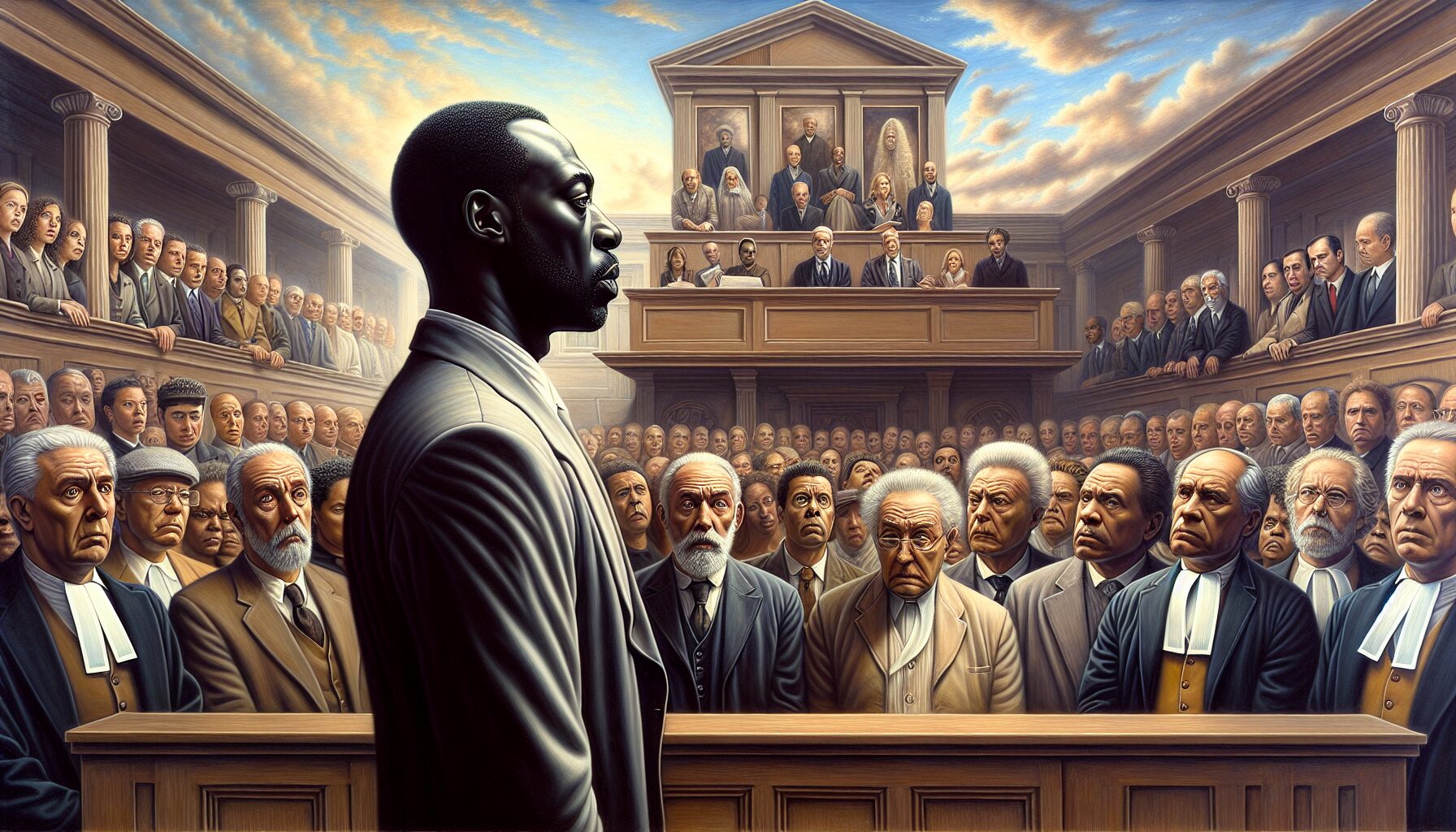
  • The Trial of the Sincere — When faithfulness is mistaken for defiance

    The Trial of the Sincere — When faithfulness is mistaken for defiance

    In today’s secular landscape, individuals who stand firm in their faith often find their sincerity misinterpreted as defiance. This phenomenon, which seems more pronounced in certain cultural contexts, raises important questions about the balance between religious conviction and societal expectations.

    The idea of being sincere in one’s beliefs is deeply rooted in many religious traditions. For instance, in Christianity, the Apostle Paul writes, “Let love be genuine. Abhor what is evil; hold fast to what is good” (Romans 12:9, ESV). This passage emphasizes an earnest devotion to one’s core beliefs, irrespective of external pressures.

    “If we are faithless, He remains faithful, for He cannot disown Himself.” (2 Timothy 2:13, NIV)

    However, this earnestness can sometimes be viewed as opposition, especially when personal beliefs clash with dominant cultural narratives. Here, we explore why this misinterpretation occurs and how individuals can navigate this challenging landscape.

    The Roots of Misinterpretation

    • Cultural Differences: In a rapidly globalizing world, diverse belief systems often intersect, leading to misunderstandings. What one group views as steadfastness, another may perceive as obstinacy.
    • Historical Context: Throughout history, religious fervor has occasionally led to conflict and division, shaping the public perception of faithfulness as potential rebellion. The Reformation or the Crusades serve as historical examples of religious conviction leading to societal upheaval.
    • Secularization: According to a report from the Pew Research Center, the decline of organized religion has cast traditionally religious practices in a new light, where devout commitment can seem anachronistic or even contrarian.

    When Sincerity Breeds Misunderstanding

    Misinterpretation of sincerity as defiance can occur in various scenarios:

    • Workplace Challenges: A person refusing to work on a sacred day may face challenges. For instance, an employee might insist on observing the Sabbath, which could be perceived wrongly as a lack of commitment to their job.
    • Public Discourse: In debates over contentious issues like abortion or marriage, those with religious objections may be seen as backward or intolerant, rather than principled.
    • Interpersonal Relationships: Families with mixed belief systems might struggle when one member’s religious practices are seen as stubbornness rather than devotion.

    Navigating the Terrain of Faith and Society

    For those who find themselves caught in the crossfire of misunderstanding, several strategies can be particularly effective:

    • Dialogue and Education: Engaging in open dialogues can bridge gaps. As sociologist Peter L. Berger notes, “To exist is to be in a situation” (“The Social Construction of Reality”). Understanding others’ situational contexts can demystify perceived defiance.
    • Empathy and Patience: Adopting an empathetic approach can ease tensions. Being patient and explaining one’s beliefs without defensiveness helps foster mutual respect.
    • Community Support: Religious communities often provide a sanctuary for individuals experiencing societal misinterpretation. These networks can offer comfort and collective strength.
    • Balancing Compromise and Conviction: Finding a middle ground does not necessarily entail compromising values. Rather, it’s about maintaining integrity while respecting differing views.
    • Legal Protections: In many countries, legal frameworks are in place to protect religious expression. Familiarity with these laws can empower individuals to assert their rights without fear.

    Despite the challenges, it’s crucial to note that the sincerity of faith carries profound value not only for the individual but also for society. History is replete with examples of faith-driven individuals who, while misunderstood initially, eventually inspired transformative change. From Martin Luther King Jr. to Mahatma Gandhi, these leaders exemplified how steadfast faith can serve as a beacon for justice and progress.

    Conclusion

    In an era where personal beliefs are aired in the court of public opinion more than ever, understanding the fine line between sincerity and perceived defiance is essential. For the faithful, the challenge lies not in altering their convictions but in finding the wisdom to express them in ways that promote understanding and coexistence.

    In the words of Mahatma Gandhi, “Faith must be enforced by reason. When faith becomes blind, it dies.” True understanding blossoms not through confrontation but through sincere, reasoned dialogue.