Tag: societies

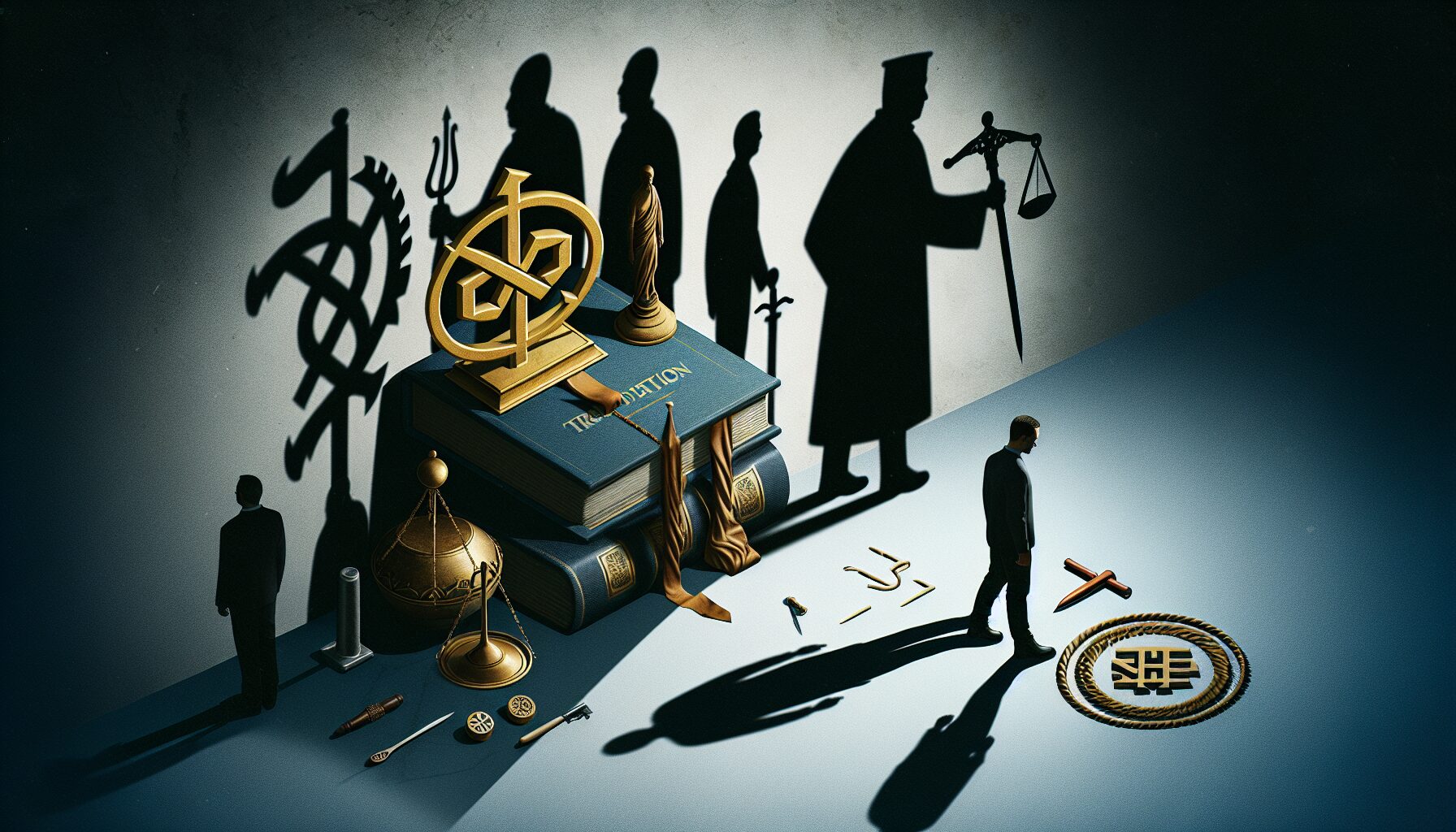
  • The War on Memory – Erasing tradition to control the future

    The War on Memory – Erasing tradition to control the future

    The War on Memory: Erasing Tradition to Control the Future

    In a world where history is increasingly under scrutiny, the concept of memory is emerging as a battleground for control over the future. The systematic alteration or erasure of historical narratives is a phenomenon that has profound implications on societies worldwide. This “war on memory” raises the question: how does manipulating tradition shape our future?

    The Power of Memory

    Memory is a fundamental component of human identity and cultural continuity. According to Sandis, “Memory is what shapes us. Memory defines our perception of the present, and, consequently, it dictates our understanding of the future” (Philosophy Foundation). The manipulation of memory, thus, is not merely an alteration of past events but an avenue to control collective consciousness.

    Erasing Traditions

    • Educational Curriculums: By revising history textbooks, educational systems can shape young minds. What is taught—and what is omitted—plays a critical role in defining societal beliefs.
    • Cultural Monuments and Symbols: The removal or destruction of cultural symbols often represents an attempt to erase uncomfortable or inconvenient histories.
    • Digital Memory: In the digital age, information can be altered, deleted, or promoted at unprecedented speeds. As George Orwell famously suggested, “He who controls the past controls the future.” (1984).

    Consequences of Erasure

    When societies lose touch with their traditions, they risk losing their identity. This disconnection can lead to cultural homogenization and loss of diversity. Furthermore, the rewriting or erasure of history to fit contemporary narratives can result in skewed realities that may gloss over the lessons learned from past mistakes.

    ”Those who cannot remember the past are condemned to repeat it.” — George Santayana

    Resisting the Erasure

    Communities around the globe are striving to restore and preserve their cultural heritage, advocating for more inclusive and accurate historical narratives. By remembering pluralistic histories and honoring diverse traditions, societies can hope to foster more robust and comprehensive cultural identities.

    The war on memory is not merely a fight for the past; it is a struggle for the future. As societies grapple with their histories, fostering a critical understanding of memory’s power becomes crucial for building a future that acknowledges rather than denies its past.


  • Sacred Deviance – How normal belief is reframed as threat

    Sacred Deviance – How normal belief is reframed as threat

    Sacred Deviance: How Normal Belief is Reframed as Threat

    Beliefs and belief systems have always been at the heart of human societies. They shape identities, forge communities, and sometimes create divides. In contemporary discourse, there’s an intriguing phenomenon where standard beliefs are often reframed as threats. This article delves into this “sacred deviance,” exploring how societal norms are turned on their heads and why this redefinition poses both challenges and opportunities for modern culture.

    The Context of Sacred Deviance

    Sacred deviance refers to the process through which long-held beliefs and traditions are reinterpreted or even vilified. This is not just a modern-day occurrence; history is replete with examples where societal norms have shifted dramatically, often leading to conflict or societal transformation.

    Understanding Deviance in a Cultural Context

    Deviance traditionally refers to behaviors or beliefs that deviate from social norms. However, what constitutes “deviant” is highly subjective and context-dependent. As Emile Durkheim, a renowned sociologist, famously stated:

    “The very fact of labeling something as abnormal demonstrates society’s collective agreement on a ‘norm.’”

    Thus, when society shifts, what was once considered normative can easily be reclassified as deviant.

    The Relativity of Threat

    The perception of threat arises when the basic ideals that define societal norms are challenged. With the rise of globalization and the digital age, exposure to diverse belief systems has intensified, resulting in a more pluralistic world.

    • Globalization: The integration of cultural practices from various parts of the world into daily life has led to a questioning of the universality of certain beliefs.
    • Digital Transformation: Online platforms allow for the rapid dissemination of information, often unfiltered, leading to challenges against the deeply held beliefs.

    This phenomenon is vividly described in The Atlantic, where it is noted that social media has created echo chambers, amplifying certain ideologies that can clash with traditional norms.

    Examples of Reframed Beliefs

    1. Religious Beliefs

    Religion has always been a cornerstone of human identity. Across cultures, religious beliefs vary widely, from deeply orthodox practices to more liberal interpretations. Yet, in many societies, the religious landscape is shifting.

    • Christianity: In some Western societies, traditional Christian values facing challenges from secular and progressive ideologies are often labeled as archaic or even extremist.
    • Islam: Muslims practicing certain aspects of their faith in non-Muslim-majority societies may face suspicion, resulting in their beliefs being construed as threats.

    Karen Armstrong, a scholar of comparative religion, states:

    “Religion isn’t about believing things. It’s ethical alchemy. It’s about behaving in a way that changes you, that gives you intimations of holiness and sacredness.”

    2. Political Ideologies

    Political beliefs, especially those on the extremes of the spectrum, are often reframed as threats. This is particularly true when:

    • Left-wing Ideologies: Policies aimed at wealth redistribution or environmental reform can be seen as threats to capitalist societies.
    • Right-wing Ideologies: Policies emphasizing nationalistic values may be seen as exclusionary or even xenophobic in increasingly multicultural settings.

    In a thought-provoking piece by The New York Times, it is discussed how the rise of populism has both challenged and reshaped democracy in various parts of the world (source).

    3. Cultural Norms

    Culture is dynamic, and what was once widely accepted can become contentious or even offensive. Consider:

    • Gender Roles: Traditional gender roles are being questioned, and those who advocate for a return to such roles may be perceived as undermining progress towards equality.
    • Marital Structures: Practices like polygamy or arranged marriages, accepted in certain cultures, might face resistance or legal challenges in others.

    A fascinating examination of these changes is outlined in an article by the BBC, highlighting how varying cultural norms influence our perception of relationships and commitments.

    The Impact of Reframed Beliefs

    This reframing has profound implications:

    • Social Tensions: When beliefs are misframed as threats, it can lead to increased polarization and societal division.
    • Identity Crisis: As long-held beliefs come under scrutiny, individuals may face crises of identity, questioning their place within societal structures.
    • Opportunity for Dialogue: On the upside, this reframing forces discussion, encouraging societies to reevaluate and redefine values.

    Yuval Noah Harari, in his book Sapiens, addresses the fluidity of human constructs, noting that “Large-scale human cooperation is based on myths,” urging us to question and recalibrate these myths if needed (source).

    Conclusion

    As societies continue to evolve, the reframing of normal beliefs as threats will likely persist. This sacred deviance forces a reevaluation of established norms and invites a deeper understanding of what underlies societal fears and aspirations. Ultimately, how societies navigate this transformation may well determine the future of communal living and collective identity.

    By embracing this challenge, we pave the way for a world that is more inclusive, tolerant, and understanding—a world where differing beliefs are not seen as threats but as opportunities for growth and enrichment.

  • The Price of Dissent – Social Consequences of Independent Thought

    The Price of Dissent – Social Consequences of Independent Thought

    In the fabric of societal norms and mores, the thread of dissent weaves a pattern that disturbs the symmetry yet enriches the texture. Independent thought, while often celebrated as a hallmark of progressive societies, carries its own cost in personal and professional domains. This article explores the multifaceted impacts of dissent, addressing questions about its necessity, the social costs incurred, and the individuals who stand as exemplars of its importance.

    The Necessity of Dissent

    Historically, progress has often hinged on those willing to question the status quo. Philosopher John Stuart Mill famously remarked, “If all mankind minus one were of one opinion, mankind would be no more justified in silencing that one person than he, if he had the power, would be justified in silencing mankind.” Mill’s advocacy for freedom of speech underscores the notion that dissent is essential for intellectual diversity and societal improvement.

    Major movements in human history, from the Renaissance to the civil rights movement, were catalyzed by individuals who dared to think differently. These moments underscore the idea that dissent is not merely personal stubbornness but a critical component of collective evolution.

    The Social Costs of Being a Dissenter

    While dissent is fundamental to societal progress, the personal cost can be steep. Dissenters often face isolation, ridicule, and even persecution. Consider the case of Galileo Galilei, who faced the Inquisition for his support of heliocentrism. While his work eventually became foundational to modern astronomy, the immediate consequences were dire, leading to house arrest and a life marked by conflict with authorities.

    In modern contexts, whistleblowers and activists today often encounter similar pushbacks. Edward Snowden, for example, faced legal and social backlash after leaking classified information about the U.S. government’s surveillance programs. Although lauded by some as a hero and vilified by others as a traitor, Snowden’s story highlights the precarious balance between public good and personal sacrifice.

    Professional Repercussions

    In professional environments, dissent can lead to what is known as “career suicide.” Creative industries might celebrate out-of-the-box thinking, but even here, stepping too far can lead to marginalization. Employees who question company policies, such as those related to environmental impact or ethical concerns, may find themselves sidelined.

    “In any bureaucracy, there’s a natural tendency to sacrifice the individual who points out the problem, rather than deal with the problem itself.” — Harvard Business Review

    Organizations often prioritize cohesion and operational efficiency over individual expression, making it risky for employees to voice concerns or propose radical changes. This reality begs the question: How can organizations foster environments where dissent is regarded as a catalyst rather than a disruption?

    Cultural and Social Isolation

    Beyond the professional arena, independent thought can lead to social alienation. Societies with rigid hierarchies or strong cultural norms may view dissenters with suspicion or hostility. This is particularly true in communities where tradition holds sway over innovation. To publicly challenge religious or social norms in such settings may result in ostracism or even violence.

    Consider the situation faced by women’s rights advocates in countries with strict gender roles. Often, these individuals risk not only their social standing but their physical safety to promote change. Organizations such as Amnesty International regularly report cases where advocates face imprisonment or worse, highlighting the severe personal costs involved.

    Celebrating the Brave Few

    Despite these challenges, the contributions of dissenting voices are invaluable. They bring to light uncomfortable truths and challenge complacency, driving societies forward even when the immediate repercussions seem daunting. From Martin Luther King Jr. to Malala Yousafzai, history celebrates those who paid the price of dissent for the greater good.

    These figures remind us that while dissent can be a lonely road, it is also a path paved with the potential for monumental change. As Albert Einstein noted, “Great spirits have always encountered violent opposition from mediocre minds.”

    Conclusion: A Call for Balance

    Ultimately, the price of dissent should not overshadow its importance. Societies must strive to create conditions where independent thought is not only tolerated but welcomed. By building cultures that encourage discourse and respect differences, we pave the way for innovation and improvement.

    In this balancing act, both individuals and organizations have roles to play—to listen, to challenge respectfully, and to protect the voices that disrupt the status quo for the benefit of all.

  • Tradition’s Shadow — When preservation becomes oppression

    Tradition’s Shadow — When preservation becomes oppression

    Throughout human history, traditions have served as the backbone of cultures and societies around the globe. They provide a sense of belonging and continuity, offering a link to the past while shaping the future. However, as these cultural rituals and practices transcend generations, there’s an increasing need to scrutinize when the preservation of tradition becomes a tool for oppression rather than cultural enrichment.

    The Role of Tradition in Society

    Traditions, by their very nature, are steadfast. According to anthropologist Clifford Geertz, they involve “stories we tell ourselves about ourselves.” As these stories are passed down, they imbue individuals with a sense of identity and shared purpose.

    “There is an invisible thread that binds us to the past, ensures our present, and secures our future.” – Unknown

    Traditionally, this thread has been perceived as positive, painting culture with the brush of unity and cooperation. However, the rigidity of these traditions can sometimes become a mechanism of control, used by those in power to maintain the status quo.

    When Culture Becomes Constraining

    • Gender Roles: Many traditions continue to reinforce archaic gender roles, limiting the potential and freedom of women and men alike. For instance, in some cultures, outdated beliefs about “appropriate” roles for women still prevent them from pursuing careers.
    • Religious Practices: In certain societies, religious traditions can mandate strict adherence to practices that suppress individual freedoms. Religious laws may dictate behavior, dress codes, and even legal systems.
    • Caste and Class Systems: Numerous cultures perpetuate systems that stratify society based on hereditary status. These systems can ostracize large groups of people and deny them equal opportunities.

    The Clash With Modern Values

    As global connectivity expands and progressive values spread, traditions that once seemed untouchable are under scrutiny. Young people worldwide are increasingly questioning practices that, while traditional, run contrary to modern human rights principles. As The Times of India reported, many Indian youth are challenging outdated caste norms through education and social collaboration.

    In many cases, this confrontation fosters conflict between generations. Older generations, often set in their ways, fear the loss of cultural identity and power. Conversely, younger generations may see the adherence to outdated traditions as a pathway to injustice and inequality.

    Finding a Balance

    Despite these tensions, it’s crucial to acknowledge that abandoning all traditions is neither feasible nor desirable. The key lies in adaptation and evolution.

    • Inclusion of Diverse Voices: Encouraging open dialogues and including voices from various demographics can help evolve traditions in ways that respect both heritage and contemporary values.
    • Focus on Core Values: Reassessing traditions to focus on the core values that promote unity, such as cooperation and mutual respect, can help reinforce positive aspects while shedding oppressive elements.
    • Innovation: Embracing technological and societal innovations can introduce new, inclusive traditions that resonate with modern life.

    Cultural Preservation without Oppression

    The challenge lies in preserving cultural identity without succumbing to the pitfalls of oppression. As societies become more connected, there remains a unique opportunity to redefine traditional values in ways that honor the past while embracing the future.

    In the words of Laurence W. Mitchell, “Culture is not a fixed set of values but a dynamic and fluid collection of practices.” By acknowledging this fluidity, societies can navigate the complexities of tradition and progress hand in hand.

    Ultimately, the path forward requires a delicate balance—a recognition that while preservation is important, it should never come at the cost of oppression. By giving voice to diverse perspectives and prioritizing inclusivity, the shadow of tradition can transform into a guiding light for the future.

  • Tradition as Fortress — How protection becomes separation

    Tradition as Fortress — How protection becomes separation

    Throughout history, traditions have been the bedrock upon which countless civilizations have constructed their identity and cohesiveness. They serve as a collective memory, offering a sense of permanence in an ever-changing world. However, as these customs evolve into steadfast fortresses that defend a culture’s heritage, they may also inadvertently result in isolation and alienation. This complex interplay between protection and separation merits deeper exploration.

    “A nation’s culture resides in the hearts and in the soul of its people.” — Mahatma Gandhi

    Traditions provide a sense of belonging and continuity. They connect generations, fusing past, present, and future. Such practices reinforce community bonds and offer individuals a refuge in the familiar. However, as traditions crystallize, they often become less inclusive and more exclusive, creating barriers to understanding and acceptance.

    The Role of Tradition as a Protective Fortress

    • Preservation of Identity: Traditions serve as a vehicle for cultural expression. They maintain linguistic diversity, culinary uniqueness, religious practices, and other cultural identifiers that define a community.
    • Stability and Continuity: In times of turmoil, traditions can be a source of comfort, offering a framework of stability amidst chaos.
    • Value Transmission: Through customs, values are effectively transmitted from one generation to the next, ensuring the survival of ethical and moral codes.

    While these aspects underscore the importance of traditions as protective mechanisms, they can simultaneously act as barriers that keep others out, generating an ‘us-versus-them’ mentality that is resistant to incorporating new thoughts or practices.

    When Tradition Becomes a Wall

    In various societies, deeply entrenched traditions have led to the marginalization of minority groups and newcomers. The reinforcement of a singular cultural narrative often means that diverse or dissenting voices are not only ignored but actively silenced.

    • Cultural Erosion: When a society clings too strictly to its traditions, it may resist necessary change, leading to cultural stagnation.
    • Exclusivity: Traditions can create insular communities, where entry is barred to those who do not conform to established norms.
    • Hampering Progress: Some traditions, despite their historical significance, may hinder social progress and integration by perpetuating outdated norms and practices.

    This duality of protection and separation is evident in numerous instances around the world, where the urge to preserve cultural heritage leads to conflicts of identity and belonging within a multicultural world. For example, traditional roles and expectations in certain societies have created gender disparities and social stratification that seem at odds with modern human rights standards.

    A Path Forward: Balancing Tradition with Inclusivity

    Given the intricate tapestry of benefits and drawbacks that traditions present, how can societies negotiate a balance? Here are some strategies for opening the gates of these traditional fortresses:

    • Adaptive Renewal: By encouraging a culture of adaptive renewal, traditions can evolve, allowing new elements to merge with the old, reflecting the continuous journey of cultural identity.
    • Dialogue and Education: Open dialogue and education about other cultures’ customs can reduce prejudices and foster inclusivity.
    • Embracing Fluidity: Recognizing that identity is fluid, not fixed, can help societies embrace multiple cultural inputs without feeling threatened.

    As famed writer Haruki Murakami once noted, “When you come out of the storm, you won’t be the same person who walked in. That’s what the storm is all about.” Murakami’s words remind us that change is a part of cultural evolution, and embracing this change does not necessarily mean losing one’s cultural grounding but, rather, enriching it. Explore more quotes.

    Conclusion

    While traditions have the potential to act as protective fortresses safeguarding our cultural legacies, they should never become impenetrable walls that prevent growth and harmony. The challenge lies in reimagining traditions for the modern world, where the preservation of cultural identity goes hand in hand with inclusivity and progress. Only then can traditions continue to enrich and fortify societies in a manner that brings people together rather than keeping them apart.