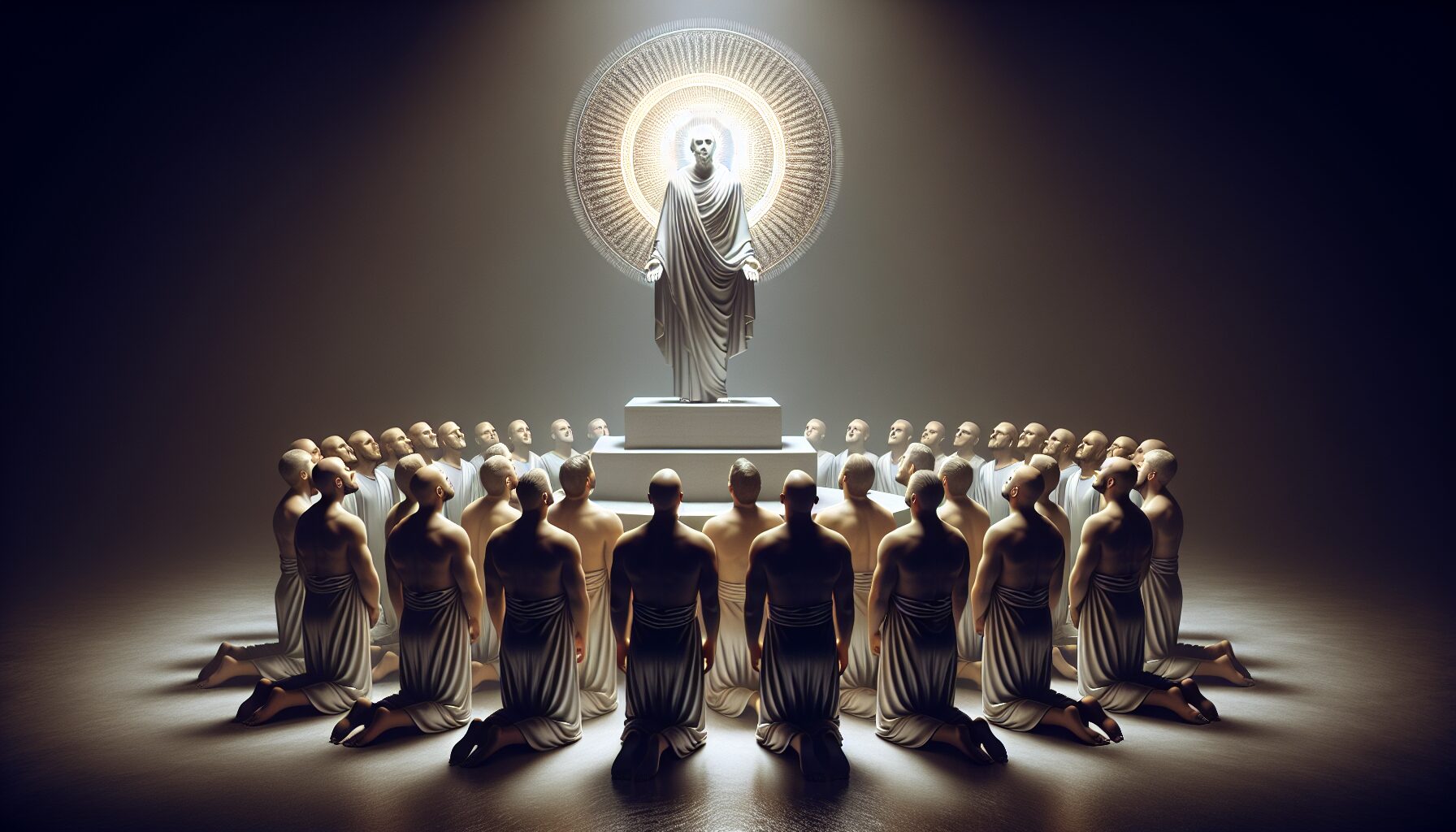
Tag: often

  • The Anatomy of Scapegoating – Why Groups Need Someone to Blame

    The Anatomy of Scapegoating – Why Groups Need Someone to Blame

    Scapegoating is a common practice in human society, where a person or group is unfairly blamed for problems or misfortunes. This phenomenon serves a variety of psychological and social functions, which are deeply rooted in the human psyche and the fabric of communities.

    Psychological Comfort

    At its core, scapegoating provides a sense of relief and psychological comfort. According to Dr. Todd Kashdan, a professor of psychology at George Mason University, “Scapegoating allows individuals to attribute their own shortcomings, failures, or anxieties onto others, thus protecting their self-esteem” (Psychology Today).

    When faced with complex or uncontrollable events, such as economic downturns or social upheaval, blaming an external entity simplifies the situation. It provides a perceived solution to a problem, which reduces uncertainty and anxiety among group members.

    Social Cohesion

    Scapegoating also plays a significant role in maintaining social cohesion. By identifying a common enemy or scapegoat, a group often strengthens its collective identity. This process often includes narratives and stories that highlight the “faults” of the scapegoated party, fostering a sense of togetherness among the rest, as they unite against a common adversary.

    “Groups often feel the need to define themselves against some ‘Other,’ as a means of self-definition and cohesion,” notes sociologist Dr. Eric Reger in his study on group dynamics (Journal of Social Psychology).

    Political And Cultural Dynamics

    • Political Manipulation: Scapegoating is a powerful tool in political strategy. Leaders often use it to divert attention from issues and consolidate power by rallying support against a targeted individual or group.
    • Cultural Narratives: History is rife with examples where entire communities have been blamed for societal problems, from the witch hunts of the 16th century to the 20th-century anti-immigrant sentiments.

    While the impulse to scapegoat may be deeply ingrained, it is essential for societies to recognize its pitfalls. Scapegoating can lead to division, discrimination, and even violence. By fostering a culture of understanding and empathy, communities can work towards more constructive solutions to their issues.

    In conclusion, scapegoating is a multifaceted phenomenon with deep psychological, social, and political roots. As societies evolve, recognizing and addressing the urge to blame others can be vital to fostering tolerance and unity in an increasingly interconnected world.

  • The Cult of Control – How Leaders Manufacture Loyalty

    The Cult of Control – How Leaders Manufacture Loyalty

    Throughout history, the phenomenon of leaders cultivating unwavering loyalty has recurrently emerged as a potent tool in the quest for power. The intricate dance of control and loyalty serves not only as a foundation for leadership but also as a mechanism for maintaining influence and dominance over groups. This article delves into the strategies and psychological manipulations employed by leaders to forge and sustain loyalty among their followers.

    The Foundations of Influence

    Effective leadership often hinges on a delicate balance of characteristics, including charisma, communication skills, and psychological insight. Leaders employ a variety of techniques to deepen followers’ loyalty, and these methods can often border on psychological manipulation. From ancient empires to modern-day political regimes, the core foundations of influence have remained largely the same.

    • Charisma and Communication: Charismatic leaders possess an extraordinary ability to connect with their audience, often utilizing persuasive language and emotive storytelling to create a shared sense of purpose and community. Barack Obama, during his presidential campaigns, exemplified this by using inspiring rhetoric that resonated deeply with a wide demographic. As Forbes notes, charisma can “influence people by capturing their imaginations.”
    • Symbols and Rituals: Many leaders understand the power of symbols and rituals, crafting them to create a sense of belonging and identity. The use of flags, emblems, and uniforms fosters unity and reinforces a shared identity, as seen in numerous organizations, from military units to religious movements.

    Psychological Manipulations

    To deepen and maintain loyalty, leaders often employ psychological tactics that manipulate perception and engender supporters’ trust and devotion.

    • Creating a Common Enemy: Uniting a group against a perceived external threat is a timeless tactic used to strengthen internal bonds. By cultivating an “us versus them” narrative, leaders can solidify group identity and allegiance. This technique was conspicuous during the Cold War, where tensions between opposing ideologies served to rally and polarize supporters on both sides.
    • Cognitive Dissonance: As per Leon Festinger’s theory of cognitive dissonance, when individuals are presented with conflicting information or choices, they often change their beliefs to align with their actions, reducing discomfort. Leaders exploit this by gradually introducing new ideologies or practices that followers justify to remain consistent with group loyalty. This is evident in closed communities, such as cults, where drastic shifts in dogma are more readily upheld.

    Social Proof and Conformity

    Human nature is inherently social, and the desire to conform is a powerful motivator. Leaders leverage social proof—the idea that individuals look to others for guidance in behavior—as a mechanism to maintain control. As Psychology Today discusses, “people are more likely to do or believe something if they see others doing it.”

    “Individuals will change their behavior to align with the actions and expectations of a group, particularly when uncertainty is high or when leaders appear to have strong conviction.”– Psychology Today

    • Encouraging Public Commitment: By encouraging followers to publicly commit to beliefs or actions, leaders harness the powerful psychological tendency to remain consistent with one’s declarations. Social media platforms have become instrumental in broadcasting public endorsements and declarations of support, further cementing these commitments.
    • Utilizing Popular Opinion: Highlighting endorsements by influential members within a community or industry can create a bandwagon effect, drawing others into conformity. This is evident in political campaigns where celebrity endorsements are often used to sway public opinion.

    The Role of Reward and Punishment

    Another critical component of manufacturing loyalty involves a strategic balance of reward and punishment. Rewards can include promotions, privileges, or social acceptance, while punishments often involve ostracism, disfavor, or direct penalties.

    • Positive Reinforcement: By encouraging specific behaviors through rewards, leaders can foster loyalty. This practice is widespread in corporate settings, where employees are motivated by the prospect of bonuses, recognition, and career advancement.
    • Fear and Intimidation: Conversely, maintaining control through fear is another tactic employed by leaders. By threatening negative consequences or fostering a culture of intimidation, groups can be kept in line, as was historically noted in authoritarian regimes.

    Ethical Considerations

    While control strategies can effectively galvanize loyalty, they also raise significant ethical concerns. The manipulation of truth, emotional exploitation, and coercion can infringe upon individual autonomy and well-being, leading to harmful consequences. As George Orwell once articulated, “The essence of being human is that one does not seek perfection, that one is sometimes willing to commit sins for the sake of loyalty.”

    Understanding these manipulations empowers individuals and organizations to foster loyalty through more ethical and transparent means, ensuring resilience against the darker aspects of control.

    Conclusion

    The complex interplay of control and loyalty continues to shape the landscape of leadership across various domains. While the tactics employed by leaders to manufacture loyalty may serve their immediate goals, they also pose an ethical dilemma that challenges the principles of autonomy and freedom. Ultimately, fostering genuine loyalty should emerge from mutual trust, respect, and ethical leadership.

  • Salt in the Spirit – Why Outcasts Often Become the Deepest Seekers

    Salt in the Spirit – Why Outcasts Often Become the Deepest Seekers

    Salt in the Spirit: Why Outcasts Often Become the Deepest Seekers

    The journey of self-discovery and spiritual seeking often finds its roots in the most unlikely of places. History and literature have long celebrated the pilgrimage of the outcast, suggesting that those who exist on the fringes of society tend to embark on a profound quest for meaning. But why is this the case? Why do the marginalized and isolated often become the deepest seekers?

    The Call of the Unseen

    Outcasts, by the nature of their exclusion, often develop a heightened sense of introspection. As social scientist Brené Brown notes, “Connection is why we’re here. We are hardwired to connect with others, it’s what gives purpose and meaning to our lives” (HuffPost). When deprived of these connections, many turn inwards, seeking the solace and understanding they cannot find externally.

    In this internal landscape, the search for spiritual truth and personal meaning becomes a refuge. Seclusion, whether self-imposed or circumstantial, provides the quiet necessary for deep reflection and the exploration of one’s spiritual path.

    A Journey Born from Pain

    Pain has long been a catalyst for transformation. The great spiritual teacher Eckhart Tolle explains, “The primary cause of unhappiness is never the situation but your thoughts about it” (Eckhart Tolle). This insight into pain becomes a guiding light for many who feel the sting of rejection and isolation.

    “The wound is the place where the Light enters you.” – Rumi

    For outcasts, pain is often a constant companion, yet it is this very pain that encourages a reevaluation of life’s deeper truths. Through suffering, outcasts are uniquely positioned to question the status quo of societal norms and values, seeking instead a spiritual grounding that brings peace amidst turmoil.

    Embracing the Role of the Wanderer

    Throughout history, wanderers and pilgrims have left behind the comforts of their known world in search of higher truths. Outcasts naturally adopt this role, not necessarily by choice but by circumstance. Whether it’s the desert fathers who fled to the wilderness or the sages of ancient East who sought enlightenment through solitude, the notion of separation from society to find spiritual clarity is a recurring theme in spirituality.

    • Siddhartha Gautama: Before becoming the Buddha, Siddhartha left a life of luxury to seek enlightenment through self-imposed exile and meditation.
    • Saint Francis of Assisi: After a dramatic conversion, he embraced a life of poverty and exclusion, founding a spiritual movement.
    • Emily Dickinson: The reclusive poet who transformed her solitary life into a rich tapestry of poetry exploring themes of spirituality and existence.

    In each of these cases, the struggle faced by these individuals outside the bounds of societal norms acted as the crucible for their spiritual insights.

    Rejection as a Form of Freedom

    Paradoxically, the rejection that defines an outcast can also free them from societal expectations, allowing space for authentic spiritual exploration. The lack of societal constraints can break down imposed narratives, offering a blank canvas upon which to craft a personal and unique path to spiritual awakening.

    Thomas Merton, a Trappist monk and author, eloquently stated, “The greatest need of our time is to clean out the enormous mass of mental and emotional rubbish that clutters our minds” (Thomas Merton Center). Outcasts often engage in this decluttering, freed from conventional paths and open to novel experiences and thoughts.

    Navigating Inner and Outer Realms

    The spiritual path is not solely an internal journey. It involves navigating both inner realms and the external world. By living on society’s edge, an outcast perceptively walks between these worlds, often seeing truths hidden from those ensconced in societal comfort.

    In embracing their status, outcasts can become conduits for renewal, knowers of paths not taken, and witnesses to the resilience of the human spirit. As spiritual seekers, they possess a unique viewpoint that can shed light on both personal and collective spirituality.

    Conclusion

    The journey of the outcast from the margins to the center of spiritual discovery showcases the transformative power of solitude, pain, and societal rejection. These factors combine to form a fertile ground for profound spiritual inquiry. As seekers of deeper truth, outcasts embody the spirit of exploration and transformation, highlighting that often the most profound awakenings occur in those who start from seemingly humble beginnings.

  • Invisible Chains – How Social Pressure Enforces Obedience

    Invisible Chains – How Social Pressure Enforces Obedience

    In the intricate web of societal interactions, individuals often find themselves bound by invisible chains that manipulate behavior without physical constraints. These chains – woven from expectations, cultural norms, and peer pressure – effectively enforce adherence to societal rules, even in absence of monitoring or enforcement.

    The Nature of Social Pressure

    Social pressure, often subtly exerted, thrives in various forms and environments, influencing decisions, beliefs, and behaviors. It stems from our innate desire to belong and be accepted within a group. As Stanley Milgram, a renowned psychologist, famously noted: “The social psychology of this century reveals a major lesson: often, it is not so much the kind of person a man is as the kind of situation in which he finds himself that determines how he will act.”

    Mechanisms of Social Influence

    • Conformity: The tendency to align one’s beliefs and behaviors with those of a group constitutes a powerful component of social influence. Classic experiments, such as those conducted by Solomon Asch, demonstrate how individuals often conform to group consensus even when it conflicts with personal judgment.
    • Obedience: As elucidated by Milgram’s experiments, obedience to authority can compel individuals to act against their moral compass. Social structures heavily invest in the concept of hierarchical obedience, which, while maintaining order, also suppresses dissent.
    • Peer Pressure: From adolescence onwards, the influence of one’s peers becomes a dominant force. The desire to be accepted can lead individuals to adopt behaviors and attitudes they might inherently oppose.
    • Social Norms: These unwritten rules of behavior, deeply embedded in culture, dictate the “acceptable” conduct. Breaking these norms often leads to social sanctions like ostracism or ridicule.

    The Role of Social Media

    In the digital age, social pressure extends beyond physical interactions and permeates the online world. Platforms like Facebook and Twitter have transformed how social pressure manifests, enabling viral trends to quickly enforce conformity on a global scale. A Psychology Today article highlights how algorithms tend to amplify popular opinions, creating echo chambers that can enforce stringent social norms and limit exposure to diverse perspectives.

    Social Pressure in Professional Environments

    In workplaces, social pressure is a powerful tool for enforcing conformity. From dress codes to corporate culture, individuals often suppress personal preferences for the appearance of unity and professionalism. The fear of social isolation or job loss can override personal convictions, as noted in a Harvard Business Review study which observed that strong corporate cultures could enhance performance but also stifle innovation by enforcing homogeneity.

    Positive Aspects of Social Pressure

    While frequently depicted as a negative force, social pressure can also foster beneficial outcomes:

    • Encouraging Pro-Social Behavior: It can promote acts of kindness, cooperation, and community engagement.
    • Upkeeping Social Order: By reinforcing norms and laws, social pressure helps maintain order and reduce chaos in societies.
    • Promoting Healthy Habits: Campaigns that leverage social norms to advocate for healthier lifestyles and behaviors demonstrate the positive potential of social pressure.

    Breaking Free from Invisible Chains

    Recognizing the influence of social pressure is a crucial step towards autonomy. Psychological resilience, awareness, and a strong sense of personal values empower individuals to make conscious choices rather than succumbing to automatic compliance.

    As Ralph Waldo Emerson wisely stated, “For non-conformity, the world whips you with its displeasure.” Yet, to be one’s self in a world that is constantly trying to make you something else is the greatest accomplishment.

    Conclusion

    Invisible chains may bind, but they are not unbreakable. By understanding the power of social pressure, individuals can navigate the delicate balance between conformity and autonomy. Awareness, critical thinking, and courage to stand for one’s principles are the keys to overcoming the pervasive forces that compel obedience, enabling a society where diversity in thought and action can truly flourish.

    For a deeper dive into the psychological mechanisms of social pressure, one may explore Simply Psychology’s resources on social roles and norms. Understanding these concepts is pivotal in recognizing the subtle controls exerted by social structures and the potential for personal agency within them.

  • When Faith Becomes a Weapon – Power Dynamics in Closed Groups

    When Faith Becomes a Weapon – Power Dynamics in Closed Groups

    In the complex interplay between faith and power, closed religious or spiritual groups often present a unique microcosm that reveals how belief systems can be manipulated to consolidate control. This dynamic is particularly evident in groups characterized by strong hierarchical structures where faith not only serves as a spiritual compass but also as a powerful tool for governance and, sometimes, oppression.

    The Entrenchment of Power

    • Authoritarian Leadership: Leaders within closed groups frequently possess an outsized influence over followers, often justified by spiritual pretexts. This authority is not just based on religious teachings but is also bolstered by the perception of divine endorsement. The leader’s word becomes inarguable truth.
    • Control Over Information: Closed groups often restrict external influences and manage what information reaches followers. According to Psychology Today, “cults and other closed groups achieve control in part through limiting the information available to their members.” This control ensures that dissent is minimized, and the group’s narrative remains unchallenged.

    Manipulation of Belief

    The power dynamics in these groups are intricately tied to the manipulation of faith. Beliefs are often exaggerated or distorted to serve the agenda of those in control. This manipulation can manifest as:

    • Guilt and Fear: Followers may be persuaded to believe that leaving the group or questioning the leader is synonymous with spiritual failure or eternal damnation. This emotional blackmail ensures compliance and discourages critical thinking.
    • Us vs. Them Mentality: An insular mindset is perpetuated where the group sees itself as the sole possessor of truth, and outsiders are viewed with suspicion or hostility. This fosters a sense of community but also isolation from differing perspectives.

    The Aftermath and Beyond

    For individuals who manage to break away from such environments, there can be significant emotional and psychological aftermaths. According to research by Langone et al., “former members often require considerable support to rebuild their personal identity and worldviews.” Recovery involves disentangling personal beliefs from the dogmatic teachings of their former groups.

    In conclusion, while faith can offer genuine spiritual fulfillment, it becomes problematic when used as a tool for manipulation. Understanding how power dynamics operate within closed groups helps in recognizing warning signs and supporting those seeking to reclaim their autonomy. As society becomes more aware of these dynamics, the hope is for greater empathy and resources to help individuals caught in these power plays of belief.

    “I suppose leadership at one time meant muscles; but today it means getting along with people.” – Mahatma Gandhi

  • Paths Through the Fire – Spiritual Growth Under Systemic Persecution

    Paths Through the Fire – Spiritual Growth Under Systemic Persecution

    Throughout history, many communities have faced systemic persecution, often resulting in profound spiritual transformation. This metamorphosis is not merely a survival mechanism, but a testament to the resilience of the human spirit. Under oppressive regimes or threatening societal structures, the perseverance of faith and spirituality can act as a beacon of hope and a catalyst for profound personal and communal growth.

    Historical Context of Persecution and Spirituality

    Across ages, narratives of persecution—whether due to race, faith, or ideology—have shaped human history. From the early Christians in ancient Rome to Jewish communities during the Holocaust, persecution has consistently tested people’s faith, often leading to remarkable spiritual resilience and renewal.

    • Early Christianity: In the first few centuries AD, Christians faced severe persecution under Roman rule. This was a period where the refusal to worship Roman gods or the Emperor was a punishable offense, often leading to martyrdom. Yet, despite these oppressive conditions, Christianity grew. As Tertullian famously said, “The blood of the martyrs is the seed of the Church.” Christians found solace and strength in their faith, bolstered by communal gatherings often held in secret catacombs.
    • Jewish Resistance in WWII: During the Holocaust, many Jewish communities turned inward to spirituality as a means of survival. Despite the unimaginable horrors, people clung to their faith. Anne Frank notably wrote in her diary, “Where there’s hope, there’s life. It fills us with fresh courage and makes us strong again.”

    Mechanisms of Spiritual Growth Under Persecution

    Systemic persecution puts into motion specific processes that can lead to spiritual growth. These mechanisms are multifaceted, encompassing emotional, psychological, and communal dimensions.

    • Deepened Faith: Persecution often forces individuals to confront the essence of their beliefs. This can lead to a purification of faith, wherein superfluous aspects are discarded, and core beliefs are reinforced.
    • Community Bonding: Shared suffering creates a profound sense of unity. For instance, during apartheid in South Africa, many black communities relied on the church as a place of refuge and collective resilience, strengthening communal ties.
    • Innovative Practices: Systemic oppression often necessitates creative adaptations of spiritual practices. The clandestine nature of worship might lead to the development of secret symbols and codes, thus enriching the faith with new rituals and meanings.

    Case Study: The Bahá’í Community in Iran

    The Bahá’í faith, amidst systemic persecution in Iran, offers a poignant example of spiritual growth under duress. The Iranian government has historically targeted Bahá’ís, denying them basic civil rights, access to education, and employment. Despite these challenges, the Bahá’í community has exemplified resilience and spiritual fortitude.

    “In the moment of utmost joy, the sign of sadness takes shape, and in the moment of utmost sadness, the sign of joy is birthed.”

    — Bahá’u’lláh
    • Educational Resilience: Faced with the denial of higher education, Bahá’ís in Iran established the informal Bahá’í Institute for Higher Education (BIHE). This initiative not only preserved educational pursuits but also reinforced spiritual solidarity and community strength.
    • International Support: The global Bahá’í community has played a significant role in raising awareness and advocating for the rights of Bahá’ís in Iran, which helps reinforce their spiritual convictions and further highlights the power of international solidarity.

    The Transformative Nature of Suffering

    Suffering under persecution is typically an unwanted condition, but it bears the potential to serve as an incubator for spiritual development. By fostering virtues such as patience, courage, and empathy, individuals and communities often emerge more spiritually robust.

    • Endurance and Patience: The endurance required during persecution tests spiritual mettle, often leading to an unshakable patience and inner peace.
    • Empathy and Compassion: Experiencing hardship can heighten empathy for others enduring similar situations, fostering a deeper understanding and compassion that enriches spiritual life.

    Conclusion: A Testament to Human Resilience

    While systemic persecution is invariably challenging, it serves as a striking testament to the inherent resilience and adaptability of human spirituality. The ability to transform dire circumstances into opportunities for profound spiritual growth and community resilience illustrates the indomitable nature of the human spirit.

    Understanding these historical precedents encourages us to recognize the capacity for spiritual triumph in the face of adversity. As societies continue to evolve, these narratives offer hope and guidance, shedding light on the potential paths through the fires of affliction.

    For further reading, explore the accounts of oppressed communities documented in works such as Viktor Frankl’s Man’s Search for Meaning or Elie Wiesel’s Night for deeper insights into the spiritual resilience born from systemic persecution.

  • The Wounds of the Exiled – How Forced Distance Shapes the Soul

    The Wounds of the Exiled – How Forced Distance Shapes the Soul

    The concept of exile carries with it a profound and enduring impact on human identity and emotional well-being. Exile, whether by force or choice, disconnects individuals from their familiar environments, cultures, and social networks. This separation creates deep psychological scars, influencing one’s perception of self and belonging. This article delves into how forced distance, encapsulated in the experience of exile, shapes the soul.

    The Historical Context of Exile

    The phenomenon of exile is as old as human civilization itself. Throughout history, individuals and groups have been cast out from their homelands, often as punishment or as a means of control. From the biblical accounts of Adam and Eve’s expulsion from Eden to political exiles like Napoleon Bonaparte and the Dalai Lama, the theme of forced displacement recurs across time.

    “Exile is not the material pains, it is the loss of something, a sense of belonging, a memory that haunts,” observed the Lebanese-American writer Kahlil Gibran in regard to the spiritual anguish that accompanies physical displacement.

    The Psychological Impact of Exile

    The trauma of exile originates from a rupture—a severance from one’s homeland and cultural symbols, leading to a persistent sense of loss and unresolved mourning. This condition is often accompanied by symptoms of anxiety, depression, and a fractured identity. The internal struggle of longing for a past life while grappling with the harsh realities of a new environment creates a dichotomy within the individual’s soul.

    • Loss of Identity: Exile forces individuals to forge an identity amidst the absence of familiar cultural touchstones. An exile must navigate a foreign society, which can either erode self-confidence or forge resilience through adversity.
    • Isolation and Loneliness: One of the most common experiences reported by exiles is profound loneliness. Displacement from family, friends, and community exacerbates feelings of alienation.
    • Nostalgia and Idealization: The disconnect from one’s home often results in idealizing the past, creating an embellished and comforting portrait of the lost homeland that may not align with reality.

    Exile and Identity Reconstruction

    Despite the potentially devastating effects of exile, an interesting dynamic emerges over time—the reconstruction of identity. This process involves renegotiating one’s understanding of self in a new socio-cultural context.

    Edward Said, a prominent scholar and exile, wrote in his memoir Out of Place: “Exile is strangely compelling to think about but terrible to experience. It is the unhealable rift forced between a human being and a native place, between the self and its true home: Its essential sadness can never be surmounted.” Nevertheless, Said suggests that the fluidity born out of forced displacement can lead to an enriched, pluralistic identity.

    Exiles often adopt a dual identity, maintaining elements of their homeland’s culture while adapting to their new environment. Some embrace the opportunity to view both cultures with a critical eye, allowing them to discard detrimental practices and embrace positive ones, ultimately leading to personal growth.

    Art and Literature: Repositories of Exile Experience

    Art and literature have vividly captured the exile experience, offering those in diaspora communities a means to express their dislocation and yearning.

    • Literature: Many authors have documented the trials and tribulations of exile. Chinua Achebe’s works, for example, often delve into themes of cultural dislocation and identity crisis, offering insights into the internal conflict faced by those exiled.
    • Music: Songs of longing and loss resonate with exiles globally. Bob Marley’s “Exodus” and the poignant fado of Amália Rodrigues echo the tensions in the hearts of those far from home.
    • Visual Arts: Paintings and installations by artists such as Kandinsky capture the tension between worlds, utilizing abstraction to represent the myriad emotions tied to exile.

    Through these mediums, exiles create an authentic narrative that sheds light on their inner soul’s journey, bridging gaps with audiences and fostering empathy for their plight.

    Resilience and Adaptation: The Silver Linings

    Though exile is primarily a story of loss, it is also a testament to human resilience. Many who have been forcibly displaced have utilized their experiences to advocate for change or contribute positively to their new communities.

    Albert Einstein, one of the world’s most prominent exiles, was forced to flee Nazi Germany due to his Jewish heritage. His contributions to science during and after his exile have been monumental, showcasing how, in some instances, displacement can catalyze innovation and greatness.

    Moreover, communities formed by exiles often develop unique cultures that contribute to their host nations’ diversity, enriching the cultural tapestry. These communities become enclaves of tradition and renewal, maintaining heritage while fostering integration.

    Conclusion

    The profound impact of exile is both a personal and collective narrative of pain, adaptation, and resilience. As globalization continues to displace individuals through war, climate change, and political strife, understanding the psychological and cultural ramifications of exile becomes ever more critical. Reframing exile not only as an experience of suffering but also as a potential catalyst for growth can help societies to create more supportive environments for these resilient individuals.

    As Joseph Brodsky, a Russian and American exile poet, poignantly stated, “The exile knows that in the absence of all else, memory functions not just as a link between past and present, but as a bridge to the future one hopes to attain.”

    Ultimately, the scars of the exiled can become powerful symbols of survival and hope, impacting both the individual and the broader world with their inherent story of adaptation and courage.

  • The Myth of Non-Interference — Why neutrality favors injustice

    The Myth of Non-Interference — Why neutrality favors injustice

    One of the oldest adages in the realm of conflict is the notion of neutrality. It might be visualized as a serene lake amidst a forest raging with tempests. However, the idea that maintaining neutrality in the face of injustice is somehow a moral stance is increasingly being challenged. In practice, neutrality often tacitly endorses injustice, for when the scales are uneven, refusing to weigh in does not mean balance, but rather reinforces the prevailing imbalances.

    The Allure of Neutrality

    “In the end, we will remember not the words of our enemies, but the silence of our friends,” observed Dr. Martin Luther King Jr., a powerful critique of the notion of staying neutral in situations demanding justice. The allure of taking a neutral stance comes from a desire to avoid conflict, perceived as a path of peace and harmony. This is encapsulated in Maxwell Maltz’s statement that, “The price of neutrality is often much more expensive than not making a decision.”

    Neutrality promises a haven from the chaos, urging individuals to step aside as opposing forces clash. But in sidestepping these battles, does neutrality truly live up to its ideal of impartiality, or does it become complicit?

    When Neutrality Becomes Complicity

    Silence in the Face of Oppression

    • Historical Context: History is replete with examples where neutrality has served as a veil for complicity. During the Holocaust, the reluctance of many nations to intervene or speak out against Hitler’s regime allowed atrocities to proliferate unabated until it was nearly too late. The U.S. Holocaust Memorial Museum states,

      “Indifference and inaction often increase the opportunities for wrongdoing.”

    • Contemporary Examples: Consider the ongoing humanitarian crises around the world. When global leaders choose neutrality amid ethnic cleansing or systematic oppression, it’s the marginalized and vulnerable who suffer the consequences.

    The Façade of Impartiality in Political Conflicts

    Neutrality in complex geopolitical landscapes is often seen as synonymous with impartiality. Yet, when the scales of justice are unbalanced, choosing not to interfere is rarely a neutral act. In the Israeli-Palestinian conflict, for example, international neutrality is often criticized as tacit support for the status quo. Noam Chomsky has argued that this kind of neutrality serves as a de facto endorsement of powerful state actors over oppressed populations.

    Why Neutrality is Not Merely Non-Action, But Wrong Action

    • The Balance of Power: By staying neutral, one inadvertently supports the more powerful party in a conflict because doing nothing changes the status quo. As Desmond Tutu has famously stated,

      “If you are neutral in situations of injustice, you have chosen the side of the oppressor.” (NPR)

    • The Ethics of Indifference: In many situations, the moral landscape does not allow for middle ground. Ethicists argue that in conflicts involving fundamental human rights violations, a neutral stance equals complicity.

    Case Studies Demonstrating the Fallacy of Neutrality

    • The Rwandan Genocide: The international community’s delayed response and initial claim of neutrality in Rwanda led to one of the most horrific massacres in modern history, resulting in an estimated 800,000 deaths. The UN‘s non-interference is now considered a glaring failure.
    • Environmental Issues: When political leaders adopt neutral stances regarding climate change, the lack of assertive action favors the continuation of harmful industrial practices, significantly harming the planet.

    The Moral Imperative to Act

    While neutrality offers a semblance of moral high ground, it often leads to a fertile ground where injustice festers and grows. Acknowledging the pitfalls of neutrality sets the stage for decisive action.

    • Active Advocacy: Becoming a proactive advocate for justice enables individuals and nations to constructively confront inequities. When stakeholders take clear stances, they pave the way for systemic changes and policies that foster fairness.
    • Building Inclusive Communities: Instead of withdrawing, engaging in dialogue and forming alliances across different communities can catalyze change. This approach promotes understanding and defuses potential conflicts from holding sway unchecked.

    Conclusion: Embracing a Stance Beyond Neutrality

    Neutrality in the face of injustice is not the absence of choice but rather a choice that too often sides with oppression. As global citizens, recognizing the myth of non-interference can push us towards deliberate engagement and the relentless pursuit of justice. Ultimately, the world benefits not from those who remain oblivious or indifferent, but from those who dare to speak truth to power and confront inequity with courage.

    It is time to reframe neutrality as a potential ally of injustice, and instead, courageously promote active interventions that align with the principles of fairness and equality for all. For, as history instructs us and as current events continue to reveal, silence, while reassuring, echoes the despair of those whose voices remain unheard, and whose plights deepen with every moment of averting eyes.

  • The False Peace — When suppression masquerades as harmony

    The False Peace — When suppression masquerades as harmony

    In the complex tapestry of societal interactions, the notion of peace often embodies the ultimate goal. Yet, the definition of peace itself can be nuanced, leading to instances where what appears to be harmony is, in fact, a facade—a false peace. This phenomenon occurs when suppression, rather than genuine understanding and resolution, is utilized to maintain the appearance of concord.

    The Illusion of Tranquility

    “Peace cannot be kept by force; it can only be achieved by understanding,” Albert Einstein once said. His words encapsulate the fundamental flaw inherent in false peace. When a society prioritizes outward calm over addressing substantive issues, it creates an illusion of tranquility that fails to hold under scrutiny. This suppression of dissenting voices often leads to unrest simmering beneath the surface, threatening to erupt into conflict.

    Historical Precedents

    Throughout history, numerous examples illustrate the consequences of false peace. The Pax Romana, often cited as a period of relative peace and stability in the Roman Empire, was, in reality, marked by systemic oppression. This era functioned through the suppression of uprisings and stringent control over the provinces, where the semblance of peace was maintained by enforcing draconian measures. The historian Tacitus famously remarked on this, saying,

    “They make a desert and call it peace.”

    The Corporate Landscape

    The theme of false peace extends beyond geopolitics into modern-day corporate environments. Within organizations, the reluctance to address underlying issues often results in a superficially harmonious atmosphere. Workplace conflicts are frequently brushed aside or suppressed under the guise of maintaining unity. However, without authentic dialogue and problem-solving, dissatisfaction festers, leading to mistrust and eventual organizational breakdown.

    • Suppressing Dissent: Employees may feel constrained in voicing genuine concerns, fearing repercussions that could hinder their career advancement. This creates a workforce that superficially conforms but, in reality, may be disengaged or resentful.
    • False Consensus: Decision-making processes may seemingly operate smoothly, yet productive diversity of thought is sacrificed. Creativity and innovation suffer, as dissenting perspectives, crucial for growth, remain unheard.

    Impacts on Personal Relationships

    The concept of false peace also permeates personal relationships, where suppression often substitutes genuine harmony. In such cases, individuals might avoid addressing critical issues to maintain an illusion of serenity. However, unresolved tensions can lead to emotional disconnection and eventual relationship breakdowns.

    As a psychologist notes in Psychology Today, “Avoidance may delay conflict, but it often intensifies negative emotions like resentment and frustration.” True peace in relationships is only achieved through open communication and mutual understanding.

    The Path to Genuine Peace

    Recognizing suppressed conflicts and addressing them constructively is essential in striving for genuine peace. This involves fostering environments—be they societal, corporate, or personal—where open dialogue is encouraged and differing viewpoints are respected. The following strategies can be pivotal in achieving lasting peace:

    • Encouraging Open Communication: Cultivating environments where individuals feel safe expressing their viewpoints without fear of retribution is crucial. Constructive dialogue lays the foundation for resolving conflicts.
    • Promoting Inclusivity: Acknowledging and valuing diverse perspectives facilitates a deeper understanding and prevents the marginalization that often breeds suppression.
    • Education and Awareness: Promoting awareness around the pitfalls of false peace and the value of authentic harmony can shift cultural mindsets toward prioritizing genuine resolution over superficial calm.

    Conclusion

    The false peace, maintained through suppression, is ultimately unsustainable. For true harmony to thrive, societies, organizations, and individuals must prioritize understanding and addressing underlying conflicts. As the philosopher Baruch Spinoza asserted, “Peace is not an absence of war; it is a virtue, a state of mind, a disposition for benevolence, confidence, justice.” In embracing these tenets, the world can move toward a more harmonious and equitable existence, one free from the shackles of false peace.

  • The Cult of Correctness — Obedience disguised as enlightenment

    The Cult of Correctness — Obedience disguised as enlightenment

    In an era increasingly defined by rapid exchanges of information and heightened social consciousness, the pursuit of truth has often taken unexpected, and sometimes unsettling, detours. At the heart of these detours lies the concept of “correctness,” a societal phenomenon that purports to embody enlightenment and progress but frequently veils a darker truth—one of conformity and control.

    Understanding Correctness

    To comprehend the depth of the Cult of Correctness, it is essential to first define the term. “Correctness,” in this context, refers to a kind of social and political propriety that dictates what is considered acceptable or unacceptable behavior and thought. While the drive to adopt more inclusive and nuanced language and practices is commendable, the inflexible enforcement of these standards can lead to a form of intellectual tyranny.

    “Tolerance, openness, and understanding, instead of the authoritarianism of dogma masquerading as truth, are hallmarks of the true philosophical spirit.”

    Harvard Gazette

    The notion of correctness often aligns with progressive values, emphasizing respect and equality across various segments of society. However, when this commitment shifts from advocacy and dialogue to rigid enforcement, it can inadvertently suppress the diversity of thought it seeks to nurture.

    The Evolution of Correctness

    Historically, every society has grappled with standards of propriety, though these standards have evolved significantly over time. The current climate can trace some of its roots back to the political correctness movement of the late 20th century, which sought to address and eliminate language and practices that were offensive to various social groups.

    While the initial ambitions of the movement were noble, aimed at fostering a more inclusive and considerate public discourse, the extension of these ideals has, in some instances, spiraled into what is colloquially known as “cancel culture.” This evolution has transformed the original intent into a punitive tool, punishing those who deviate from accepted norms irrespective of context or intention.

    The Mechanics of Obedience

    The mechanics by which correctness fosters obedience are subtle yet potent. Through the pervasive spread of social media, public discourse is often shaped by the most vocal participants, who may not necessarily represent a balanced perspective. The instantaneity and permanence of digital platforms have created an environment where public shaming can silence dissent even before it can be articulated.

    • Social Pressure: The fear of social ostracism is a powerful motivator. Many individuals may find themselves self-censoring in an attempt to align with what is deemed correct, rather than express their genuine beliefs.
    • Groupthink: When a particular viewpoint dominates public discourse, others may acquiesce to these prevailing opinions, often out of a desire to maintain social harmony rather than from personal conviction.
    • Reputational Risk: The potential damage to one’s public image or career can compel individuals to adopt safe, accepted viewpoints.

    The Illusion of Enlightenment

    At its core, the Cult of Correctness promises an enlightened society—a utopia where prejudice and inequality are relics of the past. However, in its most extreme forms, this vision can breed new forms of inequality and injustice, where voices and opinions that challenge the status quo are marginalized.

    This paradoxical approach is eloquently critiqued by the philosopher John Stuart Mill in his seminal work, “On Liberty.” Mill argued against the tyranny of the majority, warning how societal norms could stifle individuality and creative expression. According to the Stanford Encyclopedia of Philosophy, Mill emphasized the necessity of diverse opinions for the development of knowledge and the vitality of society.

    A Path Forward

    To navigate this complex environment, society must strike a delicate balance between respectfulness and openness to differing viewpoints. Here are a few strategies that may help foster genuine enlightenment without slipping into the pitfalls of enforced correctness:

    1. Promote Critical Thinking: Encouraging individuals to engage with diverse perspectives can foster resilience against rigid conformity.
    2. Engage in Constructive Dialogue: Open forums and debates that include a variety of voices can reduce echo chambers and broaden understanding.
    3. Value Intent and Context: Recognizing the intent and context behind statements can mitigate knee-jerk reactions and cultivate more nuanced discussions.

    In conclusion, while the pursuit of correctness aims to create a more enlightened and equitable society, it must be tempered with flexibility and critical engagement. By embracing a truly open discourse that values patience and understanding over perfunctory adherence, we can prevent the descent into a society where obedience masquerades as enlightenment.