Tag: minor

  • Minor Wrongs, Major Echoes — The exponential nature of spiritual harm

    Minor Wrongs, Major Echoes — The exponential nature of spiritual harm

    The idea that small actions can lead to larger consequences is neither new nor surprising in the realms of ethics and spirituality. However, the depth and extent to which minor wrongdoings can reverberate through a person’s life and spiritual well-being are often underestimated.

    The Precept of Intentional Harm

    At the heart of many spiritual philosophies is the concept of intentional harm. A deed, regardless of its magnitude, is often weighted by the intent behind it. As stated by Mahatma Gandhi, “The simplest acts of kindness are by far more powerful than a thousand heads bowing in prayer.” Conversely, even a seemingly inconsequential harmful act, when conducted with malicious intent, can have a profound impact.

    The Ripple Effect: Small Acts, Large Impacts

    The ripple effect is a common metaphor used to describe how minor actions can create larger outcomes. Like a pebble thrown into a pond, small acts of harm can expand outward, influencing not just immediate circumstances but also distant future events. This idea is supported by the Buddhist principle of karma, wherein actions generate effects corresponding to their ethical nature.

    “Karma means action, and Vipaka, fruit or result, is its reaction. Just as every object is accompanied by a shadow, even so every volitional activity is inevitably accompanied by its due effect.” — Narada Thera

    The Spiritual Aftermath of Harm

    Spiritually, the accumulation of minor wrongs can lead to a state of imbalance or dissonance, disrupting an individual’s spiritual path. Such dissonance is reflected in the disruption of internal peace, ethical coherence, and spiritual fulfillment.

    • Internal Peace: Frequent minor wrongs can create a continual state of unease or guilt. As the British philosopher John Stuart Mill noted, “He who knows only his side of the case knows little of that.” The lack of understanding of one’s internal conflicts exacerbates the accumulation of spiritual unrest.
    • Ethical Coherence: Ethical alignment within oneself may weaken as minor wrongs pile up, challenging the integrity with which one adheres to moral and ethical duties. The Bhagavad Gita emphasizes that living aligned with one’s dharma is essential for spiritual development.
    • Spiritual Fulfillment: Occupied by guilt or shame from accumulated minor misdeeds, individuals might find it hard to progress spiritually, thus hindering their journey toward self-fulfillment and enlightenment.

    Contrast With Immediate Consequences

    Whereas some actions have immediate and visible consequences, spiritual harm from minor wrongs often works insidiously over time, making it challenging to connect cause and effect. This lingering harm is analogous to the idea proposed by American philosopher and author Henry David Thoreau, who stated, “Not until we are lost do we begin to understand ourselves.”

    Preventing Exponential Spiritual Harm

    Taking proactive measures to counter the exponential ramifications of minor wrongs involves fostering awareness and cultivating compassion within and around oneself. Here are some strategies:

    • Self-reflection: Consistent self-reflection can help identify minor transgressions before they accumulate. Through meditation, or reflective journaling, one can better understand their motivations and wrangle any negative patterns.
    • Adopting a Growth Mindset: Embrace the idea that mistakes are opportunities for learning. Recognizing the potential for growth allows individuals to forgive themselves and move forward constructively.
    • Practicing Compassion: Cultivating compassion for oneself and others can counteract harmful intentions. As the Dalai Lama suggested, “If you want others to be happy, practice compassion. If you want to be happy, practice compassion.”

    Conclusion: The Subtle Brilliance of Minor Acts

    Understanding the exponential nature of spiritual harm requires a delicate awareness of the impact of seemingly trivial actions. By recognizing the power intrinsic in every action, whether small or significant, individuals can make informed choices to nurture their spiritual selves. As we thoughtfully tread the path of life, we can transform the potential for harm into opportunities for healing and growth. This energetic redirection can help us move toward a more peaceful and fulfilling existence.


  • The Erosion of Trust — How repeated small harms hollow devotion

    The Erosion of Trust — How repeated small harms hollow devotion

    The Erosion of Trust: How Repeated Small Harms Hollow Devotion

    In the intricate web of human relationships, trust forms the cornerstone upon which all else is built. Whether in personal relationships, professional environments, or larger societal structures, trust is often assumed, expected, and relied upon. Yet, like a fragile sculpture, it can be eroded over time by repeated small harms. This article delves into how tiny cracks can eventually hollow out devotion, causing relationships to crumble.

    Understanding Trust: A Delicate Balance

    Trust is a complex and multifaceted concept, often described as the belief in the reliability, truth, or ability of someone or something. According to Francis Fukuyama, a political scientist and economist, trust acts as a crucial social capital. He asserts that “society has to have the nerve to trust others, and when that is absent, social interaction becomes onerous and inefficient.”[source]

    Building trust is a slow and deliberate process, akin to planting a seed and nurturing it until it flourishes into a sturdy tree. It requires transparency, consistency, and understanding. However, maintaining this delicate balance is fraught with challenges.

    The Slow Destruction: Repeated Small Harms

    While significant breaches of trust, such as lying or betrayal, are often the focal point of discussion regarding trust erosion, it is frequently the smaller, repetitive transgressions that have a more insidious impact. These minor betrayals or “micro-betrayals,” as coined by psychologist John Gottman, can include:

    • Promises unfulfilled
    • Ignoring emotional needs
    • Small acts of dishonesty
    • Constant criticism or negativity
    • Failure to communicate effectively

    Each of these actions might appear trivial in isolation. However, over time, they accumulate and transform into a formidable force capable of dismantling the most robust foundations. As Malcolm Gladwell notes in his book, The Tipping Point, “The smallest changes can make the biggest difference.”

    The Psychology Behind Erosion

    The human mind is highly sensitive to consistency and patterns. When repeatedly exposed to minor harms, people start to form cognitive associations that frame these behaviors as typical, even acceptable. This desensitization process can lead individuals to downplay their feelings of being wronged, further perpetuating the cycle of harm.

    “Each small betrayal typically prompts a reevaluation of trustworthiness,” says psychologist David DeSteno. “As these incidents accumulate, they can create a formidable narrative that undermines the foundational elements of trust.”[source]

    Over time, the cumulative cognitive load of these micro-betrayals leads to what psychologists term “decision fatigue,” where individuals become emotionally exhausted and less resilient to even minor breaches of trust.

    The Ripple Effect: Beyond Personal Relationships

    The erosion of trust due to repeated small harms doesn’t only affect personal relationships. It has profound implications on professional and societal levels. Within an organization, a culture of trust promotes collaboration, creativity, and productivity. Conversely, when trust is undermined by repeated minor injustices, it breeds disengagement and conflict, as employees become wary and demotivated.

    In society at large, trust in institutions such as governments, media, and financial systems is crucial for stability and cooperation. When these institutions are perceived as engaging in continuous minor corruptions or inefficiencies, public trust wanes, leading to social unrest and disillusionment. Rachel Botsman, a trust researcher, eloquently states, “Trust shifts society’s burden of decision-making away from centralized authorities and into our hands.”[source]

    Rebuilding Trust: A Challenge and a Necessity

    Once trust has been eroded, rebuilding it is a considerable challenge, yet an essential endeavor for sustaining meaningful relationships. Here are some strategies to repair and strengthen trust:

    • Open Communication: Honest and transparent communication is the first step to addressing and rectifying minor harms.
    • Reestablishing Consistency: Consistent behavior that reinforces trustworthiness over time helps rebuild confidence.
    • Active Listening: Engaging in active listening fosters understanding and empathy, essential for healing wounds.
    • Accountability: Acknowledging past transgressions and taking responsibility is crucial in the reconciliation process.
    • Patience and Time: Rebuilding trust is a gradual process that demands patience and time.

    Conclusion

    The erosion of trust through repeated small harms is a subtle yet powerful phenomenon that affects all facets of human interaction. Whether within personal, professional, or societal contexts, recognizing and addressing these micro-betrayals is essential for maintaining healthy and enduring relationships. As we navigate the complexities of trust, we must strive to understand and mitigate the seemingly trivial actions that can hollow out our devotion and commitment to one another.

  • Minor Wrongs as Cultural Code — When cruelty hides in custom

    Minor Wrongs as Cultural Code — When cruelty hides in custom

    Cultural practices often encompass a range of behaviors, some of which may subtly perpetuate harm, even as they masquerade as tradition or social norms. These “minor wrongs,” though seemingly innocuous, can carry undercurrents of cruelty that reflect deeper societal issues.

    Understanding Minor Wrongs

    Anthropologically, minor wrongs refer to actions or behaviors that, while not overtly damaging, perpetuate negative stereotypes or reinforce inequitable power dynamics within a culture. These actions are often ingrained in the fabric of society to the point where they go unnoticed or unquestioned. According to cultural theorist Edward Said, “Understanding the way cultures create and distribute knowledge is critical to understanding underlying power dynamics.” (Britannica).

    Cruelty veiled as Tradition

    • Social Rituals: Some social customs, such as hazing rituals in fraternities or sororities, which are seen as rite of passage, often include mental and sometimes physical degradation. These acts, though trivialized as playful or character-building, can leave long-lasting scars.
    • Everyday Language: Certain colloquialisms or jokes can perpetuate stereotypes and perpetuate cycles of prejudice. Humor, when at the expense of marginalized groups, becomes a tool of subtle cruelty.
    • Gender Norms: In some cultures, minor actions such as “mansplaining” or dismissing domestic contributions as less significant reinforce gender inequalities, sustaining a balance of power that favors one group over another.

    Challenging the Status Quo

    Breaking away from harmful cultural codes requires awareness and deliberate action. Sociologist Pierre Bourdieu suggests that “Social space is an active and dynamic force. It requires us to think critically about how power is distributed and maintained.” This implies that recognizing subtle wrongs is the first step toward change.

    Communities and individuals can challenge these norms by:

    • Educating: Providing forums for discussion where individuals can learn about the origins and impacts of certain practices helps foster understanding and empathy.
    • Reevaluating customs: Encouraging ongoing evaluation of traditions to ensure they are inclusive and respectful to all members of the society.
    • Advocacy: Advocates can utilize platforms to campaign against practices that subtly promote cruelty, shining a spotlight on areas needing reform.

    Ultimately, the task of uncovering and dismantling cultural codes that harbor diluted forms of cruelty falls to each member of society. As communities grow more aware and vigilant, the hope is for tradition and custom to evolve alongside an increasing recognition of human dignity and equality.

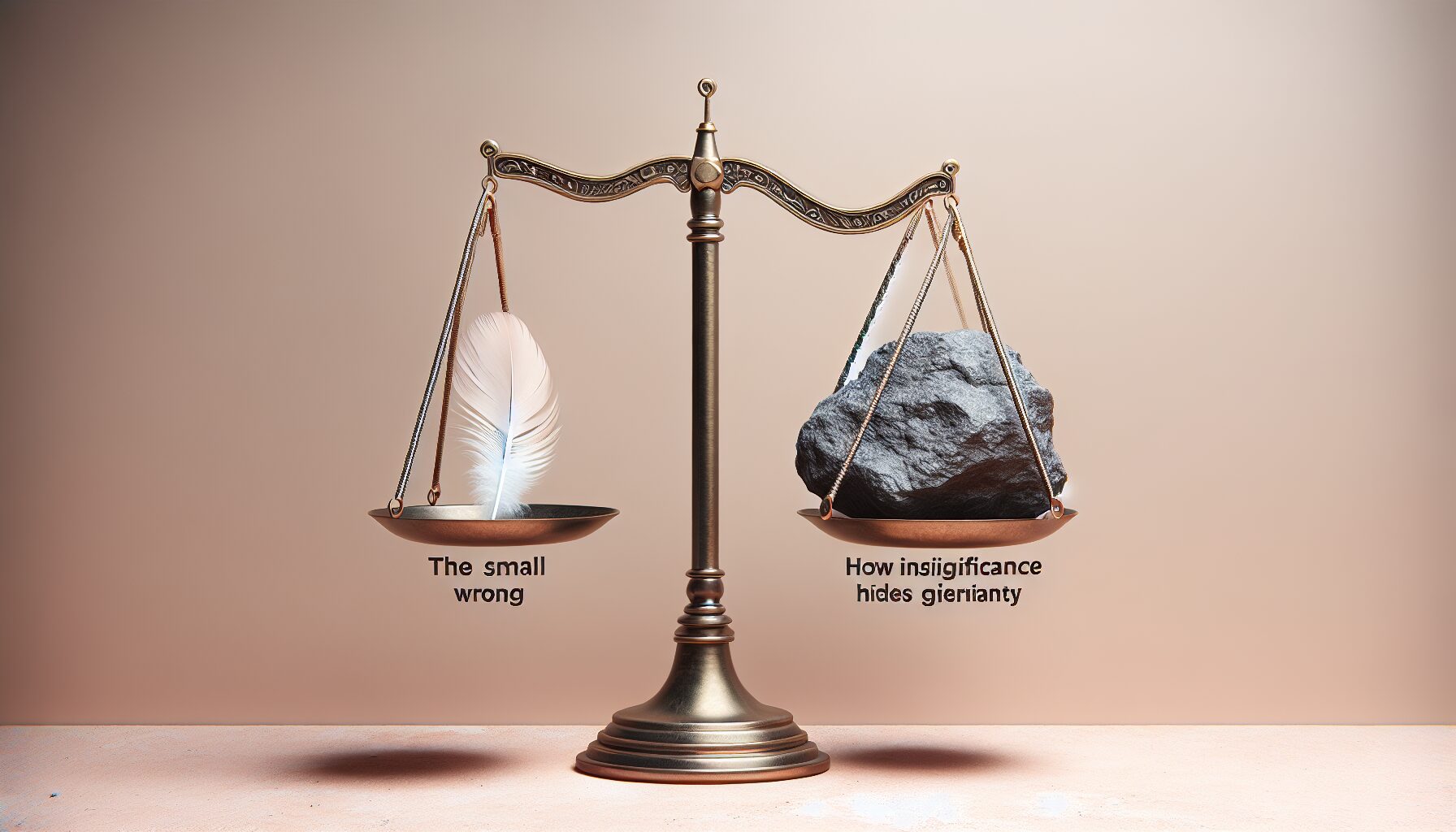
  • The Small Wrong — How insignificance hides moral gravity

    The Small Wrong — How insignificance hides moral gravity

    In everyday life, it’s not the monumental wrongdoings that often shape our ethical landscapes, but the smaller, seemingly insignificant decisions that piece together the moral compass of individuals and societies. The concept of the “small wrong” delves into how minor ethical lapses can often hide heavier moral implications, gradually eroding personal integrity and societal trust.

    Understanding the Small Wrong

    The small wrong, by definition, refers to actions or decisions that are perceived as minor infractions—like telling a white lie, slightly bending the truth, or taking something inconsequential that doesn’t belong to you. These actions, though seemingly harmless, mask deeper moral issues that often go unnoticed until they accumulate into something more significant.

    Psychologist Daniel Kahneman, in his book Thinking, Fast and Slow, describes how people often rely on quick, intuitive judgments—also known as “heuristics”—which can lead to moral oversights. Individuals might justify a small wrong by considering it inconsequential, but this subconscious pardoning fosters a setting where larger violations can thrive unnoticed.

    The Domino Effect: How Small Wrongs Accumulate

    The phrase “it’s just a small infraction” lays the groundwork for a cascading effect akin to a domino fall. One minor wrongdoing, left unchecked, often emboldens individuals to commit further minor acts. For instance:

    • A small lie to avoid embarrassment might lead to bigger lies to avoid more significant outcomes.
    • Petty theft could evolve into a habit, tapping into larger-scale unethical behavior.
    • Bending rules slightly at work can potentially unravel into ethical gray zones, complicating workplace dynamics.

    “We habitually engage in small-scale moral compromises, dulling our ethical sensitivity to more serious issues,” writes Michael Josephson, an ethics expert and former law professor.

    The Ethical Erosion: Societal Impact of Minor Wrongs

    While individuals often perceive small wrongs as personal and contained, their cumulative effect can have a broader societal impact. A society’s moral fabric is stitched together by the actions of its individuals. Habituating to minor wrongs not only weakens personal ethical standards but also diminishes collective societal values.

    Consider the implications of these behaviors in areas like business and governance:

    • In business, the normalization of unethical practices such as minor accounting fraud or inflated expense accounts cumulatively can lead to corporate scandals, damaging reputations and livelihoods.
    • In politics, when leaders justify small ethical lapses under the guise of pragmatic decision-making, it sets a detrimental precedent. As John Gardner once said, “Political life at the top is a fight for ethics.”

    Cultivating Moral Awareness

    The key to addressing the small wrong is cultivating a heightened sense of moral awareness and accountability. Educating individuals about the potential impact of their actions, however small, can foster a community of conscientious decision-makers. Here are some strategies:

    • Ethics Training: Implementing comprehensive ethics training in schools and organizations can help individuals recognize and reflect on the impact of minor wrongs.
    • Encouraging Reflection: Encouraging daily reflection and mindfulness practices can heighten self-awareness and support ethical decision-making.
    • Promoting Open Dialogue: Fostering an environment that promotes open discussions about ethical dilemmas can help individuals feel comfortable confronting and rectifying minor wrongs.

    “One of the deep secrets of life is that all that is really worth doing is what we do for others,” said Lewis Carroll. This maxim holds true in preserving both personal integrity and the moral health of society.

    Conclusion: Embracing Ethical Integrity

    The challenge of the small wrong lies in its dual nature of seeming trivial yet holding moral weight. By addressing and minimizing minor ethical lapses, individuals can significantly contribute to the cultivation of a more ethical society. Recognizing the moral gravity hidden within small wrongs enables individuals to consciously strive towards maintaining integrity, leading to a path where both personal and societal ethics flourish.

    In the footprints of ancient wisdom, it’s crucial to remember: “With great power comes great responsibility.” Indeed, each small choice contributes to the moral strength—or weakness—of society as a whole.