Tag: line

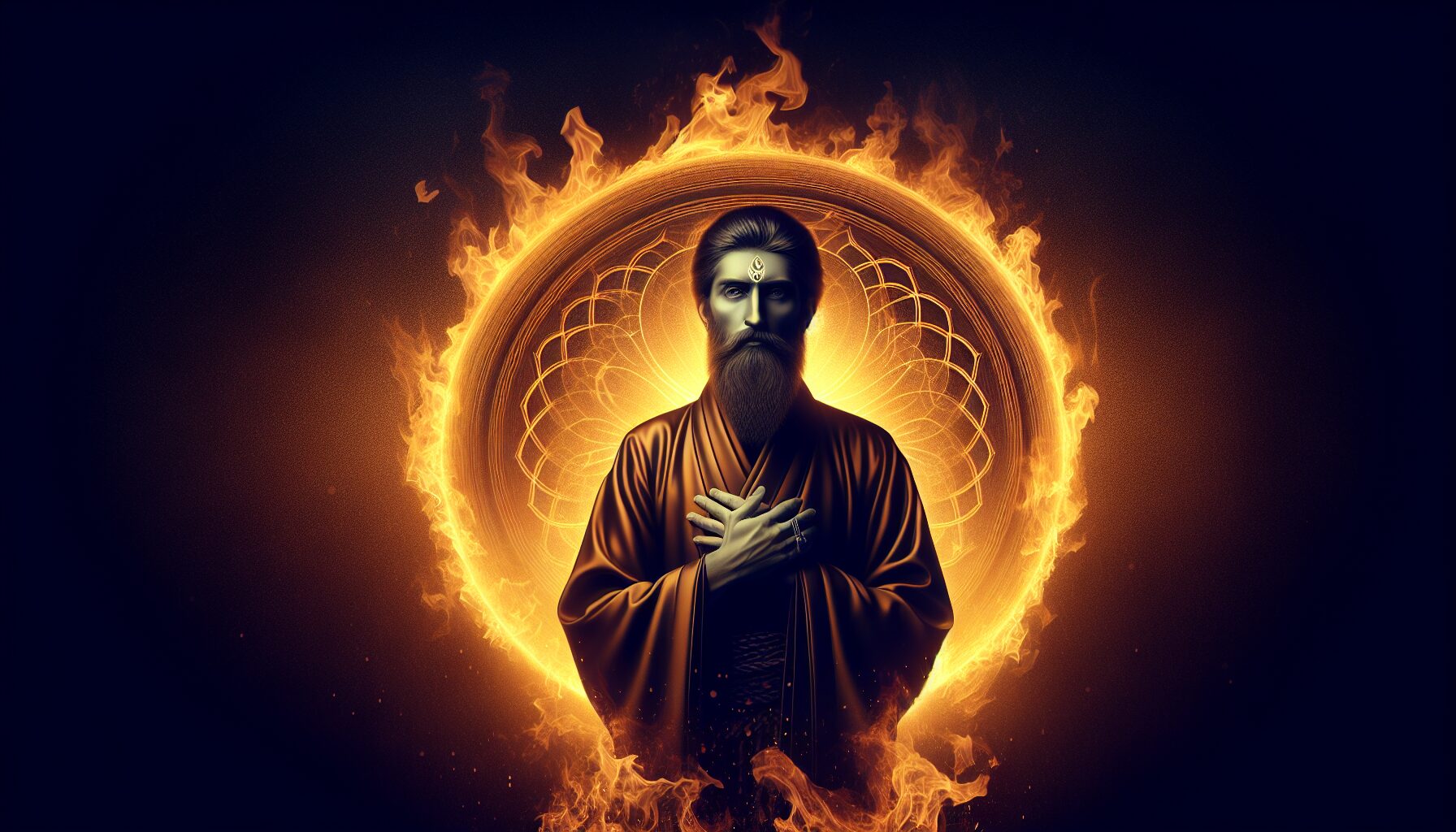
  • Leadership in the Line of Fire – Targeting spiritual authorities

    Leadership in the Line of Fire – Targeting spiritual authorities

    Leadership in the Line of Fire: Targeting Spiritual Authorities

    In an increasingly complex world, where global tensions and diverse ideologies collide, spiritual leaders often find themselves in the line of fire. These leaders, who are usually at the helm of guiding moral and ethical compasses, face numerous challenges. Their influence extends beyond religious boundaries, impacting societal norms and actions, making them prominent targets for scrutiny and even attack.

    The Role of Spiritual Leaders

    Spiritual leaders have played pivotal roles in shaping cultures and societies across the globe. They are anchors in times of moral ambiguity and offer guidance amidst chaos. For instance, Mahatma Gandhi, through his spiritual and political leadership, once said,

    “A man is but the product of his thoughts. What he thinks, he becomes.”

    His leadership continues to resonate with millions today, underlining the potential impact of spiritual guidance.

    However, these leaders’ influence is not limited to their followers. Pope Francis, leading the Roman Catholic Church, has consistently addressed global issues from environmental conservation to social justice, drawing attention worldwide and placing his leadership in the public eye.

    Challenges Faced by Spiritual Leaders

    • Secularization: In modern, secular societies, religious leaders often face the challenge of remaining relevant. As traditional religious observance declines in many parts of the world, spiritual authorities must find new ways to connect with individuals who might not identify with traditional religious practices.
    • Political Pressures: It is not uncommon for spiritual leaders to find their teachings politicized. The intersection of faith and politics can blur the original spiritual message, leading to misinterpretations and potentially putting leaders at risk.
    • Globalization and Diversity: As communities become more diverse, spiritual leaders often have to address a wider array of cultural and religious contexts. This diversity can lead to misunderstandings or misrepresentations of spiritual messages.
    • Crisis of Faith: Scandals within religious organizations can lead to widespread disillusionment. Recovering faith in spiritual leadership requires transparency and accountability, which some leaders struggle to implement effectively.

    Attack on Spiritual Leadership

    There are instances where spiritual leaders have been direct targets of violence and hostility. This targeting can stem from political, ideological, or even theological differences. For example, The New York Times reported on the violent backlash faced by leaders advocating for peace and reconciliation in conflict zones: “Pope Francis Appeals for Peace in Myanmar as Rohingya Violence Escalates”.

    Such instances highlight the vulnerability of spiritual leaders who take stands against authoritarian regimes or extremist ideologies. Their commitment to truth and justice often places them in perilous positions.

    Strategies for Protection and Support

    Given the risks, there are several measures that can be employed to protect spiritual leaders:

    • Building Alliances: Forming supportive networks with other religious and secular organizations can provide spiritual leaders with broader platforms to advocate for their causes.
    • Media Engagement: Actively engaging with the media to accurately convey messages can combat misinformation. Effective communication with the public can also garner support and understanding.
    • Educational Initiatives: Developing educational programs that emphasize the positive role of spiritual leadership in society can cultivate respect and mutual understanding.
    • Legal Protections: Advocacy for policies and laws that protect religious leaders from persecution and violence is necessary. Emphasizing the importance of freedom of religion and expression is crucial in legislative environments.

    The Path Forward

    As society grapples with unprecedented challenges, the role of spiritual leaders as moral compasses is crucial. Their leadership not only guides religious followers but also impacts secular communities by upholding principles of compassion, justice, and inclusivity.

    Spiritual leaders must navigate complex terrains, balancing tradition with modernity, and faith with societal progress. Their resilience and persistence, often under significant threat, highlight their significant role in maintaining peace and ethical governance.

    In reflecting on the future of spiritual leadership, it is instructive to consider the words of Dalai Lama:

    “This is my simple religion. There is no need for temples; no need for complicated philosophy. Our own brain, our own heart is our temple; the philosophy is kindness.”

    Such timeless wisdom underscores the enduring necessity of spiritual guidance in nurturing a harmonious coexistence.

  • The Unreadable Line — The moment understanding slips away

    The Unreadable Line — The moment understanding slips away

    There comes a juncture in the realm of knowledge and comprehension where familiarity gives way to ambiguity—a moment where understanding slips through the fingers like grains of sand. This threshold, often imperceptible, is what we call the Unreadable Line.

    The concept of the Unreadable Line has been explored in various disciplines, be it literature, psychology, or philosophy. It refers to those moments when clarity fades and the mind grapples with the unknown, often encountering the limits of human cognition and perception. What happens when understanding slips away? What lies beyond this enigmatic boundary?

    The Threshold of Understanding in Literature

    Within literature, the Unreadable Line often presents itself as a narrative technique that effectively draws the reader into the intricacies of the human experience. Authors such as James Joyce and Franz Kafka are renowned for their ability to transport readers to this space of confusion and reflection.

    “I am, a part of all that I have met; / Yet all experience is an arch wherethrough / Gleams that untravelled world, whose margin fades / For ever and forever when I move.”

    Alfred Lord Tennyson

    Tennyson’s words from Ulysses beautifully encapsulate the essence of this boundary—an “untravelled world” that always seems just beyond reach. In literature, this boundary invites readers to ponder realities beyond their own understanding, challenging them to question their perceptions.

    Philosophical Implications

    Philosophers have long explored the notion of the limits of knowledge. Immanuel Kant, for instance, argued that human understanding is confined by the categories of the mind, and there’s a realm of “the thing-in-itself” that remains inaccessible to us. Kant’s critical philosophy suggests that our cognitive capabilities inherently limit our understanding of the universe.

    “Two things fill the mind with ever new and increasing admiration and awe… the starry heavens above and the moral law within.”

    Immanuel Kant

    Kant’s words highlight the dichotomy between the knowable and the inscrutable, a reminder of the perpetual dance between understanding and mystery. This Unreadable Line marks the boundary where empirical evidence meets metaphysical speculation.

    The Psychological Perspective

    Psychologically, the Unreadable Line can represent moments of cognitive dissonance. When presented with information that challenges existing beliefs, humans encounter discomfort—a phenomenon Leon Festinger coined in the mid-20th century. This discomfort can often signal the crossing of the Unreadable Line, where acceptance falters and resistance to new ideas emerges.

    • Cognitive Dissonance Theory: Festinger’s theory posits that when individuals are faced with conflicting information, they experience mental stress. The Unreadable Line surfaces as the tension between existing beliefs and new, conflicting information.
    • The Illusion of Knowledge: Psychologist Steven Sloman, in collaboration with Philip Fernbach, discusses how people often overestimate their understanding of complex phenomena. Their book, The Knowledge Illusion, illustrates how humans are often oblivious to their own ignorance.

    These psychological insights suggest that the Unreadable Line is not just a boundary to be feared but a pivotal moment for growth and learning.

    The Enigma of the Unreadable Line

    Artists, writers, and thinkers have often celebrated uncertainty as fertile ground for creativity. As Albert Einstein once said,

    “The most beautiful thing we can experience is the mysterious. It is the source of all true art and science.”

    Albert Einstein

    The Unreadable Line, therefore, is not merely an end but a beginning—a springboard into the realm of innovation and discovery. It compels us to embrace uncertainty and plummet into the depths of the unfamiliar, emerging with novel insights.

    Conclusion

    As individuals and societies continue to seek understanding and dispel the shadows of ignorance, the Unreadable Line stands as a testament to the perpetual human quest for knowledge. It reminds us that while some horizons remain distant, the journey to comprehend what lies beyond is both necessary and enriching.

    Ultimately, the Unreadable Line challenges us to reach beyond our grasp, a call to transcend our limits and expand the frontier of human experience: an invitation to continue exploring the beautifully perplexing universe that enfolds us.