Tag: groups

  • The Outcast’s Alphabet – How marginalized groups develop secret languages.

    The Outcast’s Alphabet – How marginalized groups develop secret languages.


    The Outcast’s Alphabet – How Marginalized Groups Develop Secret Languages

    The Outcast’s Alphabet: A Hidden Vocabulary of Resilience Among Marginalized Groups

    “In the face of oppression, marginalized groups have historically developed secret languages and codes as a form of resistance and empowerment.”
    – Dr. Jane Hill, Professor of Linguistics at the University of Arizona

    The Power of Coded Language

    From the Sign language of deaf communities to the secret codes used by enslaved Africans in the American South, these covert forms of communication have played a crucial role in preserving cultures and fostering solidarity.

    The Significance of Secret Languages

    • Resistance: Coded languages can act as a form of resistance against oppressive forces, allowing marginalized groups to communicate without fear of retribution or misunderstanding.
    • Empowerment: The development and use of these hidden vocabularies can be a powerful means of asserting group identity and reinforcing solidarity among members.
    • Preservation: Secret languages help preserve cultural heritage by providing a way for traditions, stories, and histories to be shared within communities that may otherwise be silenced or marginalized by dominant cultures.

    Modern Examples of Coded Languages

    In the digital age, coded languages continue to evolve and play a vital role in marginalized communities. One such example is the use of emojis among LGBTQ+ youth as a form of discreet communication. As Dr. Hill explains:

    “The use of emojis by LGBTQ+ youth can serve as a powerful tool for self-expression and identity formation, allowing them to signal their sexual orientation or gender identity without outing themselves in dangerous environments.”
    – Dr. Jane Hill

    The Legacy of Secret Languages

    The development of secret languages among marginalized groups is a testament to the resilience and creativity of these communities in the face of adversity. By understanding and appreciating their significance, we can better understand the rich cultural heritage they represent and the ongoing struggles faced by marginalized communities today.

  • The Scapegoat Cycle – Why minority groups are blamed during economic crises.

    The Scapegoat Cycle – Why minority groups are blamed during economic crises.

    The Scapegoat Cycle – Why Minority Groups Are Blamed During Economic Crises

    Throughout history, minority groups have been unfairly targeted and blamed for societal ills, particularly during times of economic uncertainty. This phenomenon is often referred to as the “scapegoat cycle.” In this article, we’ll explore why minority groups are disproportionately impacted and blamed during economic crises.

    The Historical Context

    • Immigration and Economic Hardship: In the United States, for example, immigrants have long been scapegoated during times of economic hardship. During the Great Depression, immigrants were seen as a threat to American jobs, leading to increased xenophobia and anti-immigrant sentiment.
    • African Americans and Job Competition: Following World War II, African Americans faced discrimination in the job market, with many blaming them for taking jobs away from white workers. This narrative was perpetuated by politicians and media outlets, further entrenching racial tensions.

    The Modern-Day Scapegoat Cycle

    Today, minority groups continue to bear the brunt of societal frustration during economic crises. The COVID-19 pandemic has seen a rise in anti-asian sentiment, with some individuals blaming Asian Americans for spreading the virus or taking jobs away from others.

    “It’s heartbreaking to see people being blamed and targeted based on their race or ethnicity,” said Dr. Angela Dew, a sociologist at the University of California, Berkeley. “These stereotypes are deeply ingrained and perpetuate systemic inequality.”

    The Psychological Impact

    Minority groups are disproportionately affected by the scapegoat cycle, leading to increased anxiety, stress, and feelings of marginalization.

    • Self-Esteem and Confidence: When minority individuals are unfairly blamed for economic woes, it can lead to a loss of self-esteem and confidence. This can have long-term effects on mental health and well-being.
    • Social Isolation: The scapegoat cycle can also lead to social isolation, as minority individuals may feel compelled to distance themselves from others to avoid being targeted or judged.

    The Importance of Intersectionality

    In order to break the cycle of scapegoating, it’s essential to recognize the intersectional nature of economic crises. This means acknowledging the complex ways in which race, gender, class, and other factors intersect to create systemic inequality.

    “We need to move beyond a one-size-fits-all approach and instead focus on the specific needs and challenges faced by marginalized communities,” said Dr. Rinku Sen, founder of the Applied Research Center (ARC). “Only then can we begin to build a more just and equitable society.”

    The Way Forward

    To combat the scapegoat cycle, it’s crucial that policymakers, media outlets, and individuals take a proactive approach to promoting inclusivity and addressing systemic inequality. This includes:

    • Educating Ourselves: It’s essential to learn about the historical context of scapegoating and its ongoing impact on minority communities.
    • Raising Awareness: By sharing stories and statistics, we can raise awareness about the disproportionate impact of economic crises on minority groups.
    • Ultimately, breaking the cycle of scapegoating requires a collective effort to create a more just and equitable society for all.

  • The Cult Label – How “Othering” language is used to justify violence.

    The Cult Label – How “Othering” language is used to justify violence.

    The Cult Label – How “Othering” Language is Used to Justify Violence

    The term “cult” has become synonymous with danger and fanaticism, evoking images of brainwashed followers and apocalyptic prophecies. But is the label fair, or does it perpetuate a harmful narrative that justifies violence against minority groups? In recent years, high-profile cases like the FLDS and NXIVM have brought the concept of cults into the public eye, sparking heated debates about free will, manipulation, and the boundaries between religion and criminal activity.

    The Power of Language

    Sociologist and author Jeffrey Hadden argues that the term “cult” is often used as a pejorative to describe minority religions or groups that don’t conform to societal norms. “The label ‘cult’ is used to discredit, dehumanize, and delegitimize,” he says in an interview with The Conversation. “It’s a way to say, ‘These people are not like us, they’re weird, and they’re dangerous.’”

    A History of Prejudice

    The term “cult” has its roots in the 17th-century European witch hunts, where anyone deemed outside the mainstream was labeled a “witch.” This “othering” language served as a justification for violence and persecution. Today, the same pattern is seen in modern society. A study by the University of California, Berkeley found that anti-cult rhetoric often relies on stereotypes and misinformation to discredit minority groups.

    The Cult Label’s Consequences

    The use of the term “cult” can have devastating consequences for individuals and communities. In a New York Times piece, journalist Rachel Aviv describes how the label has been used to justify violence against minority religions like Jehovah’s Witnesses and Muslims. “When people are labeled ‘cults,’ it allows them to be treated as an enemy, rather than a group of human beings with beliefs and practices,” she writes.

    A Call for Nuance

    Scholars argue that the term “cult” is too broad and lacks nuance, failing to distinguish between legitimate religious groups and those that may warrant concern. A report by the International Cultic Studies Association emphasizes the importance of understanding the complexities of minority religions and avoiding sensationalized language.

    Beyond the Label

    So what’s the solution? Experts suggest focusing on the individual actions and behaviors, rather than making sweeping judgments about entire groups. “We should be concerned with people’s behavior, not their beliefs or affiliations,” says Hadden. “Let’s focus on creating a society that values free speech, assembly, and association – without resorting to demonizing labels.”

    Related Reading

    “The cult label is a tool of oppression, used to silence and marginalize minority groups. It’s time for a more nuanced understanding of religious freedom and the importance of respecting all belief systems.” – Jeffrey Hadden

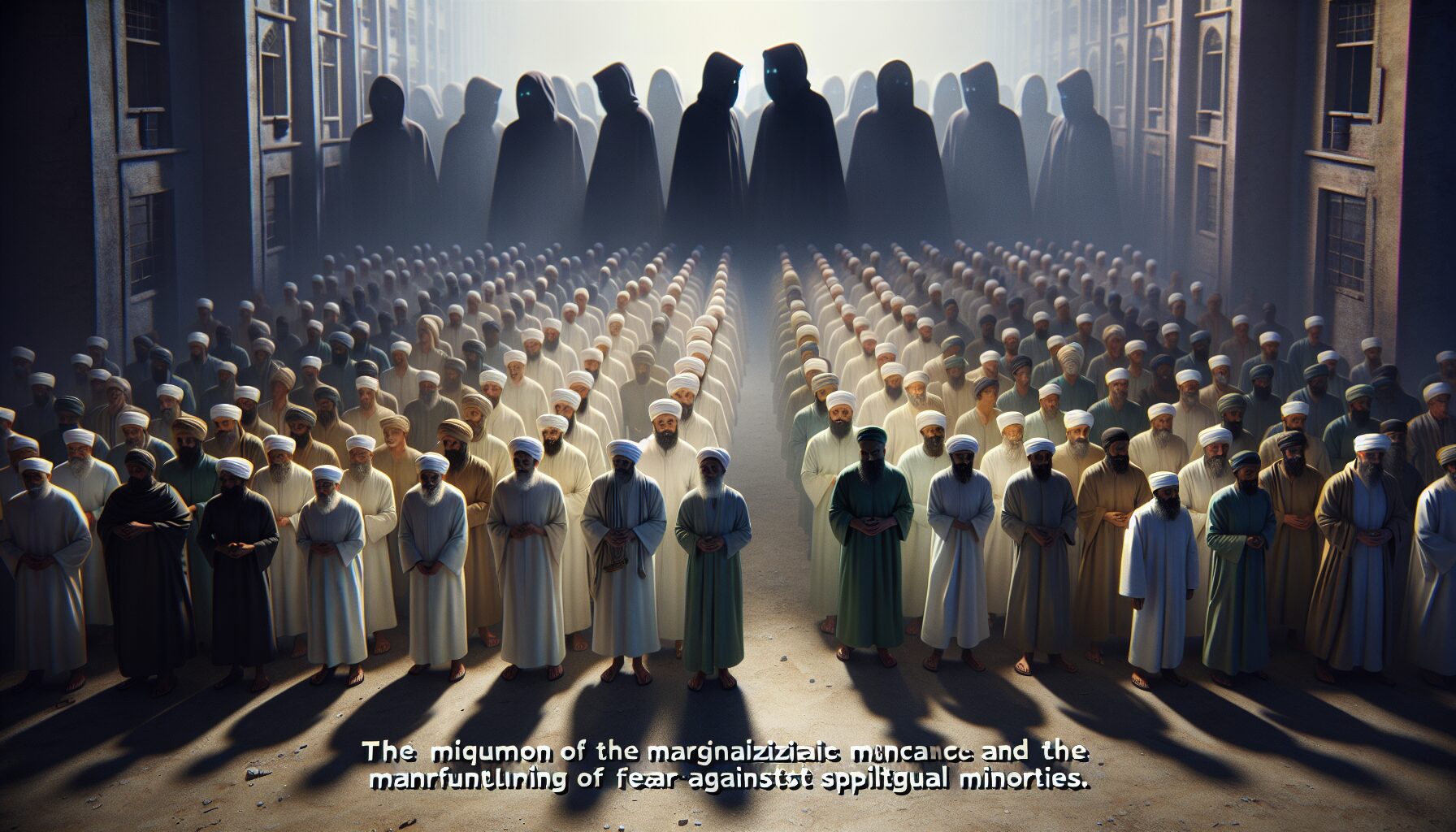
  • From Margins to Menace – Manufacturing fear of spiritual minorities

    From Margins to Menace – Manufacturing fear of spiritual minorities

    From Margins to Menace: Manufacturing Fear of Spiritual Minorities

    Throughout history, spiritual minorities have often found themselves in precarious positions within mainstream society. These groups are frequently marginalized and, at times, portrayed as societal threats. This phenomenon raises important questions about the sources and perpetuation of fear towards spiritual minorities.

    The marginalization of spiritual minorities is not a new occurrence. From early Christians in the Roman Empire to modern-day new religious movements, fear and misunderstanding have often fueled mistrust and persecution. But how does this fear arise, and what keeps it alive?

    The Roots of Fear

    At the heart of this fear is often a lack of understanding and the portrayal of these groups as ‘other.’ In his book, The Culture of Fear, sociologist Barry Glassner discusses how media and cultural narratives can amplify fear by exaggerating threats or focusing on sensational stories.[1]

    “When we focus on fear, we produce more fear. And when we portray those who are different as threatening, we invite suspicion and discrimination,” explains Glassner.[2]

    The Role of Media

    The media plays a significant role in shaping public perception. Coverage often highlights the most extreme or controversial aspects of spiritual minorities, feeding into existing stereotypes. The case of the Waco siege in 1993, involving the Branch Davidians, is a prime example. Intense media scrutiny and sensationalized reporting painted the group in a violent light, reinforcing public fear.[3]

    • Selective Coverage: Highlighting negative aspects while ignoring ordinary, peaceful practices.
    • Insider vs. Outsider Narratives: Encouraging a sense of ‘us vs. them’ through biased storytelling.

    The Impact on Society

    Such narratives not only impact the targeted groups but also influence societal norms and policies. History has shown us that manufactured fear can lead to discrimination, social exclusion, and even violence. It underscores the need for a more nuanced understanding and reporting of spiritual minorities.

    Moving Forward

    As society becomes more interconnected, fostering understanding and dialogue is crucial. Recognizing and challenging the narratives that drive fear can lead to more inclusive communities. Encouraging critical media consumption and supporting diverse voices are steps toward breaking the cycle of fear.

    In the words of cultural historian Karen Armstrong, “Compassion is the key.” Understanding and embracing spiritual diversity, rather than vilifying it, can help bridge divides and diminish unfounded fears.[4]

  • Enemies by Definition – Labeling spiritual groups as dangerous

    Enemies by Definition – Labeling spiritual groups as dangerous

    Enemies by Definition: Labeling Spiritual Groups as Dangerous

    In societies characterized by rich cultural and religious diversity, the labeling of spiritual groups as dangerous or cult-like has become a contentious issue. This article explores the implications of such designations, the motivations behind them, and the impact on communities worldwide.

    The Nature of Spiritual Groups

    Spiritual groups have existed throughout human history, representing myriad beliefs and practices. From ancient pagan traditions to modern day new age movements, these groups serve the fundamental human quest for meaning, connection, and transcendence.

    • Traditional Religions: Established religions like Christianity, Islam, and Buddhism have structured beliefs and long-standing institutions.
    • New Spiritual Movements: Groups such as the Hare Krishnas or Scientology reflect newer, often unconventional beliefs.
    • Self-Help and Wellness Programs: Some organizations, like certain sects of yoga or mindfulness movements, straddle the line between lifestyle practices and spiritual doctrines.

    The diversity of these movements not only demonstrates the pluralistic nature of faith and spirituality but also highlights the difficulties encountered when attempting to categorize or define these groups.

    The Psychology of Labeling

    Labeling certain spiritual groups as “dangerous” or “cults” is often rooted in fear, misunderstanding, or socio-political motives. According to sociologist Max Weber, “The labeling of religious movements often reflects social upheavals, with the dominant culture defining the ‘appropriate’ bounds of spirituality and belief.”

    “When a group is labeled as a ‘cult’, it frequently stems from a mixture of misinterpretation of their beliefs and societal inability to comprehend a deviation from mainstream religion.”

    The label often carries negative connotations, suggesting coercion, radical practices, or harmful ideologies. This perception overlooks the complex and sometimes benign nature of many such groups.

    Case Studies of Mislabeling

    Several spiritual groups throughout history have faced stigmatization, often unjustly, under the guise of protection from their purported danger:

    • The Branch Davidians: Known for the tragic Waco siege, this group was widely deemed dangerous due to its radical apocalyptic beliefs. However, many argue that misunderstandings and governmental miscalculations exacerbated the situation.
    • The Church of Scientology: Frequently targeted as a cult, adherents argue that it is a legitimate religion offering spiritual enrichment and self-improvement.
    • The Falun Gong: While suppressed in China as a threat to state control, globally, it is largely viewed as a peaceful movement promoting meditation and moral living.

    These examples illustrate how the label “dangerous” can be applied based not purely on objective truth, but often on political or social agendas.

    Consequences of Branding as Dangerous

    Designating spiritual groups as dangerous carries significant implications:

    • Social Stigmatization: Members of these groups often face discrimination and are ostracized from society.
    • Legal Repression: Governments may restrict their activities, subject them to surveillance, or outright ban their practices.
    • Media Portrayal: Negative media representation amplifies societal fears and perpetuates stereotypes, often leading to misunderstandings and further marginalization.

    Historically, these consequences have led to escalated tensions, conflicts, and in extreme cases, violence directed at minority spiritual groups.

    The Fine Line of Protection and Persecution

    While some spiritual groups do engage in harmful practices, it is essential to distinguish between genuinely dangerous cults and benign spiritual movements. As historian Karen Armstrong notes, “While vigilance is necessary, it must be balanced with a comprehensive understanding of these groups on their terms.” Excessive caution can lead to religious persecution under the guise of protection.

    “A balance between cultural sensitivity and awareness is crucial,” asserts religious scholar Reza Aslan. “We must remain vigilant against true harm, yet avoid an overly broad brush that tars harmless spirituality with the same brush.”

    Moving Towards Understanding

    In a world trending towards global interconnectivity, understanding diverse spiritual perspectives is both a necessity and a responsibility. Policy-makers, educators, and media professionals must engage in dialogue with spiritual communities to foster mutual understanding and respect.

    • Education: Comprehensive education on world religions and spiritual practices can diminish fear and promote empathy.
    • Interfaith Dialogue: Encouraging conversations between different spiritual groups builds mutual respect and challenges preconceived notions.
    • Balanced Media Representation: Media outlets should strive for balanced coverage that accurately reflects the beliefs and practices of spiritual groups.

    By approaching spiritual diversity with open-mindedness, society can progress towards a future where labeling is fair, precise, and devoid of prejudice.

    Conclusion

    In redefining how we view spiritual groups labeled as dangerous, it is essential to reflect on our biases and the historical context that fuels such perceptions. By doing so, communities can transcend fear and strive for a more inclusive world where spiritual plurality is celebrated rather than feared.

  • Trust Under Threat – Life inside surveilled spiritual groups

    Trust Under Threat – Life inside surveilled spiritual groups

    Trust Under Threat: Life Inside Surveilled Spiritual Groups

    In an age where surveillance permeates every corner of modern life, spiritual communities — heralded as sanctuaries of trust and introspection — face unique challenges. The impact of constant observation within these groups, whether by external forces or internal protocols, is profound and rapidly evolving.

    Surveillance and Spirituality: A Complex Relationship

    Traditionally, spiritual groups offer a retreat from the societal norms dominated by surveillance. However, as technology advances, these communities are increasingly entangled in the web of monitoring — both overt and covert. Whether it is through video surveillance, data tracking, or other technological means, the presence of observation changes the dynamic of even the most sacred spaces.

    Dr. Lisa Haynes, a researcher in digital sociology, notes, “While some groups embrace technology for security and organizational purposes, others view it as an intrusion into the sanctity of spiritual practice.” She highlights that this dual-edged sword of technology poses a moral and ethical challenge: maintaining transparency and security without eroding the foundational element of trust inherent in spiritual communities.

    Internal Pressures: The Role of Leadership

    Internally, the pressure to maintain cohesion and discipline can sometimes lead to self-imposed surveillance measures. Leaders may justify these as necessary under the guise of protection against external threats or dissent within the congregation. However, this can often lead to a climate of fear and paranoia among the followers.

    “There’s a fine line between guidance and control,” says Michael Rhodes, a former member of a large spiritual group. “What starts as spiritual oversight can quickly shift into social surveillance, where members feel monitored not just spiritually, but on every personal level.”

    The Psychological Impact

    The psychological toll of continuous surveillance is significant. Practitioners may feel a sense of paranoia, mistrust, and self-censorship, which can derail the spiritual growth and communal harmony they seek. These environments, once seen as refuges of acceptance and inner exploration, can evolve into spaces of hidden scrutiny.

    Described in a Psychology Today article, the effect of surveillance extends beyond mere discomfort, potentially stifling creativity and diminishing genuine expression. It points out that within monitored groups, “members often adapt by changing their behavior to what is expected rather than what is genuine.”

    Searching for Balance

    As these groups grapple with maintaining the integrity of their practices while embracing modern security measures, the solution lies in a delicate balance. Transparent communication and a clear delineation of boundaries around surveillance can help maintain trust. Ultimately, the goal should be to foster a community where members feel both safe and free.

    In a world where the eyes of surveillance are ever-watchful, spiritual groups face the challenging task of protecting the sacredness of trust — a cornerstone upon which their foundations are laid.

  • Bound by Belief – How persecution reshapes group identity

    Bound by Belief – How persecution reshapes group identity

    Bound by Belief: How Persecution Reshapes Group Identity

    The history of human civilization is replete with instances of religious, ethnic, and political persecution. Far from annihilating the groups in question, persecution has often played a paradoxical role in strengthening group identity and reshaping its cultural and social bonds. This phenomenon raises fascinating questions about the resilience of communities under duress and the transformative power of shared adversity.

    The Dynamics of Persecution

    Persecution frequently functions as a catalyst for the evolution of a group’s collective identity. This reshaping process centers on several dynamics:

    • Solidarity and Cohesion: As members face external threats, the survival instinct triggers increased solidarity among them. According to historian Philip Jenkins, “Persecution often binds a community together, providing it with a common cause and a narrative of resistance.”
    • Reinforced Beliefs: Far from weakening the beliefs of the persecuted, external pressure can reinforce religious or ideological convictions. Emile Durkheim, a pioneering sociologist, posited that persecution serves as a moral trigger, reaffirming the dedication of the group’s members.
    • Identity Reformation: Under external threat, groups may reformulate their identity, assuming new symbols and practices. The Jewish diaspora, for instance, has seen numerous reinterpretations of Jewish identity throughout centuries of persecution, each serving to fortify communal ties.

    Historical Examples

    The history of the early Christians provides a remarkable case study. Subjected to state-sanctioned persecution in the Roman Empire, early Christians experienced a profound transformation that would see them develop a rich iconography and theological canon. Christianity’s enduring motto, “The blood of the martyrs is the seed of the Church,” coined by Tertullian, underscored how initial persecution galvanized the faith’s spread across continents.

    Similarly, centuries later, the persecution of the Uyghur Muslims in China highlights modern reiterations of this ancient dynamic. Despite severe repression, reports have shown a resurgent embrace of cultural identity and religious practice among Uyghurs, drawing international attention and solidarity from Islamist networks globally.

    Concluding Thoughts

    Persecution, instead of achieving its elimination goals, often fortifies a group’s resolve, nurturing resilience and altering cultural practices to withstand external challenges. This paradox underscores humanity’s perpetual quest for meaning and stability in the face of adversity and highlights the indomitable spirit of community and faith.

    “When we are no longer able to change a situation, we are challenged to change ourselves.” – Victor Frankl

    This profound observation helps contextualize the unique ways in which persecution has historically unified communities, forging a stronger, more cohesive identity from the crucible of oppression.

  • Faith as Resistance – Spiritual groups that refuse to disappear

    Faith as Resistance – Spiritual groups that refuse to disappear

    Faith as Resistance: Spiritual Groups That Refuse to Disappear

    In a world increasingly driven by technology and rapid societal changes, some spiritual groups continue to assert their presence and relevance amidst the noise. These spiritual communities often embody a form of quiet resistance, standing firm in their beliefs and practices despite external pressures. This article explores how various spiritual groups are persisting and thriving in modern times.

    A Historical Perspective

    Throughout history, spirituality has been both a source of solace and a catalyst for resistance. Religious and spiritual groups have long played pivotal roles in movements for social change. The Civil Rights Movement, for instance, was heavily influenced by the teachings of Christian doctrine, with leaders like Martin Luther King Jr. emphasizing the importance of faith in the struggle for equality.

    “Faith is taking the first step even when you don’t see the whole staircase.”

    — Martin Luther King Jr.

    From the Quakers, who were instrumental in the abolition of slavery, to the Sufis, whose mystical teachings often served as a counterbalance to rigid doctrinal interpretations, spirituality has frequently been intertwined with progressive societal shifts.

    Modern Spiritual Movements

    In contemporary times, several spiritual groups are resisting cultural assimilation and asserting their identity through intentional practice. Below are a few notable examples:

    • The Amish: Known for their simple living, refusal of modern technology, and community-centric life, the Amish population in the United States has been growing. According to a Pew Research study, the Amish community has nearly doubled in size in the past two decades. By living according to their Anabaptist faith, they resist the fast-paced change of modern society.
    • Tibetan Buddhists: Despite facing significant challenges, particularly from political forces in their homeland, Tibetan Buddhists keep their traditions alive through global communities. The preservation of their spiritual practices is a form of cultural resistance and identity affirmation.
    • The Rastafarians: Emerging in the 1930s in Jamaica, Rastafarianism combines Christian elements, Pan-African ideology, and a strong cultural identity. As stated in the work of Leonard Barrett, author of “The Rastafarians”, the movement persists as a testament to cultural resilience.

    Institutional and Grassroots Support

    Many spiritual groups survive and even thrive due to both institutional support and grassroots efforts. Initiatives such as interfaith dialogue platforms and cultural heritage sites serve as resources for spiritual communities to learn, grow, and maintain their traditions.

    • Interfaith Coalitions: Projects such as The Parliament of the World’s Religions promote understanding and cooperation among diverse faiths. The Parliament serves as a critical organization in fostering peace and improving the visibility of smaller religious groups.
    • Cultural Heritage Sites: UNESCO’s efforts to protect traditional religious sites reinforce the cultural significance of these spaces. As an example, the listing of Buddhist temples in Nepal ensures both preservation and worldwide recognition.

    Digital Adaptation and Global Reach

    Many religious and spiritual groups have embraced digital platforms to expand their reach and impact. Churches offering online services, meditation apps promoting mindfulness, and social media engagement provide fertile grounds for these communities to grow. According to a Pew Research Center survey, a significant number of people access religious teachings online, showing a blend of traditional faiths with modern technology.

    “While religion always changes, we are living through a massive expansion of religious creativity,”

    — Stephan Pickard, Australian theologian.

    This digital shift allows spiritual groups to reach new audiences, inviting participation from those who might not have engaged in a traditional setting.

    Challenges and Opportunities

    Despite their resilience, spiritual communities face significant challenges, including secularization, political pressures, and demographic shifts. However, these challenges also present opportunities for growth and reinterpretation of beliefs.

    • Secularization: As secular values become more prominent, religious groups are pushed to articulate their relevance in a modern context. This can lead to engaging dialogues and critical reflections within these communities about their roles and teachings.
    • Political Pressures: Religious groups often face scrutiny and opposition from governmental authorities. However, these challenges can unite communities in a common cause, reinforcing their spiritual and cultural identities.

    The Future of Spiritual Resistance

    Looking ahead, the resilience of these spiritual groups will likely depend on their ability to balance tradition with modernity, fostering connections both within and outside their borders. Organizations like The Guardian predict that religious innovations might lead the way to more harmonious coexistence.

    Ultimately, the persistence of spiritual communities illustrates how deeply human beings value their cultural and spiritual heritages. Through careful adaptation and unwavering resistance, these groups continue to light the path for future generations.

    By continuing to stand firm in their beliefs, these spiritual communities play an integral role in maintaining cultural diversity and fostering a deeper understanding across global societies. Their message of faith as a form of resistance is as relevant now as ever.

  • The Pressure Cooker – Why High-Control Groups Break People

    The Pressure Cooker – Why High-Control Groups Break People

    High-control groups, often shrouded in the guise of religious sects, political movements, or self-improvement circles, employ techniques that erode individuality and foster dependency. These groups might brand themselves as communities of personal growth or salvation, but beneath the surface lies a modest yet complex mechanism of control that can lead to emotional and psychological breakdown.

    The Anatomy of Control

    High-control groups typically use a range of psychological strategies to maintain dominance over their members. According to Psychology Today, these groups often employ isolation to limit outside influence, instilling an “us vs. them” mentality, which is crucial for sustaining control over the group’s narrative. This encapsulation suppresses dissent and encourages conformity, be it in beliefs, behaviors, or even personal life choices.

    “The most dangerous things about these groups is their ability to make people doubt their own reality, making it easier to strip them of their autonomy,” warns Dr. Janja Lalich, an expert on cult behavior.

    The Cycle of Breaking and Reforming

    • Manipulation of Cognition: By controlling information, high-control groups manipulate how members think and perceive the world. This can drain mental resources and lead to cognitive dissonance.
    • Emotional Regulation: Through guilt, shame, and communal reinforcement, emotions become controlled, making it hard for individuals to trust their own feelings. Members are often made to feel inferior or blamed for their suffering, shifting focus away from the group’s authoritarian practices.
    • Behavioral Control: Rigorous schedules, rituals, and norms keep individuals busy and prevent them from reflecting on their circumstances, contributing to a loss of personal autonomy.

    Breaking Points and Transformation

    The relentless pressure within these groups often leads to psychological fractures. The Guardian reports on how former cult members frequently experience PTSD-like symptoms, such as anxiety, depression, and difficulty making decisions, long after they have left the group’s clutches.

    It is not just individuals who suffer; the repercussions ripple out to families and communities. The route to recovery commonly involves rebuilding self-trust and reconnecting with broader society. “Finding themselves again can be a long, painful process,” says Steven Hassan, a former cult member and author of Combating Cult Mind Control.

    While high-control groups can offer a sense of belonging and purpose, the cost can be devastating. Recognizing the signs and understanding the mechanisms of control is crucial in preventing these groups from breaking individuals beyond repair. Empowerment through knowledge is the antidote to the divisive grip of these pressure cookers.

  • The Burning Line – What Happens When You Cross Group Boundaries

    The Burning Line – What Happens When You Cross Group Boundaries

    In the complex tapestry of human interaction, group boundaries serve as invisible lines that define societal norms, professional alliances, cultural affiliations, and personal tribes. Crossing these boundaries can lead to profound changes, both positive and negative. But what truly happens when one steps across the burning line?

    The Nature of Group Boundaries

    Group boundaries are essential for the formation of identity and community. They offer a sense of belonging, security, and understanding among members. These boundaries can be rooted in a wide array of factors, including ethnicity, religion, occupation, political ideology, or shared experiences.

    “Boundaries are to protect life, not to limit pleasures.” — Edwin Louis Cole

    Edwin Louis Cole’s words highlight an essential truth: the boundaries create an environment where individuals can thrive within a group by offering protection. However, they also set limits and, sometimes, these necessary reports can become restrictions.

    The Outcomes of Crossing Boundaries

    When an individual crosses a group boundary, the outcomes can vary widely depending on the context and the groups involved. Below are some of the common experiences and outcomes associated with crossing these boundaries:

    • Cultural Enrichment: Venturing into a new group can offer a wealth of new knowledge, perspectives, and experiences. Cultural exchange initiatives between communities often illustrate this, showing how music, art, language, and customs can enrich lives.
    • Identity Challenges: Crossing into a new group may challenge one’s identity. The exposure to different belief systems or practices can lead to internal conflicts and a reevaluation of one’s values and lifestyle. This can be a necessary part of personal growth but is often uncomfortable.
    • Exclusion and Isolation: There can be social costs to stepping outside one’s native group. Ostracization can happen when a member abandons group norms, as established groups may view the act as betrayal or disloyalty.
    • Conflict and Tension: Often, longstanding biases and historical grievances can lead to tension and conflict when boundaries are crossed. Misunderstandings can easily arise due to differing communication styles or cultural practices.

    Historical Perspectives

    History provides numerous examples of boundary crossing. One prominent example is that of immigrants who often face the challenge of integrating into new societies. Their stories tell of the pursuit of opportunity and liberation but also of the struggle against xenophobia and isolationism.

    “We all have an obligation as citizens of this earth to leave the world a healthier, cleaner, and better environment for our children and future generations.” — Blythe Danner

    This quote can be adapted to boundary crossing, suggesting that as global citizens, expanding our understanding and bridging cultural divides is essential for building a harmonious future for the next generations.

    The Digital Frontier

    The advent of the digital age has dramatically transformed how boundaries are perceived and crossed. Online platforms blur the lines, allowing individuals to explore diverse groups freely.

    • Virtual Communities: Social media and online forums offer a platform where individuals can engage with communities worldwide, learn new perspectives, and collaborate across traditional boundaries.
    • Challenges of Anonymity: While the digital world offers the opportunity for identity exploration, it also presents challenges such as misinformation, trolling, and echo chambers that reinforce existing biases rather than foster understanding.

    Navigating Boundary Crossing

    It’s crucial to approach boundary crossing with sensitivity and understanding to maximize its positive potential. Here are some strategies to consider:

    • Empathy and Open-Mindedness: Approaching new groups with a willingness to listen and understand divergent viewpoints fosters respect and learning.
    • Education and Awareness: Understanding a group’s history, challenges, and core values before engaging can ease the transition and prevent misunderstandings.
    • Effective Communication: Building dialogue across boundaries is essential for mutual respect and learning. Engaging in thoughtful conversations and constructive debates can bridge divides.

    Conclusion

    Crossing group boundaries, metaphorically stepping over the burning line, can open a world rich with possibilities and growth opportunities. While it can challenge one’s identity and result in conflict, the potential for cultural enrichment and personal development is immense. By approaching these boundaries with empathy and curiosity, individuals can forge new connections that transcend traditional divisions and build an inclusive future.