
Tag: group

  • Collective Fear – How repression alters group behavior

    Collective Fear – How repression alters group behavior

    Throughout history, repression has played a pivotal role in shaping the dynamics within societies. The mechanisms and impact of repression on group behavior are profound, often leading to a collective fear that influences how individuals within these groups interact with each other and respond to authority.

    The Nature of Repression

    Repression can be defined as the act of subduing someone or something by force. Within sociopolitical contexts, it often manifests as the systemic control of behavior, thoughts, and expressions of a population. This control is typically executed through fear tactics, censorship, and intimidation.

    “When people fear the government, there is tyranny; when the government fears the people, there is liberty.” — Thomas Jefferson

    This sentiment captures the essence of how fear can dictate the structure and function of societal units. When fear is prevalent, manipulation of the masses becomes a tool for maintaining power.

    Impact on Group Behavior

    Repression doesn’t only restrict personal freedoms; it drastically alters collective behavior patterns:

    • Conformity: Under pressure, individuals in repressive environments often conform to prevailing norms, even if privately they might disagree with them. This is driven by a survival instinct and the fear of potential repercussions.
    • Silencing of Dissent: The threat of punishment or ostracism can inhibit free expression. As a result, voices of dissent are muted, and the diversity of thought is stifled, hindering social progress.
    • Self-Censorship: In anticipation of repression, individuals may preemptively censor their own thoughts and actions, perpetuating a cycle of fear-induced conformity. A study from SAGE Journals illustrates how self-censorship is prevalent in societies experiencing high levels of state surveillance.

    Breaking the Cycle

    In spite of the pervasive fear, history has shown that collective resistance can emerge. The key to breaking the cycle of repression lies in fostering environments where freedom of expression is valued and protected. Movements such as the Civil Rights Movement and more recent instances like the Arab Spring demonstrate how unified efforts can challenge oppressive forces.

    The role of solidarity cannot be understated. As individuals unite in shared goals, the power dynamics shift. Resistance movements have been empowered by this collective courage, fueling transformative change towards more open, democratic societies.

    Ultimately, understanding the effects of repression and recognizing the courage of those who stand in opposition to it is crucial in advocating for healthier, freer societies. Repression may induce collective fear, but when harnessed positively, it can also ignite the fuse for collective empowerment.
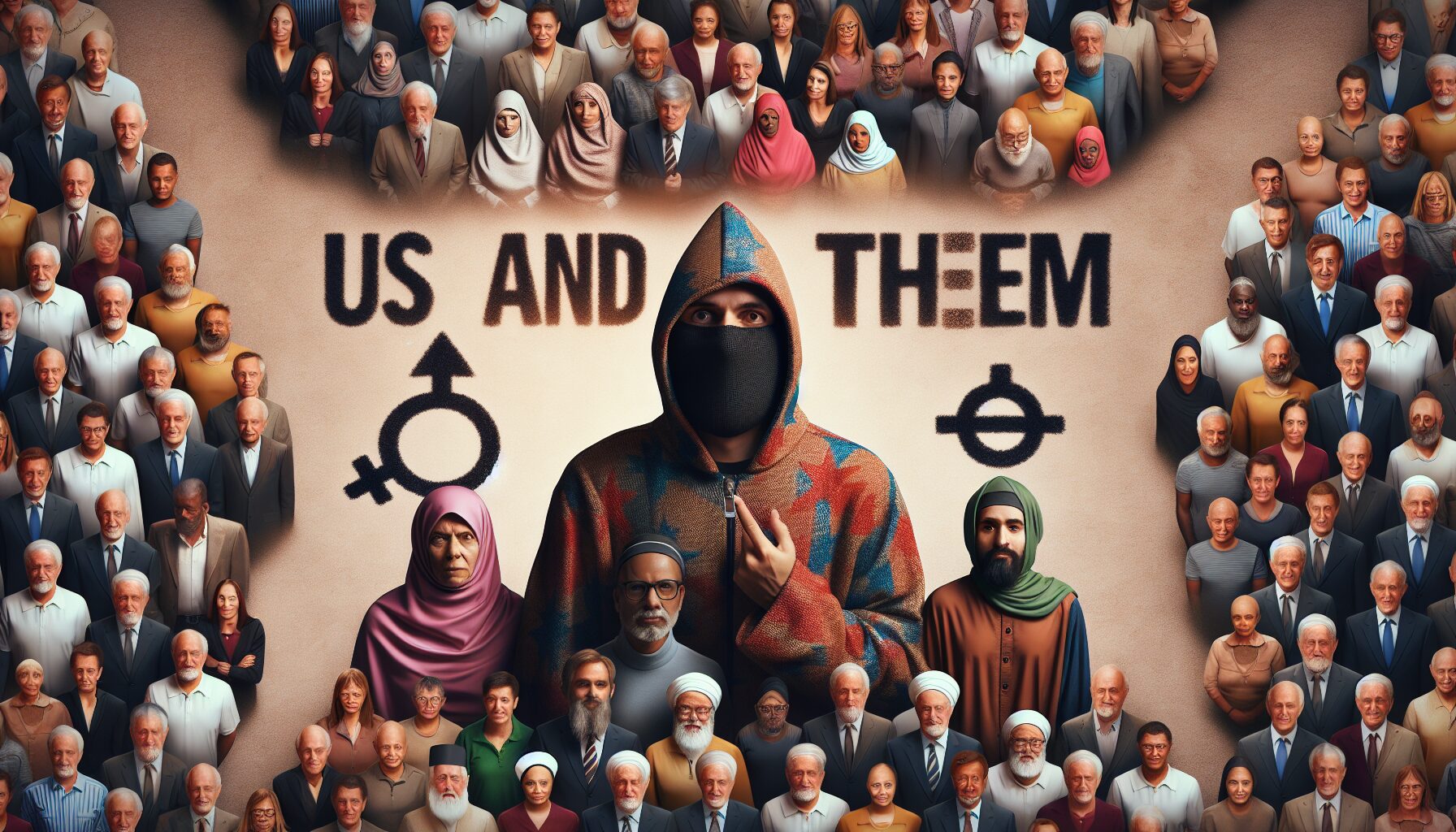

  • Us and Them – The social mechanics behind religious scapegoating

    Us and Them – The social mechanics behind religious scapegoating

    Us and Them: The Social Mechanics Behind Religious Scapegoating

    Throughout history, societies have often resorted to scapegoating certain religious groups, a phenomenon that has both social and psychological roots. Understanding the mechanisms behind this behavior reveals much about how humans interact in complex social structures.

    The Concept of Scapegoating

    Scapegoating involves unfairly blaming a person or a group for problems they did not cause. This practice is often harnessed to deflect responsibility, unite communities against a common “enemy,” and reinforce social cohesion within the dominant group. The term originates from an ancient ritual described in the Bible, where a goat was symbolically burdened with the sins of the people and driven away into the wilderness.

    Psychological Underpinnings

    According to Dr. Robert Jones, CEO of PRRI (Public Religion Research Institute), “When societies experience upheaval, individuals look for a cause; religious minorities often become the convenient scapegoat.” The American Psychological Association notes that scapegoating fulfills psychological needs, such as the need for a clearly defined foe during times of fear and uncertainty.

    The Mechanism of ‘Us vs. Them’

    • Identity: Religion is a core part of identity for many, and any threat to that can provoke defensive and aggressive responses.
    • Group Dynamics: Social Identity Theory suggests that people derive pride from their group membership. Distinguishing “us” from “them” reinforces group solidarity.
    • Perceived Threat: Sociologist Ervin Staub explains that perceived threats—whether economic, social, or cultural—often catalyze scapegoating dynamics.

    Historical Examples

    The persecution of Jewish communities throughout history, particularly during the Black Death in medieval Europe, is a classic example of religious scapegoating.

    “Jews were accused of poisoning wells and causing the plague, resulting in widespread violence and massacres,”

    recounts the Yad Vashem Institute. This illustrates how myths and stereotypes are often fabricated or exaggerated to serve the scapegoating agenda.

    The Cost of Scapegoating

    While scapegoating serves as a temporary balm for societal fears and anxieties, it ultimately negates the principles of inclusivity and mutual respect. It also perpetuates cycles of violence and misunderstanding. Psychologist Gordon Allport warned that, “Continual discrimination against minority groups not only destructs humanity but corrodes the soul of the society that indulges in it.”

    Studying the social mechanics of religious scapegoating compels us to question how we can prevent history from repeating itself. By fostering environments that emphasize empathy, understanding, and education, we can begin to dismantle the destructive mechanisms of “us” versus “them.”

  • Bound by Belief – How persecution reshapes group identity

    Bound by Belief – How persecution reshapes group identity

    Bound by Belief: How Persecution Reshapes Group Identity

    The history of human civilization is replete with instances of religious, ethnic, and political persecution. Far from annihilating the groups in question, persecution has often played a paradoxical role in strengthening group identity and reshaping its cultural and social bonds. This phenomenon raises fascinating questions about the resilience of communities under duress and the transformative power of shared adversity.

    The Dynamics of Persecution

    Persecution frequently functions as a catalyst for the evolution of a group’s collective identity. This reshaping process centers on several dynamics:

    • Solidarity and Cohesion: As members face external threats, the survival instinct triggers increased solidarity among them. According to historian Philip Jenkins, “Persecution often binds a community together, providing it with a common cause and a narrative of resistance.”
    • Reinforced Beliefs: Far from weakening the beliefs of the persecuted, external pressure can reinforce religious or ideological convictions. Emile Durkheim, a pioneering sociologist, posited that persecution serves as a moral trigger, reaffirming the dedication of the group’s members.
    • Identity Reformation: Under external threat, groups may reformulate their identity, assuming new symbols and practices. The Jewish diaspora, for instance, has seen numerous reinterpretations of Jewish identity throughout centuries of persecution, each serving to fortify communal ties.

    Historical Examples

    The history of the early Christians provides a remarkable case study. Subjected to state-sanctioned persecution in the Roman Empire, early Christians experienced a profound transformation that would see them develop a rich iconography and theological canon. Christianity’s enduring motto, “The blood of the martyrs is the seed of the Church,” coined by Tertullian, underscored how initial persecution galvanized the faith’s spread across continents.

    Similarly, centuries later, the persecution of the Uyghur Muslims in China highlights modern reiterations of this ancient dynamic. Despite severe repression, reports have shown a resurgent embrace of cultural identity and religious practice among Uyghurs, drawing international attention and solidarity from Islamist networks globally.

    Concluding Thoughts

    Persecution, instead of achieving its elimination goals, often fortifies a group’s resolve, nurturing resilience and altering cultural practices to withstand external challenges. This paradox underscores humanity’s perpetual quest for meaning and stability in the face of adversity and highlights the indomitable spirit of community and faith.

    “When we are no longer able to change a situation, we are challenged to change ourselves.” – Victor Frankl

    This profound observation helps contextualize the unique ways in which persecution has historically unified communities, forging a stronger, more cohesive identity from the crucible of oppression.

  • Group Loyalty or Survival – The dynamics of persecuted communities

    Group Loyalty or Survival – The dynamics of persecuted communities

    The human tendency to form and maintain social groups is an enduring feature of our evolutionary heritage. However, for communities facing persecution, the choice between group loyalty and individual survival presents profound challenges. This intricate dynamic has been a focal theme in understanding how communities withstand external pressures.

    The Nature of Group Loyalty

    Group loyalty is often perceived as a deeply ingrained survival mechanism. According to The Social Animal by Elliot Aronson, “The desire to belong is one of the most basic and primal human needs.” This loyalty creates a collective identity that can unify members against external threats. However, it also requires individuals to make sacrifices for the group’s well-being.

    Such loyalty is a double-edged sword. On the one hand, it strengthens the community’s resilience; on the other hand, it may compel individuals to remain in environments that threaten their personal safety and survival.

    Historical Perspectives

    • The Jewish Diaspora: Throughout history, Jewish communities have exemplified how solidarity can sustain identity amidst persecution. From the Babylonian exile to the tribulations of the Holocaust, Jewish resilience underlines the strength that group loyalty can provide in the face of adversity.
    • The Rohingya Crisis: In more recent times, the Rohingya people have faced extreme violence and forced displacement. Their persistent identity and communal ties continue to play a crucial role in their ongoing struggle. Organizations such as UNHCR emphasize the importance of these bonds in facilitating aid and global visibility for their plight.

    Psychological Implications

    The psychological impacts of group loyalty are profound, especially under oppressive conditions. Oftentimes, loyalty entails upholding cultural traditions and ethical norms vital for communal continuity. However, it can also exert immense pressure on individuals to conform, potentially stifling innovation or adaptation strategies critical for survival.

    “People need people—there’s no survival without it,” states psychologist and author Brené Brown in her work on vulnerability and belonging.

    Yet, this very need can create dilemmas when individual desires or safety conflict with group expectations. Such conflicts may induce stress, anxiety, and a sense of guilt, particularly if one entertains thoughts of abandoning the group seeking safety elsewhere.

    Individual Survival Strategies

    When faced with severe threats, some individuals might prioritize survival over group allegiance. This choice often leads to fragmented communities and individual isolation. However, it also enables the members of persecuted communities to branch out, establishing new lives and, at times, entirely new communities.

    Survivorship bias often colors our understanding—which tends to highlight successful instances of individual departure rather than failure. However, the decision to leave can have consequences that are both bold and burdensome.

    Navigating Group and Individual Needs

    Balancing the needs of the group with those of the individual requires nuanced strategies.

    • Restructuring Leadership: A flexible leadership structure within communities can allow for adaptability while still honoring group loyalty.
    • Empathy and Support Systems: Encouraging empathetic listening and providing emotional support can help reconcile individual and group priorities.
    • Education and Awareness: Educating communities about the benefits of diversified survival strategies can foster openness to alternative paths.

    The interplay between group loyalty and individual survival is a reflection of a larger human struggle—navigating the fine balance between collectivist and individualist instincts. Communities that manage to strike this balance often emerge stronger and more resilient than before.

    Conclusion

    The dynamics of persecuted communities are complex and require an intricate understanding of human behavior under duress. Whether bolstered by historical narratives, psychological frameworks, or modern-day crises, the dichotomy of group loyalty versus survival continues to unfold uniquely across different contexts.

    Ultimately, both group loyalty and individual survival contribute to the fabric of community life. The pathways chosen by individuals and groups navigating persecution shape not only their future but can also inform broader societal resilience.

  • The Ghost of the Group – How Old Doctrines Haunt the Mind

    The Ghost of the Group – How Old Doctrines Haunt the Mind

    The Ghost of the Group: How Old Doctrines Haunt the Mind

    In the vast constellation of human thought and culture, doctrines are akin to spectral entities—unseen yet influential, elusive yet enduring. Like ghosts inhabiting ancient halls, they whisper from the recesses of our minds, guiding, cajoling, sometimes even coercing. These old doctrines, shaped by the beliefs of bygone societies, continue to haunt us, weaving a complex tapestry of inherited perceptions and values.

    The Persistence of Ancient Beliefs

    Human societies across the ages have been organized around central ideas and beliefs, often codified into doctrines. These ideas, rooted in myth, religion, philosophy, or science, provide a framework through which communities understand their world. However, the residue of these doctrines does not dissipate easily. As Carl Jung once observed, “We do not solve our problems; we outgrow them. We add capacities and experiences that eventually make us stronger than the problems.” This sentiment highlights the subconscious influence of doctrines that pervades our collective psyche.

    Why Do Doctrines Haunt Us?

    • Deep-Rooted Tradition: Many doctrines are entwined with tradition. They shape societal norms and cultural customs, becoming so ingrained that they transition from taught texts to unspoken assumptions. Traditions endure over generations, creating an environment where deviation feels not just rebellious but heretical.
    • Fear of the Unknown: Doctrines offer comforting certainties in an uncertain world. They provide answers, however flawed, to existential questions. The fear of the unknown—of stepping into uncharted intellectual waters—compels many to cling to established beliefs.
    • Identity and Belonging: Doctrines often anchor our identity and our membership in a group. They dictate not only personal beliefs but also how one is perceived within a cultural group. To challenge them is to risk ostracism, which can be a powerful deterrent.

    Examples of Doctrines that Haunt

    • Religious Dogmas: Many religious doctrines, developed thousands of years ago, continue to influence modern societal norms and personal beliefs. This enduring influence can be both positive, as in the fostering of community values, and negative, when it impedes societal progress.
    • Philosophical Ideologies: Philosophical movements such as existentialism or utilitarianism have deeply impacted ethics, politics, and personal worldviews. The footprint of such ideologies can still be felt in modern discussions about morality and decision-making.
    • Cultural Norms: Beliefs about gender roles, family structures, and career paths rooted in past centuries often clash with contemporary values, creating tension and necessitating a reassessment of what traditions should persist.

    Freedom from the Ghosts

    The question then arises: how do we exorcise these ghosts or, at the very least, coexist peacefully with them? The answer lies in critical thinking and adaptability. According to philosopher Alfred North Whitehead, “Civilization advances by extending the number of important operations which we can perform without thinking about them.” Hence, part of our cultural evolution involves deeply questioning the ‘why’ behind entrenched beliefs.

    “A great many people think they are thinking when they are merely rearranging their prejudices.” — William James

    A Path Forward

    Confronting these intellectual specters involves several steps:

    • Education: Cultivating a mindset of lifelong learning that encourages the exploration of new ideas and the rejection of doctrinal rigidity.
    • Dialogue: Engaging in open conversations across different ideologies to foster understanding and movement beyond dogmatic thinking.
    • Reflection: Personal introspection to recognize areas where old doctrines may unduly influence choices or perceptions.

    These steps, while challenging, pave the way for a more enlightened and flexible worldview, enabling us to adapt to new realities and insights.

    Conclusion

    The ghosts of old doctrines, while a testament to our cultural heritage, also represent the constraints of outdated thinking. By acknowledging their presence and thoughtfully addressing their influence, we can transform these spectral guides from chains to stepping stones. Only then can we hope to chart a course through the labyrinth of modern existence, enriched by the wisdom of the past yet unfettered by its chains.

    For further reading on the intersection of self and society, consider exploring this article by Britannica on socialization.

  • The Burning Line – What Happens When You Cross Group Boundaries

    The Burning Line – What Happens When You Cross Group Boundaries

    In the complex tapestry of human interaction, group boundaries serve as invisible lines that define societal norms, professional alliances, cultural affiliations, and personal tribes. Crossing these boundaries can lead to profound changes, both positive and negative. But what truly happens when one steps across the burning line?

    The Nature of Group Boundaries

    Group boundaries are essential for the formation of identity and community. They offer a sense of belonging, security, and understanding among members. These boundaries can be rooted in a wide array of factors, including ethnicity, religion, occupation, political ideology, or shared experiences.

    “Boundaries are to protect life, not to limit pleasures.” — Edwin Louis Cole

    Edwin Louis Cole’s words highlight an essential truth: the boundaries create an environment where individuals can thrive within a group by offering protection. However, they also set limits and, sometimes, these necessary reports can become restrictions.

    The Outcomes of Crossing Boundaries

    When an individual crosses a group boundary, the outcomes can vary widely depending on the context and the groups involved. Below are some of the common experiences and outcomes associated with crossing these boundaries:

    • Cultural Enrichment: Venturing into a new group can offer a wealth of new knowledge, perspectives, and experiences. Cultural exchange initiatives between communities often illustrate this, showing how music, art, language, and customs can enrich lives.
    • Identity Challenges: Crossing into a new group may challenge one’s identity. The exposure to different belief systems or practices can lead to internal conflicts and a reevaluation of one’s values and lifestyle. This can be a necessary part of personal growth but is often uncomfortable.
    • Exclusion and Isolation: There can be social costs to stepping outside one’s native group. Ostracization can happen when a member abandons group norms, as established groups may view the act as betrayal or disloyalty.
    • Conflict and Tension: Often, longstanding biases and historical grievances can lead to tension and conflict when boundaries are crossed. Misunderstandings can easily arise due to differing communication styles or cultural practices.

    Historical Perspectives

    History provides numerous examples of boundary crossing. One prominent example is that of immigrants who often face the challenge of integrating into new societies. Their stories tell of the pursuit of opportunity and liberation but also of the struggle against xenophobia and isolationism.

    “We all have an obligation as citizens of this earth to leave the world a healthier, cleaner, and better environment for our children and future generations.” — Blythe Danner

    This quote can be adapted to boundary crossing, suggesting that as global citizens, expanding our understanding and bridging cultural divides is essential for building a harmonious future for the next generations.

    The Digital Frontier

    The advent of the digital age has dramatically transformed how boundaries are perceived and crossed. Online platforms blur the lines, allowing individuals to explore diverse groups freely.

    • Virtual Communities: Social media and online forums offer a platform where individuals can engage with communities worldwide, learn new perspectives, and collaborate across traditional boundaries.
    • Challenges of Anonymity: While the digital world offers the opportunity for identity exploration, it also presents challenges such as misinformation, trolling, and echo chambers that reinforce existing biases rather than foster understanding.

    Navigating Boundary Crossing

    It’s crucial to approach boundary crossing with sensitivity and understanding to maximize its positive potential. Here are some strategies to consider:

    • Empathy and Open-Mindedness: Approaching new groups with a willingness to listen and understand divergent viewpoints fosters respect and learning.
    • Education and Awareness: Understanding a group’s history, challenges, and core values before engaging can ease the transition and prevent misunderstandings.
    • Effective Communication: Building dialogue across boundaries is essential for mutual respect and learning. Engaging in thoughtful conversations and constructive debates can bridge divides.

    Conclusion

    Crossing group boundaries, metaphorically stepping over the burning line, can open a world rich with possibilities and growth opportunities. While it can challenge one’s identity and result in conflict, the potential for cultural enrichment and personal development is immense. By approaching these boundaries with empathy and curiosity, individuals can forge new connections that transcend traditional divisions and build an inclusive future.

  • The Hidden Laws – Unspoken Rules that Govern High-Control Groups

    The Hidden Laws – Unspoken Rules that Govern High-Control Groups

    High-control groups, often referred to as cults, exhibit characteristics that make them distinctly different from mainstream organizations. These groups, which span various domains—from religious sects to political movements—share certain unspoken rules that govern their operation and influence on members. These “hidden laws” operate beneath the surface, subtly controlling and influencing the behavior and thoughts of group members.

    Understanding High-Control Groups

    Before delving into the specifics of these unspoken rules, it is essential to understand what constitutes a high-control group. Such groups are characterized by:

    • Authoritarian Leadership: A centralized authority figure who demands unwavering loyalty.
    • Isolation: Segregating members from outside influences to reinforce group ideologies.
    • Control Over Information: Restricting access to external information to avoid contradictory viewpoints.
    • Excessive Demands: Placing significant demands on members’ time and resources.

    The Power of Unspoken Rules

    High-control groups meticulously weave unspoken rules into their fabric, often without the overt knowledge of their members. These rules shape the group’s culture and the members’ psyche, governing every aspect of their lives within the group. Here are some common unspoken rules that dictate the functioning of high-control groups:

    Rule #1: Us vs. Them Mentality

    High-control groups often cultivate a dichotomy between the in-group and the out-group. This “us vs. them” mentality reinforces loyalty and creates an identity around group membership (Zimbardo, 2007). It breeds a sense of exclusivity and superiority, making members feel part of a special collective that is misunderstood or even persecuted by outsiders.

    “In conditions of extreme uncertainty, people are prone to latch onto groups that offer certainty and identity.” – Philip Zimbardo

    Rule #2: The Cult of Personality

    Leaders of high-control groups are often elevated to a god-like status in the eyes of their followers. This transcends mere admiration; it demands unquestioning allegiance. The leader’s image is meticulously crafted, with any dissent being harshly punished. In essence, the leader becomes the embodiment of the group’s ideology and practice.

    Rule #3: Absolute Conformity

    Uniformity in thoughts, actions, and appearances is often an expected norm. Members are subtly coerced into adopting group-specific jargon, attire, and behaviors, creating a homogenized identity. B. Margaret Singer, a notable psychologist and researcher, points out that such measures are often designed to suppress individualism and critical thinking (Singer, 2003).

    “Cults… strip away a person’s individuality and promote total dependency on the group.” – Margaret Singer

    Rule #4: Information Control

    Control over information is central to the operations of high-control groups. Members are discouraged from seeking information outside the group’s approved sources. This rule reinforces the group’s narrative and insulates members from external, potentially contradictory, perspectives. Such control ranges from censorship to outright propaganda.

    Rule #5: Emotional Manipulation

    High-control groups often employ emotional manipulation to maintain control. This includes deploying guilt, fear, and shame to compel members into compliance—often under the guise of care or concern. Psychologist Robert J. Lifton, in his analysis of thought reform, highlights how these groups exploit fundamental human emotions to ensure compliance and loyalty (Lifton, 1989).

    “Emotionally manipulative leaders can effectively keep their members under control, making it difficult for them to leave even when cognitive dissonances arise.” – Robert J. Lifton

    The Psychological Impact on Members

    These concealed rules invariably take a toll on the mental and emotional wellbeing of members. The constant pressure to conform, coupled with information control and emotional manipulation, can lead to various psychological challenges such as anxiety, depression, and PTSD. Members often find themselves in a perpetual state of cognitive dissonance, torn between personal beliefs and group doctrines.

    Recognizing and Addressing High-Control Group Influence

    Awareness is the first step towards addressing the influence of high-control groups. Understanding these hidden laws allows individuals and society to identify early signs of coercive control. Moreover, open dialogue and education about these groups can empower individuals, providing them with the knowledge to resist manipulation.

    Conclusion: Breaking the Chains

    High-control groups are a fascinating yet concerning aspect of human social dynamics. By understanding the unspoken rules that govern these groups, we can better protect ourselves and others from manipulation and control. As society becomes more aware of these hidden laws, there is hope that individuals will find the strength to question, challenge, and ultimately break free from the chains of coercive power.

    Promoting critical thinking and emotional resilience can serve as antidotes to the control exerted by such groups. As Robert J. Lifton poignantly notes, the capacity for personal autonomy prevails when individuals remain vigilant and informed.

  • The Ritual of Exclusion – Why Groups Need Boundaries to Feel Holy

    The Ritual of Exclusion – Why Groups Need Boundaries to Feel Holy

    Throughout history, human societies have created rituals that serve to strengthen bonds within a group by establishing boundaries. These boundaries, often drawing demarcations between the sacred and the profane, are crucial in defining the identity of the group and in fostering a sense of belonging among its members. In many cultures, this has taken the form of religious rites, but the concept of exclusion extends far beyond religion. This article delves into the reasons why groups need boundaries to feel holy and examines the psychological and cultural implications of these practices.

    The Nature of Holiness and Exclusion

    To understand the interplay between holiness and exclusion, it’s important to first clarify what is meant by ‘holy’. Derived from the word ‘whole,’ holiness often suggests completeness and sanctity, something set apart for a particular purpose. As defined by Mircea Eliade in his seminal work The Sacred and the Profane, the sacred is distinct from the everyday and mundane, representing a higher reality.

    Groups, whether religious, social, or cultural, utilize boundaries to delineate what is holy to them. These boundaries can manifest physically — through places of worship, dress codes, and dietary laws — or symbolically, through shared beliefs and narratives. By creating a sense of distinction from the ‘other,’ groups can foster a deeper attachment to their identity and mission. This can be seen vividly in religions such as Judaism, where the concept of being a chosen people necessitates a lifestyle distinct from others. As Jay Michaelson notes in The Forward, “Jewish identity has always been about a set of practices and beliefs that draw borders between the sacred and the mundane.”

    The Psychological Need for Boundaries

    From a psychological perspective, boundaries serve an essential purpose in individual and group identity. By delineating who is ‘in’ and who is ‘out,’ groups provide their members with a means of understanding their place in the world. This is particularly prevalent during moments of uncertainty or existential crisis, where belonging to a group offers meaning and stability.

    • Identity Formation: Boundaries help create a clear contrast between ‘us’ and ‘them,’ which is vital for identity. As Erik Erikson posited, identity development is a crucial part of human development, impacting our beliefs, values, and choices. When individuals participate in group rituals, they often express a shared identity, reinforcing the boundaries that define the group.
    • Protection and Safety: By establishing what is considered holy, groups create a safe space for their members, insulating them from external threats. This is evident in communities that employ strict dietary laws or codes of conduct, as these rules serve not only spiritual but also communal and social purposes.
    • Social Cohesion: Shared rituals and boundaries enhance social cohesion. The collective experience of ritual often involves emotions like awe or reverence, binding individuals to a larger whole. As anthropologist Jonathan Haidt discusses, these shared moral matrices unite communities through common values and principles.

    Cultural Implications

    Examining the cultural impact of ritual exclusion reveals its role in shaping societies. Groups create narratives of exclusion and inclusion to maintain distinct cultures within the larger societal fabric. This is observed in rituals surrounding entry into adulthood, where rites of passage define new roles within the group, providing the individual with a deeper connection to their cultural identity.

    Consider the Maasai people’s Enkipaata ceremony – a significant rite of passage that marks the transition of boys to warrior class. These rituals are not merely ceremonial; they play a foundational role in perpetuating cultural continuity and societal norms.

    “Ritual, by setting up sacred spaces and times, helps to mark off our shared reality from the endless flood of experience, providing structure and meaning” – Rupert Sheldrake.

    The Dark Side of Exclusion

    While boundaries can bring groups together, they can also lead to division and conflict. The exclusionary tactics that ensure holiness within a group can create demonization or stigmatization of those outside the boundaries, leading to sectarianism or xenophobia. History is replete with examples of this division, often leading to persecution and violence. As sociologist Émile Durkheim warned, the sacred can also create social tension, as shared beliefs can become dogmatic, fracturing societies along ideological lines.

    Modern examples abound, from nationalism that excludes based on ethnicity or religion to gated communities that segregate the affluent from the rest of society. In such cases, the ritual of exclusion becomes a tool of power and control, reinforcing social hierarchies and economic divides.

    Conclusion

    The ritual of exclusion serves as a powerful reminder of human nature’s need for belonging and identity. While it fosters community and strengthens group identity, it also carries the potential for division and discrimination. Understanding the dual nature of these rituals can help societies navigate the complex interplay between sacred inclinations and the need for inclusivity. In recognizing the power of boundaries, modern groups can strive to create communities that celebrate distinct identities without resorting to exclusionary tactics that harm the broader social fabric.

    As we move forward in an increasingly interconnected world, bridging the gap between holy boundaries and inclusive unity becomes not just a cultural necessity but a moral imperative.

  • The Politics of Purity – How Groups Police Belief

    The Politics of Purity – How Groups Police Belief

    The Politics of Purity: How Groups Police Belief

    Throughout history, human societies have been organized around shared beliefs and values. While these collective ideals can inspire unity and cooperation, they often come with an intrinsic demand for conformity. This phenomenon, known as the “politics of purity,” refers to the ways groups enforce ideological homogeneity and suppress dissent.

    The Concept of Purity in Group Dynamics

    Groups, by their very nature, possess an inherent desire to maintain a cohesive identity. This identity is frequently rooted in core principles considered essential for membership. According to Psychology Today, “the politics of purity involves determining who is ‘in’ and who is ‘out’ based on an adherence to these principles.”

    Psychologist Jonathan Haidt describes this as part of the moral foundations theory, where “purity/sanctity” acts as a foundational moral value alongside others like care, fairness, and loyalty. Groups tend to prioritize purity when they feel threatened, fearing that the dilution of original ideals could lead to collapse.

    Mechanisms of Policing Belief

    The control and policing of belief within groups often manifest through several mechanisms:

    • Social Pressure: Members are encouraged to conform through both explicit demands and implicit expectations. Nonconformity can lead to ostracism or loss of status.
    • Rituals and Symbols: Participation in rituals and the use of specific symbols reinforce shared beliefs and delineate in-group from out-group members.
    • Language and Narrative: Controlling the narrative and language used within a group helps shape perceptions. As George Orwell famously noted, “Who controls the past controls the future: who controls the present controls the past.”
    • Gatekeeping: Leaders and influential members often set and enforce boundaries for acceptable beliefs and behaviors. This can include formal rules or informal judgment.

    The Role of Charismatic Leaders

    Charismatic leaders frequently play a critical role in defining and enforcing the politics of purity. Their appeal often stems from their ability to articulate a clear vision of the group’s identity and values. As described in Psychology Today, these leaders “embody the ideals of the group, serving as both the enforcer and the living symbol of purity.”

    Max Weber, the renowned sociologist, referred to charisma as a “certain quality of an individual personality, by virtue of which he is considered extraordinary and treated as endowed with supernatural, superhuman, or at least specifically exceptional powers or qualities.”

    The Consequences of Rigidity

    While maintaining group purity can provide clear guidelines and a sense of certainty, it can also lead to detrimental effects:

    • Groupthink: The desire for unanimity can result in irrational decision-making processes, where dissenting opinions are discouraged or silenced.
    • Stagnation: An inflexible adherence to traditional beliefs can hinder innovation and adaptation in a rapidly changing world.
    • Moral Superiority: Groups may develop a sense of moral superiority, leading to isolation and an inability to engage constructively with outsiders.
    • Conflict: Intolerance towards differing beliefs can escalate into conflict, both within the group and with external entities.

    Balancing Purity and Pluralism

    To avoid the pitfalls associated with the politics of purity, it is crucial for groups to strike a balance between maintaining core values and embracing pluralism. This involves fostering open dialogue, encouraging critical thinking, and allowing for gradual evolution in beliefs.

    “The test of a first-rate intelligence is the ability to hold two opposed ideas in mind at the same time and still retain the ability to function,” wrote F. Scott Fitzgerald. This openness to complexity might be challenging, but it is essential for sustainable growth and harmony.

    Ultimately, the politics of purity underscore the importance of vigilance against the allure of rigidity. As societies navigate the complexities of modern life, embracing diversity not only within but also beyond their immediate groups is paramount.

    By understanding the psychological underpinnings of the desire for purity, individuals and groups can better equip themselves to foster environments that champion both unity and diversity, where beliefs are not just policed but also enriched.

  • The Anatomy of Scapegoating – Why Groups Need Someone to Blame

    The Anatomy of Scapegoating – Why Groups Need Someone to Blame

    Scapegoating is a common practice in human society, where a person or group is unfairly blamed for problems or misfortunes. This phenomenon serves a variety of psychological and social functions, which are deeply rooted in the human psyche and the fabric of communities.

    Psychological Comfort

    At its core, scapegoating provides a sense of relief and psychological comfort. According to Dr. Todd Kashdan, a professor of psychology at George Mason University, “Scapegoating allows individuals to attribute their own shortcomings, failures, or anxieties onto others, thus protecting their self-esteem” (Psychology Today).

    When faced with complex or uncontrollable events, such as economic downturns or social upheaval, blaming an external entity simplifies the situation. It provides a perceived solution to a problem, which reduces uncertainty and anxiety among group members.

    Social Cohesion

    Scapegoating also plays a significant role in maintaining social cohesion. By identifying a common enemy or scapegoat, a group often strengthens its collective identity. This process often includes narratives and stories that highlight the “faults” of the scapegoated party, fostering a sense of togetherness among the rest, as they unite against a common adversary.

    “Groups often feel the need to define themselves against some ‘Other,’ as a means of self-definition and cohesion,” notes sociologist Dr. Eric Reger in his study on group dynamics (Journal of Social Psychology).

    Political And Cultural Dynamics

    • Political Manipulation: Scapegoating is a powerful tool in political strategy. Leaders often use it to divert attention from issues and consolidate power by rallying support against a targeted individual or group.
    • Cultural Narratives: History is rife with examples where entire communities have been blamed for societal problems, from the witch hunts of the 16th century to the 20th-century anti-immigrant sentiments.

    While the impulse to scapegoat may be deeply ingrained, it is essential for societies to recognize its pitfalls. Scapegoating can lead to division, discrimination, and even violence. By fostering a culture of understanding and empathy, communities can work towards more constructive solutions to their issues.

    In conclusion, scapegoating is a multifaceted phenomenon with deep psychological, social, and political roots. As societies evolve, recognizing and addressing the urge to blame others can be vital to fostering tolerance and unity in an increasingly interconnected world.