
Tag: followers

  • Witness to Power – Understanding Domination in Spiritual Structures

    Witness to Power – Understanding Domination in Spiritual Structures

    Witness to Power: Understanding Domination in Spiritual Structures

    Spiritual organizations often provide a sense of community, guidance, and purpose for millions around the world. However, they are not immune to the dynamics of power and control that affect all human institutions. Recognizing the structure of power within these spiritual organizations is crucial for both members and outsiders seeking to understand their influence and impact.

    The Nature of Spiritual Power

    Power in spiritual contexts often derives from a perceived connection to the divine or the transcendent, offering leaders a unique form of authority over their followers. As noted by scholar Max Weber, religious authority can take on a “charismatic” form, where followers believe their leaders possess special gifts or insights. He states,

    “Charisma is a certain quality of an individual’s personality by virtue of which they are set apart from ordinary people and treated as endowed with supernatural, superhuman, or at least specifically exceptional powers or qualities.”

    Forms of Domination

    • Charismatic Dominance: This occurs when leaders command significant influence based on their personal qualities or spiritual insight. Followers often ascribe to them exceptional powers which can create an unquestioned authority.
    • Hierarchical Control: Many spiritual organizations have established hierarchies, mirroring organizational or bureaucratic structures. This creates a clear chain of command that can concentrate power in the hands of a few leaders at the top.
    • Doctrinal Authority: By controlling the interpretation of sacred texts or spiritual teachings, leaders can exert significant ideological influence over their followers. This often includes the power to dictate behavioral norms and standards.

    Impact on Followers

    The effects of these power structures on followers can be profound. In some cases, members find security and guidance in strong leadership. However, when power becomes concentrated or abused, it can lead to negative consequences, such as manipulation, loss of autonomy, or exclusion of dissenting voices. As journalist and author Tom Bissell observes,

    “There is a tendency in all social organizations for power to become centralized and authoritative.”

    Seeking Balance

    To counteract potential abuses of power, many recommend introducing checks and balances within spiritual organizations. This could include transparent decision-making processes, accountability of leaders, and fostering environments where questioning and dialogue are encouraged.

    Ultimately, understanding the dynamics of power in spiritual structures requires a nuanced approach that acknowledges the unique nature of spiritual authority while advocating for ethical leadership and accountability. By doing so, spiritual communities can maintain their integrity and continue to offer solace and inspiration to their members.
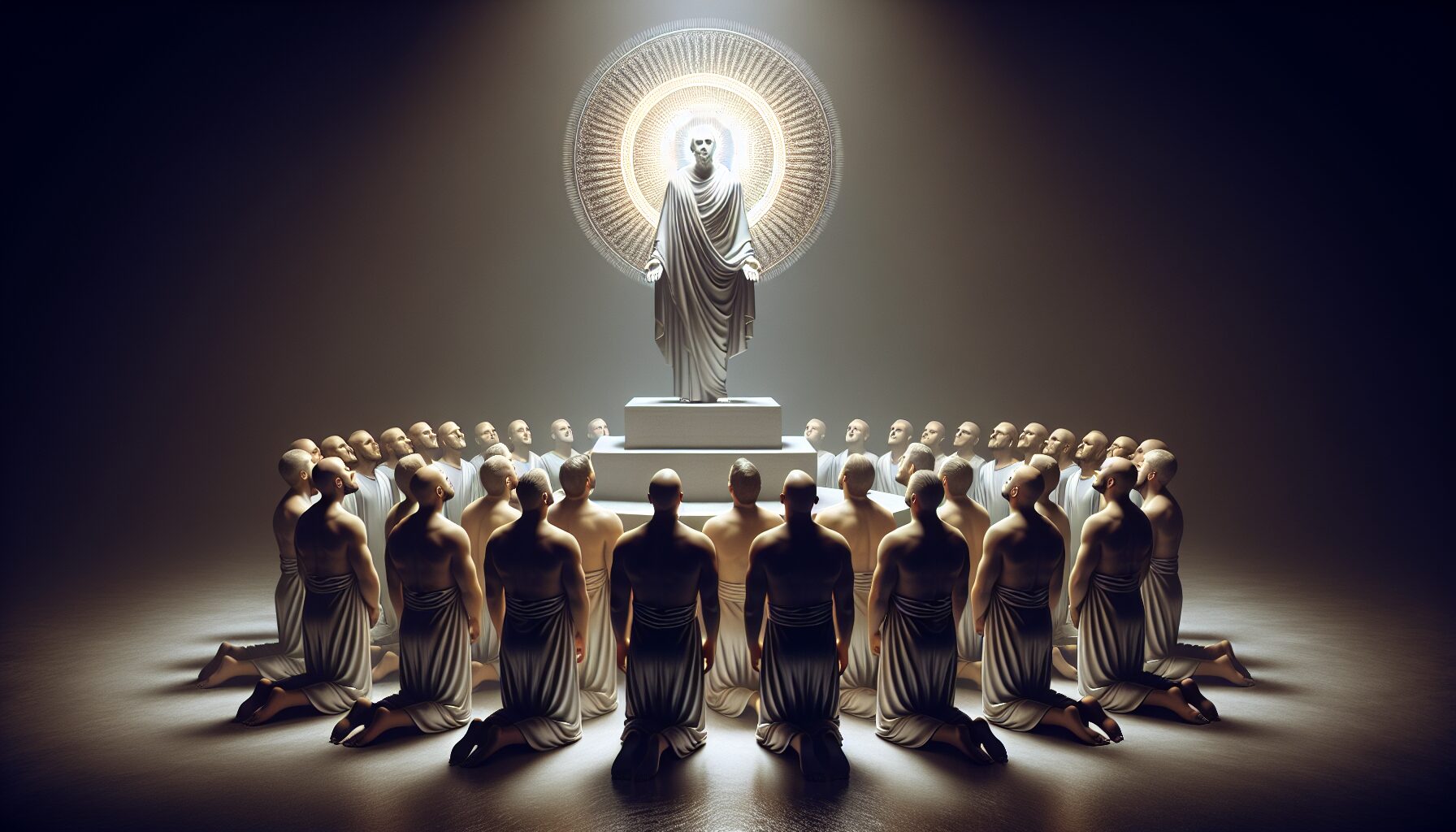

  • Spiritual Narcissism – Leaders Who Demand Devotion

    Spiritual Narcissism – Leaders Who Demand Devotion

    In a world increasingly focused on personal growth and spiritual journeys, the rise of “spiritual narcissism” is a concern for both followers and critics of new age movements. This phenomenon often manifests when leaders of spiritual groups, or those claiming enlightenment, demand unwavering devotion and admiration from their followers.

    Understanding Spiritual Narcissism

    Spiritual narcissism is a term used to describe the ego-driven behavior of individuals who exploit their supposed spiritual enlightenment to gain authority or admiration. Unlike traditional narcissism, which might center on material wealth or physical appearance, spiritual narcissism is often cloaked in a veil of wisdom, peace, and benevolence.

    “Spiritual narcissism can arise when our spiritual ‘insight’ becomes both an identity and a destination, rather than an ongoing practice of acceptance and humility,” explains Dr. Craig Malkin, a clinical psychologist and lecturer at Harvard University.

    The allure of spiritual teachings can be magnetic. They promise personal growth, connection to something greater than oneself, and newfound purpose. However, within this search for meaning lies a vulnerability that some leaders exploit, using charisma and perceived wisdom to manipulate followers.

    Signs of a Spiritually Narcissistic Leader

    • Demands for Absolute Devotion: Such leaders often insist that their followers place them above all else, sometimes even severing ties with friends and family who do not conform to the same beliefs.
    • Claim of Exclusive Knowledge: They may assert that they possess a unique understanding of the universe that others do not, thus justifying their elevated status.
    • Manipulation Tactics: Techniques such as gaslighting or guilt-tripping are used to discourage criticism and maintain control over group members.
    • Lack of Accountability: These leaders often deflect any form of criticism or questioning, portraying dissenters as spiritually deficient or unenlightened.

    The Impact on Followers

    For followers, being part of such groups can be both emotionally and psychologically taxing. The pressure to uphold the leader’s demands can lead to feelings of isolation, anxiety, and the abandonment of one’s personal values. “The problem with spiritual narcissism is that it uses spirituality as a means to bolster the ego rather than dismantle it,” notes Meggan Watterson, an author known for her work on integrating the human experience with the spiritual.

    Despite the challenges, awareness of spiritual narcissism is growing. As people become more discerning in their spiritual pursuits, they learn to recognize the red flags of leaders who prioritize self-glorification over genuine guidance and support. By focusing on authenticity and grounded spiritual practices, followers can protect themselves from the pitfalls of spiritual narcissism.

  • In the Shadow of Authority — Followers bearing leaders’ mistakes

    In the Shadow of Authority — Followers bearing leaders’ mistakes

    Leadership, often romanticized as a pathway to glory and honor, rarely exposes the less glamorous facets it obscures: the burdens borne by followers when leaders falter. Throughout history, followers have been compelled to shoulder the blame and consequences of their leaders’ errors, treading through the shadows cast by authority figures.

    The Weight of Responsibility

    The dynamic between leaders and followers is complex. As noted by leadership expert John C. Maxwell, “A leader is one who knows the way, goes the way, and shows the way.” However, when leaders slip from this ideal, their followers often find themselves entangled in the fallout. Political missteps, corporate scandals, and social movements illustrate how followers can become enmeshed in their leaders’ shortcomings.

    “The greatest leader is not necessarily the one who does the greatest things. He is the one that gets the people to do the greatest things.” – Ronald Reagan

    Yet, what happens when the direction is misguided? Followers face the immense pressure of managing their roles and the repercussions of their leader’s decisions.

    Case Studies in Leadership Fallibility

    • Political Arena: Consider the Watergate scandal that toppled President Nixon. The infamous incident forced his aides and loyalists, like H.R. Haldeman and John Ehrlichman, into the legal and moral quagmire created by their leader’s choices.
    • Corporate World: In the 2008 financial crisis, companies like Lehman Brothers collapsed under poor decisions made at the top. Employees and lower-level managers were left to navigate the economic, and often personal, repercussions while leadership remained scrutinized.
    • Social Movements: In activist circles, leaders who prioritize questionable tactics risk diminishing the movement’s legitimacy, leaving followers to defend and pivot amidst public backlash.

    Managing the Aftermath

    When leaders misstep, followers need strategies to handle the resulting backlash. Transparent communication, ethical accountability, and collective resilience are key in weathering such storms. Organizations and movements that encourage a culture of collective ownership can mitigate fallout and empower individuals to act responsibly.

    As Forbes asserts, effective leaders should cultivate environments where followers can thrive independently from leader-centric validations. This ensures that when faced with the consequences of leadership errors, followers are equipped to manage and rectify scenarios without bearing undue blame.

    While the shadow of authority can obscure and expose, it is essential to recognize and empower followers to carry not just the burden of leadership shortcomings but also the potential for profound, positive change.

  • Authority and the Freeze of Insight — How hierarchy stifles spiritual growth

    Authority and the Freeze of Insight — How hierarchy stifles spiritual growth

    In the interplay of authority and spirituality, a deep tension exists, often responsible for the stifling of genuine insight and growth. When the spiritual journey becomes entwined with hierarchical structures, the richness of personal discovery can be diminished. The need for control and uniformity can eclipse the spontaneous and individual nature of spiritual exploration.

    The Power Dynamics of Authority

    Authority in spiritual contexts often manifests through organized religion or spiritual orders, where leaders dictate the paths that followers should tread. While order and guidance can be beneficial, they sometimes lead to a restrictive environment where deviation from the norm is frowned upon. This sets the stage for what some refer to as the “freeze of insight.”

    “Authority poisons anybody who holds it.”

    The essence of personal spiritual growth lies in the individual’s own insights and realizations. Whenever a hierarchy imposes its own truths, followers may find it challenging to explore their own thoughts freely. Instead of fostering a climate of open inquiry and personal revelation, it creates one of compliance and uniformity.

    The Importance of Personal Experience

    • Self-discovery: Spiritual growth flourishes in environments that encourage questioning and personal experience. When hierarchy dictates belief, it stifles personal discovery.
    • Independent thought: Encouraging followers to critically engage with teachings promotes deeper understanding and spiritual maturity. If only rote learning and acceptance of established doctrines are endorsed, insight becomes frozen.
    • Empowerment: Spiritual authority should aim to empower individuals by encouraging direct experience and personal revelation, rather than merely perpetuating established traditions.

    The Path Forward

    To transcend the limitations imposed by spiritual authority, a shift towards inclusivity and personal empowerment is vital. By valuing individual insights and fostering open dialogue rather than ideological conformity, a richer, more dynamic spiritual experience is possible.

    “Knowing yourself is the beginning of all wisdom.”

    Ultimately, the key to liberating insight lies in embracing the unpredictable and personal nature of spiritual growth. Authority should inspire exploration rather than enforce stagnation. Addressing this balance holds the promise for a more profound and genuine spiritual journey.