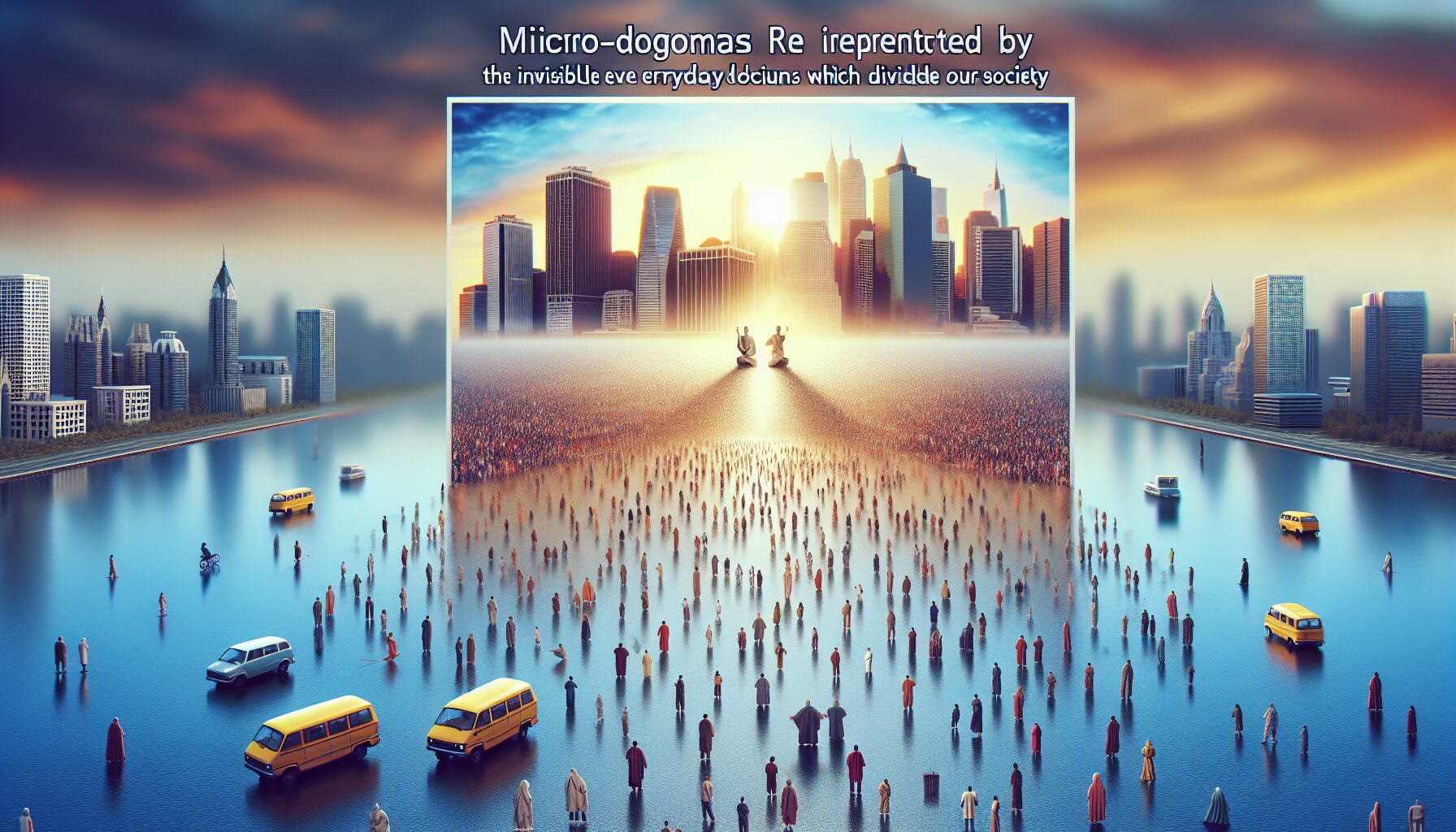
The Ghost of the Group: How Old Doctrines Haunt the Mind
In the vast constellation of human thought and culture, doctrines are akin to spectral entities—unseen yet influential, elusive yet enduring. Like ghosts inhabiting ancient halls, they whisper from the recesses of our minds, guiding, cajoling, sometimes even coercing. These old doctrines, shaped by the beliefs of bygone societies, continue to haunt us, weaving a complex tapestry of inherited perceptions and values.
The Persistence of Ancient Beliefs
Human societies across the ages have been organized around central ideas and beliefs, often codified into doctrines. These ideas, rooted in myth, religion, philosophy, or science, provide a framework through which communities understand their world. However, the residue of these doctrines does not dissipate easily. As Carl Jung once observed, “We do not solve our problems; we outgrow them. We add capacities and experiences that eventually make us stronger than the problems.” This sentiment highlights the subconscious influence of doctrines that pervades our collective psyche.
Why Do Doctrines Haunt Us?
- Deep-Rooted Tradition: Many doctrines are entwined with tradition. They shape societal norms and cultural customs, becoming so ingrained that they transition from taught texts to unspoken assumptions. Traditions endure over generations, creating an environment where deviation feels not just rebellious but heretical.
- Fear of the Unknown: Doctrines offer comforting certainties in an uncertain world. They provide answers, however flawed, to existential questions. The fear of the unknown—of stepping into uncharted intellectual waters—compels many to cling to established beliefs.
- Identity and Belonging: Doctrines often anchor our identity and our membership in a group. They dictate not only personal beliefs but also how one is perceived within a cultural group. To challenge them is to risk ostracism, which can be a powerful deterrent.
Examples of Doctrines that Haunt
- Religious Dogmas: Many religious doctrines, developed thousands of years ago, continue to influence modern societal norms and personal beliefs. This enduring influence can be both positive, as in the fostering of community values, and negative, when it impedes societal progress.
- Philosophical Ideologies: Philosophical movements such as existentialism or utilitarianism have deeply impacted ethics, politics, and personal worldviews. The footprint of such ideologies can still be felt in modern discussions about morality and decision-making.
- Cultural Norms: Beliefs about gender roles, family structures, and career paths rooted in past centuries often clash with contemporary values, creating tension and necessitating a reassessment of what traditions should persist.
Freedom from the Ghosts
The question then arises: how do we exorcise these ghosts or, at the very least, coexist peacefully with them? The answer lies in critical thinking and adaptability. According to philosopher Alfred North Whitehead, “Civilization advances by extending the number of important operations which we can perform without thinking about them.” Hence, part of our cultural evolution involves deeply questioning the ‘why’ behind entrenched beliefs.
“A great many people think they are thinking when they are merely rearranging their prejudices.” — William James
A Path Forward
Confronting these intellectual specters involves several steps:
- Education: Cultivating a mindset of lifelong learning that encourages the exploration of new ideas and the rejection of doctrinal rigidity.
- Dialogue: Engaging in open conversations across different ideologies to foster understanding and movement beyond dogmatic thinking.
- Reflection: Personal introspection to recognize areas where old doctrines may unduly influence choices or perceptions.
These steps, while challenging, pave the way for a more enlightened and flexible worldview, enabling us to adapt to new realities and insights.
Conclusion
The ghosts of old doctrines, while a testament to our cultural heritage, also represent the constraints of outdated thinking. By acknowledging their presence and thoughtfully addressing their influence, we can transform these spectral guides from chains to stepping stones. Only then can we hope to chart a course through the labyrinth of modern existence, enriched by the wisdom of the past yet unfettered by its chains.
For further reading on the intersection of self and society, consider exploring this article by Britannica on socialization.