Category: Case Files

  • Collective Fear – How repression alters group behavior

    Collective Fear – How repression alters group behavior

    Throughout history, repression has played a pivotal role in shaping the dynamics within societies. The mechanisms and impact of repression on group behavior are profound, often leading to a collective fear that influences how individuals within these groups interact with each other and respond to authority.

    The Nature of Repression

    Repression can be defined as the act of subduing someone or something by force. Within sociopolitical contexts, it often manifests as the systemic control of behavior, thoughts, and expressions of a population. This control is typically executed through fear tactics, censorship, and intimidation.

    “When people fear the government, there is tyranny; when the government fears the people, there is liberty.” — Thomas Jefferson

    This sentiment captures the essence of how fear can dictate the structure and function of societal units. When fear is prevalent, manipulation of the masses becomes a tool for maintaining power.

    Impact on Group Behavior

    Repression doesn’t only restrict personal freedoms; it drastically alters collective behavior patterns:

    • Conformity: Under pressure, individuals in repressive environments often conform to prevailing norms, even if privately they might disagree with them. This is driven by a survival instinct and the fear of potential repercussions.
    • Silencing of Dissent: The threat of punishment or ostracism can inhibit free expression. As a result, voices of dissent are muted, and the diversity of thought is stifled, hindering social progress.
    • Self-Censorship: In anticipation of repression, individuals may preemptively censor their own thoughts and actions, perpetuating a cycle of fear-induced conformity. A study from SAGE Journals illustrates how self-censorship is prevalent in societies experiencing high levels of state surveillance.

    Breaking the Cycle

    In spite of the pervasive fear, history has shown that collective resistance can emerge. The key to breaking the cycle of repression lies in fostering environments where freedom of expression is valued and protected. Movements such as the Civil Rights Movement and more recent instances like the Arab Spring demonstrate how unified efforts can challenge oppressive forces.

    The role of solidarity cannot be understated. As individuals unite in shared goals, the power dynamics shift. Resistance movements have been empowered by this collective courage, fueling transformative change towards more open, democratic societies.

    Ultimately, understanding the effects of repression and recognizing the courage of those who stand in opposition to it is crucial in advocating for healthier, freer societies. Repression may induce collective fear, but when harnessed positively, it can also ignite the fuse for collective empowerment.


  • Fragmented Faith – Internal strain within persecuted traditions

    Fragmented Faith – Internal strain within persecuted traditions

    Fragmented Faith: Internal Strain Within Persecuted Traditions

    The history of religious traditions is one marked by the perseverance of faith communities amid trials and tribulations. Yet, often overlooked is the internal strain experienced within these groups, especially those under persecution. This phenomenon of “Fragmented Faith” reveals a complex tapestry of spiritual resilience, adaptation, and, at times, division.

    A Struggle for Identity

    For many persecuted religious communities, the very threats they face from external forces serve to reinforce their collective identity. However, “the pressure to conform externally often forces an inward confrontation with evolving interpretations and practices,” suggests Dr. Emily Tardis, a renowned scholar in religious studies at the University of Oxford.

    Intergenerational Tensions

    One significant aspect of internal strain is the tension between generations within the persecuted community. While elder leaders may advocate for strict adherence to traditional practices, younger members often push for adaptations that reflect changing realities. According to The Journal of Religious History, “the intersection of traditional beliefs and modern values frequently causes friction that can lead to schisms within the community” (Journal of Religious History).

    Doctrinal Disputes

    • Interpreting Sacred Texts: Divergent interpretations of sacred texts often arise under the pressure of persecution, as individuals and subgroups seek meaning and guidance in unprecedented situations.
    • Liturgical Revisions: The need to adapt religious practices to clandestine or mobile gatherings can lead to inadvertent doctrinal modifications.

    These disputes are not merely theoretical; they manifest in real and impactful ways. As

    Prof. Mark Landon

    articulates, “In times of persecution, maintaining purity in faith becomes both a rallying cry and a source of inner discord.”

    Paths to Resilience

    Despite these challenges, many communities employ remarkable strategies to maintain cohesion and resilience. Engaging in open dialogue, forming alliances with broader movements, and nurturing a sense of shared mission are some ways these groups overcome internal strain.

    The story of the Vietnamese Catholic Church during the communist regime illustrates such resilience. Under constant threat, they fostered underground networks and upheld their traditions through clandestine ceremonies. The community found strength in what Asia News describes as “a profound sense of unity in the face of adversity.”

    A Complex Legacy

    The internal strain within persecuted traditions is a multifaceted issue that mirrors the broader human experience of struggle and survival. It underscores the inherent dynamism within faith communities, highlighting both the fragility and fortitude of shared belief systems. Ultimately, “Fragmented Faith” becomes a testament to the enduring spirit of human faith, adapting and thriving even amid the harshest of circumstances.

  • Bearing Witness – Why documenting persecution still matters

    Bearing Witness – Why documenting persecution still matters

    Bearing Witness: Why Documenting Persecution Still Matters

    Throughout history, the act of documenting persecution has stood as a pillar in the fight for justice and human rights. As societies grapple with the challenges of systemic oppression, bearing witness becomes essential, not only for the victims of today but for the education and prevention of tomorrow’s atrocities. This article delves into the significance of documenting persecution, exploring its multifaceted impact on individual lives, communities, and the global stage.

    The Power of Testimony

    Testimonies have long been a powerful tool to bring light to injustices faced by individuals and communities. As Holocaust survivor Elie Wiesel once profoundly stated, “For the dead and the living, we must bear witness.” These words echo the responsibility to the truth that comes with witnessing persecution.

    • Preserving memories: Documentation ensures that the memories of those who have suffered are preserved, providing a voice to the voiceless and allowing future generations to understand the depth of the atrocities committed.
    • Empowering victims: Sharing testimonies can be an empowering act for victims, giving them a platform to speak their truth and contribute to collective memory.

    Impact on Societal Awareness

    Documenting persecution not only preserves individual stories but also aids in raising societal awareness of ongoing injustices. By exposing these realities, documentation becomes a catalyst for social change.

    • Educating the public: Through mediums such as documentaries, books, and articles, the broader public gains insight into the experiences of oppressed groups. Education is the first step towards empathy and action. For example, the Global Slavery Index provides crucial data on modern slavery, influencing both public perception and policy changes.
    • Bridging cultural gaps: Testimonies and documents help bridge cultural and societal gaps by highlighting shared human experiences across different cultures and regions.

    The Role of Technology in Documentation

    In the contemporary era, technology plays a pivotal role in enabling more effective and widespread documentation of persecution. From viral videos captured on smartphones to digitally archived personal accounts, technology has democratized the process of documentation.

    • Real-time documentation: Platforms like Twitter and TikTok allow for the immediate sharing of events as they unfold, making them invaluable in places where mainstream media cannot reach quickly.
    • Digital archives: Online archives and databases, such as the United States Holocaust Memorial Museum, store thousands of testimonies and documents, making them accessible worldwide.

    Fostering Accountability and Justice

    Documentation serves a critical role in holding perpetrators accountable and seeking justice for victims. International courts and human rights organizations rely heavily on documented evidence to prosecute crimes against humanity.

    “The process of accountability for gross human rights abuses requires detailed, careful, and accurate documentation.” – Human Rights Watch

    • Legal proceedings: Detailed records and eyewitness accounts are essential for building cases in tribunals and courts. The International Criminal Court regularly employs evidence from human rights organizations and individual activists.
    • Policy reform: Documented evidence catalyzes legislative changes and the establishment of protective laws and policies. For instance, reports on genocide and ethnic cleansing in Rwanda and Bosnia have led to significant international policy shifts.

    Challenges in Documentation

    Despite its importance, documenting persecution is fraught with challenges. From personal risk to political interference, those who bear witness often encounter significant obstacles.

    • Safety concerns: Whistleblowers and journalists often face threats to their lives, as seen in the tragic cases of reporters covering drug cartels in Mexico or political unrest in Belarus.
    • Verifying information: Ensuring the accuracy of documented evidence, especially in conflict zones, remains a critical challenge. Organizations must tread cautiously to avoid misinformation.

    A Call to Action

    Bearing witness is not merely an act of recording history; it is a proactive stance against future injustice. Everyone has a role to play in the documentation process, whether by supporting organizations that document persecutions or by educating themselves and others.

    • Supporting initiatives: Contributing to organizations like Amnesty International and Human Rights Watch provides them with the necessary resources to continue their crucial work.
    • Public participation: Raising awareness within communities and challenging oppressive structures can start with empowering conversations and grassroots movements.

    In conclusion, the essence of documenting persecution lies in its ability to bring light to darkness, create change, and immortalize the voices of those who have suffered. As Martin Luther King Jr. famously asserted, “Injustice anywhere is a threat to justice everywhere.” In an ever-evolving world, the need to document persecution remains as urgent as ever, demanding vigilance, commitment, and unwavering courage.

  • The Global Market for Silence – Why abuses persist unchecked

    The Global Market for Silence – Why abuses persist unchecked

    In an age where information flows freely across borders at unimaginable speeds, the persistence of abuse scandals kept in the dark raises perplexing questions about the global market for silence. This market thrives on the complicity, coercion, and control of individuals and institutions tasked with protecting our moral and ethical standards.

    The Mechanics of Silence

    Silence serves as a commodity in many areas where power dynamics are at play. From corporate malpractice to human rights abuses, the mechanisms of silence are as varied as they are pervasive. The intricacies of this market often involve:

    • Non-Disclosure Agreements (NDAs): These legal instruments are frequently employed to bind victims and whistleblowers into silence. As reported by BBC News, NDAs can be seen as “gagging orders,” restricting individuals from revealing important truths.
    • Financial Incentives: Settlements and hush money often serve to preempt public scandals. As The Guardian highlights, powerful entities leverage their wealth to coerce silence, preserving their public image at the expense of justice.
    • Threats and Intimidation: Many individuals are silenced through threats of retaliation, either directly or subtly implied. This coercion is a pervasive barrier to speaking out.

    Carly Nyst, a digital rights lawyer, describes non-disclosures as “a silencing tool that effectively allows the powerful to go unchallenged.”

    The Role of Cultural and Social Norms

    Silence is further perpetuated by cultural and social norms that discourage speaking out. In many cultures, there exists a strong deference to authority which can translate into an unwillingness to question or criticize those in power. This respect for hierarchy can halt efforts to bring abuses to light.

    Groups vulnerable to exploitation, such as marginalized communities and individuals with limited economic resources, often face heightened risks. These groups, due to their social positioning, may find it more challenging to break free from imposed silence and seek justice or reparation.

    The Impact of Silence

    The consequences of a thriving market for silence are profound. Human Rights Watch notes that unchecked abuses continue to infringe upon human dignity and well-being on a global scale. Silence magnifies the impact of these harms, enabling perpetrators to act with impunity.

    • Loss of Trust: When scandals do become public, the delayed revelations often erode trust in institutions and in systems of oversight.
    • Cultural Acceptance of Misconduct: When abuse and misconduct go unpunished, societies may inadvertently learn to accept such behaviors as norm.
    • Victim Empowerment Thwarted: The refusal to allow victims to speak creates a cycle of disempowerment and trauma, potentially leading to further victimization.

    In the words of Sheryl Sandberg, “We cannot change what we are not aware of, and once we are aware, we cannot help but change.” This highlights the importance of breaking the silence to initiate change.

    Breaking the Chains of Silence

    Efforts to dismantle the market for silence are gaining momentum, driven by advocacy groups and increasingly by individuals willing to risk speaking out. The #MeToo movement and others have demonstrated the potential to disrupt entrenched systems of coercion and denial.

    • Legal Reforms: There is a growing push for legal reforms that restrict the use of NDAs in cases involving criminal activity and significant misconduct.
    • Grassroots Movements: Empowering communities to speak out and share their stories often results in greater awareness and, eventually, systemic change.
    • Media and Public Campaigns: Investigative journalism and public awareness campaigns play an essential role in shining light on abuses and compelling action from otherwise unresponsive entities.

    As the global market for silence continues to face scrutiny, the onus is on each of us to listen and act upon the stories previously hidden. Transparency and accountability must be prioritized to dismantle the structures that allow silence to persist over truth.

    Combating this issue involves not just policy change but a cultural shift in values and priorities, emphasizing truth, justice, and the unwavering resolve to no longer remain complicit by our silence. Together, through collective awareness and action, change is possible.

    The journey to dismantle this market is a long one, but as stated by human rights advocate Desmond Tutu, “If you are neutral in situations of injustice, you have chosen the side of the oppressor.” Breaking the silence requires courage, compassion, and a commitment to justice.

  • Exporting Repression – How persecution models spread globally

    Exporting Repression – How persecution models spread globally

    Exporting Repression: How Persecution Models Spread Globally

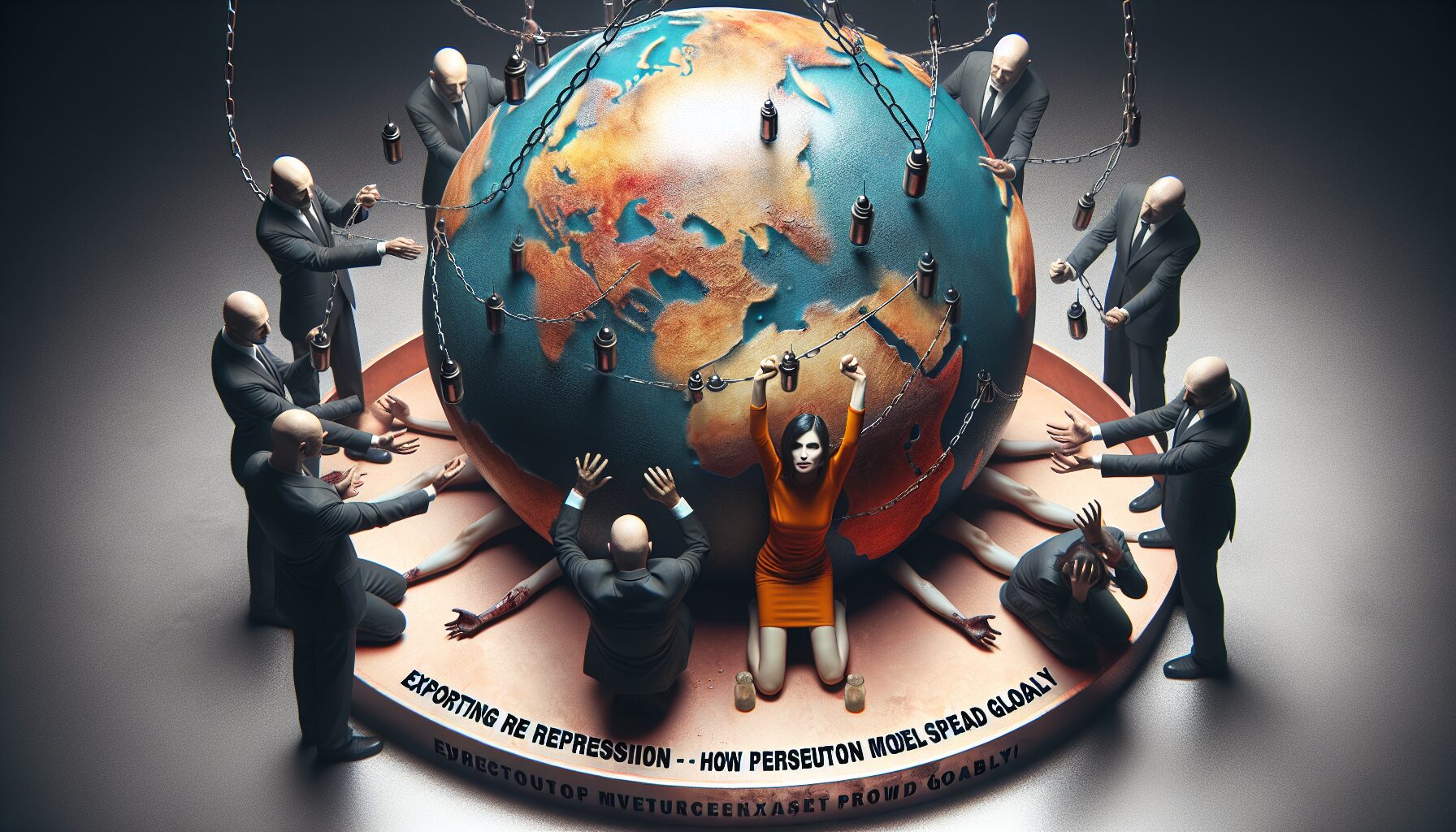
    In an increasingly interconnected world, the spread of authoritarian practices across borders has become a pressing concern. Systems of repression, once confined to the nations that developed them, are being exported globally, threatening freedoms worldwide.

    Models of Repression

    Authoritarian regimes often develop efficient models of repression to silence dissent and consolidate power. These models include a mix of surveillance technologies, legal restrictions on freedom of speech, and tactics to control information. Once developed, these models can be easily adapted and implemented in other nations.

    Technology as a Tool for Control

    Modern technology plays a pivotal role in the exportation of repression. Sophisticated surveillance systems developed in one country can be sold or shared with others, often under the guise of aiding national security. According to Human Rights Watch, “countries not known for respecting human rights have been able to purchase technology that allows them to monitor and track their citizens with extreme precision” (Human Rights Watch, 2022).

    Legal and Political Tactics

    Legal frameworks also facilitate the global spread of repression. Authoritarian leaders often share legislation and regulatory practices that curtail freedoms, portraying restrictive laws as necessary for maintaining order. This is evidenced by the increasing adoption of ‘fake news’ laws, which are criticized for being tools of censorship. The Amnesty International report states, “Such laws are often vaguely worded, allowing governments to clamp down on dissenting voices under broad interpretations of what constitutes fake news” (Amnesty International, 2023).

    “When one country implements oppressive systems successfully, it becomes a model for others with similar governance goals,” explains political analyst Jane Doe. “The export of repression is not just about technology but also about shared ideology and strategies” (Jane Doe, Political Expert, 2023).

    Resistance and Solutions

    Despite the spread of repressive techniques, international human rights organizations and civil society groups continue to push back. Raising awareness, advocating for digital rights, and supporting independent media are crucial steps toward countering these trends.

    • Advocacy and Campaigns: Groups like Freedom House are actively campaigning against the global spread of digital authoritarianism.
    • Technological Countermeasures: Developing open-source tools that protect privacy and boost secure communication channels is another key effort.

    As models of repression continue to spread, the global community must remain vigilant. Collaborative efforts are essential to ensure that freedoms enjoyed in some regions are not eroded by the authoritarian playbooks of others.

  • Asylum for Belief – When conscience crosses borders

    Asylum for Belief – When conscience crosses borders

    Asylum for Belief: When Conscience Crosses Borders

    In recent years, the intersection of asylum and personal belief systems has increasingly become a focal point for international discourse. Individuals fleeing persecution due to religious or philosophical beliefs, or whose consciousness dictates dissent from prevailing norms, often find themselves caught in complex legal and moral landscapes. This article explores the nuances of seeking asylum on the grounds of conscience and belief, examining both the international frameworks in place and the lived experiences of those seeking refuge.

    The Legal Framework

    According to the 1951 Refugee Convention, the cornerstone of international refugee law, a refugee is defined as a person who is outside their country of nationality and unable or unwilling to return due to a well-founded fear of persecution for reasons of race, religion, nationality, membership in a particular social group, or political opinion. While these categories provide a broad base, complexities arise when belief and conscientious dissent do not neatly fit within these parameters.

    “Refugee law is fundamentally about providing protections to people whose lives have been disrupted by a failure of their home countries to protect basic human rights,” says Jane McAdam, a renowned scholar on international refugee law. “The challenge is ensuring these frameworks evolve to encompass the changing dynamics and understanding of belief and conscience.” [source]

    The Role of Conscience

    Across the world, instances where individual consciences challenge authoritarian or oppressive regimes are not uncommon. For example, when citizens oppose mandatory military service on pacifist grounds or refuse government orders that conflict with their moral or religious beliefs, they may face severe repercussions, including imprisonment or execution.

    A poignant case is that of conscientious objectors. Conscientious objection is often not recognized as a legitimate reason for asylum. However, the European Court of Human Rights (ECHR) has tackled such cases, evolving the interpretation of “persecution” to sometimes include punishment for acts of conscience.

    “Serious punishment for failure to perform military service can constitute ‘persecution’ under the Geneva Convention,” asserts a landmark ECHR case recognizing the right to object for conscientious reasons.

    Case Studies: When Conscience Demands Flight

    The stories of those who have fled persecution based on belief offer profound insights into the personal impact behind the legal definitions. Consider the plight of Tibetan monks seeking asylum after facing retribution for practicing Buddhism—or the case of Jehovah’s Witnesses from Russia, a group labeled as “extremist” by Russian authorities.

    • Tibetan Monks: Fleeing repression from Chinese authorities, Tibetan monks have sought refuge in neighboring countries like India, where they can practice their beliefs freely.
    • Jehovah’s Witnesses: The Russian crackdown on Jehovah’s Witnesses, centered around accusations of extremism, has compelled many to seek asylum elsewhere, particularly in the European Union and North America.

    These examples highlight the fragile state of freedom of belief in regions with stringent governmental controls and illustrate the lengths individuals will go to preserve their conscience-driven lives.

    The Path Forward

    As awareness around the persecution-based asylum claims evolves, there is an increasing call for international institutions to adapt policies to integrate asylum claims based solely on conscience and belief more explicitly.

    “The need for innovative policy solutions that recognize and protect belief-driven asylum claims cannot be overstated,” argues Antonio Guterres, the UN Secretary-General. “We must ensure that our global systems of protection are inclusive and reactive to the world’s most vulnerable.”

    In practice, this could involve expanding definitions within the Refugee Convention to incorporate conscience explicitly as a criterion, thus allowing more individuals to rightfully claim asylum based on their intrinsic values and moral beliefs.

    Conclusion

    The plight of those seeking asylum for belief-related persecution exemplifies the delicate balance between the protection of state sovereignty and the universal human rights that transcend borders. As the global community continues to debate and adjust its policies, the stories and experiences of those who flee persecution remind us of the importance of empathy and the need for change to accommodate the world’s diverse tapestry of beliefs.

  • Faith on the Run – Refugees fleeing religious repression

    Faith on the Run – Refugees fleeing religious repression

    Faith on the Run: Refugees Fleeing Religious Repression

    In a world that strives for unity and acceptance, millions of individuals continue to flee their homelands in search of refuge from religious persecution. This article delves into the harrowing journey of those who risk everything to practice their faith freely, exploring the challenges and triumphs along the way.

    The Global Context of Religious Repression

    According to the Pew Research Center, more than a quarter of the world’s countries experience high or very high levels of government restrictions on religion. These restrictions often manifest as discrimination, harassment, and, in severe cases, violent persecution.

    • North Korea: The regime’s extreme repression of religious practice categorizes believers as enemies of the state.
    • China: The Chinese Communist Party has intensified efforts to control religious practices, notably against Uighur Muslims and Christian congregations.
    • Middle East: Regions like Syria and Iraq have been in turmoil, where religious minorities, such as Christians and Yazidis, have been targeted by terrorist groups.

    The Journey of Refugees

    Fleeing religious persecution often involves leaving behind everything familiar, venturing into the unknown. The journey is fraught with danger and uncertainty, but it is one many are willing to take to ensure religious freedom.

    “For those who have seen the pain and horror of human rights abuses, freedom is like oxygen,” writes Kenneth Bae in his memoir, “Not Forgotten: The True Story of My Imprisonment in North Korea”.

    The Danger in Displacement

    • Perilous Routes: Many refugees undertake dangerous journeys across deserts, mountains, and seas, often at the mercy of human traffickers and smugglers.
    • Hostile Borders: The increasing hostility of some nations towards refugees exacerbates the plight of those seeking asylum. They face closed borders, prolonged detention, and sometimes deportation.

    Resilience and Faith

    Throughout their journey, many refugees draw strength from their faith, which helps them cope with the adversity they face. Their narratives are replete with stories of hope and resilience.

    “Faith gives us the courage to face hardships and find solace in the darkest moments,” notes Malala Yousafzai, who has advocated for the rights of refugees across the globe.

    International Response

    Despite the challenges, international organizations and some nations have taken significant steps to address religious persecution and assist refugees.

    Policies and Protections

    • UNHCR: The United Nations Refugee Agency works diligently to provide protection and support to those fleeing religious persecution.
    • Global Compacts: Agreements like the Global Compact on Refugees aim to ensure equitable burden-sharing and enhance refugee self-reliance.

    Case Studies: Sanctuary and Support

    Several countries have opened their doors to religious refugees, offering a welcoming hand to those in need.

    • Germany: With its open-door policy during the Syrian crisis, Germany has provided shelter to hundreds of thousands of refugees from divergent religious backgrounds.
    • Canada: Known for its humanitarian approach, Canada regularly prioritizes refugee claims based on religious persecution.

    Challenges in Integration

    Once they reach a country of safety, refugees often face additional hurdles in integrating into new societies. Understanding these challenges is crucial to fostering inclusive communities.

    • Language Barriers: Limited language proficiency can hinder access to education and employment.
    • Cultural Differences: Navigating new cultural norms can be daunting, requiring significant adaptation and understanding from both refugees and host communities.

    “Welcoming refugees means more than just opening borders; it means building bridges of understanding and respect,” emphasizes António Guterres, the UN Secretary-General.

    The Road Ahead

    Addressing the root causes of religious persecution remains a vital global challenge. Advocacy for religious freedom, alongside practical support for refugees, forms the cornerstone of a path forward.

    • Promoting Tolerance: Initiatives that foster interfaith dialogue and understanding can help diminish religious conflicts globally.
    • Stronger Legislation: Nations need to enact and enforce laws that protect religious freedoms effectively.
    • Continued Support: Providing resources for refugee integration, including education and employment opportunities, is essential for sustainable resettlement.

    Conclusion

    The plight of refugees fleeing religious repression is a stark reminder of the ongoing human rights challenges worldwide. By understanding and responding to this issue with empathy and action, there is hope for a future where freedom of belief is a reality for all.

    A commitment to human dignity and freedom should guide policies and practices, ensuring that faith no longer has to be on the run. It is our collective responsibility to nurture a world where every individual can live without fear of persecution, practicing their beliefs freely and peacefully.

  • When Neighbors Turn Informants – Social breakdown under persecution

    When Neighbors Turn Informants – Social breakdown under persecution

    In times of social and political turmoil, the very fabric of community life can become tragically compromised. As authoritarian regimes seek to maintain control, they often employ tactics that pit neighbor against neighbor, turning trusted members of a community into informants. This breeding ground for paranoia weakens social bonds, leading to social breakdowns under persecution.

    An Atmosphere of Fear and Suspicion

    Historically, regimes have manipulated public fear to maintain control. According to History.com, “the threat of Communist infiltration created an atmosphere of fear and suspicion across the United States,” leading to the notorious McCarthy era, where many turned against each other in a desperate bid for survival.

    “They have not only destroyed the spirit of our community but corrupted our moral fabric,” noted historian John Wiselaw.

    Such atmospheres are nurtured by authoritarian regimes that incentivize citizens to report on each other. Persecution becomes a tool not only to eliminate dissent but also to divide and conquer by eroding the trust that communities rely on.

    The Machinery of Informant Networks

    Informant networks are meticulously constructed, constituting an extensive machinery that spies on everyday citizens. George Orwell, in his iconic novel 1984, vividly described a society where “Big Brother is watching you,” idealizing a realm where the state maintained an omnipresent surveillance apparatus.

    In Eastern Europe, particularly during the Cold War, neighborhood informants were a crucial part of the societal surveillance system established by state security agencies like the Stasi in East Germany. An article by BBC News outlines how the infiltration by the Stasi meant “one could never speak freely, even in one’s own home,” indicating the pervasive nature of these networks.

    • Incentives: Economic incentives and societal privileges often seduce individuals into becoming informants. The state may promise rewards or protection to those willing to betray their neighbors.
    • Coercion: The use of threats and blackmail ensures compliance from citizens who might otherwise be reluctant to participate.
    • Punishment: Those who resist these networks often face severe repercussions, including imprisonment or worse.

    Effects on Social Cohesion

    The presence of informant networks generates a self-perpetuating cycle of distrust within communities. Neighbors, once considered allies, become potential threats. This breakdown of interpersonal bonds leads to a fractured social landscape.

    Research by sociologists like Kathrin Röhrs and Joanna J. Bryson suggests that “social trust is a key factor in maintaining strong democratic institutions.” When this trust is eroded, it creates an environment ripe for further authoritarian control.

    Psychological Impact

    Living under constant surveillance and the threat of denunciation inflicts profound psychological stress on individuals. When individuals feel isolated and paranoid, it affects their mental health and overall well-being.

    A study published in the Journal of Social and Clinical Psychology by Sheldon Solomon explored how this climate can lead to heightened anxiety, depression, and feelings of insecurity, as “the fear of social rejection and isolation amplifies mental health struggles.”

    Breaking the Cycle

    To combat the social breakdown caused by these networks, communities require rebuilding trust through transparency and compassion. Education about historical instances of persecution and informing channels should be made available to the public to build resilience against this tactic.

    Organizations such as the American Psychological Association emphasize the importance of community programs that foster trust and resilience. Their initiatives focus on truth and reconciliation to heal community rifts and restore social bonds.

    Conclusion

    The conversion of neighbors into informants serves as a powerful mechanism of control, but its effects are devastating on a societal level. It represents a breakdown of trust and solidarity, instilling fear and mistrust among ordinary people. Recognizing these historical patterns and ensuring transparency and education are vital steps toward preventing social fragmentation under authoritarian regimes.

  • The Language of Dehumanization – How words prepare violence

    The Language of Dehumanization – How words prepare violence

    The Language of Dehumanization: How Words Prepare Violence

    Throughout history, the words we choose have often paved the way for actions, setting the tone for both collaboration and conflict. The power of language lies not only in its ability to inform and persuade but also in its potential to dehumanize and incite violence. Examining the mechanisms behind this linguistic phenomenon is vital in understanding how societies can fall into cycles of aggression.

    The Mechanisms of Dehumanization

    Dehumanization is the psychological process of demonizing the enemy, making them seem less than human and hence not worthy of humane treatment. This is often a precursor to violence, as it lowers the innate moral inhibitions that people have towards harming others. Language plays an integral role in this process.

    • Name-calling and Labeling: The first step in dehumanization often involves the use of derogatory labels. Such terms reduce individuals to undesirable stereotypes. For instance, the Rwandan genocide saw the use of the term “cockroaches” to describe the Tutsi population, effectively reducing them to vermin in the eyes of Hutu extremists.
    • Metaphors and Euphemisms: Using metaphors and euphemisms can mask the brutality of acts of violence. This can be seen in military jargon—terms like “collateral damage” or “neutralizing the target” which sterilize the reality of destruction and death.
    • Narratives of Threat: Language that frames others as existential threats can galvanize support for preemptive aggression. Adolf Hitler’s rhetoric of the ‘Jewish threat’ in pre-World War II Germany mobilized a nation leading to horrific atrocities.

    Historical Examples of Linguistic Dehumanization

    History is replete with instances where language laid the groundwork for widespread violence. A classic example is the 20th-century totalitarian regimes, which often relied heavily on propaganda to justify their actions.

    • Nazi Germany: The Nazis mastered the art of propaganda, making extensive use of vilifying language. Joseph Goebbels, the Minister of Propaganda, used media to inculcate the German public with anti-Semitic sentiment. A quote from historian Ian Kershaw illustrates this well:

      “The success of Nazi propaganda simply shows how easily people can be manipulated when fear and distance are created between groups.”

    • Rwanda: The Rwandan genocide was preceded by a period of intense media campaigns. Radio broadcasts referred to Tutsis as “inyenzi,” or cockroaches, contributing heavily to the dehumanization that enabled violence. According to a BBC report, the use of language that evokes fear and disgust played a key role in persuading ordinary citizens to commit acts of unspeakable violence against their neighbors.

    The Psychological Impact of Dehumanizing Language

    The psychological impact of such dehumanizing language cannot be underestimated. It erodes empathy and creates an ‘us versus them’ mentality. Research from The Journal of Personality and Social Psychology indicates that exposure to dehumanizing terms leads individuals to perceive out-groups as less human, reducing empathy and moral restraint.

    Such exposure also desensitizes people to violence, making atrocities seemingly acceptable or justified. This is evident in modern-day conflicts where both sides use inflammatory language to describe their opponents, thus perpetuating cycles of violence and mistrust.

    Modern-day Implications of Dehumanizing Rhetoric

    In the age of digital communication, the speed at which such rhetoric can spread poses a significant challenge. Social media platforms have become conduits for dehumanizing language, often allowing it to reach a global audience within seconds.

    To combat this, experts like technology critic Anil Dash emphasize the role of platforms in moderating content and educating users about the impact of their language. In his words, “We must hold platforms accountable for the role they play in amplifying this kind of harmful rhetoric.”

    Conclusion: The Call for Conscious Language

    The language used to describe others is not just a matter of semantics—it has the power to catalyze action, foster peace, or spur violence. Recognizing the role of dehumanizing language in preparing societies for violence is the first step toward breaking this vicious cycle. Ensuring that we choose words carefully, promoting inclusive narratives, and fostering empathy can create societies resilient against the siren call of dehumanization.

    Ultimately, becoming conscious of the language we use is crucial in striving toward a more harmonious and understanding world.

  • From Margins to Menace – Manufacturing fear of spiritual minorities

    From Margins to Menace – Manufacturing fear of spiritual minorities

    From Margins to Menace: Manufacturing Fear of Spiritual Minorities

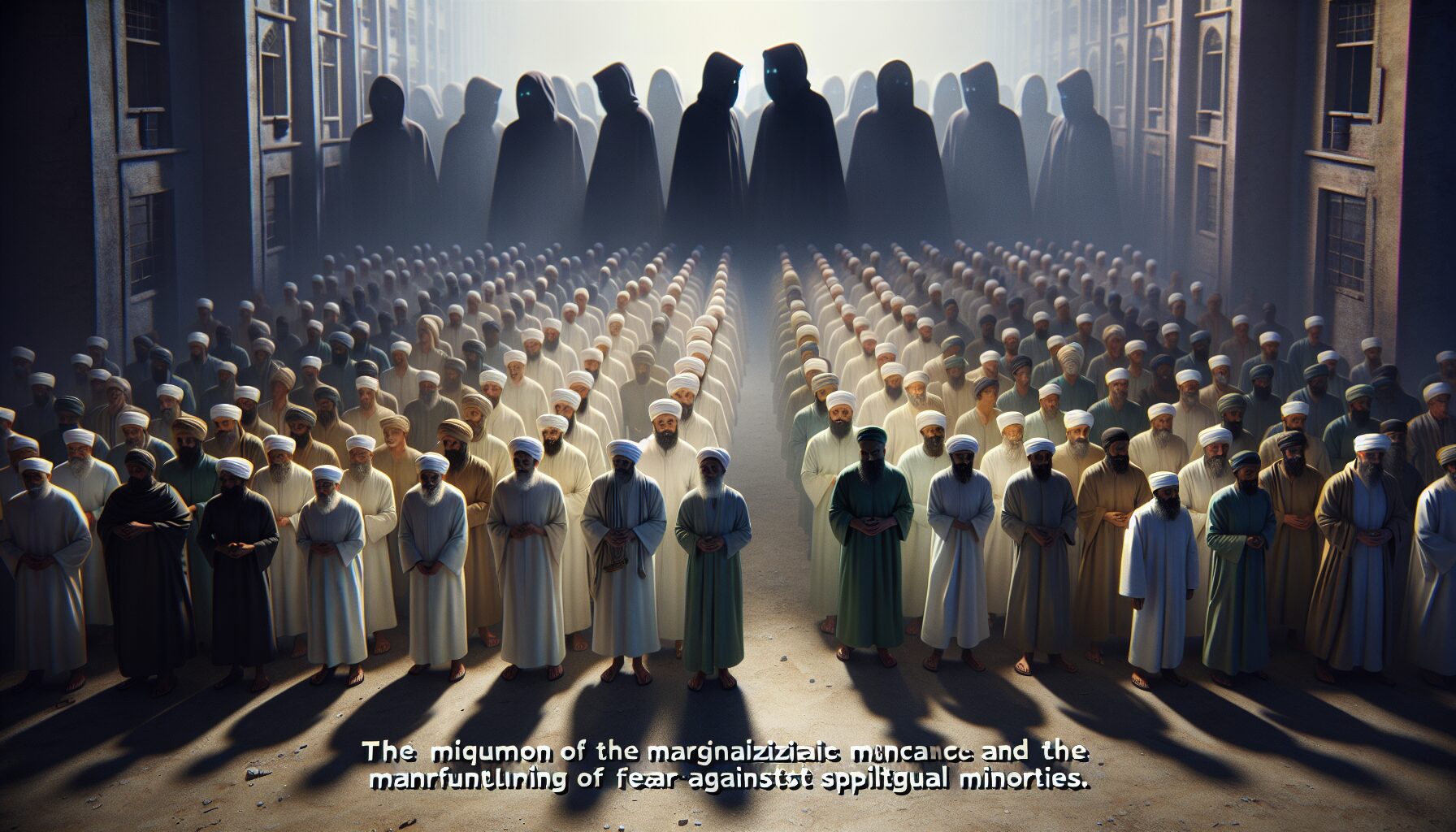
    Throughout history, spiritual minorities have often found themselves in precarious positions within mainstream society. These groups are frequently marginalized and, at times, portrayed as societal threats. This phenomenon raises important questions about the sources and perpetuation of fear towards spiritual minorities.

    The marginalization of spiritual minorities is not a new occurrence. From early Christians in the Roman Empire to modern-day new religious movements, fear and misunderstanding have often fueled mistrust and persecution. But how does this fear arise, and what keeps it alive?

    The Roots of Fear

    At the heart of this fear is often a lack of understanding and the portrayal of these groups as ‘other.’ In his book, The Culture of Fear, sociologist Barry Glassner discusses how media and cultural narratives can amplify fear by exaggerating threats or focusing on sensational stories.[1]

    “When we focus on fear, we produce more fear. And when we portray those who are different as threatening, we invite suspicion and discrimination,” explains Glassner.[2]

    The Role of Media

    The media plays a significant role in shaping public perception. Coverage often highlights the most extreme or controversial aspects of spiritual minorities, feeding into existing stereotypes. The case of the Waco siege in 1993, involving the Branch Davidians, is a prime example. Intense media scrutiny and sensationalized reporting painted the group in a violent light, reinforcing public fear.[3]

    • Selective Coverage: Highlighting negative aspects while ignoring ordinary, peaceful practices.
    • Insider vs. Outsider Narratives: Encouraging a sense of ‘us vs. them’ through biased storytelling.

    The Impact on Society

    Such narratives not only impact the targeted groups but also influence societal norms and policies. History has shown us that manufactured fear can lead to discrimination, social exclusion, and even violence. It underscores the need for a more nuanced understanding and reporting of spiritual minorities.

    Moving Forward

    As society becomes more interconnected, fostering understanding and dialogue is crucial. Recognizing and challenging the narratives that drive fear can lead to more inclusive communities. Encouraging critical media consumption and supporting diverse voices are steps toward breaking the cycle of fear.

    In the words of cultural historian Karen Armstrong, “Compassion is the key.” Understanding and embracing spiritual diversity, rather than vilifying it, can help bridge divides and diminish unfounded fears.[4]