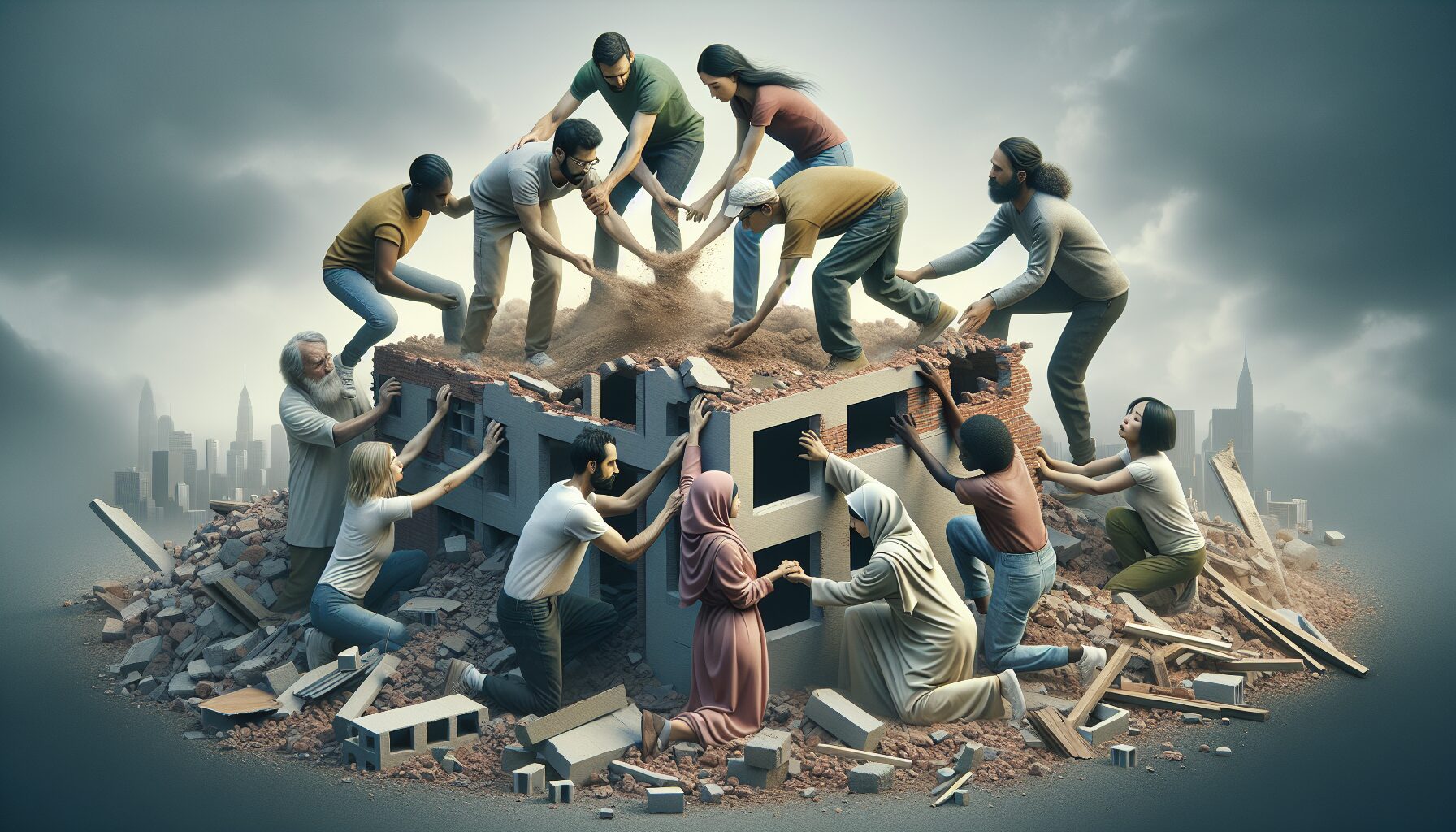
After the Collapse: What Persecuted Souls Build Next
The echoes of calamity have often paved the path to remarkable rebirths in human history. In the wake of societal collapse, where devastation and despair might be expected to blanket the earth, resilient souls steadily reconstruct their world. These individuals, often those previously marginalized and persecuted, emerge not only to rebuild but to innovate, driving forward change and development previously deemed unimaginable.
The aftermath of a collapse strips away the facades of civilization, providing a blank canvas upon which new, often more equitable societies can be painted. As noted by renowned historian Yuval Noah Harari, “Evolution molded us to live in small bands of no more than a few dozen individuals.”
“What unifies human communities, especially after a collapse,” says Harari, “is our ability to create shared myths and narratives that bind us together.”
The post-collapse society often embraces communal sharing and participatory governance structures. This shift can be seen vividly in historical examples where centralized, oppressive regimes have fallen, catalyzing grassroots movements that value collective wellbeing over individual gain.
Rebuilding from the Roots: Success Stories
During these times, technology and tradition frequently intertwine to form the foundation of future societies. In Rwanda following the 1994 genocide, a country once on the brink of failure transformed into one of Africa’s leading digital powerhouses. Their journey illustrates how resilience and innovation can lay the groundwork for recovery and growth.
- Community Initiatives: Local initiatives become crucial, fostering a sense of ownership and belonging among residents.
- Technological Advancements: As seen in Krakauer’s “Endurance”, technology adopted by a unified group can lead to revitalization. Communities often reach back to simpler, more sustainable living while embracing innovative technologies at a rapid pace.
- Mutual Aid: In the rubble of traditional economic systems, barter systems and mutual aid networks arise, providing immediate relief and fostering long-term sustainability.
Such transformations are not simply organic; they require the strength and determination of those who persist through adversity. As Rebecca Solnit eloquently puts it in her book A Paradise Built in Hell, “In the aftermath of disaster, people are often their most courageous.”
The worlds these persecuted souls build next are diverse etchings of hope and resolve, honoring past struggles while crafting fertile grounds for future generations. For more insights into post-collapse societies and their challenges, visit The Guardian for an exploration of humanity’s ability to adapt and overcome.
The essence of humanity’s capacity to rebuild lies not just in survival, but in the spirit of innovation that leads to a more inclusive and resilient society.