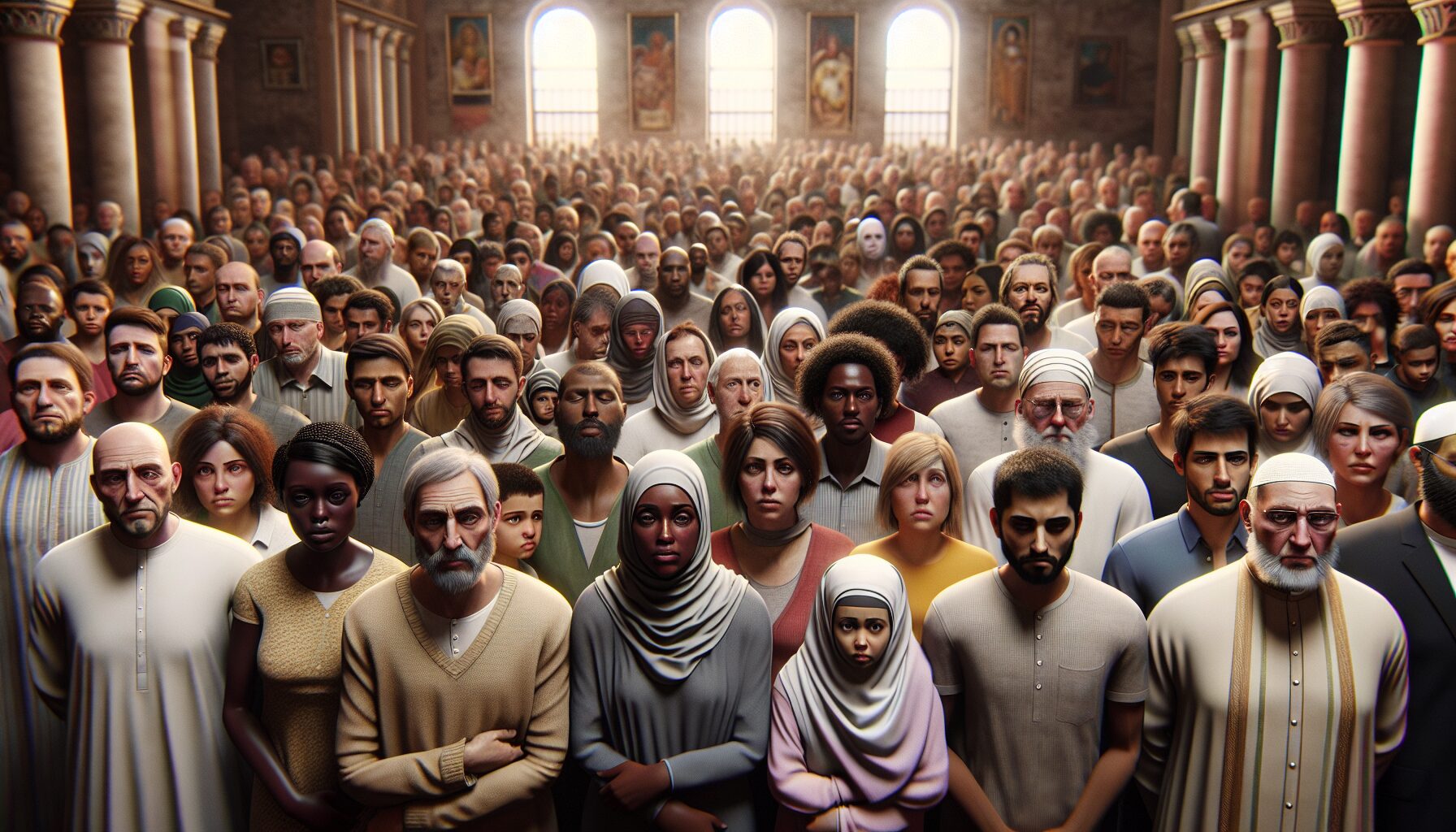
In a world where diversity of thought is celebrated, the enforcement of rigid belief systems can have profound and often detrimental effects on individuals and societies. The forceful imposition of ideologies not only stifles personal freedoms but also leaves scars on the social fabric that can take generations to heal.
The Allure and Pitfalls of Uniformity
Throughout history, the quest for uniformity in belief has been a hallmark of many regimes and institutions. The promise of a cohesive society is alluring, yet it often comes at the cost of individual expression and critical thought. George Orwell, in his seminal work 1984, warned of a future where “War is peace, freedom is slavery, and ignorance is strength”—a society so deeply entrenched in ideological conformity that truth becomes mutable.
While Orwell’s vision is extreme, the subtler forms of enforced beliefs can be just as damaging. Brené Brown, a renowned researcher, and author, once noted,
“The irony is that we attempt to disown our difficult stories to appear more whole or more acceptable. But our wholeness—even our wholeheartedness—actually depends on the integration of all of our experiences, including the falls.”
This integration is hindered in environments where divergent thinking is suppressed.
The Psychological Burden
Enforced belief systems often lead to significant psychological distress. The pressure to conform can result in anxiety, depression, and a loss of sense of self. Individuals stuck in such systems may experience cognitive dissonance—a mental conflict arising from holding contradictory beliefs—which can further exacerbate mental health issues.
Studies have shown that individuals in high-pressure environments where specific ideologies are mandated often face a “crisis of identity.” According to a study by the American Psychological Association, individuals who feel their personal beliefs are under threat often experience heightened stress levels, impacting both mental and physical health.
Societal Consequences
The human cost of enforced beliefs extends beyond individual repercussions. Societies that enforce rigid doctrine often find themselves divided as they fail to embrace the rich tapestry of diverse perspectives. This can lead to social unrest, as those who feel marginalized or oppressed eventually push back against the system.
Moreover, innovation and progress are stunted in environments where creativity and critical thinking are discouraged. A society that does not question its foundational beliefs risks stagnation, unable to adapt and thrive in a rapidly changing world.
Towards a More Inclusive Future
To mitigate the human cost of enforced belief, it is imperative to foster environments that value and respect diversity of thought. Encouraging dialogue and understanding can help bridge divides and facilitate healing. Societal progress hinges on the ability to embrace the plurality of experiences and perspectives that humanity offers.
As we move forward, the challenge lies in balancing collective societal goals with individual freedoms—ensuring that no one is left behind in the march towards progress.