
Tag: unity

  • The Myth of Unity – How Harmony Hides Abuse

    The Myth of Unity – How Harmony Hides Abuse

    In many communities and social settings, the call for unity is often emphasized as a means to maintain peace and harmony. It’s a concept lauded in families, workplaces, religious congregations, and even nations. After all, who wouldn’t want to belong to a group where cohesion and support are paramount? However, beneath the surface of such unity lies a potential pitfall: the masking of abuse and misconduct. This article explores how the pursuit of harmony can sometimes serve as a convenient cloak for abusive behavior.

    Unity as a Cultural Ideal

    Throughout history, unity has been a celebrated ideal. From the Bible’s emphasis on the collective strength of the faithful in passages like “How good and pleasant it is when God’s people live together in unity” (Psalm 133:1), to modern political slogans that rally for national cohesion, unity is presented as an undisputed virtue.

    The problem arises when this ideal transforms into a doctrine, one that mandates conformity over confrontation. Journalist and author Malcolm Gladwell suggests that while group solidarity is important, “It has its limits, especially when interpreting situations involving potential wrongdoing.” (New Yorker)

    The Pressure to Conform

    In environments where harmony is prioritized, individuals often face immense pressure to conform. This pressure can discourage dissent and enable a culture where harmful behaviors are overlooked for the sake of preserving “peace.” Consideration for unity can reactionary downplay the voices of those who are harmed, effectively silencing them.

    • Fear of Ostracism: Within tightly knit groups, the fear of being labeled as disruptive or not a “team player” may cause individuals to stay silent about injustices.
    • The Culture of Denial: Communities may deny issues within their ranks to preserve a pristine image of solidarity.

    “The silence of others in the group can make victims doubt their own experiences,” says Dr. Tanya Brown, a psychologist specializing in group dynamics. “It creates an environment where emotional and psychological abuse can thrive unnoticed.” (Psychology Today)

    The Role of Authority

    Abusive behavior often persists under the guise of maintaining harmony when those in authority manipulate the values of unity. This manipulation can occur in various forms:

    • Abusive Leadership: Leaders may coerce followers into obedience, using the threat of disruption as a means to maintain control.
    • Selective Support: Authority figures may selectively enforce rules, punishing those who speak out, while protecting those who toe the line.

    “True unity should never require the sacrifice of individual well-being,” asserts organizational consultant Linda Babcock. “Leaders must be vigilant against the misuse of ‘team spirit’ as a veil for misconduct.” (Harvard Business Review)

    Examples Across Contexts

    Abuse hidden behind the myth of unity is not confined to any one type of organization. It can be observed in diverse realms such as:

    • Religious Institutions: Reports of scandals within major religious organizations often reveal not just individual wrongdoers, but a systematic silencing of victims under the guise of protecting the institution’s unity.
    • Corporate Environments: Employees may be discouraged from speaking out against toxic work cultures to keep a semblance of harmony.
    • Family Structures: In certain familial settings, maintaining the family’s image is prioritized over the wellbeing of its members, leading to closed discussions about abuse.

    The Path Forward: Reimagining True Unity

    While the pitfalls are grave, communities can steer towards a healthier environment by redefining unity itself. True unity is characterized by the ability to embrace diversity of thought and handle conflicts constructively. This reimagining involves:

    1. Encouraging Open Dialogue: Create spaces where members can voice concerns without fear of retaliation or exclusion.
    2. Valuing Transparency: Adopt transparent practices that make it difficult to hide abusive behavior.
    3. Empowering Individuals: Promote individual awareness of rights and encourage empowerment to resist conformity.

    In the words of social advocate Maya Angelou, “Unity that honors progress and accountability is unity that lasts.” (Goodreads) True unity welcomes dissent as an opportunity for growth rather than seeing it as a threat to order.

    Conclusion

    The myth of unity, when left unchecked, can be a powerful tool for concealing abuse and discouraging truth. By dissecting our values and embracing a more nuanced understanding of unity, communities can foster environments that are both harmonious and just. It is in this balance between unity and individual integrity where transparency, safety, and true belonging can thrive.
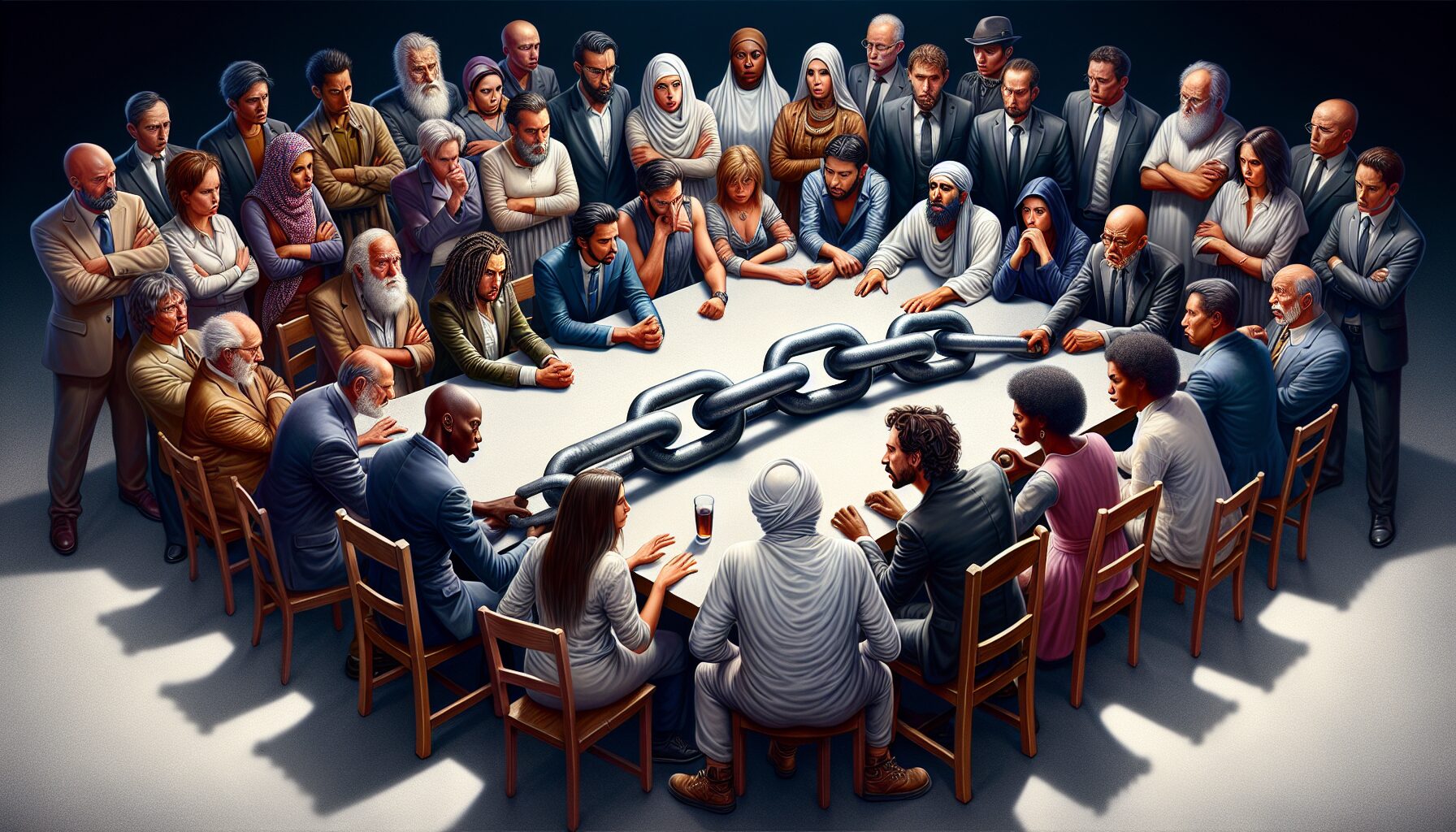

  • The Tyranny of Unity – When Consensus Is Forced

    The Tyranny of Unity – When Consensus Is Forced

    The Tyranny of Unity: When Consensus Is Forced

    In many organizations and communities, unity and consensus are valued goals. However, the pursuit of these ideals can sometimes lead to a phenomenon known as the “tyranny of unity.” This concept refers to situations where the pressure to conform is so strong that it stifles individuality, creativity, and critical thinking.

    Understanding the Tyranny of Unity

    The tyranny of unity occurs when dissenting voices are suppressed in the name of maintaining harmony. While consensus can facilitate decision-making and promote cohesive action, forced agreement can lead to problems. According to Daniel Kahneman, a Nobel laureate in Economics, “confidence is a feeling, which reflects motivation more than it reflects the ability to deliver.” Forced consensus may bolster a team’s confidence, but it doesn’t necessarily engender genuine agreement or success.

    Recognizing the Signs

    • Suppressed dissent: When members of a group feel they cannot voice their disagreements, this can lead to a lack of diverse perspectives and critical feedback.
    • Groupthink: A phenomenon where the desire for harmony results in the group making irrational or dysfunctional decisions. Irving Janis, a research psychologist, famously coined this term to describe the danger of consensus at any cost.
    • Fear of conflict: A strong aversion to conflict can lead to a culture where important issues are ignored rather than addressed.

    Impacts on Creativity and Progress

    Forced unity can have significant negative impacts on creativity and innovation. As Albert Einstein once said, “The important thing is not to stop questioning. Curiosity has its own reason for existing.” In environments where questioning is discouraged, curiosity is stifled, and potential breakthroughs are lost.

    Furthermore, when individuals feel their voices are not heard, morale can decrease, leading to disengagement and a lack of ownership over outcomes. As a consequence, the overall effectiveness and satisfaction of team members may suffer.

    Fostering a Healthy Balance

    To balance unity with individuality, organizations can promote an environment where diverse perspectives are welcomed. This can be achieved through:

    • Encouraging open dialogue: Create spaces where team members can express differing opinions without fear of retribution.
    • Valuing dissent: Recognize and reward the critical examination of ideas. This can help prevent groupthink and spur innovation.
    • Embracing conflict as growth: Understand that constructive conflict can lead to better solutions and stronger teams.

    In conclusion, while unity can be a powerful force for collaboration and progress, it should not come at the cost of stifling individual voices and ideas. By nurturing a culture that balances consensus with diversity of thought, organizations can thrive without falling prey to the tyranny of unity.

    For more insights into group dynamics and the psychology of consensus, consider reading works by Irving Janis on groupthink, or the studies by Daniel Kahneman on decision-making and biases.

  • The Illusion of Unity — When oneness is enforced

    The Illusion of Unity — When oneness is enforced

    In a world increasingly obsessed with the idea of unity, the concept of enforced oneness seems appealing. Imagine a society where everyone thinks alike, believes in the same doctrines, and works seamlessly towards common goals. However, beneath this facade of seamless unity lies a complicated reality. The illusion of unity can often stifle individuality, suppress diversity, and ultimately undermine the very essence of human creativity and progress.

    The Appeal of Oneness

    The idea of unity resonates deeply in human societies, largely because it offers a vision of harmony and cooperation. Unity promises to eradicate divisions, whether they be political, racial, religious, or economic. This is often captured by leaders and thinkers keen on promoting a stable, coherent narrative that galvanizes communities and nations.

    “Unity is strength… when there is teamwork and collaboration, wonderful things can be achieved,” said poet and playwright Mattie Stepanek.

    On a superficial level, enforced unity could seem to simplify societal complexities, reducing friction and fostering collective success. However, the cracks in this veneer become apparent when unity is used not as a natural convergence of ideas but as a forced conformity imposed by authority.

    Enforcing Oneness: Power and Control

    History offers numerous examples where enforced unity was used as a tool for control rather than cooperation. Totalitarian regimes often impose a strict uniformity under the guise of unity. In these scenarios, unity is not organic but demanded, prosecuted through force and propaganda.

    • Nazi Germany: The regime under Adolf Hitler demanded absolute conformity to its ideology. Different thoughts, cultures, and people deemed ‘other’ were brutally suppressed.
    • Stalinist Soviet Union: The state pursued unity through enforced collectivization and suppression of dissent. Ideological uniformity was strictly maintained, often with lethal consequences.
    • North Korea: Today, the state imposes a rigid unity by controlling all aspects of life, ensuring that deviation from the state’s narrative is not possible.

    These examples underscore how unity, when enforced, becomes a mechanism for control, exploiting the guise of cohesion to eliminate diversity and dissent.

    The Cost of Enforced Unity

    When unity is enforced rather than naturally developed, the cost is high. The suppression of diversity and dissent stifles creativity, innovation, and progress. Societies thrive on the diversity of thought — it is the friction between different ideas that sparks creativity and innovation. Enforced unity eliminates the friction, leaving a dull, static narrative where growth is stagnated.

    “Our ability to reach unity in diversity will be the beauty and the test of our civilization,” as rightly stated by Mahatma Gandhi, emphasizing that diversity should be celebrated, not suppressed.

    Moreover, enforced unity often leads to a climate of fear and mistrust. People develop a sense of suspicion, ever wary of their neighbors and colleagues who may denounce them for non-conformity. The society becomes a theatrical play, where everyone wears a facade to survive, extinguishing true expressions of self.

    Navigating Towards Genuine Unity

    Attaining genuine unity involves nurturing an environment where diversity is not only tolerated but embraced. A society that encourages dialogue and dispute, listens to dissent, and is willing to evolve stands a better chance at fostering a true sense of unity.

    • Education and Dialogue: Empower individuals through education and open dialogue, fostering critical thinking and the ability to engage with opposing viewpoints constructively.
    • Inclusive Policies: Implement inclusive policies that celebrate and protect diversity — be it cultural, religious, or ideological.
    • Community Engagement: Bolster community engagement through participatory democratic practices, where every voice matters and contributes to the narrative.

    The path to genuine unity is a journey of embracing differences, building mutual respect, and fostering collaboration across diversity. It’s about creating a safe space for discussing differences and finding common ground amid diversity.

    Conclusion

    The illusion of unity, when oneness is enforced, is a dangerous mirage that distracts from and even threatens the rich tapestry of human society. The aspiration for harmony and collective progress is noble, yet it should never come at the cost of individuality, freedom, and the diverse expression that we inherently hold.

    To move towards genuine unity, societies must cherish diversity and nurture an environment where differences lead to dialogue and innovation. Only then can we achieve a unity that is real, sustainable, and empowering — one that reflects the intricacies of human existence and the multitude of voices that shape it.

  • When Devotion Divides — The paradox of unity through exclusion

    When Devotion Divides — The paradox of unity through exclusion

    When Devotion Divides: The Paradox of Unity Through Exclusion

    Unity, at its core, signifies harmony and togetherness. In various contexts—spiritual, social, or political—unity is often seen as an inherent good. However, the paradox arises when the pursuit of unity involves exclusion, creating an intriguing juxtaposition where devotion to a cause or belief system fosters division from the outside. This duality is significant in understanding how human societies and groups function and evolve.

    The Nature of Devotion

    Devotion is a powerful unifying force. It binds individuals together through shared beliefs and common goals. Whether in religious congregations, political movements, or social clubs, devotion provides a sense of belonging that is crucial to the human experience. As Pierre Teilhard de Chardin, a French philosopher and Jesuit priest, once said,

    “The curve of life leads us inexorably to the consideration that devotion is a directed passion, an intense feeling that operates in unity.”

    Case Studies in Exclusionary Unity

    • Religious Devotion: Many religions preach the importance of inclusivity and love. Yet, the history of religion is replete with examples where exclusion has been used to maintain purity and doctrinal integrity. The Caste System in Hinduism, despite being outlawed, led to centuries of social exclusion under the guise of religious devotion. Despite its intended purpose to retain the sanctity of religious teachings, such exclusion deeply divided societies.
    • Political Ideologies: In politics, unity based on ideology often necessitates the exclusion of dissenting opinions. The rise of populist regimes in various parts of the world illustrates how political devotion can lead to national and international tensions. By rallying around a unifying figure or idea, supporters may ignore or actively exclude those who do not align with their views. This is evident in the escalation of nationalist movements around the globe, which frequently advocate for a homogeneous identity that sidelines other cultural or ethnic groups.
    • Cultural Movements: Cultural devotion, too, can foster unity and division. Movements that aim to preserve or revive certain traditions can exclude those who do not conform to their ideals. For instance, the cultural renaissance movements in regions like the Basque Country or Catalonia emphasize unity among their people but can be perceived as exclusionary or separatist by outsiders.

    Psychology Behind the Paradox

    Understanding why unity often relies on exclusion involves delving into the human psyche. Humans have an innate affinity for categorizing their environment and allegiances into ‘us’ versus ‘them’. This is partly driven by the need for identity affirmation and security in belonging to a group. As social psychologist Henri Tajfel, who developed the Social Identity Theory, remarked,

    “Merely belonging to a group can create discrimination against those who do not share that affiliation.”

    Tajfel’s studies revealed how peoples’ self-concept based on their group identity leads them to favor their in-group over others. This categorization causes division, despite devotion being conventionally associated with collective unity.

    Modern Implications of Exclusionary Unity

    The modern world is increasingly interconnected, yet paradoxically, there is a rise in identity-based movements focusing on homogeneity. This creates challenges and opportunities regarding how societies can navigate the waters of devotion without succumbing to divisive exclusion.

    • Social Media and Community Building: With the advent of social media, community building has taken a new turn. Platforms like Facebook and Twitter have allowed like-minded individuals to connect and form tight-knit communities. However, these communities can also become echo chambers that exclude differing viewpoints. This phenomenon has contributed to political polarization and societal division, driving home the paradox of unity through exclusion.
    • Globalization Versus Local Identities: As globalization continues to blur cultural boundaries, there is a growing grassroots movement to reclaim and celebrate local identities. While this can enrich cultural landscapes, it can also nurture suspicion and resentment towards perceived external threats.

    Strategies for Fostering Inclusive Unity

    If the goal is to maintain unity without exclusion, fostering inclusive practices becomes essential. Here are some strategies:

    • Inclusive Dialogue: Encouraging open and respectful conversations that include diverse perspectives can help break down barriers created by exclusionist tactics.
    • Education and Awareness: Promoting education and awareness about different cultures, religions, and ideologies can help dispel stereotypes and foster empathy among diverse groups.
    • Promoting Common Goals: Focusing on common humanitarian goals, such as environmental sustainability or global peace, can unite disparate groups with different foundational ideologies.

    Conclusion

    The paradox of devotion leading to division highlights the complexity of human social structures. While devotion can create a strong sense of unity and purpose, its exclusionary tendencies can sow division. To progress as a global society, it is vital to strive toward inclusive unity, where devotion does not come at the cost of division.

    In the words of Mahatma Gandhi,

    “Our ability to reach unity in diversity will be the beauty and the test of our civilization.”

    This ongoing test requires vigilant effort to maintain openness, empathy, and understanding in our myriad devotions.