
Tag: totalitarian

  • Totalitarian Compassion – Forced “care” for unwanted believers

    Totalitarian Compassion – Forced “care” for unwanted believers

    Totalitarian Compassion: Forced “Care” for Unwanted Believers

    In recent years, the notion of “compassionate governance” has gained traction in various authoritarian regimes worldwide. This seemingly paradoxical concept emphasizes the provision of forced care to those who dissent from the mainstream ideology—often dubbed unwanted believers—under the guise of societal welfare. But what happens when compassion is wielded as a tool of control?

    The Facade of Care

    Historically, totalitarian regimes have utilized myriad methods to maintain their grasp on power. Suppression, propaganda, and surveillance are rampant, yet these governments often publicly boast about their dedication to citizen well-being. This approach is perhaps best encapsulated in their deployment of forced care.

    The idea of forced care is not new. The term “Compassionate Governance” was first widely recognized after the publication of a comprehensive study on governance models throughout history. According to the study, “Totalitarian regimes have consistently exploited moralistic and humanitarian rhetoric to disguise their true intent of subjugating dissent.”

    Methods of Forced Care

    Forced care manifests in various forms:

    • Reeducation Camps: In some countries, dissenters, particularly those with religious or political differences, are sent to rehabilitation centers under the guise of “reeducation.” These centers aim to reintegrate individuals into society by aligning their beliefs with state ideology.
    • Medical Intervention: There are documented cases where individuals undergo unwanted medical procedures that are claimed to curb behaviors deemed undesirable by the state.
    • Psychological Evaluation: Citizens with opposing views may be labeled as mentally ill, requiring treatment in psychiatric facilities. This tactic blurs the line between genuine mental health care and ideological cleansing.

    Behind Closed Doors

    “The road to hell is paved with good intentions.”

    Saint Bernard of Clairvaux

    The claim of benevolent intent masks the grim reality faced by those subjected to forced care. The reeducation process, often brutal and dehumanizing, leaves lasting psychological scars. Despite the stated mission of integration and compassion, these tactics serve primarily as tools to stifle dissent and consolidate power.

    An interview with a former inmate of a reeducation center revealed shocking details. “They told us it was for our own good. That we would leave as better people. But it felt like a slow death,” shared the anonymous source, who managed to escape to safety. “We weren’t being educated; we were being erased.”

    Global Perspective

    The international community is divided on how to address the issue of forced care. Human rights organizations fiercely oppose these measures, advocating for universal freedoms and condemning their violative nature. However, many countries refrain from direct intervention, wary of geopolitical tensions and complex diplomatic ties.

    The Amnesty International report on the matter highlights: “While governments hail these programs as successes, they constitute grave human rights abuses, resorting to the erosion of dignity and autonomy.”

    Resilience and Hope

    Despite the harsh realities, stories of resilience and hope emerge from these dire circumstances. Organizations dedicated to human rights document abuses, spread awareness, and provide refuge to those ensnared by the system. Their efforts illuminate paths for international discourse and action.

    For many, the gravest concern is the normalization of such practices. There is an urgent need to critically assess the balance between governance, compassion, and human autonomy. Affected communities, once voiceless, are beginning to gain a platform, using their stories as powerful catalysts for change.

    The Path Forward

    As awareness grows, so does the momentum for change. There are calls for global solidarity to protect the sanctity of individual beliefs and rights. Empowering local voices, safeguarding cultural identities, and ensuring transparent governance must become priorities.

    In a world veering between progress and regression, totalitarian compassion stands as a cautionary tale. It is a reminder that genuine care cannot be forced, and benevolence derived from coercion is but a shadow of true empathy.
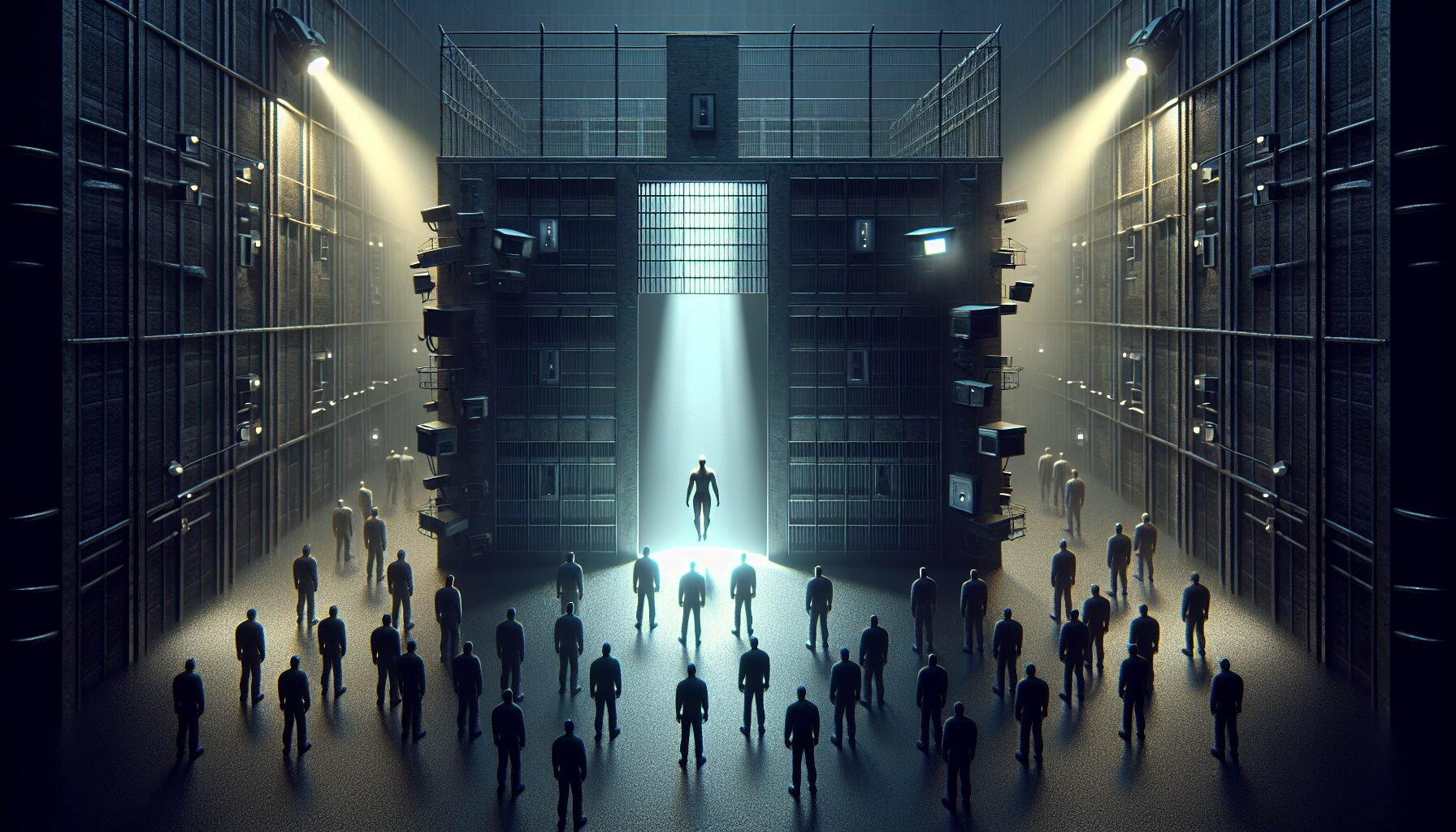
  • The Price of Conscience – Why totalitarian regimes fear inner freedom

    The Price of Conscience – Why totalitarian regimes fear inner freedom

    The Price of Conscience: Why Totalitarian Regimes Fear Inner Freedom

    Totalitarian regimes are notorious for their rigid structures and control mechanisms. They suppress free speech, curtail personal freedoms, and often dictate the social and cultural frameworks of the societies they govern. These regimes are particularly fearful of any concept or movement that promotes individualism or inner freedom. The question arises: why do they fear the conscience and autonomy of the individual so deeply?

    The Nature of Totalitarian Control

    At the core, totalitarian regimes are built upon control and conformity. As noted by political theorist Hannah Arendt, in her seminal work The Origins of Totalitarianism, these regimes strive to

    “transform human nature itself.”

    To achieve this, they employ a combination of propaganda, censorship, and surveillance, ensuring a populace that is both physically compliant and mentally conditioned to accept the status quo.

    However, the notion of inner freedom, often defined as the ability to think and discern independently of external pressures, directly challenges this fundamental control. It is precisely this reason why totalitarian regimes view the battle for inner freedom as a threat.

    The Role of Conscience and Individual Thought

    Conscience represents the subjective inner moral compass of individuals, enabling them to differentiate right from wrong. In an oppressive regime, conscience is dangerous because it empowers individuals to question authority and the moral foundation of those in power. Philosopher Václav Havel, who was a staunch advocate for human rights, emphasized that “a totalitarian regime…fears self-reliant—and therefore freely thinking people” (The New York Review of Books).

    • Moral Autonomy: Inner freedom gives rise to moral autonomy—a state where individuals make decisions through independent rational thought. Totalitarian regimes that rely on a monolithic ideology view divergent moral reasoning as a breach of unity.
    • Intellectual Independence: If individuals cultivate their minds independently, they become less susceptible to propaganda, creating a populace that challenges the regime’s singular narrative.

    Historical Examples

    Throughout history, totalitarian regimes have consistently sought to suppress individual thought:

    • Nazi Germany: The Nazi regime, led by Adolf Hitler, utilized propaganda to control ideological conformity. Dissidents and those who publicly expressed alternate views faced imprisonment or worse. As documented in Mein Kampf, Hitler himself wrote about the need to eradicate dissenting ideas that could weaken the collective resolve of the state.
    • Soviet Union: Under Stalin’s rule, independent thinkers, writers, and artists often found themselves in labor camps or were executed. The infamous purges were partly intended to eliminate those whose inner freedom could pose a threat to state orthodoxy.
    • North Korea: The Kim dynasty has maintained a firm grip over the populace through strict control of information and ruthless punishment of any deviation from state-sanctioned beliefs.

    Modern-Day Repercussions

    In today’s world, even with the advancement of technology and global communication, modern-day authoritarian governments employ sophisticated methods to curb inner freedom:

    • Digital Surveillance: By closely monitoring citizens’ online activities, regimes like China aim to suppress dissent and control thought.
    • Education Systems: Indoctrination through reformulated curricula ensures new generations grow up aligned with state ideologies, limiting exposure to Western ideologies, which are often seen as subversive.

    The global community continues to grapple with these strategies. The Freedom House, a nonprofit organization, closely monitors freedom indicators and regularly reports on regions where individual freedoms, including the freedom of conscience, are under threat.

    The Triumph of Inner Freedom

    Despite the efforts of totalitarian regimes, history is filled with stories of individuals who have persevered in preserving their inner freedom:

    • Nelson Mandela: Although incarcerated for decades, Mandela’s beliefs and hope for a democratic South Africa remained unshakeable.
    • Aung San Suu Kyi: Under house arrest for years in Myanmar, her resistance demonstrated the unwavering power of conscience against military rule.
    • Liu Xiaobo: The Chinese Nobel Laureate devoted his life to advocating for civil liberties and reform, paying the ultimate price for his beliefs.

    These figures exemplify how the spirit of inner freedom can inspire change, even in the most oppressive environments.

    The Cost of Conscience

    Maintaining one’s inner freedom and adhering to one’s conscience in defiance of a totalitarian regime invariably comes at a high cost: imprisonment, persecution, or even death. However, as history demonstrates, the payoff can be monumental. The courage of such individuals has often become the catalyst for broader societal change and reform.

    In conclusion, the price of conscience is steep, yet it remains a potent antidote to the coercive power of totalitarian regimes. It is the foundation upon which the courage to question, challenge, and ultimately transform begins. As philosopher Albert Camus once articulated, “The only way to deal with an unfree world is to become so absolutely free that your very existence is an act of rebellion” (Internet Encyclopedia of Philosophy).