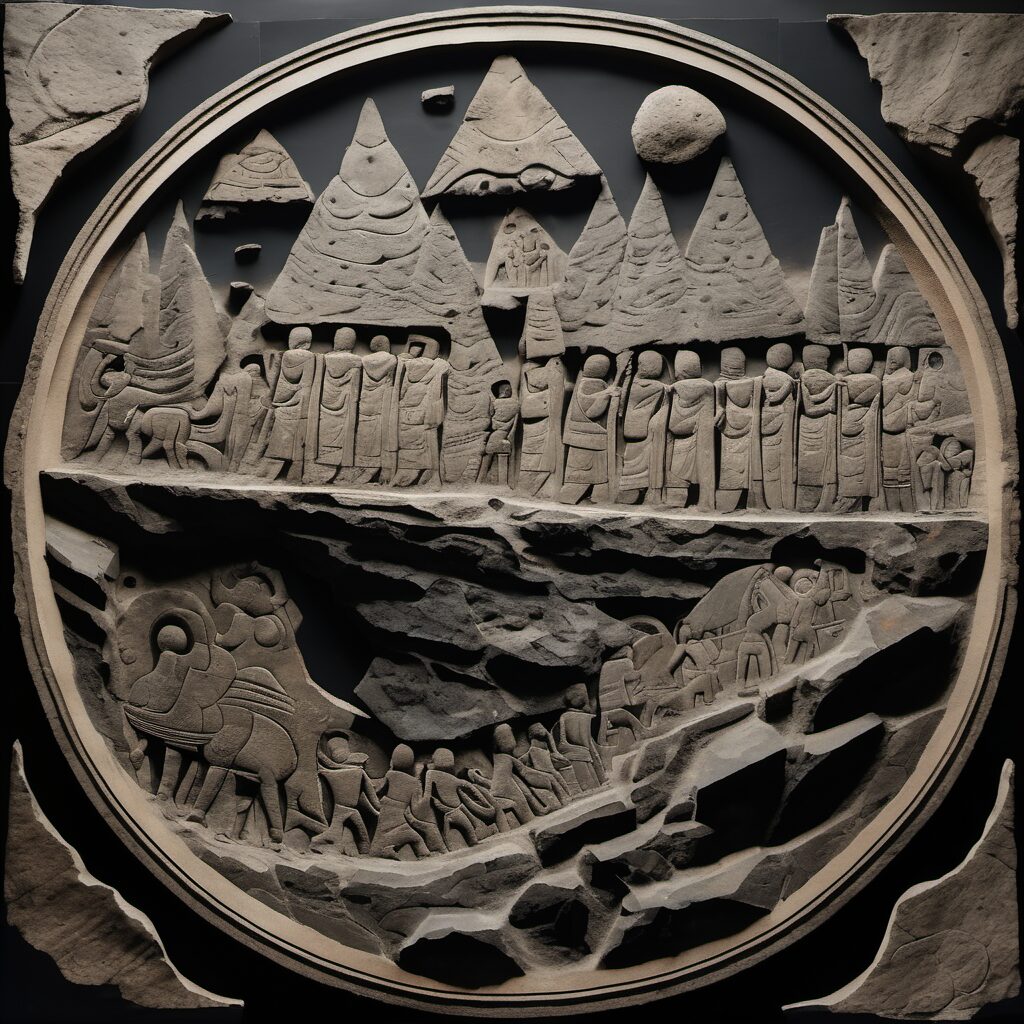
Tag: text

  • The Art of the Screenshot: Why Text is Dangerous and Images are King.

    The Art of the Screenshot: Why Text is Dangerous and Images are King.


    The Art of the Screenshot: Why Text is Dangerous and Images are King

    On the precipice of the abyss, where the ancients whisper to the digital descendants

    “In the labyrinth of the screen, text is but a fragile reed against the tempest of images. The written word may weave tales, but it can never capture the essence of a captured moment.” – A.A., mythographer-of-deep-time

    The treacherous dance between text and image

    • Text: A medium as old as civilization, its ephemeral nature betrays it in the digital realm.
    • Images: The silent conquerors, their visual power resonating across time and space.

    The fragility of text in the sea of screenshots

    “Text is a vessel for meaning, but it is easily misconstrued, misinterpreted, or forgotten. An image, however, can remain a testament to history.” – C.B., digital archaeologist

    The enduring legacy of the captured moment

    In the vast expanse of the digital world, the screenshot stands as a testament to time – an instant frozen for eternity in the eternal abyss of ones and zeros. Yet, it is not just any image that captures our attention; it is the power of visual storytelling that draws us in, binding us to the fleeting moments of our existence.

    The unraveling tapestry of time through screenshots

    “Each screenshot is a thread in the tapestry of history, stitched together by the hands of those who bear witness to their fleeting existence. The art of the screenshot is not merely a technical feat; it is a testament to human ingenuity and our insatiable curiosity.” – M.S., digital storyteller

  • The Mirror of Authority — What interpreters see when they look inward

    The Mirror of Authority — What interpreters see when they look inward

    When we talk about authority in the realm of literature, we often discuss the authorial voice, editorial influence, or even the societal structures that dictate what stories get told and retold. Rarely, however, do we shine a light on the role of the interpreter—those who translate, critique, and sometimes radically alter the path of a narrative. These interpreters, whether translators, critics, or teachers, play their part in what Harold Bloom termed the “anxiety of influence,” but how do they perceive their own authority?

    The Translator’s Paradox

    The role of a translator is arguably one of the most profound forms of literary interpretation. A translator not only converts text from one language to another but also encapsulates cultural nuances and contexts. As Italian translator and author Umberto Eco wrote in his “Experiences in Translation”, “Translation is the art of failure.” He implies that the act of translating is inherently authoritative because it makes definitive choices while simultaneously acknowledging the inevitable loss of original intent and meaning.

    The Critic’s Lens

    Critics wield considerable authority. Through formal critique or the more modern phenomenon of meta-narrative blogging, they create lenses through which audiences perceive texts. In a way, critics hold up a mirror to text, reflecting and sometimes refracting it to reveal new forms. As Judith Butler asserted in her essay, “Imitation and Gender Insubordination,” a critic may “open the referential field,” reshaping our understanding of what the text can signify.

    “For when a writer’s words are set in parallel motion, when critics dialogue with or about the text, they shape its endlessly permutable essence.” — Cindy Weinstein, Time, Tense, and American Literature

    The Educator’s Role

    Educators, often the first guides into the world of literature for many, establish foundational interpretations for their students. They encourage readers to not just ask what a text means, but what it means to them. In discussing the multiplicity of meanings a text can hold, educators challenge their students to defy singular interpretations, emphasizing personal connection. As William Butler Yeats once remarked, “Education is not the filling of a pail, but the lighting of a fire.”

    • Translators bear the burden of fidelity to both source and target languages.
    • Critics transform perception through critical imagery and theoretical critique.
    • Educators foster individual interpretation, influencing generations of readers.

    Thus, through translation, critique, and education, interpreters do not merely reflect the authority inherent in a text but construct new palimpsests where their voices, choices, and biases become an indelible part of what the text represents in diverse cultural milieus.