
Tag: strength

  • The Lonely Pillar – Standing Alone Against Collective Pressure

    The Lonely Pillar – Standing Alone Against Collective Pressure

    In a world where societal pressures shape most of our decisions, being the lone voice of dissent can be one of the most daunting experiences. Stepping out against collective pressure requires not just courage but a firm conviction in one’s beliefs. This metaphorical “lonely pillar” stands strong amidst the raging winds of societal expectations, embodying the strength of individuality.

    The Nature of Collective Pressure

    Collective pressure often manifests itself in various aspects of life—be it through professional environments, social groups, or family expectations. The intensity with which societal norms are enforced can lead individuals into compromising their beliefs to fit a mold. According to Psychology Today, “People conform for a variety of reasons: fear of rejection, desire to be liked, and concern over seeming different.” (source).

    The Strength of Standing Alone

    Defying collective pressure is not easy. It requires mental fortitude and inner strength. Author and cognitive psychologist Steven Pinker once noted, “The great appeal of a theory that explains our differences in terms of culture and socialization is that it seems to imply that we can change through culture and ideology.” (source). This implies that while societal norms can influence individuals, there remains the potential for countercultural stances.

    Personal Conviction

    • Belief System: A well-grounded belief system can provide the foundation necessary to stand firm against the tide. The key is cultivating a personal set of values that are not easily swayed by external opinions.
    • Emotional Resilience: Facing criticism and ostracism can be emotionally taxing, but developing resilience can not only mitigate these effects but also empower others to do the same.

    Stories of Solitary Resistance

    Throughout history, there are numerous instances of figures who went against the grain and became the lonely pillars of their times. Their stories serve as powerful testaments to the impact one voice can have.

    “In a time of universal deceit, telling the truth is a revolutionary act.” – George Orwell

    • Galileo Galilei: For challenging the geocentric model of the universe, Galileo faced severe backlash from the Catholic Church. His solitary stance, however, paved the way for modern astronomy.
    • Rosa Parks: Her refusal to give up her bus seat symbolized resistance against racial injustice, sparking monumental change during the Civil Rights Movement.
    • Malala Yousafzai: Standing up for girls’ education in Pakistan, even at great personal risk, Malala’s story reminds us of the bravery required to defy societal norms.

    The Ripple Effect of Individual Action

    While standing alone can feel isolating, history has shown us that solitary acts of resistance can inspire movements and foster change. The initial pushback can result in ripple effects, encouraging others to reconsider their own stances.

    The Power of One

    • Inspiration: A solitary stance can inspire others who feel similarly to step forward, fostering a community of like-minded individuals.
    • Dialogue: Inviting diverse opinions can lead to constructive dialogue, challenging prevailing norms and encouraging progressive thought.

    As described in The Atlantic, “change is often catalyzed by daring individuals who disrupt norms.” (source).

    Final Thoughts

    Being the “lonely pillar” is neither easy nor without its challenges. It requires a willingness to face adversity and an unwavering belief in the power of one’s convictions. Yet, in taking this path, individuals not only remain true to themselves but also light the way for others. Standing alone, thus, is less about isolation and more about the courage to lead amid adversity.

    The world has been changed time and again by those who dared to be different. As we navigate our own lives, may we find the strength to be our own “lonely pillars,” standing firm against the winds of collective pressure.
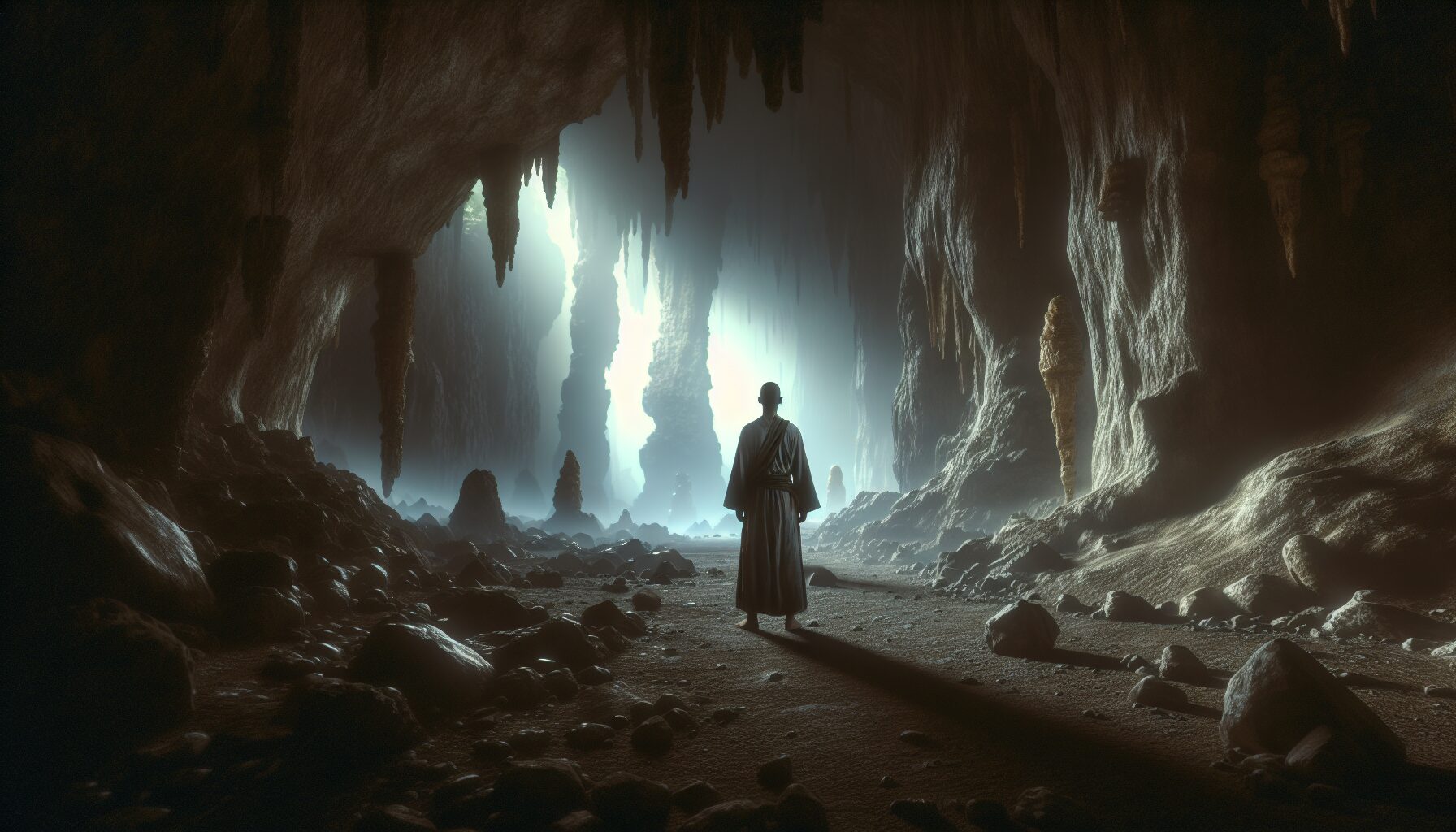

  • Courage in the Cave – Spiritual Resilience Under Pressure

    Courage in the Cave – Spiritual Resilience Under Pressure

    The metaphor of a cave has long been used to symbolize adversity, darkness, and the unknown challenges that one might face on their spiritual journey. In moments where we feel trapped or overwhelmed by life’s pressures, the concept of showing courage and resilience becomes essential. This article explores the profound idea of spiritual resilience under pressure and how one can cultivate it in their own life.

    The Symbolism of the Cave

    The cave is a powerful symbol found in various spiritual and philosophical traditions. It represents the unknown, fear, and the inner self. It is a place where one must confront their deepest fears and emerge transformed.

    “One has to accept pain as a condition of existence.”

    —Morris West

    This quote encapsulates the idea of the cave. When life pressures us, we may feel trapped in a cave of our circumstances, but it is essential to understand that the cave is also a place of learning and transformation.

    Courage in Spiritual Traditions

    Across various spiritual traditions, courage is a celebrated virtue. Here are some insights on courage:

    • Buddhism: Courage in Buddhism is about facing the truth of life, which includes suffering. The courage to accept the impermanence of all things is central to Buddhist practice.
    • Christianity: In Christianity, courage is depicted in the stories of martyrs and saints who remained steadfast in their faith despite persecution. As Joshua 1:9 (NIV) states, “Be strong and courageous. Do not be afraid; do not be discouraged, for the Lord your God will be with you wherever you go.”
    • Hinduism: The Bhagavad Gita is a dialogue that exemplifies courage in the face of overwhelming adversity. Arjuna, the warrior prince, is counseled by Lord Krishna to perform his duties with unwavering determination.

    Building Spiritual Resilience

    Resilience is the ability to recover from challenges and difficulties. When infused with a spiritual dimension, resilience becomes a profound source of strength and guidance. Here are some practices to build spiritual resilience:

    Meditation

    Meditation is a practice that helps individuals center themselves and find peace amid chaos. It allows one to reflect on their inner world, providing the clarity needed to face external challenges.

    Prayer

    For many, prayer is a source of strength. It is a call for divine assistance and an acknowledgment of forces greater than oneself. Through prayer, one can find solace and guidance, allowing resilience to take root.

    Community Support

    Being part of a spiritual community can offer immense support during times of trial. Sharing experiences and drawing strength from collective faith can enhance individual resilience.

    Stories of Courage in the Cave

    Throughout history, there are countless stories of individuals who have demonstrated spiritual resilience. Here are a few inspiring examples:

    • Nelson Mandela: Incarcerated for 27 years, Mandela emerged from his ‘cave’ with a message of reconciliation and forgiveness, embodying spiritual fortitude and resilience.
    • Helen Keller: Despite the loss of sight and hearing, Keller showed immense resilience, ultimately becoming an author, activist, and lecturer. Her story is a testament to inner strength and courage.
    • Nagarjuna: An Indian philosopher who, through his profound meditations and insights, emerged as a major figure in Mahayana Buddhism, teaching the courage to see emptiness as the ultimate reality.

    The Transformation Beyond the Cave

    The cave also represents transformation. Just as darkness precedes dawn, the challenges and pressures of life often precede profound personal and spiritual growth. Emerging from the cave signifies not only surviving trials but thriving because of them.

    “The wound is the place where the Light enters you.”

    —Rumi

    This quote from Rumi beautifully captures the essence of spiritual resilience. The challenges we face are not just obstacles; they can be the very catalysts of our spiritual enlightenment and courage.

    Conclusion

    Courage in the cave is about embracing the place of adversity and finding within it the strength to transform. It’s about understanding that life’s pressures are not merely to be endured but can serve as profound avenues for growth. Through meditation, prayer, community support, and drawing inspiration from those who have walked similar paths, one can cultivate a resilience that not only withstands the storm but is strengthened by it.

    In our own lives, let us learn to recognize our caves, face them with courage, and emerge from them with newfound wisdom and strength.

  • Spirit in the Wilderness – Strengths Found Only in Isolation

    Spirit in the Wilderness – Strengths Found Only in Isolation

    In the vastness of the wilderness, isolation envelops the spirit in a manner that obliges introspection and personal growth. History and nature have shown us time and again that solitude, often feared by many, kindles a unique fire of strength within those brave enough to embrace it. Whether it be the arid desert, the dense forest, or the icy tundra, these environments serve as fertile grounds for developing profound resilience.

    “In the wilderness, we rediscover purpose and strength that can be elusive in the hustle of daily life,” notes John Muir, a well-known naturalist, in his reflections about the power of solitary experiences.

    The Power of Solitude

    The power of solitude lies not just in the survival against physical elements but in confronting one’s inner self. As National Geographic elaborates, “wilderness acts as a balm in the face of modern life’s discontent, providing a spiritual and psychological boost by taking people away from their hectic environments.”

    Development of Resilience

    Isolation in nature facilitates resilience through the following ways:

    • Self-reliance: With no immediate help available, individuals are forced to depend on their ingenuity and resourcefulness.
    • Emotional endurance: Facing fears and uncertainties alone can lead to greater emotional strength.
    • Clarity and Focus: The absence of distraction allows for deep contemplation and a better understanding of one’s goals and desires.
    • Perspective: Time in the wilderness offers a chance to step back and gain a broader outlook on life, often leading to a renewed approach upon return.

    Inspirational Examples

    Throughout history, numerous figures have harnessed isolation to achieve powerful transformations. From Thoreau’s experiment at Walden Pond to Cheryl Strayed’s solo trek along the Pacific Crest Trail, narratives abound of those who have found strength and clarity through isolated journeys.

    Indeed, as author Henry David Thoreau aptly stated in his profound reflections on solitude, “I never found the companion that was so companionable as solitude.” This encapsulates the paradox of isolation—though it may seem lonely, it is in these moments alone that we often find our greatest company and strength within.

    Time spent in the wilderness, away from society’s incessant noise, may initially seem daunting but offers invaluable gifts. It is in these isolated moments that individuals connect deeply with their inner selves, revealing incredible strengths that lay dormant within.