Tag: spiritual

  • Spiritual Continuity in Exile – Traditions that survive displacement

    Spiritual Continuity in Exile – Traditions that survive displacement

    Spiritual Continuity in Exile: Traditions That Survive Displacement

    Throughout history, countless communities have faced displacement due to war, persecution, or economic hardships. Despite the upheaval, many of these communities have managed to keep their spiritual practices and traditions alive, allowing them to maintain a connection to their heritage. This article explores how spiritual continuity serves as a pillar of hope and identity for displaced peoples around the world.

    A History of Resilience

    Human history is replete with examples of entire communities being uprooted. From the Jews exiled to Babylon in the 6th century BCE, carrying with them the seeds of what would blossom into rabbinic Judaism, to the African diaspora that sustained various indigenous spiritual practices alongside emerging religions, displacement doesn’t necessarily mean the end of traditions.

    “When people are displaced, they often turn to their spiritual traditions to offer stability and hope in the midst of uncertainty,” notes Dr. Eliza Stein, an anthropologist specializing in migration studies. Read more about Dr. Stein’s work.

    Intergenerational Impact

    One of the most profound ways spiritual traditions survive is through intergenerational transmission. Storytelling, rituals, and communal gatherings allow elders to pass down beliefs and practices to younger generations, often in an adapted form that ensures relevance in new environments.

    • Language: Many spiritual traditions are closely tied to language, as in the case of Native American tribes that have worked to preserve and revitalize their languages as a form of spiritual and cultural continuity.
    • Rites of Passage: Rites like naming ceremonies, coming-of-age rituals, and marriage rituals often retain their core elements, even as they adapt to new cultural contexts.
    • Festivals and Celebrations: Celebrations like Diwali, Hanukkah, or the Lunar New Year allow displaced communities to cultivate a sense of normalcy and continuity in exile.

    Navigating Dual Identities

    Displacement frequently results in individuals and communities adopting dual identities, balancing between maintaining their original cultural and spiritual identities while integrating with the new society. This dual identity can lead to the hybridization of religious practices.

    “Hybridity often emerges as a natural response to cultural intermingling, creating rich, complex spiritual practices that marry past traditions with present realities,” says Professor Amira Khan, an expert in cultural studies. Explore her insights further.

    This is evident in the Cuban-American community in Miami, where Santería—a syncretic religion combining Yoruba beliefs and Catholicism—flourishes. This exemplifies how displaced groups navigate new cultural landscapes while honoring their spiritual heritages.

    Challenges and Preservation Efforts

    Despite their resilience, displaced communities face challenges in preserving their spiritual practices. These include:

    • Assimilation Pressures: Societal pressures to assimilate can at times erode traditional practices.
    • Legal Restrictions: In some regions, legal restrictions may impede the free practice of certain rituals.
    • Generational Gaps: Younger generations might feel disconnected from the traditions of their ancestors.

    To combat these challenges, various efforts have been initiated worldwide. Cultural centers, community organizations, and online platforms play a pivotal role in preserving and promoting spiritual practices among displaced populations. For instance, organizations like the International Rescue Committee provide spaces and resources for refugees to practice their spiritual customs.

    The Role of Technology

    In today’s interconnected world, technology has become a powerful tool in helping displaced communities sustain their spiritual practices. Social media platforms, video conferencing tools, and various online resources allow for greater connectivity and sharing of traditions. For example, many diaspora communities utilize Facebook and YouTube to broadcast religious ceremonies to a global audience.

    Virtual gatherings have gained prominence, especially during the COVID-19 pandemic, allowing communities to transcend geographical barriers in their worship and spiritual observances.

    Conclusion

    The continuity of spiritual traditions in exile not only enriches the lives of displaced people but also contributes to the broader cultural tapestry of the countries they move to. As refugees and migrants negotiate their identities, they remind us of the enduring power of tradition, resilience, and the human spirit.

    In a world where displacement continues to uproot lives, understanding and supporting the spiritual continuity of these resilient communities is essential, not only for their wellness but also for the enrichment of global cultural diversity. As Dr. Stein suggests, “Spiritual traditions are not static. They live and evolve—an embodiment of the enduring human spirit that persists amidst adversity.”


  • Faith Without Temples – Spiritual life after confiscation

    Faith Without Temples – Spiritual life after confiscation

    Faith Without Temples: Spiritual Life After Confiscation

    Throughout history, places of worship have not only served as spiritual sanctuaries but also as vital community hubs. However, political turmoil and changing regimes have often led to the confiscation and repurposing of these sacred spaces. This article explores how faith communities adapt when their traditional temple routes are disrupted, and how spirituality thrives beyond physical boundaries.

    Historical Context and Modern Occurrences

    The confiscation of religious sites is not a new phenomenon. During the Protestant Reformation, the English Crown seized numerous Catholic churches, monasteries, and other ecclesiastical properties. More recently, the 20th century bore witness to widespread confiscation across communist regimes, including in Russia and China, where religious buildings were appropriated for state purposes. “The Soviet government seized church buildings, converting them into museums and social clubs,” notes historian Dmitri Pospielovsky in his work, A History of Soviet Atheism.

    In today’s world, religious tensions continue to contribute to the appropriation of sacred spaces. Policies in regions such as Myanmar, India, and parts of the Middle East highlight ongoing conflicts where religious sites are often caught in cultural and political crossfires.

    The Community Response

    When a state’s policy turns toward the confiscation of religious sites, communities are confronted with the challenge of maintaining their spiritual practices and traditions. This often results in the following adaptations:

    • Home Gatherings: Without a central place of worship, believers often turn their homes into makeshift sanctuaries. These intimate gatherings can strengthen community bonds and offer a more personalized worship experience.
    • Underground Movements: In more repressive regimes, clandestine congregations may form. These secretive groups often meet in rotating locations to avoid detection, reminiscent of early Christian gatherings.
    • Technology and Virtual Spaces: In the digital era, many faith communities embrace online platforms for worship and discussion. Streaming services and social media help maintain connections and provide a sense of global solidarity. A recent study by Religiotech showed a 60% increase in online spiritual activity following church restrictions.
    • Re-purposed Public Spaces: Some congregations gather in non-traditional public venues such as parks or community centers where they can legally assemble.

    Spirituality Beyond Structures

    “Temples are mere physical structures; true devotion lies within the heart,”

    —Anonymous devotee

    For many, the essence of faith transcends physical structures. Experiences of loss can prompt a deeper reflection on the nature of spirituality. Religious leaders often emphasize that places of worship, although significant, are aides in a broader journey of faith rather than anchors of spiritual existence.

    Rabbi Sarah Bassin, speaking about Jewish survivors during WWII, noted, “Deprived of synagogues, our people emerged with an unyielding focus on inner spirituality and personal connection to the divine.” This sentiment echoes across religious traditions where followers are encouraged to find faith in their daily lives and acts.

    Global Examples of Resilience

    There are numerous examples of communities maintaining resilience and spiritual vitality even after losing their physical temples:

    • The Bahá’í Faith in Iran: Despite facing severe restrictions, Bahá’ís continue to practice their faith. They hold gatherings within the safety of private homes and use digital communication to support each other.
    • Christians in China: With close monitoring of official churches, house churches have seen a rise. Creative worship in small groups enables believers to sustain their spiritual lives.
    • Tibetan Buddhists: Under strict government oversight of monasteries, many Tibetan Buddhists focus on individual meditation and study to cultivate their spiritual well-being.

    The Future of Faith Without Temples

    The resilience shown by various traditions in the absence of traditional temples suggests that as political landscapes shift, so too will strategies and methods of spiritual practice. The modern age offers new prospects for practicing faith without the need for dedicated buildings, relying instead on community strength, technology, and unwavering devotion.

    Though challenges remain, the human spirit’s capacity to adapt and flourish proves that even when temples are taken, faith and spirituality cannot be confiscated.

  • Modernity’s Intolerance – Why progress narratives erase spiritual heritage

    Modernity’s Intolerance – Why progress narratives erase spiritual heritage

    Modernity’s Intolerance: Why Progress Narratives Erase Spiritual Heritage

    In our fast-paced, technologically driven world, the narrative of progress often dominates our understanding of societal development. This prevailing narrative equates progress with scientific advancement and technological innovation. However, as we march forward, this perspective has inadvertently sidelined and, at times, actively erased spiritual heritage. This article explores how modernity’s intolerance is reshaping cultural landscapes and eroding the spiritual foundations that have been integral to human societies.

    The Progress Narrative: A Double-Edged Sword

    The narrative of progress that underpins modern society is often equated with notions of economic growth, technological advancements, and scientific rationality. This narrative assumes that human history is a lineal journey from primitivism towards enlightenment, marked by technological triumphs and scientific breakthroughs. Such a perspective, while fostering innovation and improving living standards, often diminishes the value of spiritual and cultural traditions.

    • Economic and Technological Focus: The emphasis on economic performance and technological prowess often creates an environment where spiritual values are viewed as obstacles to growth. As societies prioritize GDP growth and technological superiority, traditional practices and beliefs are sidelined or deemed archaic.
    • Scientific Rationalism: The rise of scientific rationalism in the modern era has positioned empirical analysis and objective reasoning as the ultimate paths to truth and knowledge. While this has led to phenomenal advancements, it has often delegitimized forms of knowledge rooted in spirituality.

    The Cultural Erosion of Spiritual Heritage

    As the world becomes increasingly connected through globalization and digitization, cultural homogenization poses a significant threat to spiritual diversity. The global spread of Western modernity often carries with it the unintentional consequence of eroding indigenous cultures and spiritual practices.

    • Globalization and Cultural Homogenization: Global markets and media have a pervasive influence on cultural expressions, often prioritizing Western cultural products over indigenous traditions. This leads to a homogenization of cultural norms, overshadowing diverse spiritual practices.
    • Urbanization and Displacement: The migration from rural areas to urban centers in search of economic opportunities often results in the loss of connection to ancestral lands and traditional spiritual practices tied to them.

    Paul Kingsnorth’s Perspective on Progress and Spirituality

    “Our myth is ‘Progress’,” says author Paul Kingsnorth, “and its inevitability is rarely questioned… but in reality, progress has always been a double-edged sword.” (The Guardian)

    Kingsnorth critiques progress narratives by arguing that they often dismiss the complex, interconnected relationship between humans and their spiritual environments. These progress narratives can impose a singular way of life that negates the essential spiritual experiences that have been nurtured by communities for centuries.

    Preserving Spiritual Heritage in a Modern Age

    Preserving spiritual heritage amid advancing modernity necessitates a balanced approach that respects the role of technological progress without compromising spiritual identities. Strategies include:

    • Integrating Spirituality with Modern Practices: Encouraging practices that merge traditional spiritual rituals with modern lifestyles, thus creating a symbiotic relationship rather than a confrontational one.
    • Promoting Cross-Cultural Education: Education systems that include teachings of diverse spiritual traditions can foster understanding and appreciation of cultural heritage.
    • Supporting Indigenous Movements: Promoting and supporting initiatives by indigenous communities that aim to protect and revive their spiritual and cultural practices.

    The Role of Modern Spiritual Movements

    Modern spiritual movements play a crucial role in bridging the gap between ancient wisdom and contemporary life. Practices such as mindfulness, yoga, and holistic medicine, which draw from ancient spiritual traditions, are seeing a resurgence in popularity in Western societies. These practices suggest a growing awareness of the benefits of integrating spiritual elements into modern living, emphasizing balance between technological advancements and spiritual well-being.

    Conclusion: Embracing Diverse Narratives

    While progress and technological advancements undoubtedly offer numerous benefits, it is crucial to acknowledge and preserve the spiritual heritages that enrich human existence. This requires a conscious effort to create narratives that value both scientific achievements and the wisdom of spiritual traditions. By cultivating a societal framework that embraces diverse perspectives, humanity can steer towards a future that honors its past.

    As society stands at a crossroads, there exists an opportunity to redefine modernity—one that recognizes that true progress includes the spiritual well-being of individuals and communities. In this reconceptualized modernity, spiritual heritage is not merely an artifact of the past but a vibrant and essential part of our collective future.

  • Leadership in the Line of Fire – Targeting spiritual authorities

    Leadership in the Line of Fire – Targeting spiritual authorities

    Leadership in the Line of Fire: Targeting Spiritual Authorities

    In an increasingly complex world, where global tensions and diverse ideologies collide, spiritual leaders often find themselves in the line of fire. These leaders, who are usually at the helm of guiding moral and ethical compasses, face numerous challenges. Their influence extends beyond religious boundaries, impacting societal norms and actions, making them prominent targets for scrutiny and even attack.

    The Role of Spiritual Leaders

    Spiritual leaders have played pivotal roles in shaping cultures and societies across the globe. They are anchors in times of moral ambiguity and offer guidance amidst chaos. For instance, Mahatma Gandhi, through his spiritual and political leadership, once said,

    “A man is but the product of his thoughts. What he thinks, he becomes.”

    His leadership continues to resonate with millions today, underlining the potential impact of spiritual guidance.

    However, these leaders’ influence is not limited to their followers. Pope Francis, leading the Roman Catholic Church, has consistently addressed global issues from environmental conservation to social justice, drawing attention worldwide and placing his leadership in the public eye.

    Challenges Faced by Spiritual Leaders

    • Secularization: In modern, secular societies, religious leaders often face the challenge of remaining relevant. As traditional religious observance declines in many parts of the world, spiritual authorities must find new ways to connect with individuals who might not identify with traditional religious practices.
    • Political Pressures: It is not uncommon for spiritual leaders to find their teachings politicized. The intersection of faith and politics can blur the original spiritual message, leading to misinterpretations and potentially putting leaders at risk.
    • Globalization and Diversity: As communities become more diverse, spiritual leaders often have to address a wider array of cultural and religious contexts. This diversity can lead to misunderstandings or misrepresentations of spiritual messages.
    • Crisis of Faith: Scandals within religious organizations can lead to widespread disillusionment. Recovering faith in spiritual leadership requires transparency and accountability, which some leaders struggle to implement effectively.

    Attack on Spiritual Leadership

    There are instances where spiritual leaders have been direct targets of violence and hostility. This targeting can stem from political, ideological, or even theological differences. For example, The New York Times reported on the violent backlash faced by leaders advocating for peace and reconciliation in conflict zones: “Pope Francis Appeals for Peace in Myanmar as Rohingya Violence Escalates”.

    Such instances highlight the vulnerability of spiritual leaders who take stands against authoritarian regimes or extremist ideologies. Their commitment to truth and justice often places them in perilous positions.

    Strategies for Protection and Support

    Given the risks, there are several measures that can be employed to protect spiritual leaders:

    • Building Alliances: Forming supportive networks with other religious and secular organizations can provide spiritual leaders with broader platforms to advocate for their causes.
    • Media Engagement: Actively engaging with the media to accurately convey messages can combat misinformation. Effective communication with the public can also garner support and understanding.
    • Educational Initiatives: Developing educational programs that emphasize the positive role of spiritual leadership in society can cultivate respect and mutual understanding.
    • Legal Protections: Advocacy for policies and laws that protect religious leaders from persecution and violence is necessary. Emphasizing the importance of freedom of religion and expression is crucial in legislative environments.

    The Path Forward

    As society grapples with unprecedented challenges, the role of spiritual leaders as moral compasses is crucial. Their leadership not only guides religious followers but also impacts secular communities by upholding principles of compassion, justice, and inclusivity.

    Spiritual leaders must navigate complex terrains, balancing tradition with modernity, and faith with societal progress. Their resilience and persistence, often under significant threat, highlight their significant role in maintaining peace and ethical governance.

    In reflecting on the future of spiritual leadership, it is instructive to consider the words of Dalai Lama:

    “This is my simple religion. There is no need for temples; no need for complicated philosophy. Our own brain, our own heart is our temple; the philosophy is kindness.”

    Such timeless wisdom underscores the enduring necessity of spiritual guidance in nurturing a harmonious coexistence.

  • From Margins to Menace – Manufacturing fear of spiritual minorities

    From Margins to Menace – Manufacturing fear of spiritual minorities

    From Margins to Menace: Manufacturing Fear of Spiritual Minorities

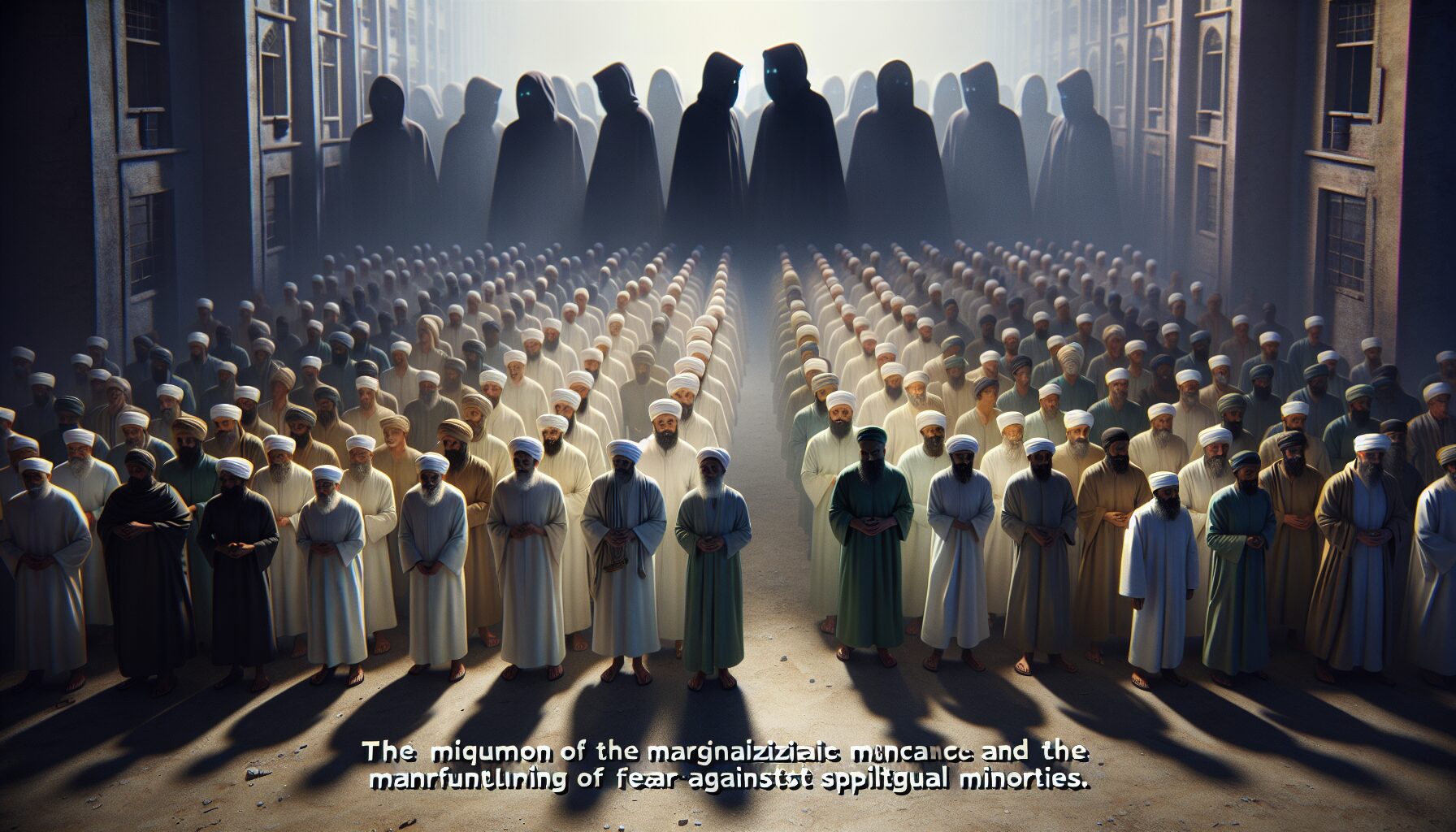
    Throughout history, spiritual minorities have often found themselves in precarious positions within mainstream society. These groups are frequently marginalized and, at times, portrayed as societal threats. This phenomenon raises important questions about the sources and perpetuation of fear towards spiritual minorities.

    The marginalization of spiritual minorities is not a new occurrence. From early Christians in the Roman Empire to modern-day new religious movements, fear and misunderstanding have often fueled mistrust and persecution. But how does this fear arise, and what keeps it alive?

    The Roots of Fear

    At the heart of this fear is often a lack of understanding and the portrayal of these groups as ‘other.’ In his book, The Culture of Fear, sociologist Barry Glassner discusses how media and cultural narratives can amplify fear by exaggerating threats or focusing on sensational stories.[1]

    “When we focus on fear, we produce more fear. And when we portray those who are different as threatening, we invite suspicion and discrimination,” explains Glassner.[2]

    The Role of Media

    The media plays a significant role in shaping public perception. Coverage often highlights the most extreme or controversial aspects of spiritual minorities, feeding into existing stereotypes. The case of the Waco siege in 1993, involving the Branch Davidians, is a prime example. Intense media scrutiny and sensationalized reporting painted the group in a violent light, reinforcing public fear.[3]

    • Selective Coverage: Highlighting negative aspects while ignoring ordinary, peaceful practices.
    • Insider vs. Outsider Narratives: Encouraging a sense of ‘us vs. them’ through biased storytelling.

    The Impact on Society

    Such narratives not only impact the targeted groups but also influence societal norms and policies. History has shown us that manufactured fear can lead to discrimination, social exclusion, and even violence. It underscores the need for a more nuanced understanding and reporting of spiritual minorities.

    Moving Forward

    As society becomes more interconnected, fostering understanding and dialogue is crucial. Recognizing and challenging the narratives that drive fear can lead to more inclusive communities. Encouraging critical media consumption and supporting diverse voices are steps toward breaking the cycle of fear.

    In the words of cultural historian Karen Armstrong, “Compassion is the key.” Understanding and embracing spiritual diversity, rather than vilifying it, can help bridge divides and diminish unfounded fears.[4]

  • Spiritual Orphans – Children separated from persecuted believers

    Spiritual Orphans – Children separated from persecuted believers

    Spiritual Orphans: Children Separated from Persecuted Believers

    The plight of religious persecution often remains hidden in the shadows, overshadowing those who bear the gravest consequences: the children. Separated from their faith-defending parents, these young individuals become spiritual orphans, navigating a world deprived of religious heritage and community. This article delves into the lives and challenges of these children, revealing the impact of such separations and efforts to support them.

    The Scope of Religious Persecution

    Religious persecution, an enduring blight across the globe, affects millions. According to a 2020 report by the Pew Research Center, “more than 80 countries experience high or very high levels of social hostilities involving religion.” Among the faith groups frequently targeted are Christians, Muslims, and minority religious communities. In nations where religious expression encounters state oppression or societal hostility, believers face dire repercussions, including imprisonment and forced separation from families.

    The Children Left Behind

    When believers are persecuted, their children suffer a different but profound trauma. The separation creates spiritual orphans—children left to navigate their formative years without parental guidance in faith. This separation is neither entirely physical nor purely spiritual.

    “Persecution can tear families apart, sometimes literally when a parent is imprisoned or worse. And even when families are allowed to remain together, the constant threat and pressure can be crushing.” — Open Doors USA

    These children face a unique duality of loss. The absence of parents removes not only love and care but a crucial aspect of their cultural and spiritual identity.

    The Psychological and Spiritual Impact

    • Loss of Identity: Children grow up without a clear understanding of their religious customs and beliefs, leading to an identity crisis as they mature.
    • Emotional Distress: Separation induces trauma, anxiety, and depressive symptoms, further exacerbated by an environment hostile to their religious identity.
    • Social Isolation: Without parental and community support, children often find themselves marginalized, unable to form healthy social bonds.

    Experts emphasize the profound psychological ramifications on these children. Dr. Patrick Sookhdeo, international director of Barnabas Fund, warns, “These are children who not only lose their family, they lose their plan in life, their protection, and sometimes even hope.”

    Efforts to Support Spiritual Orphans

    Various organizations are stepping up to provide support for these vulnerable youths:

    • Open Doors focuses on holistic support, including education, counseling, and safe environments for affected children. Their programs offer a semblance of community and emotional support.
    • World Evangelical Alliance provides advocacy and legal support, working towards reuniting families and ensuring respect for religious freedom.
    • Local Churches and Communities: In areas impacted by religious persecution, local faith communities often take responsibility for caring for spiritual orphans, providing a continual connection to their religious roots.

    Despite these efforts, challenges persist. Funding constraints, political instability, and the complex dynamics of religious and cultural integration pose ongoing obstacles. The needs are great, and the work is critical.

    The Path Forward

    Addressing the crisis of spiritual orphans requires a multifaceted approach:

    • International cooperation to promote and enforce religious freedom, thereby reducing the root causes of persecution.
    • Strengthening refugee programs to include a component that addresses spiritual and cultural support.
    • Increased awareness and education about the plight of persecuted believers, encouraging grassroots and international efforts to provide tangible support and advocacy.

    The journey towards reclaiming a unified family life that honors both human rights and religious freedom is fraught with challenges. Yet, it is a cause worthy of global attention and action. The future of these children, and indeed the future of genuine religious liberty, depends on collective understanding and intervening to ease the burdens borne by these spiritual orphans.

    By uniting as a global community to support these children, we sow seeds of hope and resilience that can defy persecution and nurture a new generation of individuals defined not by their circumstances, but by the breadth of love and acceptance they receive.

  • When Healing Is Illegal – Banning spiritual and traditional practices

    When Healing Is Illegal – Banning spiritual and traditional practices

    When Healing Is Illegal: Banning Spiritual and Traditional Practices

    The spiritual and traditional healing practices have been a cornerstone of human culture for centuries. However, in recent years, these practices have come under scrutiny, with several countries imposing bans or restrictions. This article explores these bans’ implications, the cultural heritage they threaten, and the debate over regulation and legitimacy.

    The Significance of Spiritual and Traditional Healing

    • Cultural Heritage: Spiritual and traditional healing methods are deeply entwined with cultural identities. They connect people to their ancestors’ wisdom and practices, offering a sense of continuity and identity.
    • Holistic Health: Unlike conventional medicine, which often focuses on treating symptoms, traditional practices usually take a holistic approach, addressing the mind, body, and spirit as interconnected.
    • Accessibility: Especially in rural and underserved areas, these practices can be more accessible than mainstream medical services due to geographical or economic constraints.

    The Legal Landscape

    Despite their significance, many jurisdictions have placed restrictions on spiritual and traditional healing practices. The reasons for these legal challenges are varied:

    • Safety Concerns: Governments often cite safety concerns—both physical and psychological—as reasons for imposing bans. Some traditional practices may not align with modern understandings of health and risk, leading to potential harm.
    • Regulatory Challenges: Regulatory frameworks in many countries are not equipped to handle the nuances of these practices, leading to blanket bans rather than nuanced regulations.
    • Economic Interests: There is a significant economic impact of traditional healing practices competing with the pharmaceutical and medical industries.

    Case Studies from Around the World

    To understand the global impact of banning spiritual and traditional practices, let’s examine some examples:

    South Africa’s Witchcraft Suppression Act

    The Witchcraft Suppression Act was enacted in 1957 in South Africa, leading to the criminalization of specific traditional practices associated with witchcraft. Critics argue that the act fails to distinguish between harmful practices and legitimate traditional healing, thus endangering a rich cultural tradition.

    Australia’s Therapeutic Goods Administration

    The Australian Therapeutic Goods Administration (TGA) regulates the inclusion of herbal medicines under strict guidelines. While this ensures safety and efficacy, it also presents barriers that may exclude traditional Aboriginal healing practices from being recognized.

    The Debate: Regulation vs. Banning

    As societies grapple with how to handle spiritual and traditional healing practices, the debate often centers on whether regulation or outright banning is more appropriate. Both sides present compelling arguments:

    Arguments for Regulation

    • Preservation of Cultural Heritage: Regulation can ensure these practices continue, passing cultural knowledge to future generations while ensuring safety.
    • Integration with Modern Medicine: In a regulated environment, traditional practices can complement conventional medicine, offering treatments that are both effective and culturally respectful.

    Arguments for Banning

    • Risk of Harm: Practices that involve the use of unverified remedies or rites that could cause physical or psychological harm warrant cautious handling.
    • Fraud Prevention: Banning these practices can be seen as a means of protecting individuals from fraudulent claims of healing that exploit the vulnerable.

    Quotes from Experts

    “In many traditional societies, healing was a communal affair involving spiritual dimensions… rather than drawing a line between science and tradition, it is perhaps the spirit of inquiry that should guide medicine in the future.” — Dr. Linda Tuhiwai Smith, Professor of Indigenous Education

    “The question is not whether traditional healing should be modernized or abandoned, but how it can be integrated responsibly into the broader healthcare system.” — Walid Abdulrahim, Cultural Anthropologist

    Navigating a Path Forward

    The path forward involves finding a balance that respects cultural heritage while ensuring public safety. Collaborative efforts between traditional healers, medical professionals, and policymakers could pave the way for an inclusive approach that celebrates diversity in healing practices.

    • Inclusive Dialogues: Involving traditional healers in discussions about health regulations can lead to more culturally sensitive outcomes.
    • Research and Documentation: More research into the efficacy of traditional therapies can help integrate successful practices into mainstream healthcare.

    Conclusion

    When healing is illegal, it becomes imperative to question not only the decision itself but also the societal values and priorities it reflects. The challenge lies in striking a balance between preserving valuable cultural traditions and protecting public health. As the world becomes increasingly globalized, embracing diverse healing paradigms might lead to richer, more holistic health outcomes for all.

  • Faith in a File – Reducing spirituality to surveillance data

    Faith in a File – Reducing spirituality to surveillance data

    Faith in a File: Reducing Spirituality to Surveillance Data

    In an age where technology permeates every facet of our lives, the intrusion of surveillance has now extended into the realm of spirituality. As digital devices monitor our physical steps, they equally track our spiritual journeys, recording religious habits, beliefs, and practices in data that can be analyzed for various purposes. This digital oversight threatens to reshape our understanding of faith in profound ways.

    The Rise of Digital Religion

    The convergence of spirituality and technology is not a new phenomenon. Religious practices have adapted to technological advances for centuries. The printing press paved the way for the wide dissemination of religious texts, including the Bible, which profoundly impacted Christianity’s spread and evolution. Today, however, the fusion of spirituality and technology takes a more intimate form: the surveillance of personal religious practices through digital means.

    • Online Worship: With the advent of the internet, many religious practices have moved online. Services are streamed to parishioners worldwide, prayer groups meet over video chat, and even confessions are heard through encrypted apps.
    • Religious Apps: Thousands of spiritual and religious apps are available, ranging from prayer and meditation timers to scripture study tools and virtual prayer beads. These apps often collect detailed data on user practices.

    According to the Pew Research Center, more than two-thirds of Americans own a smartphone, with the number increasing annually. This statistic underscores the growing role of mobile technology in shaping how we practice and experience spirituality today.

    Surveillance Capitalism and Spirituality

    Shoshana Zuboff, author of The Age of Surveillance Capitalism, posits that our every move is monetized in the age of digital life. In her book, Zuboff warns of a world where personal experiences, including religious and spiritual lives, are commodified and potentially exploited.

    “Surveillance capitalism unilaterally claims human experience as free raw material for translation into behavioral data,” Zuboff writes.
    Read more.

    The implications of such surveillance on spirituality are manifold:

    • Reduction of Faith to Data: Spiritual experiences and religious practices, deeply personal and often sacred, risk being reduced to mere data points measured and analyzed like any market trends.
    • Targeted Advertising: Companies can tailor religious content and products to individuals based on their data profiles, turning spirituality into a marketable entity.
    • Privacy Concerns: Personal religious beliefs and practices could become the target of hacking, unauthorized data sharing, or governmental scrutiny.

    Impacts on Religious Freedom

    The possibility of spiritual surveillance poses questions regarding religious freedoms. Historically protected by laws and considered inviolable, religious beliefs now run the risk of exposure through data breaches or misuse. The tension between surveillance for security and the protection of religious freedom remains a contentious issue.

    Mitigating the Effects

    As these technologies evolve, religious institutions and individuals face the challenge of safeguarding their spiritual information. Several strategies can be employed to mediate the advances of digital surveillance:

    • Increased Awareness: Religious communities can raise awareness about the data privacy implications of their digital engagements, ensuring members understand the risks involved.
    • Privacy Tools: Utilizing privacy-focused applications and encrypted communication can help protect sensitive spiritual and religious information.
    • Policy Advocacy: Advocating for policies that protect digital privacy and religious freedom is crucial. Faith-based organizations can work alongside advocates for digital rights to shape the discourse on data protection.

    Conclusion: A Path Forward

    The intersection of spirituality and surveillance technology is fraught with challenges and opportunities. While technology can enhance religious practices, it also brings risks that require careful navigation. As we move further into a digital age, the call to protect the sacred aspects of spirituality is paramount.

    Religious leaders, policy makers, and technology developers must collaborate to ensure that the digital age respects the sanctity of individual beliefs, balancing innovation with the fundamental right to spiritual privacy.

    Understanding and addressing the implications of surveillance on spirituality can help maintain the integrity of religious freedom in the 21st century. The faithful, and indeed all individuals, will benefit from a landscape where technological advancement enhances rather than diminishes our most intimate beliefs.

  • Enemies by Definition – Labeling spiritual groups as dangerous

    Enemies by Definition – Labeling spiritual groups as dangerous

    Enemies by Definition: Labeling Spiritual Groups as Dangerous

    In societies characterized by rich cultural and religious diversity, the labeling of spiritual groups as dangerous or cult-like has become a contentious issue. This article explores the implications of such designations, the motivations behind them, and the impact on communities worldwide.

    The Nature of Spiritual Groups

    Spiritual groups have existed throughout human history, representing myriad beliefs and practices. From ancient pagan traditions to modern day new age movements, these groups serve the fundamental human quest for meaning, connection, and transcendence.

    • Traditional Religions: Established religions like Christianity, Islam, and Buddhism have structured beliefs and long-standing institutions.
    • New Spiritual Movements: Groups such as the Hare Krishnas or Scientology reflect newer, often unconventional beliefs.
    • Self-Help and Wellness Programs: Some organizations, like certain sects of yoga or mindfulness movements, straddle the line between lifestyle practices and spiritual doctrines.

    The diversity of these movements not only demonstrates the pluralistic nature of faith and spirituality but also highlights the difficulties encountered when attempting to categorize or define these groups.

    The Psychology of Labeling

    Labeling certain spiritual groups as “dangerous” or “cults” is often rooted in fear, misunderstanding, or socio-political motives. According to sociologist Max Weber, “The labeling of religious movements often reflects social upheavals, with the dominant culture defining the ‘appropriate’ bounds of spirituality and belief.”

    “When a group is labeled as a ‘cult’, it frequently stems from a mixture of misinterpretation of their beliefs and societal inability to comprehend a deviation from mainstream religion.”

    The label often carries negative connotations, suggesting coercion, radical practices, or harmful ideologies. This perception overlooks the complex and sometimes benign nature of many such groups.

    Case Studies of Mislabeling

    Several spiritual groups throughout history have faced stigmatization, often unjustly, under the guise of protection from their purported danger:

    • The Branch Davidians: Known for the tragic Waco siege, this group was widely deemed dangerous due to its radical apocalyptic beliefs. However, many argue that misunderstandings and governmental miscalculations exacerbated the situation.
    • The Church of Scientology: Frequently targeted as a cult, adherents argue that it is a legitimate religion offering spiritual enrichment and self-improvement.
    • The Falun Gong: While suppressed in China as a threat to state control, globally, it is largely viewed as a peaceful movement promoting meditation and moral living.

    These examples illustrate how the label “dangerous” can be applied based not purely on objective truth, but often on political or social agendas.

    Consequences of Branding as Dangerous

    Designating spiritual groups as dangerous carries significant implications:

    • Social Stigmatization: Members of these groups often face discrimination and are ostracized from society.
    • Legal Repression: Governments may restrict their activities, subject them to surveillance, or outright ban their practices.
    • Media Portrayal: Negative media representation amplifies societal fears and perpetuates stereotypes, often leading to misunderstandings and further marginalization.

    Historically, these consequences have led to escalated tensions, conflicts, and in extreme cases, violence directed at minority spiritual groups.

    The Fine Line of Protection and Persecution

    While some spiritual groups do engage in harmful practices, it is essential to distinguish between genuinely dangerous cults and benign spiritual movements. As historian Karen Armstrong notes, “While vigilance is necessary, it must be balanced with a comprehensive understanding of these groups on their terms.” Excessive caution can lead to religious persecution under the guise of protection.

    “A balance between cultural sensitivity and awareness is crucial,” asserts religious scholar Reza Aslan. “We must remain vigilant against true harm, yet avoid an overly broad brush that tars harmless spirituality with the same brush.”

    Moving Towards Understanding

    In a world trending towards global interconnectivity, understanding diverse spiritual perspectives is both a necessity and a responsibility. Policy-makers, educators, and media professionals must engage in dialogue with spiritual communities to foster mutual understanding and respect.

    • Education: Comprehensive education on world religions and spiritual practices can diminish fear and promote empathy.
    • Interfaith Dialogue: Encouraging conversations between different spiritual groups builds mutual respect and challenges preconceived notions.
    • Balanced Media Representation: Media outlets should strive for balanced coverage that accurately reflects the beliefs and practices of spiritual groups.

    By approaching spiritual diversity with open-mindedness, society can progress towards a future where labeling is fair, precise, and devoid of prejudice.

    Conclusion

    In redefining how we view spiritual groups labeled as dangerous, it is essential to reflect on our biases and the historical context that fuels such perceptions. By doing so, communities can transcend fear and strive for a more inclusive world where spiritual plurality is celebrated rather than feared.

  • Spirituality as Dissent – Inner freedom versus political control

    Spirituality as Dissent – Inner freedom versus political control

    Spirituality as Dissent: Inner Freedom Versus Political Control

    Throughout history, spirituality has frequently emerged as a form of dissent, contrasting starkly with political regimes striving for control. The dance between inner freedom and external governance raises compelling questions regarding the role of spirituality in nurturing personal autonomy against the backdrop of political agendas.

    The Essence of Spirituality

    Spirituality, often misunderstood as merely religious practice, transcends structured dogma and institutionalized belief systems. It finds its roots in personal introspection and the quest for meaning beyond the material realm. As philosopher Jiddu Krishnamurti poignantly noted, “The moment you follow someone, you cease to follow Truth.” Krishnamurti emphasizes the essence of spirituality as a personal journey toward truth, free of external imposition.

    Historical Context: Spiritual Movements as Forms of Resistance

    • Buddhism in Ancient India: Originating as a reaction against the rituals and hierarchies of Vedic tradition, Buddhism offered an egalitarian path based on personal enlightenment. Siddhartha Gautama, the Buddha, sought a middle way that promoted inner transformation over external worship.
    • Christian Mysticism: During medieval times, Christian mystics emerged as dissenters, emphasizing personal experience of the divine over established ecclesiastical authority. Figures like Meister Eckhart advocated for direct communion with God, challenging the Church’s intermediary role.
    • Sufism in Islam: Sufism, the mystical branch of Islam, stressed an inner path to divine love, often positioning itself against the political power structures of orthodox Islam. As Rumi expressed, “The wound is the place where the Light enters you.” This highlights the individual’s internal struggle and awakening beyond societal constraints.

    Modern-Day Examples

    Contemporary examples illustrate the enduring relevance of spirituality as a form of dissent:

    • Tibetan Buddhism and China: The ongoing tension between the Chinese government and Tibetan Buddhists underscores the power struggle between political control and spiritual autonomy. The Dalai Lama, as a spiritual leader, symbolizes the pursuit of inner freedom amidst external occupation and cultural suppression.
    • Mindfulness Movements: Originating from Eastern spiritual traditions, mindfulness practices have been embraced worldwide as tools for personal liberation. In societies marked by stress and over-stimulation, these practices serve as a peaceful rebellion against consumerism and societal pressure.

    The Psychological Underpinnings of Spirituality as Dissent

    From a psychological perspective, spirituality offers individuals a paradigm to construct an identity independent of external validation or coercion. According to Viktor Frankl, the renowned psychiatrist and Holocaust survivor, “Everything can be taken from a man but one thing: the last of the human freedoms—to choose one’s attitude in any given set of circumstances.” This inner freedom, as advocated by Frankl, is the bedrock upon which spiritual dissent is built.

    Resistance Through Non-Violent Means

    Many spiritual movements have emphasized non-violent resistance as a principal form of dissent. Mahatma Gandhi’s philosophy of Ahimsa (non-violence) inspired the Indian independence movement and continues to serve as a template for spiritual-led resistance worldwide. Gandhi’s perspective that “An eye for an eye will only make the whole world blind” underscores the spiritual assertion that violence begets violence, whereas inner transformation plants the seeds for genuine change.

    Political Reactions and Attempts at Co-opting Spirituality

    Political regimes, cognizant of spirituality’s dissident potential, have historically either sought to suppress spiritual movements or co-opt them to consolidate power.

    • Suppression: Authoritarian governments often repress spiritual leaders and movements perceived as threats to their rule. Such actions attest to the power of spiritual influence—capable of rallying masses through shared values and beliefs beyond physical and economic constraints.
    • Co-optation: Conversely, some political entities may attempt to align themselves with spiritual ideologies, co-opting these for their narratives. A notable example is the Roman Empire adopting Christianity, using it to unify diverse groups under a common cause, thereby fortifying its rule.

    The Role of Community in Spiritual Dissent

    Spirituality often fosters community, offering a collective identity that can withstand political oppression. As Howard Zinn aptly noted, “Small acts, when multiplied by millions of people, can transform the world.” Spiritual communities provide a framework for solidarity, facilitating collective acts of resistance rooted in shared values and mutual support.

    The Digital Dimension: Spirituality and Dissent in the 21st Century

    In the digital age, the nexus of spirituality and dissent has expanded into virtual realms. Online platforms allow for the global dissemination of spiritual teachings, transcending geographic and political barriers. Movements like the Occupy protests demonstrated how digital tools can galvanize collective consciousness, weaving together diverse spiritual and political threads into a tapestry of dissent.

    Conclusion

    Spirituality as dissent represents the timeless struggle for inner freedom in the face of external control. While political regimes may shift and transform, the human spirit’s quest for meaning, autonomy, and connection remains unwavering. As we navigate an era marked by both technological advancement and political complexities, the role of spirituality as a liberating force will continue to thrive, illuminating paths toward deeper understanding and unity.

    Ultimately, the interplay between spirituality and political control underscores the enduring power of the human spirit in its eternal quest for liberation—a testament to the resilience of individuals in pursuit of truth and justice.