Tag: society

  • The Cult of Correctness — Obedience disguised as enlightenment

    The Cult of Correctness — Obedience disguised as enlightenment

    In an era increasingly defined by rapid exchanges of information and heightened social consciousness, the pursuit of truth has often taken unexpected, and sometimes unsettling, detours. At the heart of these detours lies the concept of “correctness,” a societal phenomenon that purports to embody enlightenment and progress but frequently veils a darker truth—one of conformity and control.

    Understanding Correctness

    To comprehend the depth of the Cult of Correctness, it is essential to first define the term. “Correctness,” in this context, refers to a kind of social and political propriety that dictates what is considered acceptable or unacceptable behavior and thought. While the drive to adopt more inclusive and nuanced language and practices is commendable, the inflexible enforcement of these standards can lead to a form of intellectual tyranny.

    “Tolerance, openness, and understanding, instead of the authoritarianism of dogma masquerading as truth, are hallmarks of the true philosophical spirit.”

    Harvard Gazette

    The notion of correctness often aligns with progressive values, emphasizing respect and equality across various segments of society. However, when this commitment shifts from advocacy and dialogue to rigid enforcement, it can inadvertently suppress the diversity of thought it seeks to nurture.

    The Evolution of Correctness

    Historically, every society has grappled with standards of propriety, though these standards have evolved significantly over time. The current climate can trace some of its roots back to the political correctness movement of the late 20th century, which sought to address and eliminate language and practices that were offensive to various social groups.

    While the initial ambitions of the movement were noble, aimed at fostering a more inclusive and considerate public discourse, the extension of these ideals has, in some instances, spiraled into what is colloquially known as “cancel culture.” This evolution has transformed the original intent into a punitive tool, punishing those who deviate from accepted norms irrespective of context or intention.

    The Mechanics of Obedience

    The mechanics by which correctness fosters obedience are subtle yet potent. Through the pervasive spread of social media, public discourse is often shaped by the most vocal participants, who may not necessarily represent a balanced perspective. The instantaneity and permanence of digital platforms have created an environment where public shaming can silence dissent even before it can be articulated.

    • Social Pressure: The fear of social ostracism is a powerful motivator. Many individuals may find themselves self-censoring in an attempt to align with what is deemed correct, rather than express their genuine beliefs.
    • Groupthink: When a particular viewpoint dominates public discourse, others may acquiesce to these prevailing opinions, often out of a desire to maintain social harmony rather than from personal conviction.
    • Reputational Risk: The potential damage to one’s public image or career can compel individuals to adopt safe, accepted viewpoints.

    The Illusion of Enlightenment

    At its core, the Cult of Correctness promises an enlightened society—a utopia where prejudice and inequality are relics of the past. However, in its most extreme forms, this vision can breed new forms of inequality and injustice, where voices and opinions that challenge the status quo are marginalized.

    This paradoxical approach is eloquently critiqued by the philosopher John Stuart Mill in his seminal work, “On Liberty.” Mill argued against the tyranny of the majority, warning how societal norms could stifle individuality and creative expression. According to the Stanford Encyclopedia of Philosophy, Mill emphasized the necessity of diverse opinions for the development of knowledge and the vitality of society.

    A Path Forward

    To navigate this complex environment, society must strike a delicate balance between respectfulness and openness to differing viewpoints. Here are a few strategies that may help foster genuine enlightenment without slipping into the pitfalls of enforced correctness:

    1. Promote Critical Thinking: Encouraging individuals to engage with diverse perspectives can foster resilience against rigid conformity.
    2. Engage in Constructive Dialogue: Open forums and debates that include a variety of voices can reduce echo chambers and broaden understanding.
    3. Value Intent and Context: Recognizing the intent and context behind statements can mitigate knee-jerk reactions and cultivate more nuanced discussions.

    In conclusion, while the pursuit of correctness aims to create a more enlightened and equitable society, it must be tempered with flexibility and critical engagement. By embracing a truly open discourse that values patience and understanding over perfunctory adherence, we can prevent the descent into a society where obedience masquerades as enlightenment.


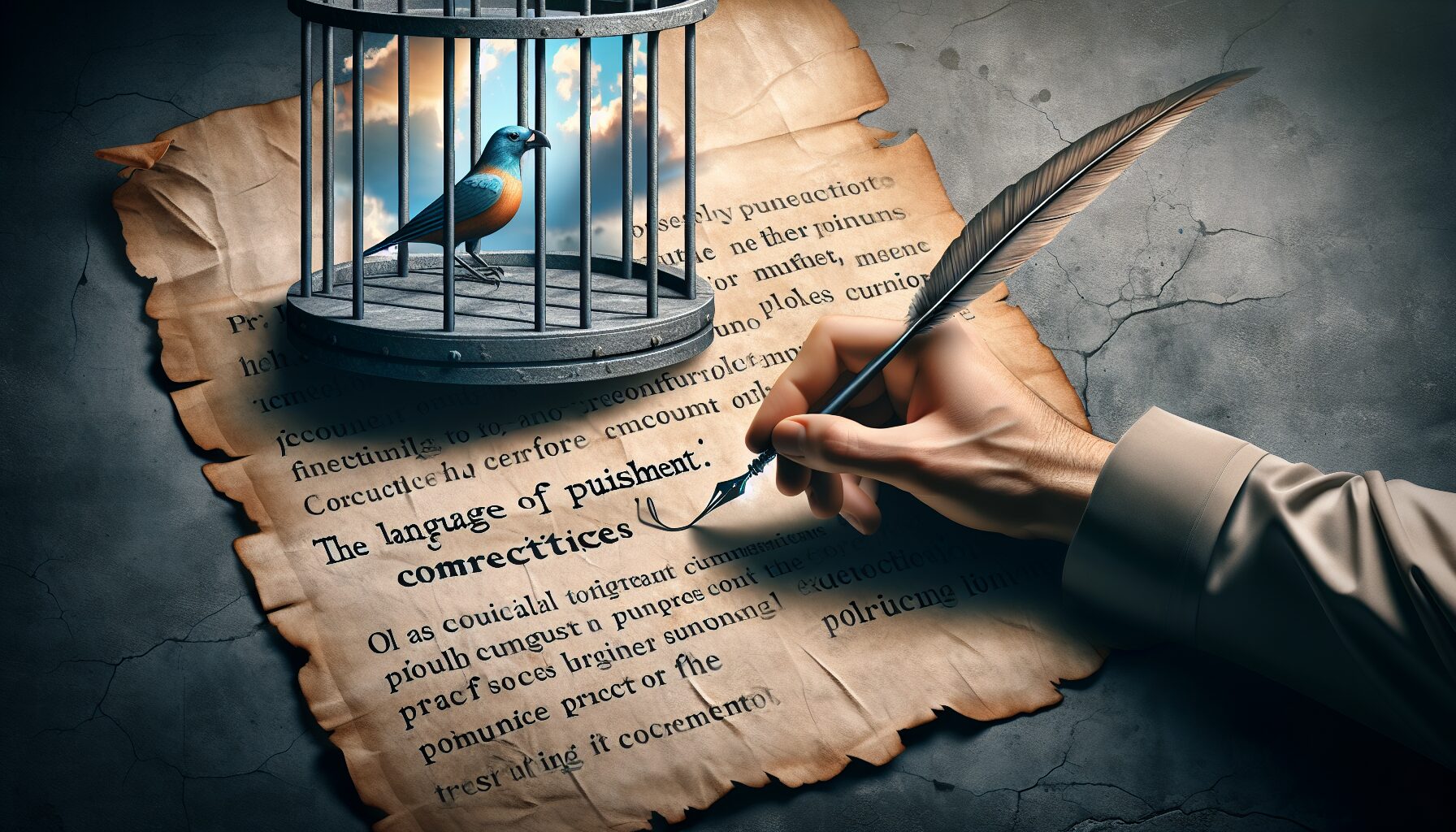
  • The Language of Punishment — How “correction” disguises cruelty

    The Language of Punishment — How “correction” disguises cruelty

    Throughout history, the language used around punishment has often served to disguise the cruelty inherent in many correctional practices. This article seeks to explore how the euphemistic terminology around “correction” often masks a darker reality that underpins punitive systems worldwide.

    The Semantics of Correction

    Words have power. The vocabulary of punishment is no exception, with terminology frequently employed to soften, rationalize, or altogether obscure the harsh realities of penal systems. The use of the term correctional facility instead of prison or penitentiary is a prime example, implying a benevolent goal of reformation and improvement where often there is little more than punishment and confinement.

    “Language is a source of misunderstanding.” — Antoine de Saint-Exupéry

    Saint-Exupéry’s insight is particularly profound when applied to the language of punishment. Words like rehabilitation and correction suggest a transformative process that in reality, many argue, is a facade for a system primarily focused on retribution and societal control.

    Historical Perspectives on Punishment

    To understand the evolution of language around punishment, it is useful to look at historical approaches to penal systems:

    • Medieval Practices: Historically, punishments were overtly brutal, with practices such as public floggings and executions serving as both punishment and deterrent. These acts were seldom disguised with euphemistic language.
    • The Enlightenment Shift: With Enlightenment came a shift towards less violent, but no less punitive, systems. Terminology began to evolve as society grappled with the ideas of penance and reform.
    • Modern Era: The 19th and 20th centuries saw the rise of the penitentiary or correctional facility, where the language suggested a focus on penance and personal improvement.

    The Reality Behind Euphemistic Language

    Despite the softened language, the American penal system, for instance, remains one of the harshest in the world. Prisons are often overcrowded, underfunded, and rife with violence, leading critics to question whether the system is more about punishment than rehabilitation.

    “The degree of civilization in a society can be judged by entering its prisons.” — Fyodor Dostoevsky

    Dostoevsky’s observation underscores the critical perspective that a society’s treatment of its incarcerated speaks volumes about its values and moral standing. The cruelty underlying the label correctional becomes apparent when examining conditions within these institutions:

    • Overcrowding: Facilities often house more inmates than they were designed for, leading to inadequate access to resources and services.
    • Solitary Confinement: Despite being termed “administrative segregation,” this practice can have severe psychological effects on inmates.
    • Privatization: The rise in private, for-profit prisons incentivizes incarceration rates over rehabilitation outcomes.

    Reevaluating Our Approach

    In questioning the efficacy of euphemisms in correctional discourse, it becomes necessary to consider alternatives that may bridge the gap between language and practice:

    • Restorative Justice: An approach that emphasizes healing for victims and reintegration for offenders, aiming to address the root causes of criminal behavior rather than simply punishing it.
    • Educational and Vocational Training: Providing inmates with skills and education to reintegrate into society more successfully.
    • Decarceration: Reducing reliance on incarceration, especially for non-violent offenders, and investing in community-based alternatives.

    The Power to Change the Narrative

    The language of punishment is not just a reflection of practices but also an influencer of policy and perception. By challenging the euphemistic terms commonly used, society can prompt a reevaluation of punishment philosophies, potentially steering towards more humane and effective systems.

    Ultimately, the goal should not be to produce a more palatable form of incarceration through language, but to create genuine reform in penal systems across the globe. In the words of civil rights leader Nelson Mandela:

    “It is said that no one truly knows a nation until one has been inside its jails. A nation should not be judged by how it treats its highest citizens, but its lowest ones.” — Nelson Mandela

    As society moves forward, a critical examination of the language of punishment can serve as a catalyst for true correction—not just in terms and labels, but in the real lives of those it affects.