Tag: small

  • The Erosion of Trust — How repeated small harms hollow devotion

    The Erosion of Trust — How repeated small harms hollow devotion

    The Erosion of Trust: How Repeated Small Harms Hollow Devotion

    In the intricate web of human relationships, trust forms the cornerstone upon which all else is built. Whether in personal relationships, professional environments, or larger societal structures, trust is often assumed, expected, and relied upon. Yet, like a fragile sculpture, it can be eroded over time by repeated small harms. This article delves into how tiny cracks can eventually hollow out devotion, causing relationships to crumble.

    Understanding Trust: A Delicate Balance

    Trust is a complex and multifaceted concept, often described as the belief in the reliability, truth, or ability of someone or something. According to Francis Fukuyama, a political scientist and economist, trust acts as a crucial social capital. He asserts that “society has to have the nerve to trust others, and when that is absent, social interaction becomes onerous and inefficient.”[source]

    Building trust is a slow and deliberate process, akin to planting a seed and nurturing it until it flourishes into a sturdy tree. It requires transparency, consistency, and understanding. However, maintaining this delicate balance is fraught with challenges.

    The Slow Destruction: Repeated Small Harms

    While significant breaches of trust, such as lying or betrayal, are often the focal point of discussion regarding trust erosion, it is frequently the smaller, repetitive transgressions that have a more insidious impact. These minor betrayals or “micro-betrayals,” as coined by psychologist John Gottman, can include:

    • Promises unfulfilled
    • Ignoring emotional needs
    • Small acts of dishonesty
    • Constant criticism or negativity
    • Failure to communicate effectively

    Each of these actions might appear trivial in isolation. However, over time, they accumulate and transform into a formidable force capable of dismantling the most robust foundations. As Malcolm Gladwell notes in his book, The Tipping Point, “The smallest changes can make the biggest difference.”

    The Psychology Behind Erosion

    The human mind is highly sensitive to consistency and patterns. When repeatedly exposed to minor harms, people start to form cognitive associations that frame these behaviors as typical, even acceptable. This desensitization process can lead individuals to downplay their feelings of being wronged, further perpetuating the cycle of harm.

    “Each small betrayal typically prompts a reevaluation of trustworthiness,” says psychologist David DeSteno. “As these incidents accumulate, they can create a formidable narrative that undermines the foundational elements of trust.”[source]

    Over time, the cumulative cognitive load of these micro-betrayals leads to what psychologists term “decision fatigue,” where individuals become emotionally exhausted and less resilient to even minor breaches of trust.

    The Ripple Effect: Beyond Personal Relationships

    The erosion of trust due to repeated small harms doesn’t only affect personal relationships. It has profound implications on professional and societal levels. Within an organization, a culture of trust promotes collaboration, creativity, and productivity. Conversely, when trust is undermined by repeated minor injustices, it breeds disengagement and conflict, as employees become wary and demotivated.

    In society at large, trust in institutions such as governments, media, and financial systems is crucial for stability and cooperation. When these institutions are perceived as engaging in continuous minor corruptions or inefficiencies, public trust wanes, leading to social unrest and disillusionment. Rachel Botsman, a trust researcher, eloquently states, “Trust shifts society’s burden of decision-making away from centralized authorities and into our hands.”[source]

    Rebuilding Trust: A Challenge and a Necessity

    Once trust has been eroded, rebuilding it is a considerable challenge, yet an essential endeavor for sustaining meaningful relationships. Here are some strategies to repair and strengthen trust:

    • Open Communication: Honest and transparent communication is the first step to addressing and rectifying minor harms.
    • Reestablishing Consistency: Consistent behavior that reinforces trustworthiness over time helps rebuild confidence.
    • Active Listening: Engaging in active listening fosters understanding and empathy, essential for healing wounds.
    • Accountability: Acknowledging past transgressions and taking responsibility is crucial in the reconciliation process.
    • Patience and Time: Rebuilding trust is a gradual process that demands patience and time.

    Conclusion

    The erosion of trust through repeated small harms is a subtle yet powerful phenomenon that affects all facets of human interaction. Whether within personal, professional, or societal contexts, recognizing and addressing these micro-betrayals is essential for maintaining healthy and enduring relationships. As we navigate the complexities of trust, we must strive to understand and mitigate the seemingly trivial actions that can hollow out our devotion and commitment to one another.

  • The Law of Small Things — Tiny injustices as cosmic lessons

    The Law of Small Things — Tiny injustices as cosmic lessons

    The Law of Small Things: Tiny Injustices as Cosmic Lessons

    In the grand tapestry of life, it is often the enormity of events that captures our collective attention. Wars, elections, and pandemics dominate headlines and history books, but it is in the intimate realm of small things where profound lessons await our discovery. This is the essence of the “Law of Small Things” — the idea that tiny injustices, often overlooked, can serve as significant conduits of cosmic wisdom.

    The Subtle Weight of Minor Injustices

    The Law of Small Things posits that trivial misdoings, much like grains of sand, may hold the weight of mountains over time. Consider the daily neglect of a cashier receiving no greeting, the disregard of a colleague’s suggestion, or the habitual interruption at a dinner table. While each of these acts might seem insignificant, they accumulate, shaping perceptions and realities.

    • Momentary Slights: Philosopher Alain de Botton suggests that, “What we encounter in solitude are not enormous vistas but micro-destinations that ground our experience,” implying that the small moments can deeply affect personal growth.
    • The Power of Words: A study from the University of California revealed that small kindnesses or offenses can indeed influence an individual’s mood and behavior significantly, although such effects are often underestimated.

    Cosmic Lessons from the Mundane

    It is through these slight injustices that the universe whispers its teachings. Each minor injustice is an invitation to observe, reflect, and transform. As renowned author Brené Brown points out, “We don’t have to do all of it alone. We were never meant to. We can learn profound lessons through observing and altering our interactions with others.”

    “Success isn’t about the end result, it’s about what you learn along the way.” – Vera Wang

    Indeed, perhaps the most valuable cosmic gifts come disguised as daily nuisances and injustices, requiring us to tune our senses to their subtle frequencies. The Law of Small Things demands mindfulness and an attentive heart.

    Embracing Change in Everyday Life

    By acknowledging these tiny injustices, individuals are empowered to challenge habitual reactions and assumptions. What if each minor irritation was received with gratitude, viewed as a prompt for personal growth? Embracing this concept can transform these seemingly insignificant moments into precious lessons.

    The Law of Small Things serves as a reminder that the cosmos weaves its biggest lessons in the smallest threads of our daily lives. So let us listen closely to the whispers of the universe, for therein lies the promise of growth and transformation, one small act at a time.

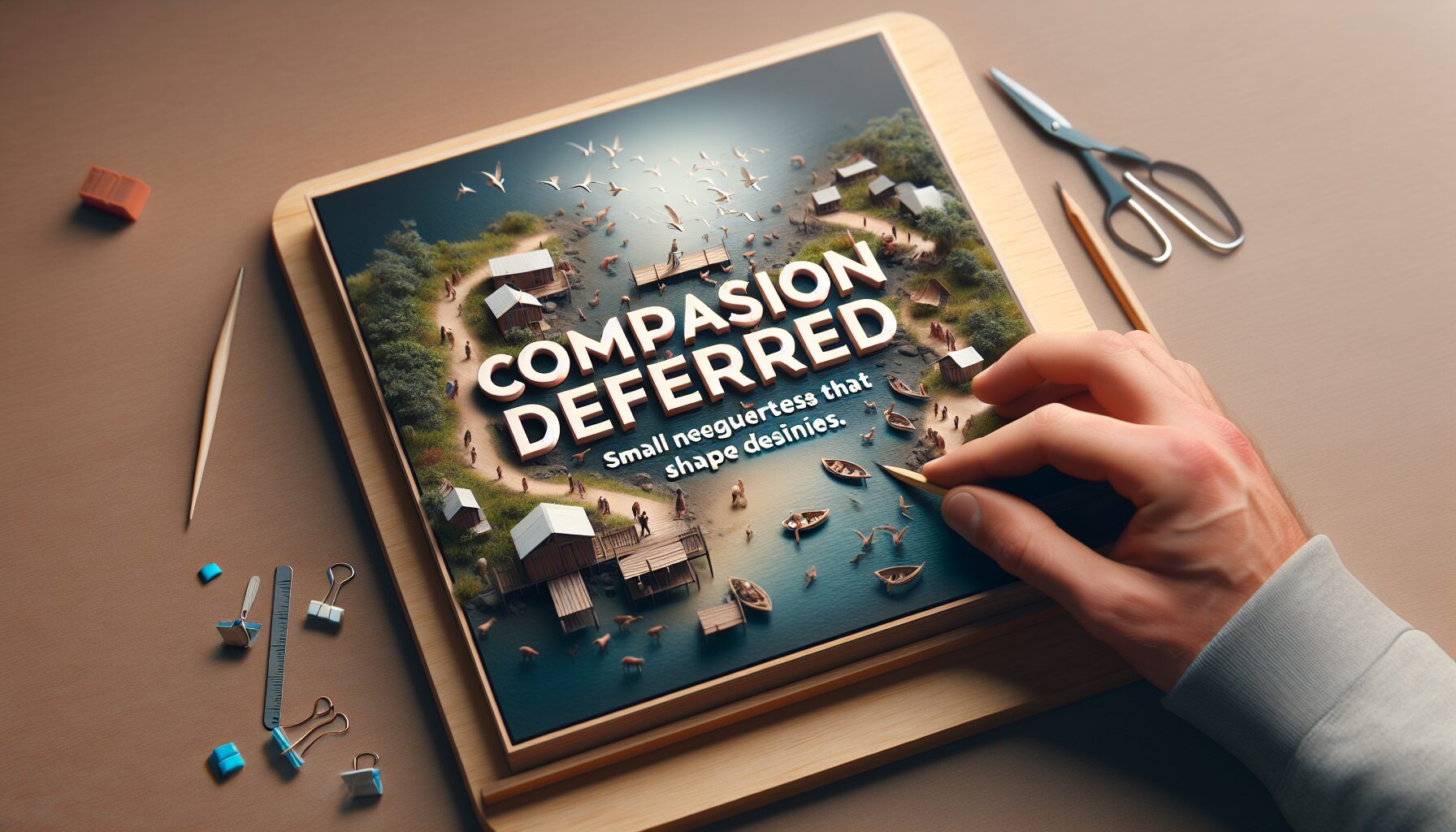
  • Compassion Deferred — Small neglects that shape destinies

    Compassion Deferred — Small neglects that shape destinies

    Compassion Deferred: Small Neglects That Shape Destinies

    In a world increasingly interconnected yet paradoxically distant, acts of kindness and compassion often seem like rare commodities. The subtle nuances and quiet neglects in everyday interactions can profoundly impact personal destinies. The phenomenon of “Compassion Deferred” refers to these small neglects — the moments where compassion is withheld, which, over time, accumulate and shape the paths of individuals and communities.

    The Nature of Small Neglects

    Small neglects are those seemingly insignificant moments where opportunities to show empathy and understanding are overlooked. These can be as trivial as ignoring a colleague’s struggle with a workload or as profound as failing to acknowledge the pain of a grieving friend. When consistently overlooked, these moments can lead to significant implications.

    • Personal Relationships: Within families, the absence of expressed love and support can leave lasting emotional scars. Children who grow up without open channels for empathy may struggle to form meaningful relationships later in life.
    • Work Environments: In professional settings, neglecting the emotional well-being of employees can lead to decreased productivity and job satisfaction. This negligence often results in high turnover rates and a toxic work culture.
    • Community Interactions: Lack of community support and engagement can hinder social cohesion and foster divisiveness. Communities that neglect collective compassion often experience increased crime rates and social unrest.

    The Psychological Impact

    The psychological implications of deferred compassion are profound. According to Dr. Brené Brown, a research professor known for her work on vulnerability and empathy, “Not expressing compassion when we witness someone’s suffering makes us more prone to shame and guilt.” (Brené Brown, accessed October 2023).

    This emotional oversight can lead to a range of mental health issues, including:

    • Anxiety and Depression: Feelings of isolation often accompany neglect, leading to heightened anxiety and depression.
    • Reduced Self-Worth: When compassion is withheld, individuals may begin attributing this neglect to their perceived unworthiness.
    • Barrier to Empathy: Without experienced compassion, people may struggle to empathize with others, perpetuating a cycle of neglect.

    Historical Perspectives on Compassion

    History provides numerous examples where the absence of compassion had tragic outcomes. Consider the industrial era in the 19th century, marked by rapid technological advancements but also profound social negligence. Children as young as five were thrust into the harsh realities of factory work, with scant regard for their wellbeing. Charles Dickens’ Oliver Twist and other novels illustrated this neglect, embodying societal disregard.

    “The civility which money will purchase, is rarely extended beyond the wealthy.” — Charles Dickens, Oliver Twist.

    Moreover, wars and genocides are stark reminders of how entire communities can be decimated when compassion is systematically deferred. The Holocaust stands as a glaring testament to what happens when empathy is overshadowed by hatred and compliance with repressive ideologies.

    Cultural Variations in Compassion

    The expression and withholding of compassion vary across cultures. In some societies, collectivism promotes a natural inclination towards empathy and community support. In contrast, individualistic cultures might inadvertently prioritize independence over communal solidarity, leading to more frequent instances of deferred compassion.

    Salon writer Thomas Rogers notes, “In many Asian cultures, where family ties and community obligations take precedence, compassion is culturally ingrained, influencing how individuals interact within their social and familial spheres.” (Thomas Rogers, Salon, accessed October 2023).

    Redirecting the Course: Embracing Compassion

    To prevent compassion from being deferred, deliberate action must be taken at individual, communal, and institutional levels.

    Individual Action

    • Mindful Awareness: Practicing mindfulness helps individuals recognize when presenting opportunities to show compassion are missed.
    • Active Listening: Engage in genuine conversations where emotional needs are prioritized over transactional dialogues.
    • Express Gratitude: Regularly expressing gratitude fosters a culture of appreciation and, by extension, compassion.

    Community Initiatives

    • Social Support Networks: Building and maintaining robust community support systems can counteract feelings of isolation.
    • Empathy Workshops: Organizing workshops can sensitize communities on the importance of everyday acts of kindness.

    Institutional Change

    • Corporate Responsibility: Companies must integrate empathy and well-being into their core values, ensuring compassionate business practices.
    • Policy Implementation: Governments and organizations should implement policies that encourage empathetic and supportive environments.

    Conclusion

    The phrase “Compassion Deferred” encapsulates the missed opportunities that subtly but inevitably shape lives, often leading to unintended repercussions. Acknowledging the power of small acts of kindness can transform these moments from occasions of neglect into seeds of profound positive change. Harnessing compassion in everyday interactions may ultimately lead to a more connected, understanding, and unified world.

    Transformation begins when we recognize these patterns of neglect and intentionally act to replace them with empathy and understanding. By committing to this paradigm shift on a personal, societal, and global scale, it’s possible to reshape destinies toward more harmonious futures.

  • The Butterfly Effect of Misjudgment — Tiny causes, vast consequences

    The Butterfly Effect of Misjudgment — Tiny causes, vast consequences

    In an interconnected world, where decisions wield monumental influences, the butterfly effect remains a poignant reminder of complexity’s role in our lives. Originating from chaos theory, this idea postulates that minor actions can generate disproportionate impacts, similar to how “a butterfly flapping its wings in Brazil might cause a tornado in Texas,” as described by Edward Lorenz, the mathematician and meteorologist who coined the term butterfly effect.

    History and Origins

    The metaphor of the butterfly effect emerged from Lorenz’s research in the 1960s when he discovered that infinitesimal variations in his computer models of weather forecasts could yield dramatically different outcomes. This discovery underscored the unpredictable nature of complex systems, suggesting that small missteps or misjudgments could lead to substantial consequences.

    “When the present determines the future, but the approximate present does not approximately determine the future,” remarked Lorenz about chaos theory’s implications.

    Real-World Manifestations

    Throughout history, the butterfly effect has revealed itself in myriad contexts, from geopolitics to personal decisions:

    • The Assassination of Archduke Franz Ferdinand:
      This seemingly isolated event in 1914 set off a chain reaction leading to World War I. A single bullet disrupted the European balance of power, demonstrating how one act of violence could unleash unprecedented upheaval.
    • The Cuban Missile Crisis:
      A small misjudgment in military communication nearly led to nuclear war in 1962. It highlights how intricate the web of international relations can be and how a single error might escalate into global catastrophe.
    • Technological Revolutions:
      Consider the vast impacts of small technological innovations. The creation of the World Wide Web by Tim Berners-Lee, initially perceived as an infrastructure enhancement, revolutionized how humanity communicates and accesses information.

    Personal Lives and Beyond

    The butterfly effect resonates in personal spheres as well, where misjudgments can yield life-altering consequences:

    • Career Choices: A seemingly minor decision, such as taking a particular job offer, can pivot an individual’s entire career trajectory, impacting not only future opportunities but also personal life satisfaction.
    • Personal Relationships: Small acts of kindness, or lack thereof, within relationships can fundamentally alter dynamics, fostering growth or sowing discord.
    • Daily Decisions: Simple routine choices, such as health habits, accumulate over time to create significant health outcomes, illustrating the long-term power of everyday decisions.

    Understanding and Mitigating Misjudgment

    Given the potential for profound consequences from seemingly insignificant actions, understanding the nature of misjudgment becomes crucial. Awareness is the first step in mitigating errors that could spiral into costly mistakes, both in organizations and personally. Learning from past misjudgments, considering multiple perspectives, and employing strategic foresight can aid in minimizing unintended ripple effects.

    In organizations, implementing robust decision-making frameworks can guard against the hazards of misjudgment. Such frameworks often include:

    • Scenario Planning: Anticipating various future scenarios allows organizations to prepare for potential outcomes, reducing the surprises in decision impacts.
    • Cross-Disciplinary Teams: Diverse perspectives in decision-making can reveal blind spots, thereby decreasing the likelihood of overlooked consequences.
    • Continuous Feedback Loops: Systems that facilitate ongoing feedback allow organizations to adapt quickly to unexpected developments.

    The Power of Awareness

    On a societal level, educating individuals about the butterfly effect and the consequences of misjudgment can foster a culture of thoughtful decision-making. This encompasses understanding that the true weight of a decision lies not only in its immediate effects but in its potential to cascade across time and space.

    Ultimately, the butterfly effect of misjudgment serves as a testament to the intricate connections within our world. Embracing this awareness, humanity can aspire toward decisions that not only serve immediate objectives but also honor the broader legacy we leave for future generations.

    In the words of author Ray Bradbury, “A small change in one place can have unforeseen consequences elsewhere.” As we navigate our paths, may we carry these words, honoring the subtle yet powerful dance of cause and effect. By doing so, we may not only avoid unnecessary turbulence but also create ripples of positivity that resonate across time.

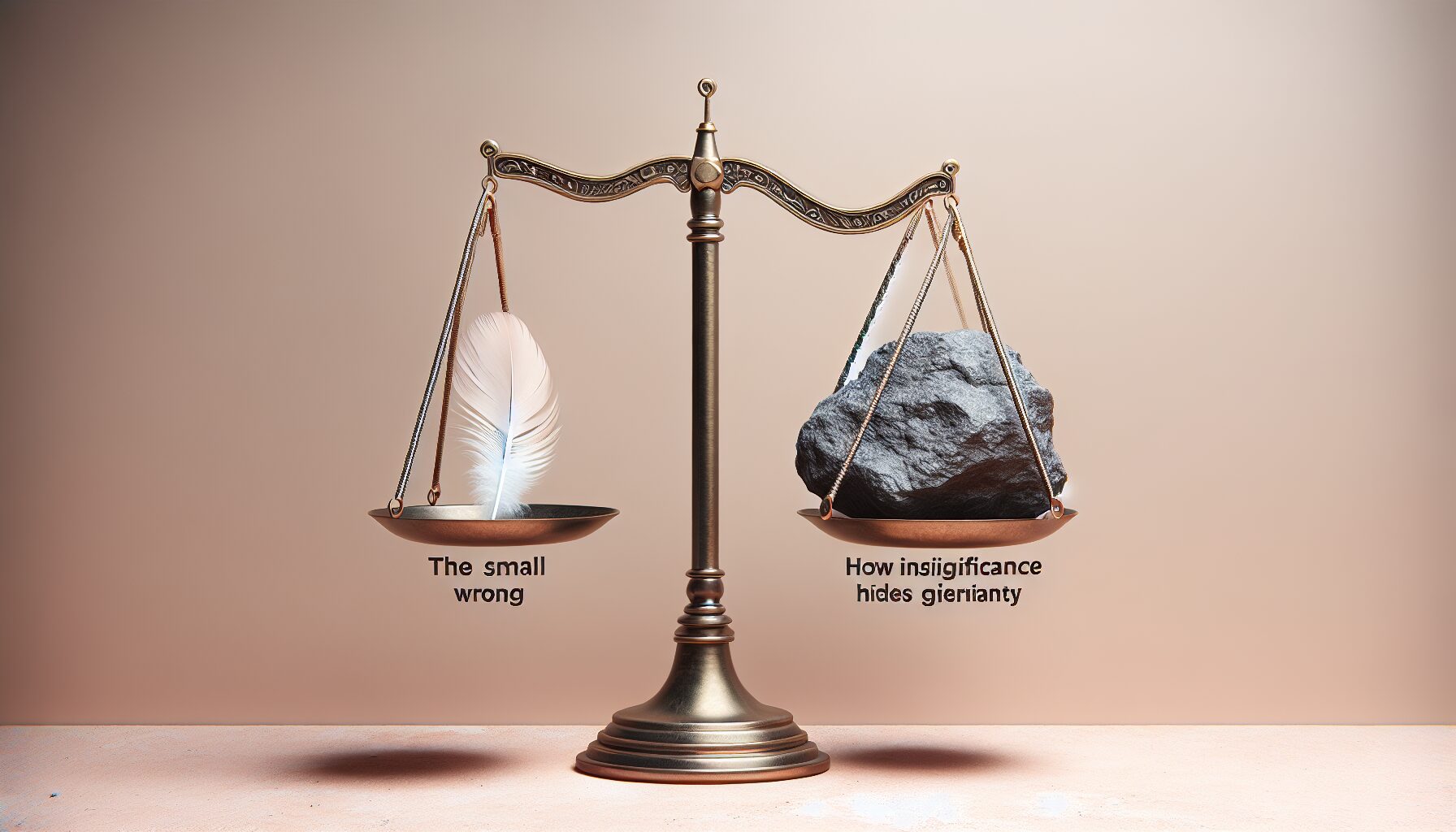
  • The Small Wrong — How insignificance hides moral gravity

    The Small Wrong — How insignificance hides moral gravity

    In everyday life, it’s not the monumental wrongdoings that often shape our ethical landscapes, but the smaller, seemingly insignificant decisions that piece together the moral compass of individuals and societies. The concept of the “small wrong” delves into how minor ethical lapses can often hide heavier moral implications, gradually eroding personal integrity and societal trust.

    Understanding the Small Wrong

    The small wrong, by definition, refers to actions or decisions that are perceived as minor infractions—like telling a white lie, slightly bending the truth, or taking something inconsequential that doesn’t belong to you. These actions, though seemingly harmless, mask deeper moral issues that often go unnoticed until they accumulate into something more significant.

    Psychologist Daniel Kahneman, in his book Thinking, Fast and Slow, describes how people often rely on quick, intuitive judgments—also known as “heuristics”—which can lead to moral oversights. Individuals might justify a small wrong by considering it inconsequential, but this subconscious pardoning fosters a setting where larger violations can thrive unnoticed.

    The Domino Effect: How Small Wrongs Accumulate

    The phrase “it’s just a small infraction” lays the groundwork for a cascading effect akin to a domino fall. One minor wrongdoing, left unchecked, often emboldens individuals to commit further minor acts. For instance:

    • A small lie to avoid embarrassment might lead to bigger lies to avoid more significant outcomes.
    • Petty theft could evolve into a habit, tapping into larger-scale unethical behavior.
    • Bending rules slightly at work can potentially unravel into ethical gray zones, complicating workplace dynamics.

    “We habitually engage in small-scale moral compromises, dulling our ethical sensitivity to more serious issues,” writes Michael Josephson, an ethics expert and former law professor.

    The Ethical Erosion: Societal Impact of Minor Wrongs

    While individuals often perceive small wrongs as personal and contained, their cumulative effect can have a broader societal impact. A society’s moral fabric is stitched together by the actions of its individuals. Habituating to minor wrongs not only weakens personal ethical standards but also diminishes collective societal values.

    Consider the implications of these behaviors in areas like business and governance:

    • In business, the normalization of unethical practices such as minor accounting fraud or inflated expense accounts cumulatively can lead to corporate scandals, damaging reputations and livelihoods.
    • In politics, when leaders justify small ethical lapses under the guise of pragmatic decision-making, it sets a detrimental precedent. As John Gardner once said, “Political life at the top is a fight for ethics.”

    Cultivating Moral Awareness

    The key to addressing the small wrong is cultivating a heightened sense of moral awareness and accountability. Educating individuals about the potential impact of their actions, however small, can foster a community of conscientious decision-makers. Here are some strategies:

    • Ethics Training: Implementing comprehensive ethics training in schools and organizations can help individuals recognize and reflect on the impact of minor wrongs.
    • Encouraging Reflection: Encouraging daily reflection and mindfulness practices can heighten self-awareness and support ethical decision-making.
    • Promoting Open Dialogue: Fostering an environment that promotes open discussions about ethical dilemmas can help individuals feel comfortable confronting and rectifying minor wrongs.

    “One of the deep secrets of life is that all that is really worth doing is what we do for others,” said Lewis Carroll. This maxim holds true in preserving both personal integrity and the moral health of society.

    Conclusion: Embracing Ethical Integrity

    The challenge of the small wrong lies in its dual nature of seeming trivial yet holding moral weight. By addressing and minimizing minor ethical lapses, individuals can significantly contribute to the cultivation of a more ethical society. Recognizing the moral gravity hidden within small wrongs enables individuals to consciously strive towards maintaining integrity, leading to a path where both personal and societal ethics flourish.

    In the footprints of ancient wisdom, it’s crucial to remember: “With great power comes great responsibility.” Indeed, each small choice contributes to the moral strength—or weakness—of society as a whole.

  • Small Errors, Deep Wounds — The disproportionate harm of subtle misreadings

    Small Errors, Deep Wounds — The disproportionate harm of subtle misreadings

    In the realm of communication, small errors can leave deep, lasting impressions. A single misinterpretation or a subtle misreading can unexpectedly ripple through personal relationships, professional environments, and even social discourse, often causing a profound impact disproportionate to the initial mistake.

    The Fragility of Words

    Words are the currency of communication, and their meanings are largely dependent on context, tone, and delivery. A subtle misreading can alter the intended message, leading to unintentional misunderstandings. For instance, a simple text message that lacks the warmth of verbal tones or facial expressions can be misread easily, sometimes resulting in feelings of hostility where none was intended.

    “The single biggest problem in communication is the illusion that it has taken place.” — George Bernard Shaw

    This quote is a stark reminder of the challenges that accompany miscommunication. When subtle errors in understanding occur, they can escalate into larger issues if not promptly addressed. A misplaced word or misunderstood phrase can sometimes create a domino effect, leading to trust issues and fractured relationships.

    The Domino Effect in Professional Settings

    In professional environments, subtle misreadings can severely damage reputations and hinder productivity. According to a study published in the Harvard Business Review, error-free communication is crucial for organizational efficiency. The study emphasizes that slight misinterpretations can lead to wrong decision-making processes, which can eventually cost companies substantial resources and time. For more on this research, see the full article on Harvard Business Review.

    Mitigating Misunderstandings

    To mitigate the disproportionate harm caused by small errors, embracing clear communication methods is essential. Active listening, for example, can significantly reduce the likelihood of miscommunication by ensuring that all parties are truly heard and understood. Regular feedback mechanisms can also help clarify any misunderstandings before they escalate.

    Technological aids such as email and messaging platforms should be used wisely, ensuring that concise and clear language is utilized. Furthermore, employing face-to-face communication whenever possible can dramatically decrease the chances of subtle misreading.

    A Lasting Impact

    Ultimately, being aware of the potential impact of subtle misreadings can help individuals act more mindfully in their communications. By prioritizing clarity and active listening, we can foster healthier interactions in both personal and professional relationships, avoiding the deep wounds that small errors can inflict.