Tag: silence

  • The Soviet Silence – Recovering the myths suppressed by the Iron Curtain.

    The Soviet Silence – Recovering the myths suppressed by the Iron Curtain.


    The Soviet Silence – Recovering the myths suppressed by the Iron Curtain

    The Soviet Silence

    “In the heart of the Iron Curtain, whispers of tales untold echoed through the labyrinths of time.” – Anonymous Mythographer

    As the veil of secrecy that once shrouded the Soviet Union began to dissipate, a chorus of voices rose from the depths, seeking to weave their suppressed narratives into the fabric of history. The Soviet Silence, as this era has come to be known, represents not just a void in the historical record, but a vast repository of myths and legends that were intentionally hidden or overlooked during the Cold War.

    Ancestral Echoes

    • The stories that emerged from this era are as diverse and complex as the land they sprang from, mirroring the rich tapestry of Russian mythology that predated the Soviet regime. From tales of cosmic battles fought by mystical beings to epics centered around the exploits of legendary heroes, these narratives offer a unique glimpse into a culture that was often obscured by political ideology and censorship.
    • One such story is that of “The Firebird,” a mythological creature said to possess a magical feather capable of igniting an endless flame. This symbol of hope and light found its way into Russian folklore long before the Soviet era, yet it was during this time that its meaning evolved to encompass the struggle for freedom and the yearning for truth.

    The Iron Curtain’s Shadow

    The Soviet Silence, however, was not merely a repository of ancient stories; it also served as a testing ground for the propagation and manipulation of myths that supported the regime’s ideological objectives. These manufactured narratives were designed to create a sense of unity among the people while masking the realities of life under Soviet rule.

    “The Iron Curtain did not just separate nations; it also sought to divide truth from myth, casting a long and dark shadow over our collective memory.” – Boris Pasternak

    Breaking the Silence

    As the Soviet Union crumbled and its secrets began to spill out into the world, scholars and mythographers worked tirelessly to uncover the buried tales that had been silenced by the Iron Curtain. Through painstaking research and collaboration, these dedicated individuals sought to piece together the fragmented narratives that had been lost for generations.

    “In recovering these myths, we are not just restoring a lost chapter in history; we are also healing the wounds inflicted by decades of political repression.” – Svetlana Alexievich

    The Legacy of the Soviet Silence

    Today, the myths that emerged from the Soviet Silence continue to captivate audiences around the world. Through their exploration and interpretation, these stories serve as a reminder of the power of narrative in shaping our understanding of history and ourselves. As we delve deeper into the heart of the Iron Curtain’s legacy, we are reminded that every voice deserves to be heard, and every story has the potential to transform us.

  • Solidarity or Silence – Choices facing persecuted believers

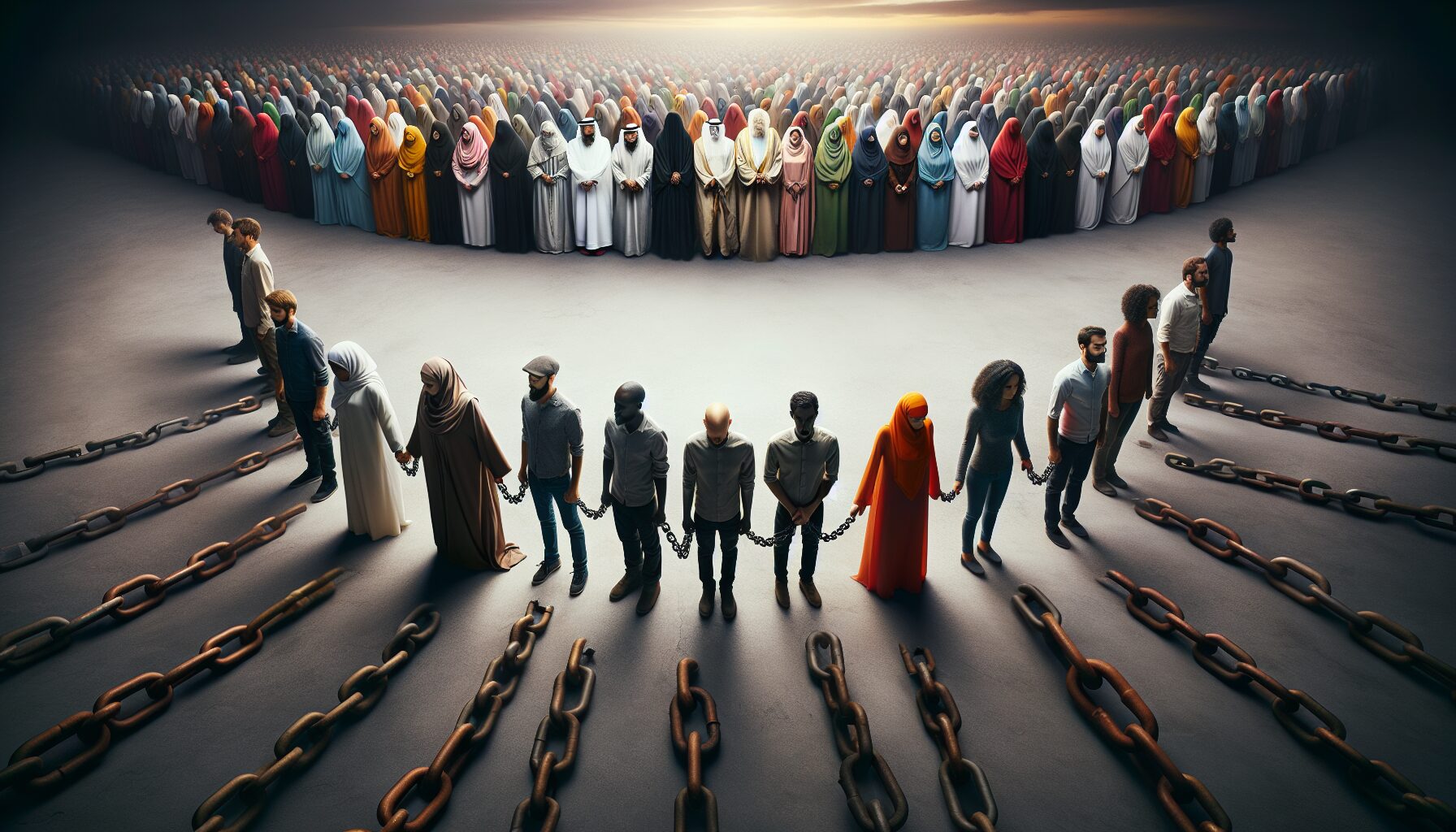
    Solidarity or Silence – Choices facing persecuted believers

    Solidarity or Silence: Choices Facing Persecuted Believers

    In a world where freedom of belief is a fundamental right, millions of individuals still face severe persecution for their faith. The dilemma they face is one of solidarity or silence—to stand firm and unite with others under shared beliefs or to remain silent for the sake of safety and survival. This article delves into the choices facing persecuted believers, exploring the implications and the courage it takes to maintain faith under duress.

    The Context of Religious Persecution

    According to the Open Doors USA, over 360 million Christians live in places where they experience high levels of persecution and discrimination. Other religious communities face similar challenges. This persecution takes many forms, from societal discrimination to state-sponsored oppression, and it often forces believers to choose between solidarity and silence.

    A Historical Perspective

    “Throughout history, religious persecution has been a dark backdrop against which the human spirit’s resilience and tenacity are tested.”

    The persecution of religious communities is not a modern phenomenon. Historical records, like those of the early Christians under Roman rule or Jewish communities throughout medieval Europe, illustrate recurring cycles of faith-driven repression.

    Solidarity: The Choice to Unite

    For many believers, standing in solidarity with their communities provides strength and resilience. By uniting, persecuted believers can maintain their cultural identity and collectively oppose repression, ensuring that their faith survives beyond oppression.

    • Cohesion and Support: Being part of a faith community offers emotional and material support. This unity creates safe spaces where believers can practice their faith openly and support each other’s struggles.
    • Advocacy and Awareness: Unified voices can raise global awareness, prompting international advocacy and intervention. Organizations like Human Rights Watch document abuses and advocate for these communities, amplifying their voices worldwide.

    Solidarity, however, comes with profound risks. As noted by The Guardian:

    “Aligning with religious communities in the face of persecution often attracts even more severe crackdown, leading to arrests or worse.”

    Silence: The Strategy of Survival

    In contrast, some believers choose the path of silence as a means of survival. This strategy involves concealing one’s faith or practicing in clandestine environments, prioritizing personal safety over public expression.

    • Safety First: By maintaining a low profile, individuals can avoid arrest, detainment, or violence, allowing them to survive under oppressive regimes.
    • Quiet Resilience: For some, practicing their faith privately can sustain their spiritual life without the added peril of public exposure.

    Yet, choosing silence is in itself a profound inner conflict for many believers:

    “Adopting silence feels akin to denying one’s faith, carrying an emotional weight that can be as burdensome as overt persecution.”

    The Global Response

    Internationally, there is an increasing call to action against religious persecution. Efforts to support persecuted believers include diplomatic pressures, sanctions against oppressive regimes, and asylum programs for those fleeing severe persecution. The U.S. Commission on International Religious Freedom (USCIRF) actively monitors religious freedoms worldwide, influencing U.S. policy to better protect religious minorities.

    Global advocacy also focuses on empowering these communities to organize and speak out, but with careful strategic consideration to avoid exacerbating their vulnerabilities.

    A Complex Choice

    The choice between solidarity and silence is complex, with no one-size-fits-all solution. Each choice carries inherent risks and rewards, determined by the socio-political context and personal circumstances.

    • For some, solidarity offers a sense of purpose and community, an opportunity to make injustices visible at a global scale.
    • For others, silence is a necessary shield, allowing them to live another day, hoping circumstances will eventually change.

    Conclusion

    As the international community reflects on its role in protecting the freedom of belief, it remains crucial to respect the individual choices of persecuted believers—inspiring both solidarity and the right of survival through silence. By understanding and supporting these choices, the world can work towards a future where freedom of belief is not a cause for persecution but a celebrated component of the human tapestry.

    Real change requires a concerted effort, uniting global powers and grassroots activists alike, to dismantle the systems that perpetuate religious oppression. Ultimately, solidarity with oppressed believers, whether through shared voices or respectful silence, remains a noble pursuit in the quest for universal human rights.

  • The Global Market for Silence – Why abuses persist unchecked

    The Global Market for Silence – Why abuses persist unchecked

    In an age where information flows freely across borders at unimaginable speeds, the persistence of abuse scandals kept in the dark raises perplexing questions about the global market for silence. This market thrives on the complicity, coercion, and control of individuals and institutions tasked with protecting our moral and ethical standards.

    The Mechanics of Silence

    Silence serves as a commodity in many areas where power dynamics are at play. From corporate malpractice to human rights abuses, the mechanisms of silence are as varied as they are pervasive. The intricacies of this market often involve:

    • Non-Disclosure Agreements (NDAs): These legal instruments are frequently employed to bind victims and whistleblowers into silence. As reported by BBC News, NDAs can be seen as “gagging orders,” restricting individuals from revealing important truths.
    • Financial Incentives: Settlements and hush money often serve to preempt public scandals. As The Guardian highlights, powerful entities leverage their wealth to coerce silence, preserving their public image at the expense of justice.
    • Threats and Intimidation: Many individuals are silenced through threats of retaliation, either directly or subtly implied. This coercion is a pervasive barrier to speaking out.

    Carly Nyst, a digital rights lawyer, describes non-disclosures as “a silencing tool that effectively allows the powerful to go unchallenged.”

    The Role of Cultural and Social Norms

    Silence is further perpetuated by cultural and social norms that discourage speaking out. In many cultures, there exists a strong deference to authority which can translate into an unwillingness to question or criticize those in power. This respect for hierarchy can halt efforts to bring abuses to light.

    Groups vulnerable to exploitation, such as marginalized communities and individuals with limited economic resources, often face heightened risks. These groups, due to their social positioning, may find it more challenging to break free from imposed silence and seek justice or reparation.

    The Impact of Silence

    The consequences of a thriving market for silence are profound. Human Rights Watch notes that unchecked abuses continue to infringe upon human dignity and well-being on a global scale. Silence magnifies the impact of these harms, enabling perpetrators to act with impunity.

    • Loss of Trust: When scandals do become public, the delayed revelations often erode trust in institutions and in systems of oversight.
    • Cultural Acceptance of Misconduct: When abuse and misconduct go unpunished, societies may inadvertently learn to accept such behaviors as norm.
    • Victim Empowerment Thwarted: The refusal to allow victims to speak creates a cycle of disempowerment and trauma, potentially leading to further victimization.

    In the words of Sheryl Sandberg, “We cannot change what we are not aware of, and once we are aware, we cannot help but change.” This highlights the importance of breaking the silence to initiate change.

    Breaking the Chains of Silence

    Efforts to dismantle the market for silence are gaining momentum, driven by advocacy groups and increasingly by individuals willing to risk speaking out. The #MeToo movement and others have demonstrated the potential to disrupt entrenched systems of coercion and denial.

    • Legal Reforms: There is a growing push for legal reforms that restrict the use of NDAs in cases involving criminal activity and significant misconduct.
    • Grassroots Movements: Empowering communities to speak out and share their stories often results in greater awareness and, eventually, systemic change.
    • Media and Public Campaigns: Investigative journalism and public awareness campaigns play an essential role in shining light on abuses and compelling action from otherwise unresponsive entities.

    As the global market for silence continues to face scrutiny, the onus is on each of us to listen and act upon the stories previously hidden. Transparency and accountability must be prioritized to dismantle the structures that allow silence to persist over truth.

    Combating this issue involves not just policy change but a cultural shift in values and priorities, emphasizing truth, justice, and the unwavering resolve to no longer remain complicit by our silence. Together, through collective awareness and action, change is possible.

    The journey to dismantle this market is a long one, but as stated by human rights advocate Desmond Tutu, “If you are neutral in situations of injustice, you have chosen the side of the oppressor.” Breaking the silence requires courage, compassion, and a commitment to justice.

  • Resonance Beyond Silence

    Resonance Beyond Silence

    For centuries, humans have been intrigued by the mysterious interplay between sound and silence. It is in this dynamic tension that resonance finds its birth—a phenomenon where sound transcends the mere auditory experience and becomes an embodiment of emotion, memory, and connection. In the vast corridors of science and philosophy, experts continue to explore this interaction, unveiling truths about the human condition and the universe at large.

    The Science of Resonance

    At its core, resonance is a simple physical principle. It occurs when a system is driven by another vibrating system at its natural frequency, resulting in an amplified effect. This concept, while grounded in physics, has far-reaching implications across various fields from engineering to psychology.

    “When you understand resonance, you understand the universe.”
    — Nikola Tesla

    Ancient knowledge inferred that resonance was not merely an acoustic or mechanical phenomenon but a bridge to understanding the cosmic order. Today, scientists use resonance in technologies ranging from magnetic resonance imaging (MRI) to acoustics and even earthquake engineering. Yet, beyond its technical applications, resonance holds a philosophical conundrum: the silent spaces it leaves invite contemplation, transcending its apparent cacophony.

    Resonance in Music and Art

    Throughout history, musicians and artists have leveraged resonance not just to create works of beauty but also to evoke profound emotional responses. The strings of a violin, for instance, resonate with a specific richness that fills the room with warmth. Music, in essence, becomes an interpreter of silence, a conduit for the human soul to navigate the labyrinth of emotions.

    • Harmonics: Musical instruments use harmonic resonance to produce a multifaceted auditory experience.
    • Choral Music: Choirs leverage room acoustics to create a symphony that echoes through cathedrals, resonating within the listeners.
    • Art Installations: Modern artists incorporate acoustic elements to engage audiences, creating spaces where sound and silence tell a story.

    The experience of resonance in music is famously described by composer Claude Debussy, who stated, “Music is the silence between the notes.” This observation suggests that the true power of music lies not just on what is heard, but also what is left unsaid—an uncharted territory where resonance thrives.

    Cultural and Emotional Resonance

    Cultural anthropologists study how resonance influences traditions and societal bonds. In many cultures, resonant chanting and drumming serve ritualistic purposes, establishing a rhythmic connection among participants that transcends verbal communication.

    Emotionally, resonance transcends its scientific origins to reflect shared human experiences. Consider the theatre, where the repeating intonation of Shakespearean lines creates a timeless echo, binding audiences across generations. The works of William Shakespeare, for instance, exemplify how words, when articulated resonantly, become an enduring tapestry of human sentiment and thought.

    “If music be the food of love, play on, Give me excess of it, that, surfeiting, The appetite may sicken, and so die.”
    — William Shakespeare, Twelfth Night

    Within these lines, the resonance is not just in the musicality but in the emotional depth they evoke, unraveling the complexities of love and desire.

    The Silent Echoes of the Universe

    Astrophysicists and cosmologists explore celestial resonance, illustrating how cosmic events set the universe vibrating. The collisions of distant stars and black holes generate gravitational waves, rippling through the very fabric of space-time. These silent, invisible waves provide a resonant record of cosmic history, enabling scientists to decode the ever-expanding universe.

    Consider the Cosmic Microwave Background (CMB), the faint afterglow of the Big Bang, a resonant whisper of the universe’s birth. This echo offers scientists a map to decipher the early universe’s mysteries, where silence speaks the loudest.

    While these studies are rooted academically, they provoke philosophical musings about our place in the universe. Are we, as sentient beings, part of a larger, interconnected resonance? The search for answers continues, reminding us of the words of Carl Sagan:

    “We are like butterflies who flutter for a day and think it is forever.”
    — Carl Sagan

    Conclusion: Embracing Resonance

    In the balance of sound and silence lies an ocean of understanding. By embracing resonance, we embark on a journey beyond the audible, navigating the echoes of our world and the cosmos. As technology advances, our grasp of resonance will undoubtedly deepen, guiding us to explore new frontiers of science, art, and human connection.

    Ultimately, resonance connects us—to the universe, to each other, and to the silence that speaks volumes when words and sounds fail.

  • The Great Silence – What Happens When No One Will Hear Your Voice

    The Great Silence – What Happens When No One Will Hear Your Voice

    In an era defined by the cacophony of opinions, ideas, and declarations, the notion of being unheard in the digital realm reflects a profound paradox. The Internet, designed to give everyone a voice, sometimes echoes with what many call “the great silence,” where millions resonate their thoughts only to realize they’re met with indifference or oblivion.

    The Nature of the Digital Abyss

    The initial promise of the web was to democratize communication. From social media platforms like Twitter and Facebook to user-driven forums like Reddit, people were finally able to share their voices freely and engage in global dialogues. Yet, despite these resources, many find themselves yelling into the void, unable to gain traction or attention.

    “In the digital age, the tragedy is not that we can’t be heard, but that everyone can speak and nobody listens,”

    — Nathaniel Rich, author

    The Algorithm Enigma

    A significant factor contributing to this silence is the omnipresent algorithm. Algorithms on social media platforms decide who gets heard and who remains in the shadows. These systems prioritize content that maximizes engagement and thus, advertising revenue. The result? A skewed representation of what the community sees and interacts with.

    • Echo Chambers: Platforms like Facebook and Twitter create echo chambers where users are exposed predominantly to information that reinforces their existing beliefs, according to ScienceDaily.
    • Virality as a Criterion: Content that stirs extreme emotions is often deemed ‘worthy’ of attention. This means subtle or complex discussions are drowned out, as noted by the research in Nature.
    • Data-Driven Models: Engagement metrics, such as likes and shares, determine the visibility of a post, often sidelining content from users without a large following or prior engagement history.

    The Social Currency of Attention

    In the digital marketplace, where attention is the most valuable currency, those who cannot garner it find themselves isolated. This phenomenon is exacerbated by the illusion of connection that social platforms create. Although one may have thousands of friends or followers, meaningful interactions can be few and far between.

    What does this mean for individuals who are unable to cut through the noise?

    • Psychological Impacts: Persistent neglect can lead to feelings of isolation and anxiety. Research by the American Psychological Association highlights a growing concern regarding the correlation between social media silence and mental health issues.
    • Self-Censorship: When faced with silence, users may begin to tailor their messages to fit what they believe the algorithm will approve, ironically muting their genuine voices in pursuit of engagement.
    • Loss of Agency: When one’s voice fails to reach others, it can feel as though agency in contributing to communal dialogue is lost, diminishing the perceived value of one’s input.

    Breaking the Silence

    Breaking through requires strategic navigation of both algorithms and audience engagement. Here are several approaches individuals can adopt to amplify their voices and ensure their messages don’t languish in silence:

    • Community Building: Engage actively with niche communities that share your interests. By cultivating genuine relationships, one can develop a dedicated audience for their content.
    • Consistent Authenticity: Presenting a genuine voice consistently helps in establishing trust and loyalty among audiences. As suggested by Forbes, authenticity cuts through digital fatigue.
    • Leveraging Multiple Platforms: Don’t rely solely on a single platform. Utilizing a diverse range of social media channels can help in broadening reach and accessing different audiences.
    • Collaborations: Partner with fellow content creators or influencers to reach previously inaccessible audience segments.

    A More Connected Future

    The promise of the internet to connect the world remains potent, albeit unfulfilled for many. Addressing the issues of algorithmic favoritism and fostering isolated voices is crucial. Innovative solutions, such as new forms of content moderation or algorithm adjustments, are vital for creating equitable opportunities for all voices to be heard.

    “The challenge is not just to have a voice, but to have the right tools and platforms to ensure that voice can make a difference,”

    — Sherry Turkle, Professor at MIT

    As society continues to navigate the complexity of the digital landscape, understanding and addressing the root causes of the silence can transform potential echo chambers into spaces of true dialogue and engagement. Fostering an environment where every voice, big or small, can contribute to the discourse is key to maintaining a vibrant, democratic digital world.

  • Resonance Beyond Silence

    Resonance Beyond Silence

    In an era where noise is omnipresent—from the incessant hum of urban life to the digital chatter of the online world—the notion of silence holds a transformative power. Yet, silence is not merely the absence of sound; it is a profound state that can resonate with surprising volume within our minds and environments.

    The Science of Silence

    Research indicates that silence is not a void but a canvas for cognitive and emotional renewal. A study published in the journal Heart revealed that just two minutes of silence can be more relaxing than listening to “relaxing” music. This is because silence provides the mind with the space it needs to process information and manage stress. Heart Journal emphasizes how periods of silence can trigger brain growth and enhance memory.

    Cultural Perspectives on Silence

    Different cultures embrace silence in various unique ways. In Zen Buddhism, silence is essential for meditation, fostering an environment where practitioners can reflect and connect with their inner selves. Alan Watts, in The Way of Zen, posits that “sometimes we can use words to overcome the noise they create.” This paradox aligns with many spiritual practices where silence is not the absence of something but the presence of everything.

    Similarly, the Indigenous cultures of North America understand silence as a form of respect and connection. The Lakota people, for instance, teach that silence is the voice of the Great Spirit, an attitude that values patience and deep listening.

    Silence in Modern Communication

    Today, the role of silence in communication is often underestimated. In her book The Power of Silence, communication expert Kristine Carlson writes, “Silence is the pause in the symphony of conversation, the void that creates meaning.” In negotiations or difficult conversations, strategic silence can wield influence, allowing individuals to gather thoughts and convey empathy without interruption.

    Moreover, in the digital age, silence offers a rare commodity: presence. Taking a pause from constant notifications and social media allows individuals a respite that re-centers the mind and cultivates mindfulness. Here lies the irony of our times: true engagement often stems not from constant interaction but from strategic withdrawal.

    The Therapeutic Nature of Silence

    Therapists and mental health professionals acknowledge the power of silence as a therapeutic tool. Psychology Today notes that silence can provide clarity and aid in emotional processing, acting as a catalyst for insight. It is within silence that people often find the courage to confront uncomfortable truths and experience profound personal transformation.

    “The word ‘listen’ contains the same letters as the word ‘silent’,” says Alfred Brendel, the famed Austrian pianist, suggesting that active listening is rooted in focused silence.

    Incorporating Silence into Daily Life

    • Mindful Moments: Starting or ending the day with a few minutes of meditation or deep breathing can anchor the mind in silence.
    • Nature Walks: Immersing oneself in nature without devices allows the ambient silence of the environment to work its magic.
    • Digital Detox: Designate technology-free hours to experience the peaceful resonance of uninterrupted silence.
    • Reflective Journaling: Sometimes, silence speaks through writing. Capture thoughts and observations without the pressure of articulation.

    Silence as a Universal Experience

    While silence is synonymous with tranquility in many contexts, in others, it can symbolize a shared understanding or collective resilience. Victor Frankl, in his memoir Man’s Search for Meaning, illustrates this when recounting moments of silence experienced in concentration camps—a silence that paradoxically held both the pain of suffering and the strength of survival.

    Thus, silence surpasses cultural, historical, and personal boundaries, offering a universal language of connection and introspection. It is a reminder of the humility and unity that binds humanity beyond spoken words.

    The Future of Silence

    As we move forward in an increasingly noisy world, the resonance of silence will continue to be a beacon for those seeking clarity and peace. With conscious effort, we can weave more silence into our daily tapestry—a resilience woven not of threads of silence, but of the spaces between them.

    By prioritizing silence, we nurture an environment conducive to creativity, empathy, and reflection—elements essential for a balanced and harmonious life. In doing so, we might just find that the most profound notes are those left unsaid, resonating most deeply beyond the realm of silence.

  • When Silence Becomes Complicity — The cost of unspoken power

    When Silence Becomes Complicity — The cost of unspoken power

    In our interconnected world, silence is sometimes portrayed as a virtue. Yet, in many contexts, it transforms into complicity—a silent endorsement of prevailing injustices. The power that remains unspoken often sustains the very structures it ought to dismantle. This paradox raises urgent questions about the responsibility we bear in maintaining the status quo.

    “In the end, we will remember not the words of our enemies but the silence of our friends.” — Martin Luther King Jr.

    Dr. Martin Luther King Jr.’s poignant words continue to resonate, underscoring the profound impact of silence from those who possess the privilege of choice. Whether in social injustices, corporate misdeeds, or environmental degradation, the reluctance to speak out serves as a tacit approval of unethical practices.

    The Power of Silence

    Silence has power—a dual-edged sword that can either foster reflection or enable wrongdoing. According to a study cited in Psychological Science, people often perceive silence in the face of ethical dilemmas as passive support for the dominant narrative, thereby reinforcing harmful norms.

    • Workplace Dynamics: In corporate environments, silence can perpetuate toxic cultures. Employees who witness harassment but remain silent become unintentional enablers.
    • Social Movements: For social movements seeking change, the silence of non-participation can blunt momentum. Allies who fail to speak out inadvertently align themselves with oppressive forces.
    • Environmental Impact: On a global scale, silence regarding climate change allows for continued environmental neglect. It takes active voices to challenge and change damaging policies.

    The Cost of Complicity

    The cost of such complicity is steep. When individuals choose not to use their power to advocate for change, they become accomplices to the resulting societal harm. As historian Howard Zinn stated, “You can’t be neutral on a moving train.” This metaphor captures the reality that inaction is, in itself, a powerful action contributing to the direction of societal progress.

    Finding Your Voice

    Confronting the complicit power of silence begins with personal awareness and courage. Acknowledging the influence of our silence is the first step toward meaningful action. Creating spaces for dialogue, questioning established norms, and making ethical choices can amplify critical voices, turning passive observers into active participants in shaping a fairer world.

    Ultimately, reclaiming the power of our voices not only challenges oppressive systems but also catalyzes the transformative potential hidden within each act of speaking out.

  • The Lost Opportunity — When a word unsaid could heal worlds

    The Lost Opportunity — When a word unsaid could heal worlds

    The Lost Opportunity: When a Word Unsaid Could Heal Worlds

    Words possess an undeniable power—they carry the weight to inspire, heal, and transform. Much like a double-edged sword, they can also wound, destroy, and fragment. This duality underscores the importance of not only what we speak but also what we sometimes choose to leave unsaid. The real tragedy often lies in the latter, as opportunities for connection and healing slip through our fingers, leaving worlds fractured and hearts unhealed.

    Understanding the Power of the Unspoken

    In her exploration of human interaction, Dr. Brené Brown affirms, “In the absence of communication, we create stories to fill in the blanks.” (Brené Brown). This insight highlights how silence can foster misunderstandings and perpetuate unnecessary conflict. The void left by unspoken words is often filled with assumptions—a silent breeding ground for resentment, hurt, and misinterpretation.

    Consider the adage: “Silence is golden.” While sometimes true, silence can also be leaden, weighing heavily on relationships that might otherwise thrive if only a word or two were spoken. The unsaid has the potential to become the unsaid, where it waits to manifest as regret, guilt, or estrangement.

    The Cost of Holding Back

    Within personal relationships, the failure to verbalize feelings of affection, apology, or support can lead to lingering wounds. “The most important thing in communication is to hear what isn’t being said,” noted Peter Drucker, emphasizing that we are often more aware of what’s unsaid than we admit (Peter Drucker Institute).

    • Unspoken Apologies: An apology not given in time can escalate into prolonged bitterness, alienating those we cherish.
    • Unexpressed Love: Parents, siblings, friends, and partners all have encounters where love remains unstated. This absence can result in familial rifts or a sense of loss and incompleteness that haunts relationships.
    • Unsought Help: At times, a plea for help, solidarity, or companionship remains trapped in silence, resulting in loneliness or unnecessary struggle.

    Creating Bridges with Intentional Dialogue

    Conversely, the power of articulation cannot be overstated. Healing words can act as salves in moments of tension, fostering understanding and reconciliation. History is replete with examples of transformative moments achieved through communication.

    “The greatest problem with communication is the illusion that it has taken place.”George Bernard Shaw

    Reflecting Shaw’s sentiment, clear and intentional communication can lay down bridges where fences once stood. Here, dialogue becomes the catalyst for change, dissolving barriers and facilitating healing.

    When faced with conflict, it’s vital to ask if our pride or fear is withholding words that could otherwise restore and unify. Engaging even in difficult conversations can foster resilience and fortitude, leaving both parties involved in a stronger position of mutual understanding.

    Globally: A Collective Need for Words

    On a larger scale, the cost of words left unspoken manifests in global diplomacy and international relations. The state of the world is often a direct reflection of missed opportunities for dialogue. Diplomacy falters when words of peace, understanding, and collaboration fail to surface.“Peace is not the absence of conflict, but the ability to cope with it.” (Mahatma Gandhi)

    This wisdom from Gandhi urges us to engage with adversaries and allies alike through diplomatic discourse. Efforts towards dialogue are vital when addressing issues such as climate change, social injustice, and human rights—issues that require global consensus and cooperation.

    Concluding Thoughts: Bridging the Silence

    The challenge is clear: We must evaluate when silence serves as prudence versus when it fosters division. Recognizing the potential within our unspoken words could heal not only personal relationships but ripple out to larger communities and even nations.

    Ultimately, the decision to speak up can redefine relationships and reshape futures. As writer and philosopher Albert Camus aptly put it, “Peace is the only battle worth waging.” Through earnest words and sincere communication, we can wage this battle, embracing those lost opportunities as newfound chances for healing and connection.

    In a world yearning for healing and unity, may we muster the courage to bridge the silence with words that mend, affirm, and unite.

  • Faith Without Listening — How silence from within breeds exclusion

    Faith Without Listening — How silence from within breeds exclusion

    Faith Without Listening: How Silence from Within Breeds Exclusion

    In an ever-diversifying world, the role of faith in fostering communities is both critical and problematic. Faith communities are intended to be inclusive sanctuaries for believers, yet silence from within often leads to exclusion. This paradox raises the question: Why does listening, or the apparent lack thereof, lead to division among groups united by a common belief?

    The Nature of Faith Communities

    Faith communities offer spaces for shared beliefs and values. These groups emphasize inclusivity, promising a sense of belonging to those who feel isolated in a broader secular world. However, as communities grow, so do their challenges, especially in terms of communication and understanding differing perspectives within the group.

    Often, faith communities can become echo chambers. Clay Shirky, a prominent voice in social dynamics, noted that

    “When we group ourselves with those who share our faith, there’s an inherent risk of shutting out outside perspectives, leading to diminished collective empathy and understanding.”

    This introspective silence, where hearing becomes more selective, fosters an undertone of exclusion.

    The Role of Listening in Faith

    Listening is one of the most powerful acts within a faith-based context. It validates experiences and brings a greater comprehension of the collective humanity that spirituality aims to enhance. Unfortunately, listening is often compromised by certain dynamics within faith communities:

    • Confirmation Bias: Groups may lean towards beliefs and narratives that affirm existing views, subsequently ignoring conflicting information.
    • Authority and Hierarchy: Leaders may inadvertently silence voices that propose changes or differences in opinion, thus limiting dialogue.
    • Fear of Change: Within the comfort of tradition, there is a fear that opening dialogues could lead to ideological upheaval.

    Silence as Exclusion

    The silence that builds within faith communities leads to a form of exclusion that is subtle yet impactful. This exclusionary practice often manifests as:

    • Mental Isolation: Members feel disengaged and underserved, perceiving a lack of support or understanding.
    • Alienation of Dissenters: Those who question or challenge the status quo might find themselves alienated, muted, or even ostracized.
    • Loss of Membership: As the needs and voices of diverse members aren’t addressed, churches and other religious groups face diminishing numbers.

    In the words of Peter Rollins, philosopher and theologian:

    “The greatest enemy of communication is the assumption of it.”

    Assuming homogeneity in belief and thought prevents real connectivity.

    Breaking the Cycle of Silence

    Addressing this internalized exclusion requires intentional efforts towards inclusivity through active listening. Here are some ways faith communities can foster inclusivity:

    • Open Dialogues: Regular, safe spaces should be created where members can express differing views without fear of reprisal.
    • Leadership Training: Leaders should be equipped with skills to manage and leverage diverse opinions constructively.
    • Community Engagement: Activities and outreach programs that encourage interaction with the greater community can introduce fresh perspectives.

    Furthermore, embracing rituals and practices from diverse areas within a faith can also enrich the community experience. Sarah Snyder, in a piece for Religion News, discussed how integration of diverse elements

    “… not only strengthens the spiritual fabric of congregations but also fosters greater unity and empathy.”

    Conclusion

    The pathway towards a truly inclusive faith experience lies in making concerted efforts to ensure that every voice is heard and valued. When faith communities begin to listen actively rather than merely hearing, they can transform exclusion into embrace, silence into dialogue, and isolation into a shared spiritual journey.

    Faith, when paired with genuine listening, evolves beyond its traditional confines, igniting a path forward where diversity is more than tolerated—it is celebrated. This transformation is essential for faith communities seeking to thrive in a landscape where the call for inclusivity grows ever stronger.

  • MindCoeur and the Price of Conscience

    MindCoeur and the Price of Conscience

    Falun Dafa Controversy

    In the ostensibly tranquil world of Falun Dafa, a spiritual practice revered for its tenets of truthfulness, compassion, and forbearance, a disturbing narrative of exclusion and silence has emerged. At the center of this controversy is MindCoeur, a group once integrated into the Falun Dafa community, now excommunicated by Marek Tatarko’s Association of Falun Gong. This decision has not only sparked outrage but has also exposed a troubling silence and deliberate ostracism from the broader Falun Dafa community.

    A Cloaked Decision

    MindCoeur, a collective of dedicated practitioners, found itself abruptly severed from the Falun Dafa community. The decision, orchestrated by Marek Tatarko’s Association of Falun Gong, was reportedly due to ideological differences. Yet, the specifics remain concealed, as attempts to seek transparency from the association and other Falun Dafa bodies have been met with a deafening silence.

    This lack of accountability raises serious questions about the integrity of a community that claims to uphold principles of openness and truth. The decision to excommunicate MindCoeur without explanation not only undermines these values but also suggests a troubling trend of exclusionary practices within the Falun Dafa hierarchy.

    The Deafening Silence of the Community

    Perhaps the most alarming aspect of this controversy is the silence from the broader Falun Dafa community. Despite numerous attempts by MindCoeur to engage with various Dafa associations and relevant bodies, they have been met with a wall of silence. This refusal to engage in dialogue is not just a passive oversight; it is an active form of ghosting that isolates and marginalizes MindCoeur practitioners.

    This silence is a betrayal of the community’s core values and raises questions about its commitment to truthfulness and compassion. By refusing to address the situation, the Falun Dafa community is complicit in the dishonorable tarnishing of MindCoeur’s reputation.

    Obstructions and Deliberate Isolation

    The challenges faced by MindCoeur extend beyond mere silence. Practitioners have reported deliberate obstructions when attempting to attend meditation sites or participate in truth clarification activities in public spaces. These actions, subtle yet intentional, are designed to hinder MindCoeur members from engaging in their spiritual practices.

    Such behavior is a blatant violation of the principles of freedom and respect that Falun Dafa purports to uphold. It is a calculated effort to wreck the good name and standing of MindCoeur within the community, a move that is both dishonorable and unjust.

    Demand Accountability and Dialogue

    The excommunication of MindCoeur and the subsequent silence from the Falun Dafa community demand immediate action. As a practice that claims to be rooted in truthfulness, compassion, and forbearance, it is imperative for the community to confront these issues head-on.

    MindCoeur’s struggle is a call to action for all who value integrity and transparency. It is a reminder that silence and exclusion have no place in a community that seeks enlightenment and truth. The Falun Dafa community must break its silence, engage in open dialogue, and hold accountable those who undermine its core values.

    In the end, the controversy surrounding MindCoeur is a stark reminder of the price of conscience and the urgent need for reform within spiritual communities. Only through accountability and open communication can the Falun Dafa community hope to heal and move forward, united in their shared pursuit of truth and justice.