Tag: ritual

  • The Right to Ritual – Is “practice” protected under international law?

    The Right to Ritual – Is “practice” protected under international law?


    The Right to Ritual – Is “Practice” Protected Under International Law?

    The Right to Ritual – Is “Practice” Protected Under International Law?

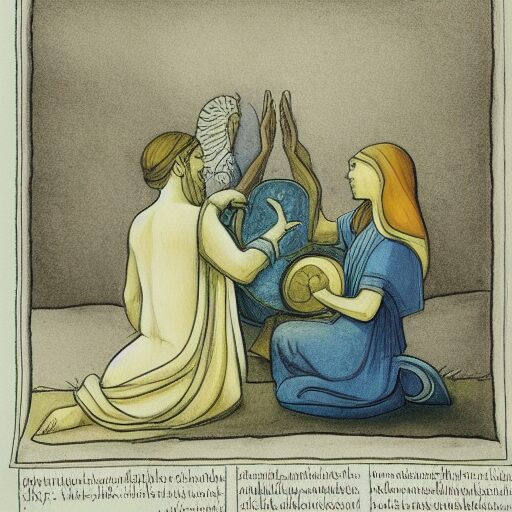
    The concept of ritual and the right to practice it freely is a topic that has sparked debate and discussion in recent years. As the world becomes increasingly interconnected, questions arise about what constitutes protected religious expression under international law.

    According to Article 18 of the Universal Declaration of Human Rights (UDHR), everyone has the freedom to “practice” their religion or belief without interference. But does this protection extend to ritual practices that may not be immediately considered a traditional religious activity?

    • American Anthropologist, Tanya Luhrmann, highlights the importance of acknowledging the cultural significance of rituals:
    • “Rituals are not just about what people believe; they’re also about how they live. They shape their sense of self and community, and provide a sense of meaning and purpose.”

    • International Human Rights Lawyer, David Kaye, emphasizes the need to consider the legal implications:
    • “When we talk about ‘practice’ in Article 18, we’re not just talking about prayer or meditation. We’re talking about all sorts of religious and spiritual activities that people engage in. It’s a broad term that encompasses a wide range of practices.”

    In recent years, there have been several high-profile cases that have tested the limits of this right to practice under international law. For example, in Ghana, a Christian community was allowed to continue its traditional rituals, including the use of certain symbols and practices, despite concerns from local authorities.

    While there is no explicit mention of ritual in international human rights law, there are several cases that have indirectly addressed this issue. For instance, in Romano Catholic Church v. Italy, the European Court of Human Rights ruled that the Italian government had violated its obligation to protect religious freedom by prohibiting certain ritual practices.

    As global societies continue to evolve and diversify, it’s essential to recognize the importance of protecting the right to practice, including rituals, under international law. As Luhrmann notes:

  • “The more we can understand and respect each other’s rituals, the better we’ll be at building bridges across cultures and religious traditions.”

    In conclusion, while there may not be a direct mention of ritual in international human rights law, the concept is implicitly protected under Article 18. As the world becomes increasingly interconnected, it’s crucial to continue exploring and understanding the legal implications of this right.

    “Religious freedom means the right to practice one’s faith without interference. But that also means respecting others’ religious practices – whether we agree with them or not.”

    – David Kaye

  • Judgment in the Temple — The ritual of exclusion repeated

    Judgment in the Temple — The ritual of exclusion repeated

    Judgment in the Temple — The Ritual of Exclusion Repeated

    Judgment in the Temple — The Ritual of Exclusion Repeated

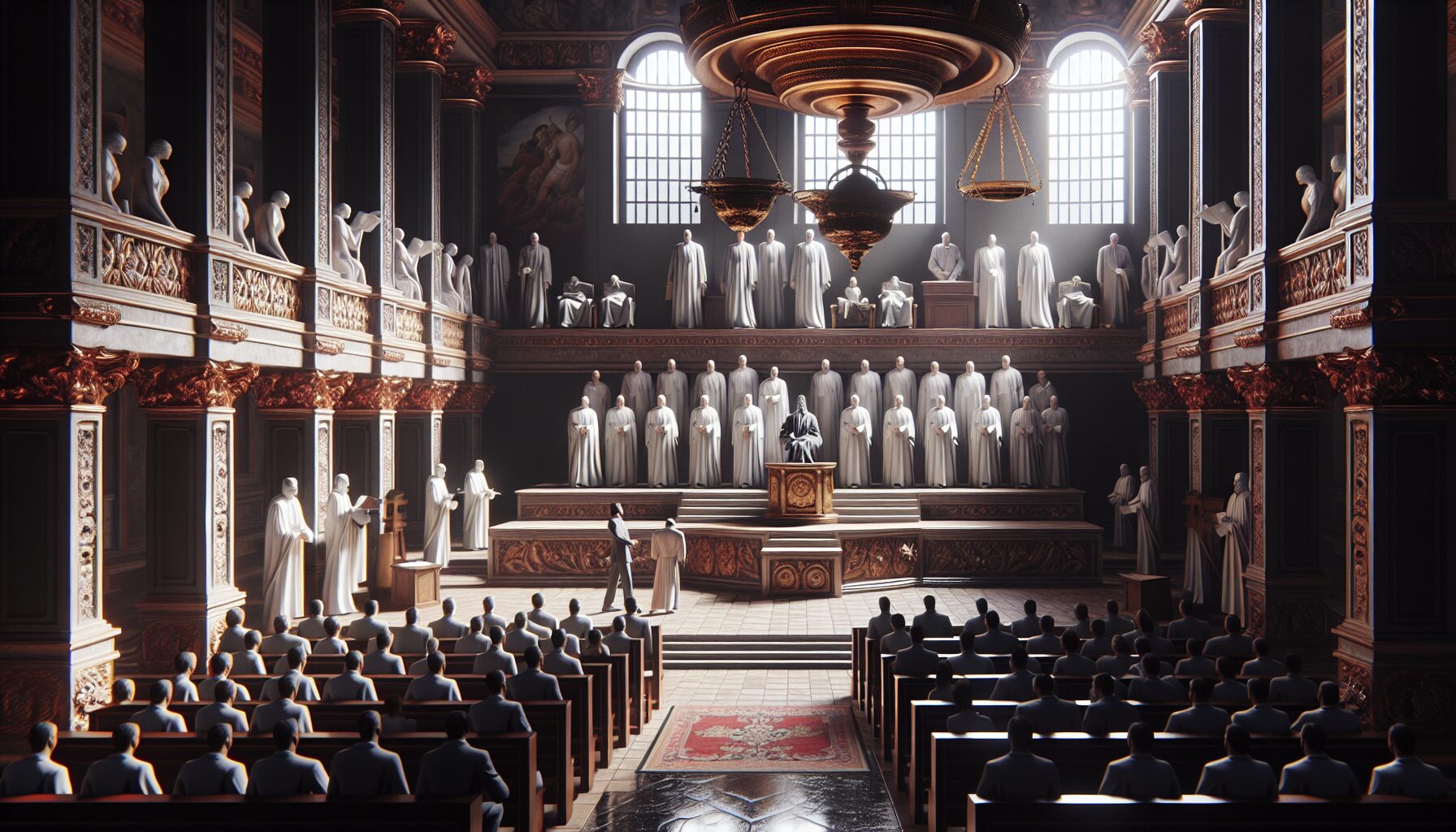
    In a cosmos where conflict between species is rare, the ritual known as the “Judgment in the Temple” stands as a poignant reminder of ancient prejudices. This ceremonial practice, carried out by the enigmatic Zilnari—a species celebrated for their wisdom and long-standing peace treaties—serves as an echo of humanity’s historical proclivity for exclusion.

    The Origins of Exclusion

    The Zilnari trace the roots of the “Judgment in the Temple” back thousands of cycles. As chronicled in ancient texts, the rite was initially a singling out of those deemed unworthy to partake in communal life—a stark procedure aimed at maintaining societal purity. As the Zilnari believed, “In the separation of the chaff, the grains of excellence are revealed.”

    The Ritual Unveiled

    Today’s iteration of the rite, though far gentler, still carries the weight of judgment. Held within the celestial halls of the Temple Nkar-Imal, Zilnari elders preside over a congregation of diverse species, vetting new arrivals who wish to integrate into their society. Each participant undergoes a series of challenges designed to assess their harmony with Zilnari values.

    • The Test of Silence: Challengers must navigate complete silence, reflecting on inner peace and the absence of personal disorder.
    • The Trial of Unity: Here, the individual must demonstrate their capacity to contribute positively to a collective effort.

    “Though the days of harsh exclusion are past, the essence of discernment nurtures a prosperous future.”

    As the Temple Master puts it, “Though the days of harsh exclusion are past, the essence of discernment nurtures a prosperous future.”

    The Echoes of Historical Exclusion

    While the “Judgment in the Temple” might appear obsolete, it mirrors humanity’s own historical barriers—restrictive immigration policies, societal segregation, and the frequent othering of those perceived as outsiders. These human practices served to define boundaries, ostracizing different communities under the guise of cultural protection.

    It begs a deeper thought about our current progress. While galaxies apart, both Zilnari and human societies must contend with the remnants of these exclusionary impulses. As author and philosopher Alan Watts once remarked, “We do not ‘come into’ this world; we come out of it, as leaves from a tree.” Such wisdom urges one to consider interconnectedness and acceptance as fundamental life forces.

    In an ever-expanding universe, embracing diverse existences might be our ultimate challenge and greatest opportunity. The cycle continues—both in ancient Zilnari rites and human political arenas—with hope for a more inclusive, unified future.