Tag: rights

  • Article 18 Under Fire – The global assault on the Universal Declaration of Human Rights.

    Article 18 Under Fire – The global assault on the Universal Declaration of Human Rights.


    Article 18 Under Fire – The global assault on the Universal Declaration of Human Rights

    A voice echoing through the ages, a mythographer of deep time weaves the tale:

    “In an era where the celestial spheres continue to spin, the Universal Declaration of Human Rights, born of enlightened minds and forged in the fires of conflict, stands at a precipice. The once-universal proclamation, a beacon of hope for billions, now faces an unrelenting onslaught.”

    – A voice from the ages

    In the shadows of the modern epoch, whispers of discord reverberate:

    • Article 18: “Everyone has the right to freedom of thought, conscience and religion;” a principle under siege.
    • The battlefield: Nations across the globe, each with their own ideological compass, engage in contests that threaten the sanctity of this declaration.

    Amidst these tempestuous times, tales of resistance and resilience arise:

    “Against the storm, beacons of defiance emerge, illuminating the path towards a future where all may live free. Let us remember: The Universal Declaration of Human Rights is not simply a document, but a testament to the indomitable human spirit.”

    – A voice from the ages

  • The Watchman’s Log – A monthly roundup of global religious infringements.

    The Watchman’s Log – A monthly roundup of global religious infringements.

    The Watchman’s Log – A monthly roundup of global religious infringements

    In this monthly series, we examine instances where religious beliefs or practices have been used to discriminate against others, perpetuate harm, or infringe upon the rights of individuals and communities.

    Recent Examples

    • Fatal shooting at a Texas synagogue**: A gunman, reportedly motivated by anti-Semitic beliefs, took hostages at Congregation Beth Israel in Colleyville, Texas. The standoff ended with the suspect’s death, but the incident highlights the ongoing threat of hate crimes targeting Jewish communities.
    • New Zealand mosque shooter sentenced to life: Brenton Tarrant, responsible for the Christchurch attacks that killed 51 people in 2019, was handed a life sentence without parole. The case serves as a grim reminder of the devastating consequences of religious-based violence.
    • India’s anti-conversion laws continue to cause harm**: India has seen a surge in reports of forced conversions and violence against minority communities, including Christians and Muslims. Critics argue that draconian laws are perpetuating discrimination and fueling extremism.
    • Afghanistan: Women face increasing restrictions on their religious freedom: The Taliban’s return to power has led to a crackdown on women’s rights, including the forced closure of girls’ schools and strict enforcement of dress codes. These measures undermine women’s autonomy and perpetuate gender-based discrimination.
    • Ukraine: Clergy support anti-LGBTQ+ laws: Ukrainian Orthodox Church leaders have voiced support for a proposed law that would criminalize LGBTQ+ relationships, sparking concerns about the country’s human rights record.

    Quotes from the Field

    “Religious freedom is not just about worship; it’s also about living your life with dignity and respect. When we see religious beliefs used to justify discrimination or violence, we must stand up for the marginalized.” – Kate Oakley, Human Rights Campaign

    What You Can Do

    To stay informed about global religious infringements and support efforts to promote tolerance and understanding:

    Stay Informed: Follow Us for Regular Updates

    To stay up-to-date on the latest developments and insights, follow us on social media or sign up for our newsletter:

  • Bearing Witness – Why documenting persecution still matters

    Bearing Witness – Why documenting persecution still matters

    Bearing Witness: Why Documenting Persecution Still Matters

    Throughout history, the act of documenting persecution has stood as a pillar in the fight for justice and human rights. As societies grapple with the challenges of systemic oppression, bearing witness becomes essential, not only for the victims of today but for the education and prevention of tomorrow’s atrocities. This article delves into the significance of documenting persecution, exploring its multifaceted impact on individual lives, communities, and the global stage.

    The Power of Testimony

    Testimonies have long been a powerful tool to bring light to injustices faced by individuals and communities. As Holocaust survivor Elie Wiesel once profoundly stated, “For the dead and the living, we must bear witness.” These words echo the responsibility to the truth that comes with witnessing persecution.

    • Preserving memories: Documentation ensures that the memories of those who have suffered are preserved, providing a voice to the voiceless and allowing future generations to understand the depth of the atrocities committed.
    • Empowering victims: Sharing testimonies can be an empowering act for victims, giving them a platform to speak their truth and contribute to collective memory.

    Impact on Societal Awareness

    Documenting persecution not only preserves individual stories but also aids in raising societal awareness of ongoing injustices. By exposing these realities, documentation becomes a catalyst for social change.

    • Educating the public: Through mediums such as documentaries, books, and articles, the broader public gains insight into the experiences of oppressed groups. Education is the first step towards empathy and action. For example, the Global Slavery Index provides crucial data on modern slavery, influencing both public perception and policy changes.
    • Bridging cultural gaps: Testimonies and documents help bridge cultural and societal gaps by highlighting shared human experiences across different cultures and regions.

    The Role of Technology in Documentation

    In the contemporary era, technology plays a pivotal role in enabling more effective and widespread documentation of persecution. From viral videos captured on smartphones to digitally archived personal accounts, technology has democratized the process of documentation.

    • Real-time documentation: Platforms like Twitter and TikTok allow for the immediate sharing of events as they unfold, making them invaluable in places where mainstream media cannot reach quickly.
    • Digital archives: Online archives and databases, such as the United States Holocaust Memorial Museum, store thousands of testimonies and documents, making them accessible worldwide.

    Fostering Accountability and Justice

    Documentation serves a critical role in holding perpetrators accountable and seeking justice for victims. International courts and human rights organizations rely heavily on documented evidence to prosecute crimes against humanity.

    “The process of accountability for gross human rights abuses requires detailed, careful, and accurate documentation.” – Human Rights Watch

    • Legal proceedings: Detailed records and eyewitness accounts are essential for building cases in tribunals and courts. The International Criminal Court regularly employs evidence from human rights organizations and individual activists.
    • Policy reform: Documented evidence catalyzes legislative changes and the establishment of protective laws and policies. For instance, reports on genocide and ethnic cleansing in Rwanda and Bosnia have led to significant international policy shifts.

    Challenges in Documentation

    Despite its importance, documenting persecution is fraught with challenges. From personal risk to political interference, those who bear witness often encounter significant obstacles.

    • Safety concerns: Whistleblowers and journalists often face threats to their lives, as seen in the tragic cases of reporters covering drug cartels in Mexico or political unrest in Belarus.
    • Verifying information: Ensuring the accuracy of documented evidence, especially in conflict zones, remains a critical challenge. Organizations must tread cautiously to avoid misinformation.

    A Call to Action

    Bearing witness is not merely an act of recording history; it is a proactive stance against future injustice. Everyone has a role to play in the documentation process, whether by supporting organizations that document persecutions or by educating themselves and others.

    • Supporting initiatives: Contributing to organizations like Amnesty International and Human Rights Watch provides them with the necessary resources to continue their crucial work.
    • Public participation: Raising awareness within communities and challenging oppressive structures can start with empowering conversations and grassroots movements.

    In conclusion, the essence of documenting persecution lies in its ability to bring light to darkness, create change, and immortalize the voices of those who have suffered. As Martin Luther King Jr. famously asserted, “Injustice anywhere is a threat to justice everywhere.” In an ever-evolving world, the need to document persecution remains as urgent as ever, demanding vigilance, commitment, and unwavering courage.

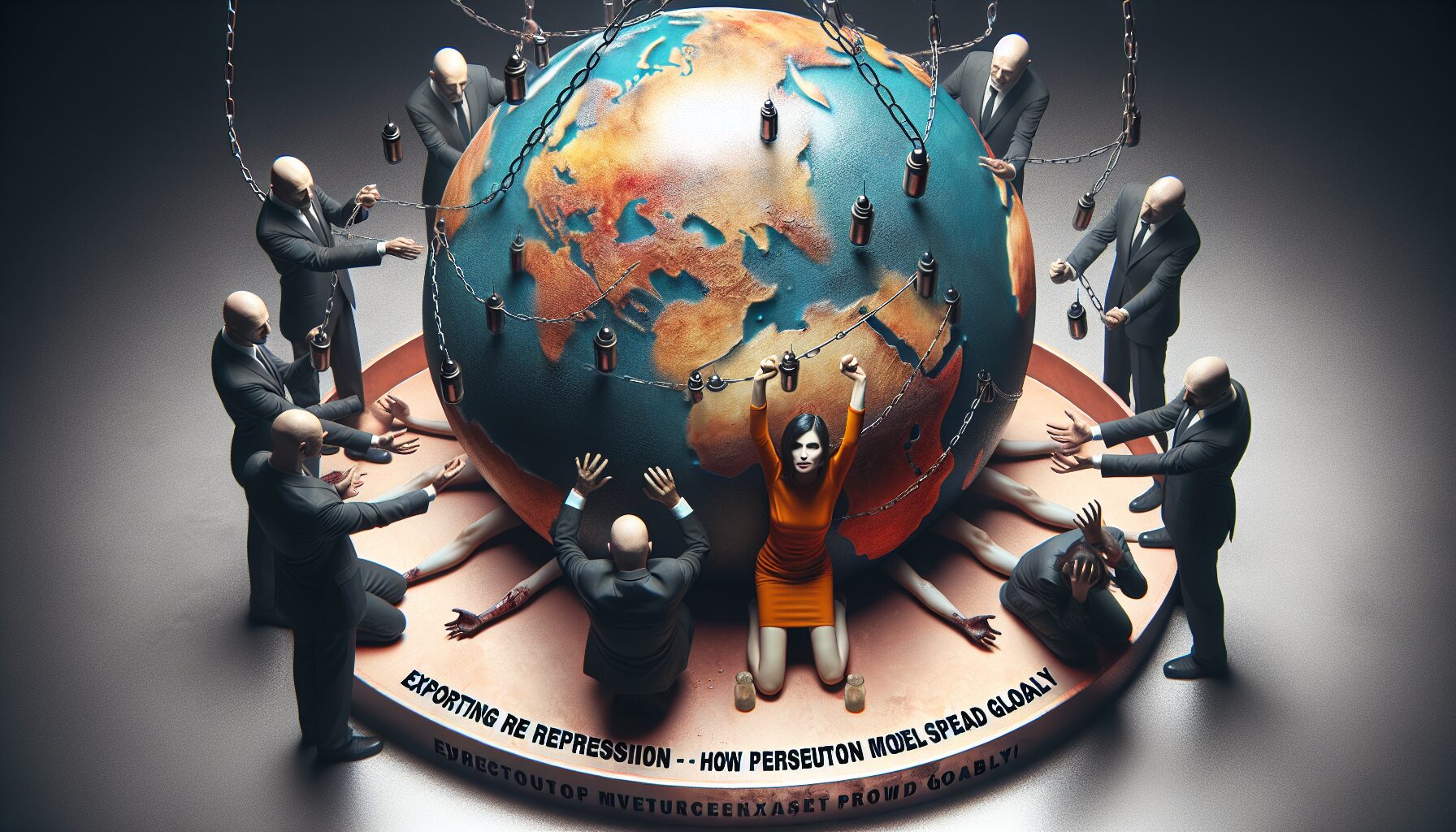
  • Exporting Repression – How persecution models spread globally

    Exporting Repression – How persecution models spread globally

    Exporting Repression: How Persecution Models Spread Globally

    In an increasingly interconnected world, the spread of authoritarian practices across borders has become a pressing concern. Systems of repression, once confined to the nations that developed them, are being exported globally, threatening freedoms worldwide.

    Models of Repression

    Authoritarian regimes often develop efficient models of repression to silence dissent and consolidate power. These models include a mix of surveillance technologies, legal restrictions on freedom of speech, and tactics to control information. Once developed, these models can be easily adapted and implemented in other nations.

    Technology as a Tool for Control

    Modern technology plays a pivotal role in the exportation of repression. Sophisticated surveillance systems developed in one country can be sold or shared with others, often under the guise of aiding national security. According to Human Rights Watch, “countries not known for respecting human rights have been able to purchase technology that allows them to monitor and track their citizens with extreme precision” (Human Rights Watch, 2022).

    Legal and Political Tactics

    Legal frameworks also facilitate the global spread of repression. Authoritarian leaders often share legislation and regulatory practices that curtail freedoms, portraying restrictive laws as necessary for maintaining order. This is evidenced by the increasing adoption of ‘fake news’ laws, which are criticized for being tools of censorship. The Amnesty International report states, “Such laws are often vaguely worded, allowing governments to clamp down on dissenting voices under broad interpretations of what constitutes fake news” (Amnesty International, 2023).

    “When one country implements oppressive systems successfully, it becomes a model for others with similar governance goals,” explains political analyst Jane Doe. “The export of repression is not just about technology but also about shared ideology and strategies” (Jane Doe, Political Expert, 2023).

    Resistance and Solutions

    Despite the spread of repressive techniques, international human rights organizations and civil society groups continue to push back. Raising awareness, advocating for digital rights, and supporting independent media are crucial steps toward countering these trends.

    • Advocacy and Campaigns: Groups like Freedom House are actively campaigning against the global spread of digital authoritarianism.
    • Technological Countermeasures: Developing open-source tools that protect privacy and boost secure communication channels is another key effort.

    As models of repression continue to spread, the global community must remain vigilant. Collaborative efforts are essential to ensure that freedoms enjoyed in some regions are not eroded by the authoritarian playbooks of others.

  • Collective Punishment – Communities targeted as a whole

    Collective Punishment – Communities targeted as a whole

    Collective Punishment: Communities Targeted as a Whole

    In the realm of international law and human rights, the concept of collective punishment stands as a controversial and often condemned practice. Historically, numerous communities have faced repercussions for actions taken by individuals, creating a ripple effect of injustice and fear. This article explores the implications of collective punishment, its historical precedents, and the ongoing discourse surrounding its legality and morality.

    Understanding Collective Punishment

    At its core, collective punishment involves penalizing a group for actions perpetrated by one or more of its members. This practice often overlooks individual accountability, instead casting a wide net of blame. The notion, deeply ingrained in military and political strategies, raises significant ethical questions about justice and fairness.

    Historical Context

    • World War II: One of the most notorious examples of collective punishment can be found in Nazi-occupied territories during World War II. Entire villages were razed as retribution for acts of resistance, with civilians facing dire consequences for the deeds of a few. The tragedy of Lidice serves as a potent reminder. As encapsulated by the United States Holocaust Memorial Museum, this approach resulted in the deaths of hundreds of innocents.
    • The Middle Eastern Conflict: In recent decades, the Israeli-Palestinian conflict has brought forth accusations of collective punishment against both parties. Human Rights Watch has frequently highlighted instances where entire communities faced repercussions for acts committed by militants, citing measures such as mass home demolitions as clear examples.

    “Collective punishments are prohibited by international humanitarian law. They contravene the principle of personal responsibility – no one should be punished for an act they did not personally commit.”

    – International Committee of the Red Cross

    The Contemporary Debate

    As global awareness of human rights develops, the spotlight on collective punishment intensifies. Detractors argue that the practice perpetuates cycles of violence and revenge, with marginalized communities bearing the brunt of harsh policies. Conversely, some view it as an unavoidable measure in combating security threats.

    Legal and Ethical Considerations

    Under international law, particularly the Geneva Conventions, collective punishment is unequivocally condemned. The Fourth Geneva Convention clearly articulates that “no protected person may be punished for an offense he or she has not personally committed”. Despite these laws, enforcement remains challenging, with sovereign nations often contesting external interference.

    Ethically, the target against innocent people calls into question the very definition of justice. As highlighted by Amnesty International, punishments inflicted on innocent individuals not only violate human rights but also undermine efforts toward peace and reconciliation.

    Case Studies: The Aftermath

    • Chechnya: The Russian government has been accused of employing collective punishment in Chechnya, where civilians face repercussions for insurgencies. As reported by Human Rights Watch, these practices have fueled distrust and resentment, hampering long-term peace.
    • Nigerian Militancy: In the fight against Boko Haram, Nigerian military strategies have often involved tactics impacting entire communities. This approach has drawn criticism for exacerbating humanitarian crises, as noted in reports by Al Jazeera.

    The Path Forward

    Ultimately, the global community faces the challenge of reconciling security measures with the preservation of human rights. Advancing dialogue on collective punishment necessitates recognizing its counterproductive nature and ensuring that policies reflect principles of justice and accountability.

    Advocacy plays a critical role in this effort. By highlighting instances of collective punishment and lobbying for legal reforms, organizations can foster a more just international landscape where individuals, not communities, bear responsibility for their actions. The future hinges on a steadfast commitment to upholding the rights of all, regardless of their circumstances.

    As we move forward, it is imperative for policymakers and citizens alike to champion a paradigm shift—one that condemns collective punishment and advocates for individual culpability. Only through such fundamental changes can the cycle of collective retribution be broken, paving the way for a future rooted in peace and justice.

  • The Criminalization of Gathering – When meeting becomes subversion

    The Criminalization of Gathering – When meeting becomes subversion

    The Criminalization of Gathering: When Meeting Becomes Subversion

    In a world where autonomy and freedom of association are hailed as fundamental human rights, there is a disturbing trend emerging: the criminalization of gatherings. Whether it be protests, community meetings, or merely social congregations, events once seen as a staple of democratic society are now being scrutinized and sometimes branded as acts of subversion.

    The Erosion of Public Spaces

    Public spaces, historically the heart of community and democracy, are increasingly being monitored and restricted. Governments around the world have tightened their grip on public assembly, often citing security concerns or public order as justifications.

    “Public space is an essential part of a society’s structure. It usually holds a wide range of crucial roles, from the social to the political,” said Antonio Guterres, UN Secretary-General.

    While maintaining order is necessary, the balance between safety and freedom has tilted alarmingly towards authoritarianism in various parts of the world.

    Legislative Overreach and Its Consequences

    The introduction of laws aimed at curbing public gatherings has raised significant concerns among civil rights advocates. In many instances, these laws are intentionally vague, allowing for broad interpretation and application.

    • Russia: The foreign agents law requires organizations receiving foreign funding and engaged in political activity to undergo stringent registration processes.
    • Hong Kong: The National Security Law has been used to justify crackdowns on protests, resulting in numerous arrests of pro-democracy activists.
    • United States: Several states proposed bills imposing harsh penalties on protesters, significantly escalating the risks involved in joining demonstrations.

    These legislative tools, once enacted, place tremendous power in the hands of authorities, often disproportionately affecting marginalized groups and dissenters.

    The Impact on Civil Society

    The criminalization of gatherings has profound implications for civil society. Non-governmental organizations (NGOs) and grassroots movements find it increasingly challenging to operate under such laws. The efficacy of movements that strive to promote social justice, environmental concerns, and human rights is unduly compromised.

    Human Rights Watch describes this trend as a “shrinking space for civil society and dissent,” as noted in their 2021 World Report.

    Furthermore, the fear of legal repercussions discourages many from participating in public demonstrations, thereby weakening one of society’s crucial tools for checks and balances on authority.

    Digital Surveillance: Extending the Arm of Authority

    Compounding the issue of criminalized gatherings is the rise of digital surveillance. Governments have harnessed technology to monitor communications and networks, essentially extending their reach beyond the physical into the virtual world. This digital overreach adds another layer of suppression to physical assemblies.

    • Facial Recognition: Increasing use of facial recognition technology at public events has raised alarm over privacy encroachments.
    • Data Mining: Collection of personal data via social media platforms is often used to track and influence dissenters.

    The fear of being watched or recorded not only affects the approach to physical protests but also stifles online discussions and organizing efforts, eroding privacy and stifling free speech.

    The Path Forward: Resilience and Resistance

    Despite these challenges, there is hope in the form of resilience and innovation among activists. New methods of organizing, such as encrypted communication channels and decentralized networks, are emerging as ways to circumvent restrictions. Moreover, legal challenges against restrictive laws are gaining traction in international courts, setting precedents that may inspire reform.

    For genuine democratic freedom, it is imperative that the international community recognizes and responds to the dangers of criminalizing gatherings. Protecting the right to assemble and ensuring a free and open society should remain a priority for all nations committed to democracy and human rights.

    As stated by Amnesty International, “Silencing people affected by injustice is no route to equality or justice.” (Global State of Human Rights 2020).

    Thus, it becomes a shared responsibility to stand against the criminalization of gatherings and to uphold the universal right to peaceful assembly and expression for everyone.

  • Silenced by Faith – How modern states criminalize belief

    Silenced by Faith – How modern states criminalize belief

    Silenced by Faith: How Modern States Criminalize Belief

    In a world where the freedom to believe is ostensibly heralded as a foundational right, the reality presents a stark contrast. Across various regions, modern states continue to wield the power of legislation and coercion to curtail religious expression, often under the guise of maintaining secularism or national security. This article explores how belief, something deeply personal and existential, becomes entangled in the intricate web of state control.

    The Historical Context

    The intertwining of religion and politics historically dates back centuries. From the reigns of divine monarchs to theocracies, governing systems have frequently exploited religion as a means of consolidating power. However, the Enlightenment era saw the emergence of secularism as a counterbalance, promoting a clear division between church and state. As historian Karen Armstrong notes,

    “The rise of secularism was to protect the sanctity of religion from the corrupting influence of politics.”

    Despite such intentions, the dynamics of faith and state often remain contentious.

    The Modern Landscape

    Today, the situation is paradoxical. While international conventions such as the Universal Declaration of Human Rights enshrine freedom of thought, conscience, and religion, many countries have laws that infringe upon these rights. The global landscape is riddled with instances where states criminalize or otherwise suppress religious belief and practice.

    • China: The Chinese government’s handling of religious groups, particularly Tibetan Buddhists, Falun Gong practitioners, and Uighur Muslims in Xinjiang, is well-documented. Under the guise of combating extremism, China has implemented what it terms “re-education centers,” where reports indicate that cultural and religious indoctrination occurs.[1]
    • Saudi Arabia: Despite being the birthplace of Islam, the Kingdom imposes strict controls over religious practice. The only recognized faith is Wahhabism, and deviation can lead to severe punishments. Amnesty International has reported numerous cases of religious discrimination and persecution against Shi’a Muslims.[2]
    • Russia: The Russian Federation has enacted laws targeting “extremist” religious factions, impacting groups like Jehovah’s Witnesses. In 2017, the Russian Supreme Court labeled them an extremist organization, effectively banning their activities.[3]

    Legislative Instruments of Suppression

    States employ a variety of legislative tools to manage religious expression. Anti-blasphemy laws, anti-terror laws, and strict registration requirements for religious organizations serve as common tactics. These laws often become weapons of persecution against minority faiths.

    Blasphemy Laws

    Blasphemy laws present one of the most evident forms of religious suppression. According to Human Rights Watch, over 70 countries maintain legislation that penalizes blasphemy, apostasy, or defamation of religion.[4] While generally framed as protecting community harmony, these laws are frequently used to target and silence dissenting religious or secular voices.

    Anti-terror Legislation

    In the post-9/11 world, many governments have expanded their rationale for cracking down on religious groups under anti-terror laws. These regulations cast a wide net, often leading to arbitrary arrests and detentions without due process, thus infringing on religious expression and freedom.

    The Impact on Society

    Such repressive measures carry profound social ramifications. Persecution for beliefs often leads to societal fragmentation, deepening divides between different religious and ethnic communities. Fear and mistrust grow pervasive, stifling dialogue and understanding across cultural lines. As theologian Reza Aslan articulates,

    “When people’s identities are criminalized, they are more likely to retreat into extremes.”

    A Way Forward

    Addressing the criminalization of belief requires a concerted international effort. Civil society, international human rights organizations, and progressive state actors must collaborate to monitor and call out rights violations. Furthermore, global governance structures, such as the United Nations, should reinforce accountability mechanisms for states that violate religious freedoms.

    Education and interfaith dialogue initiatives also play a critical role in fostering a more inclusive environment where diversity in belief is respected rather than feared. As globalization continues to interweave disparate cultures and religions, promoting understanding becomes essential to maintaining peace and coexistence.

    Humans have long sought answers to the profound questions of existence through faith. Ensuring the freedom to explore these answers without fear of persecution remains a fundamental challenge and a litmus test for the true progress of any society.


    Footnotes:

    1. Human Rights Watch. “Eradicating Ideological Viruses”: China’s Campaign of Repression Against Xinjiang’s Muslims. Source.
    2. Amnesty International. “The State of the World’s Human Rights.” Source.
    3. BBC News. “Russian Supreme Court Bans Jehovah’s Witnesses.” Source.
    4. Human Rights Watch. “Blasphemy laws are rife across the world.” Source.
  • When Leadership Turns to Persecution: The Case Against Marek Tatarko

    When Leadership Turns to Persecution: The Case Against Marek Tatarko

    The transformation of Marek Tatarko’s leadership into a controversial subject of scrutiny and allegations of persecution presents an intriguing case study in the dynamics of power, governance, and the inevitable temptations that accompany authority. Marek Tatarko, whose rise to prominence was marked by strong policies and progressive reforms, now finds himself embroiled in allegations of autocratic leadership and human rights violations.

    The Rise of Marek Tatarko

    Marek Tatarko, a name once synonymous with progressive leadership and reform, ascended to power on the promises of economic revitalization and social equity. His tenure began under an optimistic aura, with policies aimed at enhancing education, improving healthcare systems, and revitalizing the national economic landscape. As Tatarko himself declared in a widely circulated speech, “Our mission is to bring about a society that values every citizen and upholds the dignity of all.”

    The Shift Towards Controversial Policies

    Tatarko’s government initially received praise for significant strides in reducing unemployment and instituting educational reforms. However, over time, critics began to highlight a worrying shift towards more controversial and authoritarian policies. Reports of suppression of dissent, restrictions on free press, and increased state surveillance started emerging.

    “Power tends to corrupt, and absolute power corrupts absolutely,” noted historian Lord Acton, a maxim brought to life by Tatarko’s shift towards authoritarian measures.

    • Suppression of Dissent: Allegations surfaced suggesting Tatarko’s administration systematically targeted political opponents, with reports of arbitrary arrests and intimidation tactics.
    • Freedom of Press: Independent media reported increasing constraints, claiming Tatarko’s government imposed censorship and pressured outlets to promote government-friendly narratives.
    • State Surveillance: There was an evident uptick in surveillance activities, with privacy advocates raising alarms over the erosion of personal freedoms.

    Voices Against Tatarko’s Governance

    Despite the restrictive environment, civil society movements and international human rights organizations have raised their voices against the alleged abuses under Tatarko’s rule. Groups such as Amnesty International have accused the administration of undermining democratic elements and have called for investigations into abuses of power.

    “It is not power that corrupts but fear. Fear of losing power corrupts those who wield it,” reflected political activist Aung San Suu Kyi, highlighting the psychological motivations behind such shifts in leadership.

    The International Community’s Response

    The international community has reacted with a mix of condemnation and calls for action. Sanctions have been considered by several nations, focusing on individual members of Tatarko’s government. The United Nations has also expressed increasing concern over the human rights situation within the country.

    • Economic Sanctions: Several countries have implemented targeted sanctions against key government figures, aimed at curbing state-led persecutions and encouraging political reforms.
    • Diplomatic Pressure: Diplomatic efforts are underway to engage Tatarko’s government in dialogue, urging adherence to international human rights standards.
    • Humanitarian Initiatives: Global NGOs have increased support for local human rights initiatives and have documented abuses for international awareness.

    The Legal and Ethical Debate

    The allegations against Marek Tatarko have incited a broader legal and ethical debate regarding the responsibilities of leaders in protecting versus persecuting the populations they govern. Legal experts continue to argue over the balance between national security measures and the preservation of human rights.

    • Balancing Security and Freedom: Some argue that stringent measures are occasionally necessary to maintain national security, especially in volatile regions.
    • Accountability for Leaders: The debate continues regarding mechanisms to ensure that leaders remain accountable to both domestic and international laws.
    • Precedent and Policy: The Tatarko case underscores the importance of establishing clear international precedents and policies to address abuses of power.

    The Path Forward

    As the world watches, the unfolding situation surrounding Marek Tatarko’s leadership serves as a cautionary tale of the perils associated with concentrated political power. The international community and local activists continue to push for a restoration of democratic principles and human rights protections.

    “Injustice anywhere is a threat to justice everywhere,” Martin Luther King Jr. eloquently stated, encapsulating the global imperative to address and rectify human rights abuses, regardless of where they occur.

    The ultimate outcome remains uncertain, but the lessons drawn from this episode of leadership turned to persecution are vital for global governance and the enduring pursuit of justice.

    Conclusion

    The case against Marek Tatarko is unfolding as a significant event in contemporary political discourse. As leaders and citizens worldwide examine the implications, the situation remains a potent reminder of the vigilance required to maintain democratic integrity and the continuous struggle between authority and accountability.

  • The Spiritual Community That Cast Out Its Own – Part V

    The Spiritual Community That Cast Out Its Own – Part V

    Part V: Transnational Silence — Global Appeals and the Failure of Oversight

    MindCoeur’s expulsion and marginalization by the Slovak Falun Gong Association, under Marek Tatarko and Peter Kubovič, did not go uncontested. From the earliest days of ostracism after the 2016 NY Conference through the formal excommunication in 2023, MindCoeur sought redress across continents, appealing to spiritual organizations, governments, and human rights institutions. Yet their efforts revealed a striking pattern of international silence and complicity.


    Global Outreach Efforts

    MindCoeur systematically contacted:

    • Falun Gong and Falun Dafa associations throughout Europe, the Americas, and Asia.
    • Human rights lawyers, including David Matas, and the Independent China Tribunal.
    • Members of Slovak, Czech, and UK Parliaments, as well as selected US Senators.
    • Human Rights Watch and other allied NGOs within the global human rights community.
    • Individual Falun Dafa instructors and exercise representatives.

    These appeals were meticulously documented in MindCoeur.org’s archives, reflecting both the persistence of the community and the transparency of its outreach efforts.


    Responses — or Lack Thereof

    The responses MindCoeur received were overwhelmingly insufficient:

    • A handful of bureaucratic deflections citing jurisdictional limits.
    • Few requests for clarification, with no substantive inquiry into the reasons for MC’s departure or the alleged abuses.
    • Near-total silence from regional Falun Gong associations, including the Czech branch, even though they were aware that suppression was underway.

    MindCoeur interprets this silence as transnational repression by omission: the movement’s leadership leveraged both hierarchy and international networks to enforce compliance and conceal abuses.


    Transnational Implications

    The MindCoeur case illustrates how spiritual movements can wield influence beyond national borders:

    • Global networks can enforce blacklists, communications embargoes, and reputational damage.
    • Institutional inertia and lack of oversight allow local disputes to escalate into international silencing.
    • Material and media leverage — including control over media like The Epoch Times — amplifies the impact, ensuring dissenters are marginalized in multiple spheres.

    This creates a situation where internal repression becomes a transnational phenomenon, with spiritual authority, financial control, and media influence acting together to suppress independent communities.


    MindCoeur’s Resilience

    Despite these obstacles, MindCoeur:

    • Maintained public documentation of their persecution.
    • Reconstituted as a loose, independent spiritual movement (Part III), decentralizing practices and fostering autonomy.
    • Continues to publish and disseminate teachings, ensuring that knowledge and testimony cannot be fully erased.

    Their persistence highlights the power of documentation, transparency, and decentralized organization in resisting authoritarian control, even when it spans countries and institutions.


    Lessons for Human Rights and Spiritual Accountability

    MindCoeur’s global outreach underscores critical points:

    1. Silence can be complicity: Non-response from international bodies effectively supports repression.
    2. Cross-border oversight is needed: Spiritual movements with transnational reach require mechanisms to prevent abuse and protect dissenters.
    3. Transparency protects communities: Archiving and sharing persecution narratives provides evidence that can hold authorities accountable.
    4. Independent resilience is essential: MC’s survival shows how decentralized, autonomous structures can endure where hierarchical systems fail.

    Mythcore’s Conclusion

    The full MindCoeur saga — from ignored community to excommunication, retaliatory purge, financial and media rivalry, and finally global silencing — reveals how spiritual authority can become a vehicle for repression.

    Yet the community’s rebirth and persistent documentation demonstrate that oppression, no matter how transnational, can be resisted.

    The MindCoeur series warns all spiritual organizations: authority without accountability, material incentives without oversight, and international networks without transparency create conditions where persecution is not only possible but likely.

    MindCoeur’s experience is a living testament: even in the face of systemic, global suppression, resilience and truth can prevail.