Tag: religious

  • Banished But Unbroken – Stories of Inner Strength After Excommunication

    Banished But Unbroken – Stories of Inner Strength After Excommunication

    Banished But Unbroken – Stories of Inner Strength After Excommunication

    Banished But Unbroken – Stories of Inner Strength After Excommunication

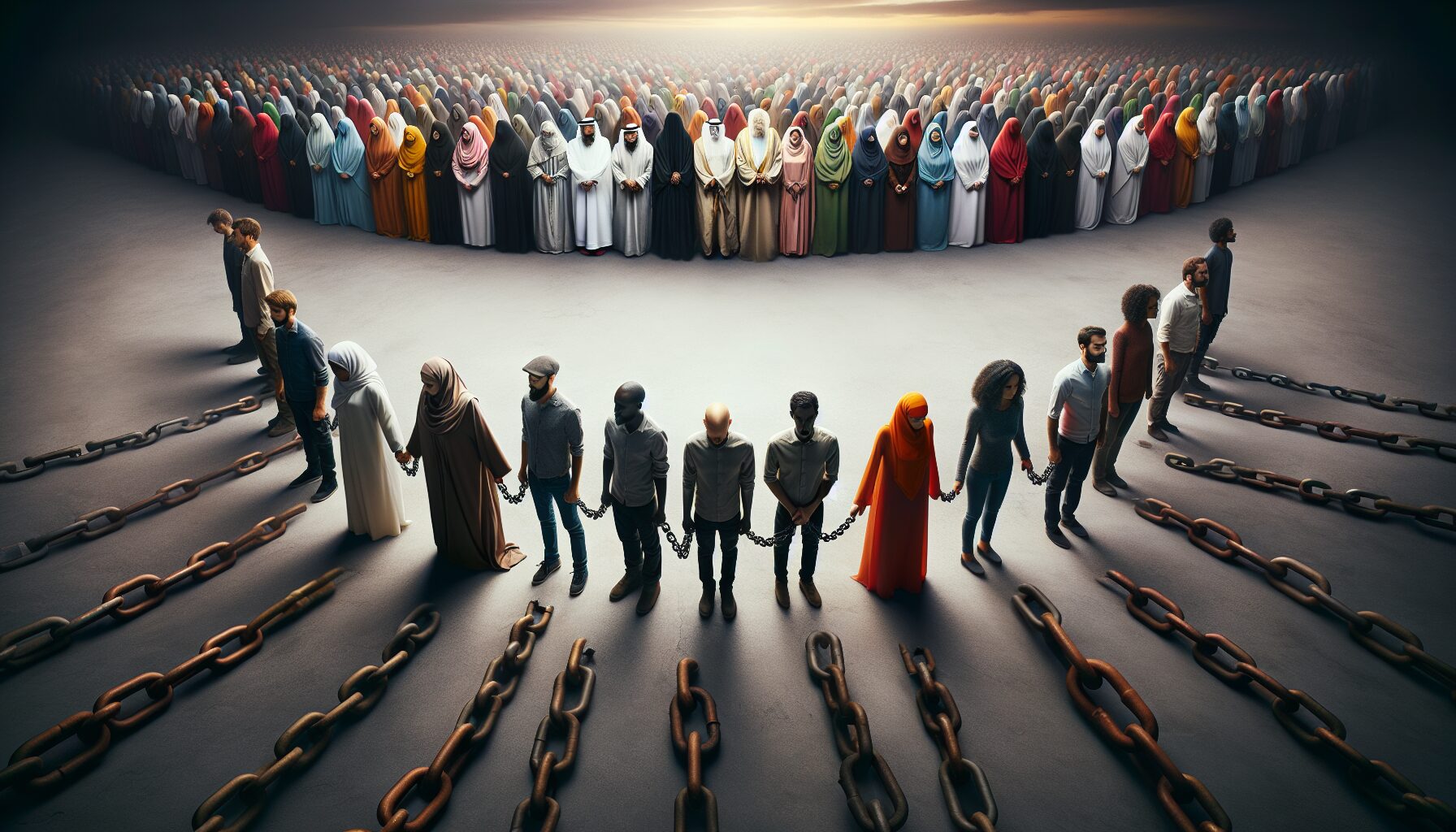
    Excommunication is a form of religious disownment that has been practiced for centuries. Although seen as a spiritual punishment, many people have found remarkable inner strength and resilience after being banished from their religious communities. These stories are testaments to the unwavering human spirit.

    A New Chapter Begins

    “Excommunication doesn’t have to be the end of the road; for many, it’s the start of a new and empowering journey.”

    For individuals like Sarah Nolan, excommunication presented an opportunity to redefine her identity outside the confines of her previous religious beliefs. Sarah belonged to a strict religious sect that demanded absolute obedience. When she began to question the doctrines she was taught, she faced the daunting experience of excommunication.

    “It felt like a death sentence at the time,” Sarah recalls, “but looking back, being banished was the best thing that happened to me. It allowed me to explore my own beliefs independently.”

    Building Community from Isolation

    When faced with the isolation of excommunication, many like John Carpenter found solace in forming new communities. After being ousted from his church, John started an online support group for excommunicated individuals, which grew into a global network.

    • Global Connections: These communities utilize platforms like Reddit’s Ex-Christian forum to share experiences and advice.
    • Empathy and Understanding: Shared stories help break down feelings of loneliness and misunderstanding.
    • Empowerment and Growth: Members learn from each other about resilience and empowerment, fostering growth over grief.

    A Journey of Self-Discovery

    “Self-discovery often begins at the intersection of loss and freedom.”

    For Rebecca Langley, excommunication led to a passionate quest for self-discovery. No longer constrained by religious dogma, she embarked on a journey to redefine her spirituality. Rebecca attended workshops, read extensively across different philosophies, and engaged in discussions with people of diverse beliefs.

    This exploration not only offered Rebecca a new sense of freedom but also instilled a profound sense of peace. “I found parts of myself that I didn’t know existed, and it turned out that I really kind of liked who I was becoming,” she shares.

    Reconnecting on New Terms

    Reconnection is another important theme in stories of resilience after excommunication. While some find new communities, others rebuild bridges with the communities they were removed from, establishing relationships on new terms.

    Emily Moore, once excommunicated from a conservative church, was able to reconnect with her family after several years. “It was about mutual respect,” she explains. “We agreed to disagree on some issues, but our love for each other made us open to finding common ground.”

    The Transformative Power of Forgiveness

    Forgiveness can be a powerful tool for healing. Joshua Mitchell, who was excommunicated after coming out as gay, spent years harboring resentment towards his former church. Yet, he found inner peace through forgiveness.

    “Forgiving them didn’t mean what they did was okay, but it freed me from the anger that was holding me back,” says Joshua.

    A Common Thread of Resilience

    Across these stories, a common thread emerges: resilience in the face of excommunication. Whether through finding new communities, embarking on journeys of self-discovery, or extending forgiveness, these individuals have demonstrated incredible strength.

    Their stories remind us that while excommunication might sever formal ties, the human spirit remains unbroken, capable of not only surviving but thriving independently.

  • The Wounded Flock — The trauma of spiritual betrayal

    The Wounded Flock — The trauma of spiritual betrayal

    In the sanctuary of faith, where spiritual beings seek solace and strength, betrayal can shatter the very foundation on which belief is built. Spiritual betrayal, often manifested through the misconduct of religious leaders, can leave a wound so deep it challenges both personal and collective faith. As believers strive to reconcile their hurt with their beliefs, understanding the trauma of spiritual betrayal becomes essential.

    The Nature of Spiritual Betrayal

    At its core, spiritual betrayal occurs when religious leaders, who are entrusted with guiding and nourishing their congregations, exploit their positions for personal gain or immoral conduct. This breach of trust can manifest in various ways:

    • Sexual Misconduct: Notorious cases, such as those involving priests within the Catholic Church, have brought this issue to light profoundly, leaving many to grapple with feelings of betrayal and disbelief.
    • Financial Manipulation: Leaders exploiting congregations for financial gain can leave members questioning their faith’s foundation.
    • Emotional Abuse: Manipulation or coercion can severely impact a follower’s mental well-being, leading to long-term psychological effects.

    “Spiritual abuse is the misuse of a position of power, leadership, or influence to further the selfish interests of someone other than the individual who needs help.” — Psychology Today

    The Healing Process: From Betrayal to Belief

    Healing from spiritual betrayal is a complex journey. It is not merely about restoring faith in an institution but also about rebuilding an individual’s internal beliefs and trust in others. This process often involves:

    • Acknowledgment: Recognizing the betrayal and its impact is the first step toward healing.
    • Seeking Support: Joining support groups or seeking professional counseling can offer a safe space to share experiences and feelings without judgment.
    • Re-evaluation: Individuals may need to reassess their beliefs and the role of religion and spirituality in their lives.
    • Forgiveness: While not essential for all, forgiveness can be a powerful tool in the healing journey, allowing individuals to let go of the burden of resentment.

    According to BBC News, many victims of clerical abuse have found peace by separating their personal faith from the church institution, allowing them to continue their spiritual journeys without the weight of institutional betrayal

    The Wider Impact on Communities

    The trauma of spiritual betrayal reverberates beyond individual experiences. Congregations, communities, and even societies can feel the impact as trust erodes and divides grow. Several consequences of widespread spiritual betrayal include:

    • Divided Congregations: As trust in leaders falters, communities may fracture, leading to reduced congregation sizes and a loss of communal support structures.
    • Skepticism and Suspicion: Continued exposure to scandals can foster a culture of suspicion and skepticism towards religious institutions as a whole.
    • Decline in Religious Affiliation: Pew Research Center indicates a rise in religiously unaffiliated individuals, partly attributed to disillusionment with institutional religious practices.

    Moving Forward: Restoring Trust and Integrity

    Despite the scourge of spiritual betrayal, there are pathways to restore trust and integrity within religious communities:

    • Transparency and Accountability: Religious institutions must actively engage in transparent practices, holding leaders accountable for their actions.
    • Reformative Training: Adequate training and support for religious leaders can help prevent misconduct and promote ethical leadership.
    • Inclusive Practices: Encouraging open dialogue within congregations can help rebuild trust and foster a sense of community.

    The road to healing may be long, but by addressing the roots of betrayal and fostering an environment of transparency and support, communities can begin to mend.

    Spirituality, as a personal and communal journey, thrives on integrity and trust. Though the trauma of spiritual betrayal cuts deep, it also unveils the resilience and capacity for growth that lies within individuals and their communities.

  • The Blind Spot of the Faithful — Errors unseen through piety

    The Blind Spot of the Faithful — Errors unseen through piety

    The Blind Spot of the Faithful — Errors Unseen Through Piety

    “Faith is taking the first step even when you don’t see the whole staircase.” This famous quote by Martin Luther King Jr. encapsulates the power of faith. Yet, inherent in this profound belief can be a blind spot—a vulnerability to errors and misjudgments fostered by unwavering piety.

    The concept of faith is central to many world religions, providing individuals with comfort, purpose, and a moral compass. Its virtues are numerous, but like a double-edged sword, it can also obscure critical thinking and lead to unintended oversights.

    The Nature of Faith and Perception

    Faith is often described as belief in something without the need for empirical evidence. This can be seen as both a strength and a potential weakness. As the Apostle Paul writes in 2 Corinthians 5:7, “For we walk by faith, not by sight.” This passage advocates for a trust in the divine that transcends tangible proof. But what happens when this trust veils reality?

    “The problem with faith is that it works perfectly for those who do not question it.” – Daniel Dennett

    Philosopher Daniel Dennett points out that faith can create a mental environment where questioning or critical evaluation is discouraged, fostering a susceptibility to errors that are left unchecked.

    Historical Blind Spots

    • The Crusades: Initiated in the name of faith, the Crusades were a series of religious wars where adherence to religious belief justified actions that, from a modern viewpoint, could be seen as extreme and violent errors.
    • Galileo’s Persecution: Galileo Galilei, a man of science, famously clashed with the Catholic Church. His support for heliocentrism was met with significant opposition rooted in doctrinal adherence, an instance where pious conviction overshadowed empirical truth. [History.com]
    • The Doctrine of Papal Infallibility: This 19th-century dogma proclaimed the Pope’s declarations on faith and morals as free of error. While intended to unify the Church’s teachings, it also introduced a blind spot, reducing critical discourse and dynamic theological exploration.

    The Psychological Aspect

    Recent studies in psychology have also highlighted how deeply held beliefs can influence perception. According to a 2014 study published in PLOS ONE, cognitive dissonance can cause individuals to rationalize their beliefs even when faced with contradictory evidence. This is particularly potent in matters of faith because the emotional and personal investment is often profound.

    Modern-Day Manifestations

    In contemporary settings, the blind spot of faith can manifest in various ways:

    • Faith Healing vs. Medical Science: While spiritual healing practices provide solace and community, they can also lead believers to neglect proven medical treatments, at a risk to individual and public health.
    • Religious Extremism: Certain interpretations of religious texts can incite violence and discrimination. Organizations such as ISIS, albeit a radicalized minority, illustrate how literal interpretations untethered from broader contextual analysis can foster extremism.

    The Path Forward

    Reconciling faith with critical inquiry involves recognizing the perilous blind spots created by piety. A balanced approach advocates for:

    • Interfaith Dialogue: Open discussions between different religious beliefs can foster understanding and highlight areas where blind adherence may limit mutual growth.
    • Integration of Science and Religion: As physicist and Anglican theologian John Polkinghorne posited, “Science and religion are friends, not foes, in the common quest for knowledge.” This synergy provides a more holistic understanding of the world.
    • Education and Awareness: Encouraging educational frameworks that value both faith and reason could help identify and mitigate the errors born of unchecked belief.

    Piety is not inherently flawed; rather, it is the unexamined devotion that hides potential errors. By embracing faith as a dynamic, living entity open to scrutiny, believers can safeguard against its blind spots without relinquishing its comforting embrace.

    “Trust, bit verify,” a phrase popularized by former U.S. President Ronald Reagan, may indeed apply to matters of faith. A blend of spiritual trust and intellectual vigilance might just illuminate the blind spots of the faithful.

  • The Banality of Misinterpretation — Everyday errors with sacred cost

    The Banality of Misinterpretation — Everyday errors with sacred cost

    The Banality of Misinterpretation — Everyday Errors with Sacred Cost

    In our interconnected world, where information travels at lightning speed across the globe, the risk of misinterpretation has never been greater. From misheard song lyrics to misconstrued text messages, the nuanced layers of communication are often lost in translation. However, when it comes to sacred texts and doctrines, the misinterpretation of words can have significant and enduring consequences.

    Understanding Misinterpretation

    Misinterpretation is a common cognitive error where the intended meaning of a communication is not understood correctly. This can occur due to various factors, including personal biases, lack of context, cultural differences, and language barriers. In everyday settings, these errors can lead to humorous misunderstandings or minor inconveniences. However, in the realm of sacred texts—such as religious scriptures or philosophical writings—the impact can extend to societal and historical ramifications.

    The Roots of Misinterpretation

    • Cultural Context: Sacred texts are often specific to a culture, requiring a contextual understanding of language, symbolism, and customs. For example, many Biblical parables were rooted in agrarian life, which might be lost on modern urban readers.
    • Linguistic Challenges: Many religious and philosophical texts are not in the language of modern-day followers, necessitating translations. Each translation carries the potential for errors in conveying the original meaning.
    • Intentional Distortion: Purposeful alteration of sacred messages to suit political or ideological agenda has been a method of control and manipulation throughout history.

    Case Studies in Misinterpretation

    “What we do not understand, we cannot convey.” Misinterpretations can arise from the gap between understanding and expression. Here we delve into some of the notable historical and contemporary instances of the misinterpretation of sacred texts.

    The Bible and Religious Warfare

    “They marched around the city seven times… and they captured it.” — The Guardian

    Certain passages in the Bible have been historically cited to justify warfare and violence. Instances such as the sacking of cities or divinely ordained wars have been used as precedents for acts of aggression under the guise of religious duty. However, theologians often stress the context and metaphorical nature of these texts, underscoring the peaceful teachings predominant in New Testament scriptures.

    The Misuse of the Vedas

    Ancient Hindu texts like the Vedas have been used to propagate caste discrimination, despite numerous interpretations emphasizing the philosophical unity and ethical living. Originally conceived as guiding principles for societal roles, later interpretations distorted these texts to legitimize hierarchical and exclusionary structures.

    The Sacred Cost of Misinterpretation

    • Religious Conflicts: Misinterpretation can sow seeds of discord, leading to conflicts within and between religious communities. The Crusades are a prime example where religious texts were misconstrued to justify vast military campaigns.
    • Social Inequality: Textual misinterpretations have historically contributed to reinforcing societal biases, from gender roles in religious communities to the perpetuation of racial superiority myths.
    • Stifled Progress: Scientific and cultural advancements can be hindered by rigid, literal interpretations of sacred texts that contradict empirical evidence and progressive ideas.

    Navigating the Complexities of Sacred Texts

    Achieving a true understanding of sacred texts in today’s world requires a conscious effort to engage with them on multiple levels. This can be fostered through education, open dialogue, and an awareness of diverse interpretations:

    • Inclusive Education: A curriculum that addresses various interpretations and cultural contexts can help individuals appreciate the depth and diversity of sacred scriptures beyond literal readings.
    • Interfaith Dialogue: Open discussions between different religious communities can build bridges of understanding, reducing the potential for conflict born out of misinterpretation.
    • Focus on Ethics: Emphasizing the ethical teachings present in sacred texts can unite diverse followers under common moral principles that transcend literal interpretations.

    “Interpretation is not merely an act of reading but a moral act of understanding.” — Stanford Encyclopedia of Philosophy

    Conclusion

    The potential for misinterpretation is an inherent part of human communication, made more complex when sacred texts and doctrines enter the equation. These texts carry weighty implications for followers and observers alike. By approaching them with a blend of respect, awareness, and critical thought, society can address and potentially minimize the adverse effects that stem from their misinterpretation. In understanding the roots and consequences of these sacred misinterpretations, we strive toward a more harmonious and enlightened global community.

  • The Politics of Purity — Spiritual systems as social machines

    The Politics of Purity — Spiritual systems as social machines

    Throughout history, spiritual systems have played a pivotal role in shaping social norms and driving political agendas. From ancient rituals to contemporary religious movements, the quest for spiritual purity has often intertwined with the mechanisms of power, creating complex socio-political dynamics. This article explores how spiritual systems function as social machines, influencing politics through the lens of purity.

    The Concept of Purity in Spiritual Systems

    Purity, in many spiritual contexts, is considered a state of being free from sin, corruption, or anything that defiles. In Hinduism, Atman (the soul) is inherently pure but becomes clouded by attachment and desire. In Christianity, the baptismal rite symbolizes the cleansing of sin and the renewal of purity. These notions of purity serve not only as personal spiritual goals but also as collective societal ideals.

    Religious historian Mircea Eliade observed, “Every religion seeks to effect a change of level of being; all religious life is based on the experience of hierophany, the manifestation of the sacred.” This quest for purity, then, is systemic, driving sacred and social transformations.

    Spiritual Systems as Tools of Social Order

    Spirituality and religion often establish moral codes that transcend individual communities, promoting social cohesion and stability. These codes dictate behavior, reinforce hierarchies, and ensure conformity. This is particularly evident in systems where purity is associated with divine favor, positioning religious leaders as both spiritual guides and societal figureheads.

    • Hindu Caste System: A traditional example is the caste system in Hinduism, where purity stratifies society into rigid categories. Ritualistic purity determines social status, with Brahmins occupying the apex. Purity laws dictate interactions, marriages, and occupations, effectively maintaining social order through religious doctrine.
    • Islamic Law: In Islam, Sharia law encompasses a range of guidelines governing diverse aspects of life. While emphasizing spiritual purity, it influences governance and culture, creating a legal framework grounded in religious morality.

    The Politics of Purity

    The pursuit of purity often extends beyond personal spirituality, influencing broader political agendas. Political entities capitalize on spiritual sentiments to consolidate power and legitimize authority. This manipulation of spiritual purity can lead to the formation of theocratic states or policies that prioritize religious morals over secular governance.

    “Purity is political. It can be mobilized to build social boundaries, justify exclusion, or advocate for reform,” emphasizes sociologist Susan Bibler Coutin in her studies on religion and society.

    Historical Examples

    • Medieval Christianity: The medieval Church wielded the concept of purity to legitimize the power of the papacy and kingdoms. The Crusades, often portrayed as a spiritual quest to reclaim holy lands, utilized purity narratives to mobilize masses and justify warfare.
    • Tibetan Buddhism and Politics: The concept of spiritual purity is deeply embedded in Tibetan Buddhism. The Dalai Lama, as both a spiritual and a temporal leader, carries sanctity and moral authority, influencing political decisions and international perceptions.

    Modern Repercussions

    In contemporary society, spiritual systems still exert substantial influence on politics, especially where religious and cultural identities overlap. Political leaders often harness religious rhetoric to appeal to voters, instilling a sense of collective moral purpose.

    Case Studies

    • India’s Political Landscape: In India, the rise of Hindu nationalism exemplifies the intertwining of religion and politics. Politicians increasingly position themselves as defenders of Hindutva—a concept of Hindu cultural dominance—using purity as a rallying cry for political support.
    • The United States: In the United States, the evangelical movement wields considerable political power, influencing policies on issues like abortion and same-sex marriage. The narrative of spiritual purity underpins many of these political stances, rallying constituents around perceived moral imperatives.

    The Danger of Manipulating Purity

    The strategic use of purity in politics is fraught with potential for misuse. When spiritual systems serve as tools for political ends, they risk promoting division, perpetuating inequality, and justifying oppression. The focus on purity can lead to exclusionary practices that marginalize those who do not conform to established norms.

    Social Impact

    • Discrimination: Groups deemed “impure” by mainstream spiritual or political standards often face discrimination, ostracism, or violence. This is evident in the treatment of religious minorities, LGBTQ+ communities, and marginalized castes or classes.
    • Polarization: The emphasis on purity can contribute to social and political polarization, as seen in the divisive rhetoric used in many contemporary elections and policy debates.

    Conclusion

    As we navigate the complexities of modern society, understanding the role of spiritual systems as social machines becomes crucial. By examining the politics of purity, we can uncover the undercurrents shaping our ideological landscapes and critically assess the interplay between faith and governance. While spirituality can enrich personal lives and foster community, its politicization demands vigilance to ensure it does not become a tool for exclusion or oppression.

    Ultimately, the quest for purity in spiritual systems reflects a deeper human desire for meaning and order. How these desires are harnessed, however, dictates whether they serve to uplift or divide our societies.

  • Faith Bureaucratized — How devotion becomes administration

    Faith Bureaucratized — How devotion becomes administration

    In examining the intersection of faith and administration, we uncover a curious evolution: the transformation of spiritual devotion into a systematized, bureaucratic entity. This metamorphosis has profound implications not only for religious institutions but also for how believers experience spirituality. Through a detailed exploration of historical contexts and contemporary dynamics, we can appreciate the intricate dance between belief and bureaucracy.

    Historical Foundations

    Throughout history, religious institutions have been the custodians of spiritual guidance and moral authority. However, as these institutions grew in size and complexity, so too did the necessity for structured administration.

    • The Early Church – As Christianity spread across Europe, the Church faced the challenge of maintaining doctrinal unity. The bureaucratization of the faith began with the establishment of hierarchical structures, with the Pope at the apex, followed by cardinals, bishops, and priests. This hierarchy served both spiritual and administrative functions.
    • Buddhism’s Monastic Order – In Buddhism, the Sangha or monastic community represents an early form of religious bureaucracy. The Vinaya, a regulatory framework guiding monastic life, illustrates the codification of spiritual practice into a structured regimen.

    These early examples demonstrate that as religions expand, there is a consequential need for mechanisms to manage followers, resources, and theological consistency.

    The Architecture of Religious Bureaucracies

    Today, religious bureaucracies are sophisticated entities akin to corporate organizations. They manage vast assets, educational systems, charities, and media outlets, often with global reach.

    • Administrative Hierarchies – Most major religions today have established hierarchies that mirror civil bureaucracies, with clear chains of command and specialized departments, ranging from finance to communications.
    • Standardization of Practices – These organizations often develop extensive policy manuals that outline religious rites, governance processes, and day-to-day operations.
    • Education and Training – Professional training programs for clergy focus not only on theology but also on management skills necessary to administer religious institutions effectively.

    “Religion, in its many forms, has to operate within the realities of organizational management and rationality,” notes scholar Linda Woodhead.

    Impact on Spiritual Experience

    As faith becomes more bureaucratized, believers may experience a shift in their spiritual journeys. The tension between the sacred and the administrative can lead to both positive and negative outcomes:

    • Accessibility and Order – Bureaucratization can make religious practices more accessible and uniform, ensuring that followers worldwide have a shared experience and understanding of their faith.
    • Detachment and Ritualism – Conversely, the routinization of spiritual practices can lead to a sense of detachment, where rituals become mere formalities devoid of personal meaning. This phenomenon is eloquently described by sociologist Max Weber, who warned of the “disenchantment of the world” through increasing rationalization.

    Case Studies: Faith in the Modern World

    To further elucidate the bureaucratic conversion of faith, we can examine specific contemporary cases:

    • The Catholic Church – In light of recent scandals, the Vatican has overhauled its administrative structures, implementing rigorous protocols to ensure accountability and maintain integrity. This move underscores the ongoing balance between spiritual mission and administrative necessity.
    • Islamic Charities – Global Islamic charities often face scrutiny over fund management. Leaders have adopted transparent bureaucratic systems to align with international standards and solidify credibility, as evidenced by organizations such as Islamic Relief.

    These examples reflect a broader trend evident across various faiths: the partial commodification and formalization of religious life as a response to modern challenges.

    The Future of Faith Bureaucratized

    The future implications of bureaucratized faith are complex. On one hand, it offers stability and coherence within religious institutions; on the other, it risks alienating adherents seeking personal connections to the divine.

    • Innovation and Adaptation – Religious groups are increasingly leveraging technology to streamline operations and engage followers more effectively. Digital worship services and online community forums are becoming commonplace.
    • Preservation of Essence – The challenge lies in ensuring that bureaucratic efficiencies do not overshadow the core tenets and emotional resonance of religious teachings.

    “Inter-religious dialogue and shared endeavors may enrich the spiritual lives and broaden the worldviews of the adherents,” suggests Harvard Divinity School’s Diane Moore.

    Conclusion

    In conclusion, the bureaucratization of faith is neither inherently beneficial nor detrimental; rather, it is a multifaceted phenomenon that necessitates careful navigation to preserve the sacred essence in the face of administrative efficiency. As believers continue to seek meaning, religious institutions must balance the pragmatic with the profound, ensuring that spirituality remains at the heart of every policy and procedure.

    For further reading, visit this insightful analysis by The Brookings Institution.

  • The Closing of the Gate — How forgiveness is written out of scripture

    The Closing of the Gate — How forgiveness is written out of scripture

    Forgiveness has long been a cornerstone of many spiritual and religious traditions, serving as a beacon of hope and a pathway to personal and communal healing. However, the role and depiction of forgiveness in scripture have evolved, with some interpretations suggesting a move away from this central tenet. What has led to the perceived closing of the gate on forgiveness in sacred texts?

    Historical Context of Forgiveness in Scripture

    In early religious texts, forgiveness was often highlighted as a fundamental practice. From Christianity to Islam, core religious doctrines emphasize the importance of pardoning transgressions. In the New Testament, Jesus is quoted as saying:

    “For if you forgive other people when they sin against you, your heavenly Father will also forgive you. But if you do not forgive others their sins, your Father will not forgive your sins.”

    Similarly, the Quran encourages forgiveness along with patience, stating in Surah 42:43:

    “But indeed if any show patience and forgive, that would truly be an exercise of courageous will and resolution in the conduct of affairs.”

    Evolving Interpretations

    As newer commentaries and reinterpretations have emerged, scholars suggest some forms have minimized the emphasis on forgiveness, opting instead to focus on justice and retribution. This shift is evident in various translations and interpretations where the emphasis on divine punishment sometimes overshadows that of mercy and pardon.

    • Influence of Historical Context: Over the centuries, changes in societal norms and governance structures have influenced how scripture is interpreted. During times of conflict, texts that focus on justice and retribution gain traction over those championing forgiveness.
    • Translation Variance: Different translations can significantly impact the perception of messages within scripture. The translation of terms related to forgiveness may vary, impacting the overall emphasis placed on the practice.

    The Impact of Modern Interpretations

    The closing of the gate on forgiveness has made its way into the philosophy of many modern religious practices. While forgiveness is still a valued concept, it is supplementary to the core focus of adhering strictly to doctrinal rules. An analysis from PBS on the rise of fundamentalism examines how reformist groups prioritize doctrinal correctness over more nuanced aspects of faith like forgiveness.

    As we continue to interpret these sacred texts in the context of our modern world, perhaps the gate on forgiveness is not entirely closed, but rather reconfigured. This forces practitioners to find a balance, ensuring that while justice remains, the spirit of forgiveness endures.

  • Between Scripture and Shadow — How light becomes filtered by fear

    Between Scripture and Shadow — How light becomes filtered by fear

    Between Scripture and Shadow — How Light Becomes Filtered by Fear

    The interplay between light and shadow is not solely a phenomenon in the natural world; it is an apt metaphor for the human experience of interpreting knowledge and belief. In the realm of religion and philosophy, light symbolizes truth and understanding, while shadow often represents the obfuscation of those very ideals by fear. The way individuals and societies navigate this interplay can determine their cultural, spiritual, and individual trajectories.

    The Beacon of Scripture

    Scripture in various religious traditions is often regarded as the light—a guiding principle meant to illuminate the path of humankind. The Bible, the Quran, the Bhagavad Gita, and other sacred texts provide moral and ethical guidance intended to lead followers towards a higher understanding and spiritual fulfillment. These texts shine light on fundamental aspects of human existence, promoting principles such as love, justice, and humility.

    “Your word is a lamp for my feet, a light on my path.” — Bible, Psalm 119:105

    This verse from the Book of Psalms encapsulates how scripture is perceived as a source of clarity and direction. However, while scriptures are invaluable resources, their interpretation is often susceptible to human biases and insecurities. When fear enters the equation, these biases can distort the light of scripture, casting shadows and leading to misinterpretation and dogma.

    Fear as a Filtering Mechanism

    Fear, both personal and societal, acts as a filter that can distort the message of any scripture. This fear may stem from the unknown, from change, or from threats to established norms and customs. When fear dictates the interpretation of scripture, it often leads to rigid dogmas and practices that prioritize control over compassion, driving a wedge between the foundational principles of the text and the reality of its practice.

    Historically, fear has led to the imposition of strict orthodoxies, where questioning or deviating from prescribed interpretations could result in exile or punishment. The infamous Spanish Inquisition, for example, was rooted in the fear of heretical influence undermining the Catholic Church’s power, illustrating how fear can lead to suppression rather than enlightenment.

    • Religious Dogmatism: When faith becomes inflexible, fear of the “other” can prevent individuals from engaging with different perspectives.
    • Cultural Conservatism: Societies may resist change due to a deep-seated fear of losing traditional values and identity.

    The Shadow of Fear in Practice

    The effects of fear are not limited to historical events; they pervade contemporary society. Consider debates on issues such as gender equality, LGBTQ+ rights, and religious freedom. In many cases, fear of divergence from traditional scriptural interpretation fuels resistance against these movements.

    “It is fear that brings the shadow; faith casts the light that disperses it.” — Unknown

    The challenge lies in confronting fear with faith—faith not just in religious contexts but in human capacity for empathy and reason. To move beyond the shadow, societies must encourage open dialogue and embrace multifaceted interpretations of scripture that resonate with contemporary values.

    Illuminating the Path Forward

    To foster an environment where light can shine brightly through fear-filtered shadows, several steps can be taken:

    • Encouraging Interfaith Dialogue: By fostering conversations among diverse religious groups, individuals can gain deeper insights and appreciation for various scriptural interpretations.
    • Promoting Education: Education should focus on critical thinking and interpretation, equipping individuals to explore scripture not just as texts of commandments, but as living documents open for contemporary examination.
    • Embracing Innovation: Societal norms and religious interpretations can and should evolve as understanding and context change.

    The essence of scripture transcends fear and shadows when embraced with an open heart and mind. By acknowledging and confronting our fears, we allow the true light of knowledge and divine wisdom to emerge, offering a path not of shadow but of clarity and peace.

  • The Trial of the Sincere — When faithfulness is mistaken for defiance

    The Trial of the Sincere — When faithfulness is mistaken for defiance

    In today’s secular landscape, individuals who stand firm in their faith often find their sincerity misinterpreted as defiance. This phenomenon, which seems more pronounced in certain cultural contexts, raises important questions about the balance between religious conviction and societal expectations.

    The idea of being sincere in one’s beliefs is deeply rooted in many religious traditions. For instance, in Christianity, the Apostle Paul writes, “Let love be genuine. Abhor what is evil; hold fast to what is good” (Romans 12:9, ESV). This passage emphasizes an earnest devotion to one’s core beliefs, irrespective of external pressures.

    “If we are faithless, He remains faithful, for He cannot disown Himself.” (2 Timothy 2:13, NIV)

    However, this earnestness can sometimes be viewed as opposition, especially when personal beliefs clash with dominant cultural narratives. Here, we explore why this misinterpretation occurs and how individuals can navigate this challenging landscape.

    The Roots of Misinterpretation

    • Cultural Differences: In a rapidly globalizing world, diverse belief systems often intersect, leading to misunderstandings. What one group views as steadfastness, another may perceive as obstinacy.
    • Historical Context: Throughout history, religious fervor has occasionally led to conflict and division, shaping the public perception of faithfulness as potential rebellion. The Reformation or the Crusades serve as historical examples of religious conviction leading to societal upheaval.
    • Secularization: According to a report from the Pew Research Center, the decline of organized religion has cast traditionally religious practices in a new light, where devout commitment can seem anachronistic or even contrarian.

    When Sincerity Breeds Misunderstanding

    Misinterpretation of sincerity as defiance can occur in various scenarios:

    • Workplace Challenges: A person refusing to work on a sacred day may face challenges. For instance, an employee might insist on observing the Sabbath, which could be perceived wrongly as a lack of commitment to their job.
    • Public Discourse: In debates over contentious issues like abortion or marriage, those with religious objections may be seen as backward or intolerant, rather than principled.
    • Interpersonal Relationships: Families with mixed belief systems might struggle when one member’s religious practices are seen as stubbornness rather than devotion.

    Navigating the Terrain of Faith and Society

    For those who find themselves caught in the crossfire of misunderstanding, several strategies can be particularly effective:

    • Dialogue and Education: Engaging in open dialogues can bridge gaps. As sociologist Peter L. Berger notes, “To exist is to be in a situation” (“The Social Construction of Reality”). Understanding others’ situational contexts can demystify perceived defiance.
    • Empathy and Patience: Adopting an empathetic approach can ease tensions. Being patient and explaining one’s beliefs without defensiveness helps foster mutual respect.
    • Community Support: Religious communities often provide a sanctuary for individuals experiencing societal misinterpretation. These networks can offer comfort and collective strength.
    • Balancing Compromise and Conviction: Finding a middle ground does not necessarily entail compromising values. Rather, it’s about maintaining integrity while respecting differing views.
    • Legal Protections: In many countries, legal frameworks are in place to protect religious expression. Familiarity with these laws can empower individuals to assert their rights without fear.

    Despite the challenges, it’s crucial to note that the sincerity of faith carries profound value not only for the individual but also for society. History is replete with examples of faith-driven individuals who, while misunderstood initially, eventually inspired transformative change. From Martin Luther King Jr. to Mahatma Gandhi, these leaders exemplified how steadfast faith can serve as a beacon for justice and progress.

    Conclusion

    In an era where personal beliefs are aired in the court of public opinion more than ever, understanding the fine line between sincerity and perceived defiance is essential. For the faithful, the challenge lies not in altering their convictions but in finding the wisdom to express them in ways that promote understanding and coexistence.

    In the words of Mahatma Gandhi, “Faith must be enforced by reason. When faith becomes blind, it dies.” True understanding blossoms not through confrontation but through sincere, reasoned dialogue.

  • Lost in Translation — When spiritual language hardens into law

    Lost in Translation — When spiritual language hardens into law

    Lost in Translation: When Spiritual Language Hardens into Law

    Spiritual language, in its purest form, is created to connect individuals with the divine, to foster a deeper understanding within oneself, and to encourage a harmonious existence with others. However, as history has shown us, when this sacred language transforms into rigid law, it often leads to division, misinterpretation, and sometimes even conflict. Here, we explore how and why spiritual language transitions into law and the effects of such transformations.

    The Evolution of Spiritual Language

    At its inception, spiritual language serves the purpose of expressing the ineffable—those things that transcend ordinary experience. As Joseph Campbell once stated, “Every religion is true one way or another. It is true when understood metaphorically. But when it gets stuck in its own metaphors, interpreting them as facts, then you are in trouble.” Spiritual teachings often begin as oral traditions meant to inspire and instruct. Over time, these teachings are codified into sacred texts.

    • Symbolism and Metaphor: These are the tools of spiritual language. They offer layers of meaning and invite personal interpretation.
    • Rituals and Practices: Designed to be adaptable to personal and communal contexts, these practices aim to foster deeper connection.
    • Experiential Wisdom: Personal spiritual experiences are often shared to enlighten and guide others.

    From Spiritual Guidance to Legalistic Interpretation

    As spiritual teachings spread, there arises a need for standardization. This process sometimes results in spiritual language being solidified into law. When metaphorical wisdom becomes literal mandate, like in the case of many religious texts, interpretations become restricted.

    For example, consider religious laws that have emerged from texts like the Torah, the Bible, or the Quran. Initially, these texts were intended to provide followers with guidance for living a meaningful life. Over time, they took on the role of judicial authority.

    Case Study: The Ten Commandments

    “I am the Lord thy God…Thou shalt have no other gods before me.”

    —Exodus 20:2-3, The Bible

    The Ten Commandments, originating in the Bible, exemplify how spiritual advice intended for the Israelites was codified into law, not only within religious communities but extending into secular governance systems in many Western societies over centuries.

    The Implications of Literalism

    When spiritual precepts are interpreted as rigid law, the consequences can be profound:

    • Loss of Personal Connection: The personal journey of spiritual discovery may be hindered by prescribed legalistic interpretations.
    • Interfaith and Intraffaith Conflict: Disputes arise when groups interpret spiritual languages differently, leading to sectarianism or even holy wars.
    • Restrictive Social Norms: When societal laws are based on specific religious interpretations, it may limit freedoms or suppress minority beliefs.

    Contemporary Issues

    Today, we see numerous examples around the world of spiritual laws dictating legal policies in areas such as marriage, education, and even fashion. The debates over Sharia law in Muslim-majority countries illustrate the tensions and complexities of modern adaptation.

    Navigating the Conflict

    To address the challenge of spiritual language hardening into law, a balance must be struck between respecting tradition and encouraging progressive interpretation. Here are approaches that can help:

    • Encouraging Dialogue: Open discussions between religious leaders and laypeople can foster understanding and flexibility in interpretation.
    • Historical Contextualization: Educating on the historical context of spiritual texts helps to elucidate metaphorical meanings versus literal enforcements.
    • Interfaith Collaboration: By finding common ground between different faiths, communities can build inclusive societies.

    Towards a Harmonious Integration

    The integration of spiritual teachings into daily life should ideally enhance rather than restrict personal and community well-being. Nelson Mandela’s insight is apt here: “Religion is one of the fields where battles will be fought. And it will not be the science or the law that will decide who will win but the truth itself. The truth will prevail.” The guiding light should always remain the truth and compassion that spiritual language initially sought to instill.

    Conclusion

    Spiritual language has the power to transform and uplift. However, its potency is diminished when rigidly enforced as law. To maintain its vitality, ongoing interpretation and contextual reevaluation are necessary. By respecting both ancient wisdom and modern insights, we can ensure that spiritual language remains a source of unity rather than division.

    Understanding the delicate balance between spiritual guidance and legal application not only preserves the sanctity of human experience but also fosters societies that truly embrace the diversity of human thought and belief.