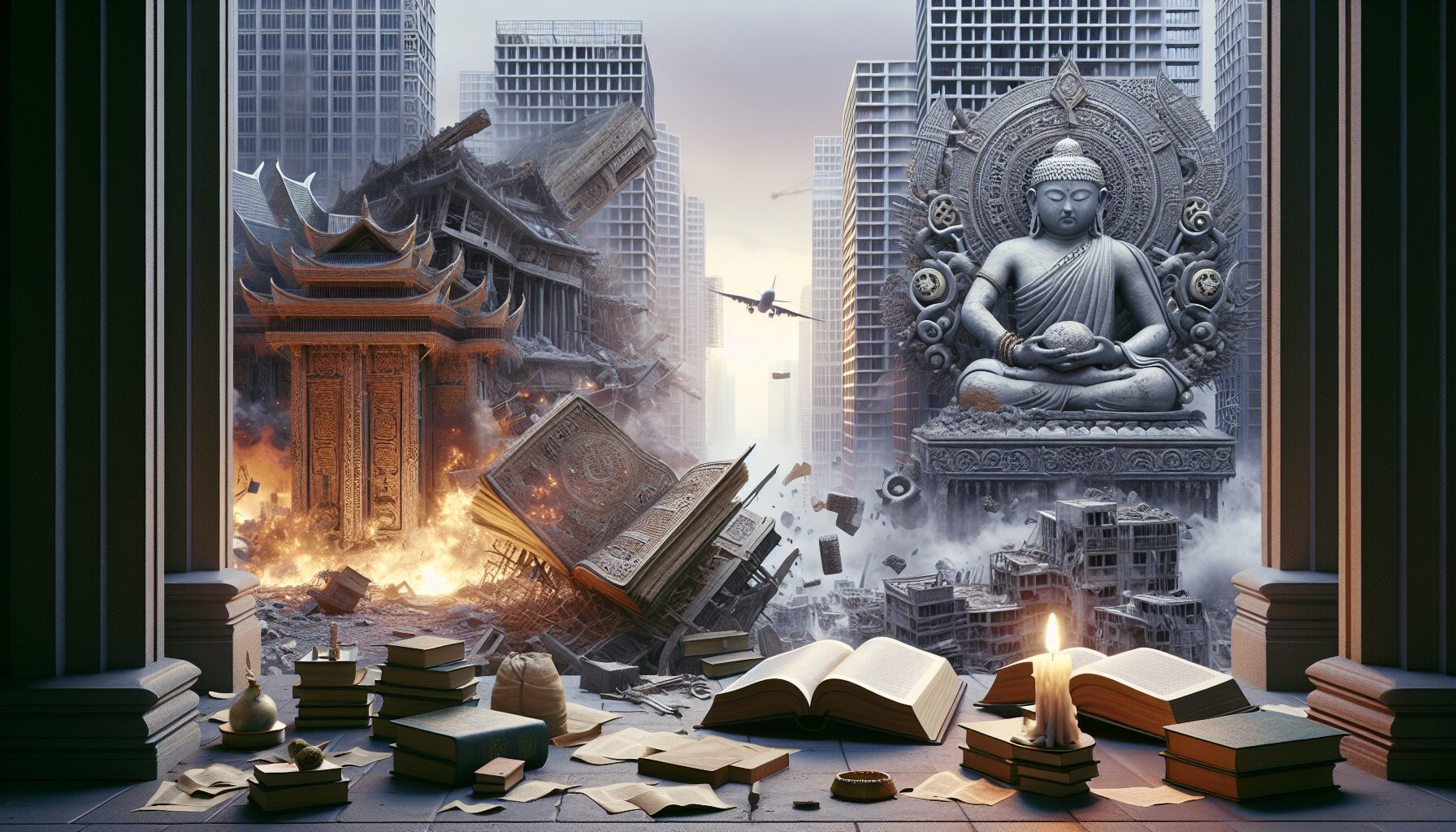
When Reform Means Destruction: Forced Modernization of Belief
Change is an inevitable part of human history. It is often seen as a beacon of progress, leading societies toward greater enlightenment and freedom. However, history tells a different and more complex story, one in which so-called “reform” has sometimes entrenched discord, damaged cultures, and destroyed identities. The forced modernization of belief systems, while aiming to liberate and enlighten, can often have the opposite effect, resulting in cultural erosion and societal fragmentation.
“The road to hell is paved with good intentions.” — Saint Bernard of Clairvaux
The Historical Context of Forced Modernization
Throughout history, dominant powers have imposed their beliefs on lesser powers, often in the name of progress or civilization. This imposition is not new, stretching back to the colonization of the Americas, the spread of Christianity across the globe, and the expansion of European empires. In each case, the local beliefs and customs were deemed primitive or backward, requiring reform.
- Colonialism: Many indigenous cultures were suppressed or destroyed as European powers colonized large swaths of the Americas, Africa, and Asia. Religious conversion was often a key tactic in these efforts, rationalized by the belief that European culture was superior.
- Industrial Revolution: The rapid technological advancements and societal shifts brought about by the Industrial Revolution also led to the restructuring of social and cultural norms. Traditional roles and beliefs were cast aside in the rush to modernize and industrialize.
- Cultural Revolutions: In more recent history, cultural revolutions, such as those seen in China and the former Soviet Union, sought to eliminate “old” beliefs and traditions deemed incompatible with modern state ideologies.
The impact of these forced changes resulted in more than just the loss of traditional practices; they also led to significant cultural and psychological upheaval. For many, these changes were not liberating but rather destructive, erasing vital connections to their pasts and destabilizing their societies.
The Psychological Toll of Forced Reform
The forced modernization of belief systems can wreak havoc on individual and societal psyches. According to scholars at Academia.edu, the impacts are manifold:
- Identity Crisis: When core beliefs are challenged or transformed, individuals may experience an identity crisis. Traditional signifiers of self and community are upended, leaving people searching for meaning in a newly shaped world.
- Sense of Loss and Alienation: The rapid pace of change can create feelings of loss and alienation. Long-held traditions and institutions vanish almost overnight, creating a disconnect between the past and the present.
- Cultural Conflicts: As new beliefs are imposed, conflicts can arise between traditionalists and modernists. This strife can lead to societal divides, weakening the social fabric.
Resistance and the Fight to Preserve Culture
Resistance often arises in the face of imposed change. When cultural reform is perceived as an attack on identity, communities have historically pushed back. This struggle to maintain a cultural heritage has taken many forms, from armed rebellion to the peaceful revival of traditional practices.
- Revival Movements: These movements aim to resurrect and preserve traditional practices and beliefs, adapting them to the modern context without losing their essence.
- Legal Protections: Many post-colonial nations have sought legal protections for indigenous cultures and languages, recognizing their intrinsic value and the need to preserve them for future generations.
- Education and Advocacy: Educating younger generations about their cultural heritage and advocating for the recognition and respect of indigenous cultures are crucial steps in maintaining cultural diversity.
Resistance is not only a defense mechanism but also a testament to the adaptability and resilience of human cultures. Despite attempts to homogenize beliefs, diversity persists, offering rich tapestries of human experience and understanding.
Case Study: The Cultural Erosion in Tibet
The situation in Tibet is a poignant example of how forced modernization can wreak havoc on a cultural, religious, and societal level. Following the annexation of Tibet by China in the 1950s, the Chinese government embarked on a campaign to modernize Tibet. This campaign included the suppression of the Tibetan language, dismantlement of religious institutions, and a large-scale migration of Han Chinese settlers into the region.
“Tibetans are a distinct culture under serious threat from policies that are eroding their rich cultural heritage,” notes the Human Rights Watch.
The impacts are still felt today, as Tibetan culture struggles for survival against policies that aim to assimilate them into the broader Chinese identity. This erosion is not just about cultural artifacts or language but strikes at the heart of what it means to be Tibetan.
The Path Forward: Sustainable Cultural Evolution
While change is inevitable, it does not have to mean destruction. Sustainable cultural evolution relies on respect, dialogue, and a recognition of the inherent value of diverse beliefs. To foster a world where various faiths and practices can coexist, it is imperative to adopt holistic and inclusive methods rather than impose external ideals.
- Inclusive Policy Making: Engaging local communities in the formulation of policies affecting them, ensuring that modernization comes from within rather than being imposed from without.
- Cultural Preservation Initiatives: Supporting initiatives aimed at preserving and revitalizing languages, arts, and traditions.
- Global Cultural Exchange: Promoting mutual understanding through cultural exchange programs that celebrate, rather than disparage, differences.
By acknowledging the complexity and interconnectedness of our global society, we can adopt a path that recognizes the strengths in diversity and promotes true coexistence.
As we look to the future, we bear the responsibility to ensure that progress and reform lift humanity together rather than marginalize or erase the voices of those who hold different beliefs. It is through this understanding that reform can truly foster growth rather than serve as a euphemism for destruction.
In acknowledging both the potential and the pitfalls of forced modernization, we illuminate a new path, one where reform respects the past it seeks to build upon.