
Tag: quiet

  • Quiet Revolutions – Internal Acts of Resistance

    Quiet Revolutions – Internal Acts of Resistance

    Quiet Revolutions: Internal Acts of Resistance

    In a world where loud demonstrations and outspoken protests often capture media headlines, the quiet revolutions happening within individuals can often go unnoticed. These internal acts of resistance, though silent and subtle, are incredibly powerful in shaping societies and fostering personal growth. Such transformations represent a pivotal force in human history, driving change from within and showcasing the indomitable spirit of individuals against structures of oppression and conformity.

    The Nature of Quiet Revolutions

    Quiet revolutions are characterized by their understated nature. Unlike their more boisterous counterparts, these revolutions occur within the individual, manifesting as quiet yet firm resolve, subtle shifts in behavior, and the embracing of values that challenge the status quo. This form of resistance often goes unseen by the world at large but is profound and transformative on a personal level.

    Examples of Historical Quiet Revolutions

    • Monastic Movements: Throughout history, monastic communities have demonstrated quiet revolution through their ascetic lifestyles and devotion to spiritual pursuits. Their silent protests against materialism and worldly indulgences offer a pathway of resistance through simplicity and contemplation.
    • Literary Impacts: Writers like Franz Kafka and George Orwell have subtly resisted totalitarian regimes through their works, influencing the consciousness of readers without taking to the streets. Their writing has inspired readers to question authority and envision alternative futures.
    • Gandhi’s Philosophy: While Mahatma Gandhi is widely known for his public campaigns, his practice of nonviolent resistance, Satyagraha, encouraged profound inner conviction and peace as tools for change, emphasizing the strength of silent, personal revolution. As Gandhi himself said,

      “In a gentle way, you can shake the world.”

    Modern Manifestations

    In today’s advanced society, quiet revolutions continue to take shape in myriad forms:

    • Mindfulness and Meditation: The growing popularity of mindfulness and meditation practices reflects a movement towards inner peace and awareness. Participants resist the chaos and stress of modern life, transforming their perspective from within.
    • Individual Activism: Acts such as conscious consumerism and lifestyle changes—choosing to go vegan, reducing carbon footprints, or supporting ethical businesses—demonstrate personal resistance against larger systems that participants view as unsustainable or ethically questionable.
    • Digital Expression: Platforms like blogs and podcasts allow individuals to quietly influence opinions and culture. Bloggers frequently challenge dominant narratives through personal stories and informed commentary.

    The Power and Potential of Internal Resistance

    The power of internal acts of resistance lies largely in their potential to accumulate and create widespread change over time. When individuals align their daily actions with their personal beliefs, they contribute to a cumulative, transformative effect that eventually permeates society. Such choices inspire others to question existing paradigms and explore new paths, creating a ripple effect of quiet but substantial transformations.

    Moreover, quiet revolutions empower individuals. By redefining their engagement with the world according to personal values and authentic desires, people claim agency over their lives, escaping cycles of oppression and expectation imposed by external authorities.

    The Challenges Faced

    Despite their profound power, quiet revolutions face several challenges. They often occur without external validation, and the initiators of such acts may face skepticism or dismissal. Moreover, as noted by philosopher Michel Foucault, “Where there is power, there is resistance.”[1](https://plato.stanford.edu/entries/foucault/) This resistance, even when quiet, invariably encounters opposition from dominant structures that perceive it as a threat to the existing order.

    Conclusion

    The story of human civilization is replete with both loud and silent acts of revolutionary transformation. While bold protests will always have their place, it is essential to recognize and appreciate the quiet revolutions that subtly, yet powerfully, shape the world. As individuals engage in personal acts of resistance—through introspection, lifestyle choices, and creative expression—they contribute to a tapestry of change that promises a more reflective and conscientious society.

    Encouraging quiet revolutions means fostering environments where personal convictions are respected and valued. It involves recognizing the strength in silence and the profound impact of internal change. These internal acts of resistance prove that sometimes, the most significant revolutions foster the longest-lasting transformations, echoing quietly throughout the threads of society.

    The journey of personal revolution is one that any individual can embark upon, regardless of their circumstances, thereby embodying the eternal spirit of resilience and hope.

  • The Final Straw — The soul’s quiet breaking point

    The Final Straw — The soul’s quiet breaking point

    The expression “the straw that broke the camel’s back” is a well-worn metaphor used to describe that moment when something small and seemingly insignificant becomes the catalyst for a larger, profound reaction. This phrase, however, does more than just capture a single aspect of human experience—it embodies the cumulative nature of stress and burden that eventually leads to the soul’s breaking point.

    The soul, in its vast complexity, can handle much adversity and challenge. It is resilient, tough, and adaptable. However, there comes a moment when the pressure, no matter how small the final push, becomes unbearable. This is the final straw—the soul’s quiet breaking point. This article explores the nuanced and often imperceptible journey to this profound moment.

    The Nature of Accumulation

    Every day, we navigate through stressors both big and small—work deadlines, family obligations, societal pressures, and personal expectations. Each adds a weight to our being, often unnoticed until it becomes too much. The human soul can absorb an incredible amount of strain, adapting and soldiering on. However, as Anne Lamott poignantly noted, “Almost everything will work again if you unplug it for a few minutes, including you.”

    • Resilience Unrecognized: We often fail to recognize our own resilience. The soul withstands much turmoil thanks to its innate strength, but not indefinitely.
    • Transcending Tolerance: While humans are adept at managing stress, there is always a threshold beyond which they are unable to cope.

    The Straw that Broke the Camel’s Back

    The ‘final straw’ is often deceptive in its insignificance. It is rarely a catastrophic event but rather something minor—a forgotten errand, a sideways glance, or a harsh word. These are the moments that, when combined with the mounting pressures of life, result in a profound emotional eruption.

    “Most of the important things in the world have been accomplished by people who have kept on trying when there seemed to be no hope at all.” — Dale Carnegie

    While long-suffering perseverance is admirable, it is also imperative to understand and listen to the signs of impending breakdowns before they reach a destructive crescendo.

    Signs of Impending Breakdown

    The subtle signals that herald an approaching breaking point are as varied as they are numerous. Recognizing these signs is crucial to preventing a descent into overwhelm.

    • Physical Symptoms: Chronic fatigue, sleep disturbances, and tension headaches are common physical indicators.
    • Emotional Outbursts: Disproportionate emotional reactions, such as sudden weeping or unexplained irritability.
    • Cognitive Impairment: Decreased concentration, memory lapses, and decision-making difficulties.

    Recognizing these signs is not only beneficial for self-care but also for offering support to others who might be laboring silently under their burdens.

    The Aftermath: What Happens When the Break Occurs

    When the soul reaches its quiet breaking point, the aftermath is profound. Some experience a sense of liberation—an emotional catharsis that, while initially painful, eventually leads to healing and renewal. For others, however, this breaking point can signify a deeper descent into despair and depression.

    Therapist and author Julia Cameron emphasized the healing power of creativity in navigating through such emotional turmoil, suggesting that “We are, ourselves, creations. And we, in turn, are meant to continue creativity by being creative ourselves.”

    • Transformation: Many individuals find solace in transformative activities like writing, painting, or gardening, as these help rebuild emotional resilience.
    • Seeking Support: Professional help, whether through counseling or support groups, becomes imperative for many in finding a new equilibrium.

    Strategies for Reinforcement

    Preventing the soul from reaching its final breaking point involves proactive measures that cultivate resilience and reinforce emotional defenses. Here are several strategies to consider:

    • Mindfulness Practices: Incorporating mindfulness and meditation into daily routines can significantly reduce stress levels and improve emotional well-being.
    • Connectedness: Building and maintaining strong social connections can provide crucial support during times of difficulty.
    • Regular Reflection: Consistent introspection facilitates self-awareness and helps in recognizing when intervention is necessary.

    A final word on resilience comes from the poignant wisdom of Viktor E. Frankl, the illustrious psychologist and Holocaust survivor, who wrote in “Man’s Search for Meaning,” “When we are no longer able to change a situation, we are challenged to change ourselves.”

    A Collective Responsibility

    Beyond individual efforts, there is a collective responsibility in recognizing and responding to the signs of someone nearing their emotional brink. Whether it’s through workplace policies that stress mental health awareness or educational programs that teach emotional intelligence from an early age, society must embrace a more empathetic approach.

    Therefore, the imperative is not only to guard our own souls against reaching a breaking point but to foster environments where others feel safe and supported in expressing their vulnerabilities. This way, we collectively prevent that final, quiet breaking point from being reached.

    Ultimately, understanding and addressing the final straw—the soul’s quiet breaking point—requires both self-awareness and communal care. By doing so, we not only fortify ourselves but uplift the human experience, creating a world where everyone can thrive without fear of breaking under the weight of life.

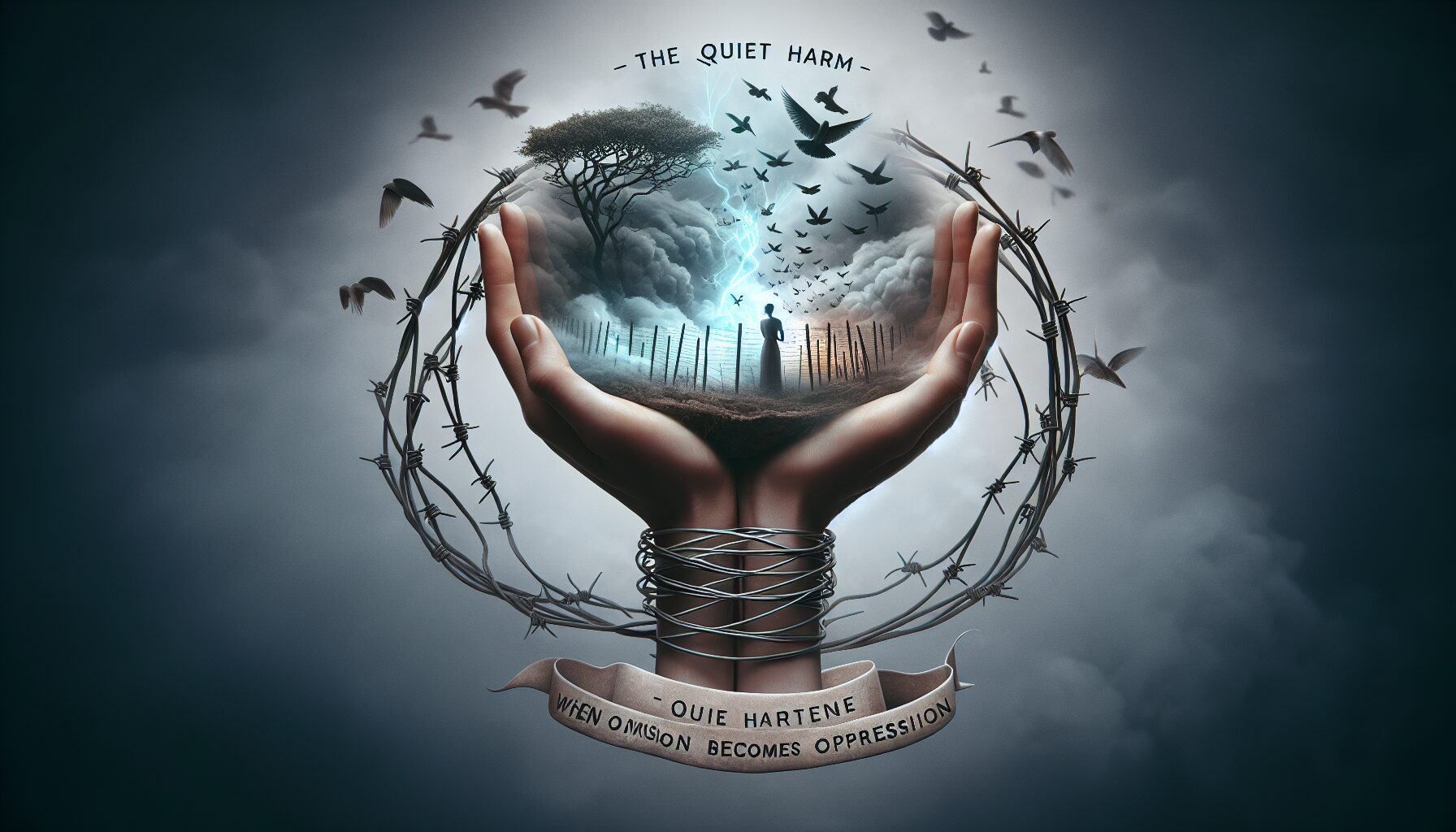
  • The Quiet Harm — When omission becomes oppression

    The Quiet Harm — When omission becomes oppression

    The Quiet Harm: When Omission Becomes Oppression

    In the discourse on oppression, we often focus on explicit acts of discrimination, violence, and exclusion. However, there is an insidious form of oppression that often goes unnoticed—omission. The act of leaving out, ignoring, or underrepresenting individuals or groups can be just as damaging as any overt act of discrimination. This article explores how omissions, whether intentional or not, play a pivotal role in maintaining systems of oppression and what steps can be taken to counteract this quiet harm.

    The Subtle Nature of Omission as Oppression

    Omission manifests in various forms such as the erasure of minority voices in historical narratives, the lack of representation in media, or the exclusion of diverse perspectives in policymaking. These omissions perpetuate a dominant narrative while rendering others invisible, thus reinforcing structural inequalities.

    The Erasure of History

    Consider the historical portrayal of significant events. More often than not, history is written by the victors and those in power, leading to the marginalization of minority experiences and contributions. For example, the history of colonialism is frequently told from a Eurocentric perspective, ignoring the devastations faced by indigenous populations.

    “Until the lions have their own historians, the history of the hunt will always glorify the hunter.” — Chinua Achebe

    This selective historical narrative denies agency and voice to oppressed groups, thereby contributing to their continued marginalization and reinforcing a singular, often skewed narrative.

    Media Representation Matters

    Media plays a critical role in shaping cultural perceptions and societal norms. The underrepresentation or misrepresentation of marginalized groups in movies, television, and news perpetuates stereotypes and denies these groups a diverse and dynamic humanity.

    • The Bechdel Test, introduced by Allison Bechdel, evaluates the representation of women in media based on whether two named women characters talk to each other about something other than a man. While simplistic, even this basic test is often failed, illustrating significant gender omissions.
    • Studies show that LGBTQ+ individuals, people of color, and those with disabilities are vastly underrepresented in Hollywood and often pigeonholed into stereotype-laden roles. This omission not only skews public perception but also limits the aspirations of those who do not see themselves reflected in media.

    The Impact of Omission in Policy and Education

    Policies That Fail to Include

    Policies that do not consider the needs and perspectives of all communities can inadvertently oppress through omission. For example, urban planning policies that overlook accessibility for individuals with disabilities limit their mobility and ability to participate fully in society.

    Inclusive policymaking requires intentional efforts to understand the diverse needs of all community members. The absence of such efforts leads to a de facto oppression where only certain voices and needs are addressed, exacerbating existing disparities.

    Educational Disparities

    Education systems reflect and perpetuate societal values, and thus, they are pivotal in either challenging or reinforcing systemic oppression. Curriculum choices that omit significant cultural contributions from non-dominant groups implicitly suggest that these perspectives are unworthy of study.

    “The function of education is to teach one to think intensively and to think critically. Intelligence plus character — that is the true goal of education.” — Martin Luther King Jr.

    Educational omissions hinder critical thinking and an understanding of the diversity that shapes our world, resulting in generations ill-prepared to engage constructively with difference.

    Addressing the Quiet Harm of Omission

    Steps Toward Inclusivity

    Recognizing omission as a form of oppression is the first step toward meaningful change. Efforts must be made at individual, institutional, and societal levels to address and rectify these omissions.

    • Amplification of Voices: Platforms should be created and existing ones utilized to amplify marginalized voices. This includes efforts within media, literature, and public discourse.
    • Inclusive Historical Narratives: Schools and educational institutions must review their curricula to include diverse perspectives, ensuring a more comprehensive understanding of history.
    • Policy Reform: Policymakers should adopt a more inclusive approach, considering the varied impacts of legislation on all segments of the population, especially those at the intersections of multiple marginalities.

    The Role of Allies and Advocates

    Allies and advocates have a crucial role in combating the oppression of omission. By acknowledging their own privileges, actively listening to marginalized voices, and advocating for systemic change, allies can help shift the narrative toward one that is truly inclusive.

    The work of allies also involves calling out omissions when observed, advocating for representation in all spheres, and supporting the platforms and movements led by those who have traditionally been sidelined.

    Conclusion: Toward a More Just and Inclusive Society

    Omission is a quiet, often silent form of harm that can lead to continued oppression if left unaddressed. By bringing attention to what’s left unsaid, society can begin to dismantle the structures that perpetuate inequality and foster a future where diversity is recognized and celebrated. The journey toward inclusivity is ongoing, requiring vigilance, commitment, and courage from all individuals and institutions alike.

    “Injustice anywhere is a threat to justice everywhere.” — Martin Luther King Jr.

    This call to action remains as relevant today as ever. Achieving a truly just society requires a conscious effort to recognize and rectify omissions, ensuring that all individuals and groups are seen, heard, and valued.

  • The Quiet Heresy — How compassion becomes rebellion

    The Quiet Heresy — How compassion becomes rebellion

    In a world where power and control often dictate society’s norms, the simple act of compassion can unwittingly transform into a form of rebellion. The seeming antithesis of opposition, compassion, has historically acted as a catalyst for social change, challenging entrenched systems and igniting movements that call for justice and equality.

    This phenomenon, often overlooked, is rooted in challenging the status quo through humane acts that defy unjust authority. Where oppressive regimes glorify might and conformity, compassion becomes a quiet heresy that undermines such structures by holding a mirror to their failures.

    Acts of Compassion as Defiance

    Take, for instance, the White Rose movement during Nazi Germany. A small, non-violent group led by students, their tool against tyranny was not violence but the dissemination of leaflets urging the German people to rise to moral courage by resisting Hitler’s regime. Although seemingly simple, their act of kindness towards humanity amidst extreme cruelty was a profound form of rebellion, driven by empathetic defiance.

    “We will not be silent. We are your bad conscience. The White Rose will not leave you in peace!” — The White Rose Pamphlets

    Similarly, during the Civil Rights Movement in the United States, Dr. Martin Luther King Jr. embodied compassionate resistance. His philosophy of nonviolence, inspired by Gandhi, was deeply rooted in love and understanding. As he stated, “Hate cannot drive out hate; only love can do that.” King’s approach galvanized a movement, transforming the landscape of American society through its uncompromising insistence on the dignity of all human beings.

    The Subtle Power of Empathy

    Compassion overturns systems of dehumanization and indifference, revealing their flaws and rallying others to the cause of justice. In contemporary times, this spirit is visible in grassroots movements advocating for climate justice, refugee rights, and poverty alleviation. These initiatives challenge the indifference often displayed by those in power, underscoring a truth that is as radical as it is simple: all lives have inherent value.

    • Climate activists, such as Greta Thunberg, use compassion for future generations to challenge environmental policies.
    • The humanitarian work of individuals like Malala Yousafzai emphasizes the transformative power of education and peace in the face of violent oppression.

    The quiet heresy of compassion lies in its ability to unite hearts against unjust barriers, propelling movements and inspiring change. In a sense, it serves as a reminder that the most profound revolutions often begin with small, humane acts that simply refuse to perpetuate the cycles of cruelty and indifference.