Tag: public

  • Doctrine of Fear – How state media paints alternative beliefs as “threats.”

    Doctrine of Fear – How state media paints alternative beliefs as “threats.”


    Doctrine of Fear: State Media’s Portrayal of Alternative Beliefs as “Threats”

    Doctrine of Fear: State Media’s Portrayal of Alternative Beliefs as “Threats”

    In today’s world, the role of media is paramount in shaping public opinion. However, a growing concern arises when this power is used to perpetuate fear and marginalize alternative beliefs.

    “Media, if used rightly, can educate, inform, inspire, but unfortunately it can also be misused to create fear, spread hatred, and manipulate public opinion,”
    – Amitabh Bachchan, Indian actor and UNICEF Goodwill Ambassador (Source)

    The Doctrine of Fear: A Historical Perspective

    The concept of the “Doctrine of Fear” dates back to the Cold War era, where fear was intentionally instilled in the masses to support government policies and maintain social control.

    • Red Scare: The McCarthy Era in the United States, named after Senator Joseph McCarthy, saw a wave of fear-mongering about communist infiltration into American society (Source).
    • McCarthyism: This period was characterized by the use of fear, intimidation, and blacklisting to suppress dissent and perceived threats.

    Modern-Day Manifestations

    Fast forward to today, state media in various countries continues to employ similar tactics, using fear as a tool to sway public opinion and reinforce dominant narratives.

    “State media has become a powerful weapon that can create fear, manipulate emotions, and ultimately control the narrative. This is especially concerning when alternative viewpoints are suppressed or portrayed as threats,”
    – Maria Ressa, Philippine journalist and co-founder of Rappler (Source)

    The Impact on Society and Democracy

    The misuse of media for fear-mongering can have detrimental effects on society, including the erosion of trust in institutions, increased polarization, and a stifling of free speech.


  • The Global Market for Silence – Why abuses persist unchecked

    The Global Market for Silence – Why abuses persist unchecked

    In an age where information flows freely across borders at unimaginable speeds, the persistence of abuse scandals kept in the dark raises perplexing questions about the global market for silence. This market thrives on the complicity, coercion, and control of individuals and institutions tasked with protecting our moral and ethical standards.

    The Mechanics of Silence

    Silence serves as a commodity in many areas where power dynamics are at play. From corporate malpractice to human rights abuses, the mechanisms of silence are as varied as they are pervasive. The intricacies of this market often involve:

    • Non-Disclosure Agreements (NDAs): These legal instruments are frequently employed to bind victims and whistleblowers into silence. As reported by BBC News, NDAs can be seen as “gagging orders,” restricting individuals from revealing important truths.
    • Financial Incentives: Settlements and hush money often serve to preempt public scandals. As The Guardian highlights, powerful entities leverage their wealth to coerce silence, preserving their public image at the expense of justice.
    • Threats and Intimidation: Many individuals are silenced through threats of retaliation, either directly or subtly implied. This coercion is a pervasive barrier to speaking out.

    Carly Nyst, a digital rights lawyer, describes non-disclosures as “a silencing tool that effectively allows the powerful to go unchallenged.”

    The Role of Cultural and Social Norms

    Silence is further perpetuated by cultural and social norms that discourage speaking out. In many cultures, there exists a strong deference to authority which can translate into an unwillingness to question or criticize those in power. This respect for hierarchy can halt efforts to bring abuses to light.

    Groups vulnerable to exploitation, such as marginalized communities and individuals with limited economic resources, often face heightened risks. These groups, due to their social positioning, may find it more challenging to break free from imposed silence and seek justice or reparation.

    The Impact of Silence

    The consequences of a thriving market for silence are profound. Human Rights Watch notes that unchecked abuses continue to infringe upon human dignity and well-being on a global scale. Silence magnifies the impact of these harms, enabling perpetrators to act with impunity.

    • Loss of Trust: When scandals do become public, the delayed revelations often erode trust in institutions and in systems of oversight.
    • Cultural Acceptance of Misconduct: When abuse and misconduct go unpunished, societies may inadvertently learn to accept such behaviors as norm.
    • Victim Empowerment Thwarted: The refusal to allow victims to speak creates a cycle of disempowerment and trauma, potentially leading to further victimization.

    In the words of Sheryl Sandberg, “We cannot change what we are not aware of, and once we are aware, we cannot help but change.” This highlights the importance of breaking the silence to initiate change.

    Breaking the Chains of Silence

    Efforts to dismantle the market for silence are gaining momentum, driven by advocacy groups and increasingly by individuals willing to risk speaking out. The #MeToo movement and others have demonstrated the potential to disrupt entrenched systems of coercion and denial.

    • Legal Reforms: There is a growing push for legal reforms that restrict the use of NDAs in cases involving criminal activity and significant misconduct.
    • Grassroots Movements: Empowering communities to speak out and share their stories often results in greater awareness and, eventually, systemic change.
    • Media and Public Campaigns: Investigative journalism and public awareness campaigns play an essential role in shining light on abuses and compelling action from otherwise unresponsive entities.

    As the global market for silence continues to face scrutiny, the onus is on each of us to listen and act upon the stories previously hidden. Transparency and accountability must be prioritized to dismantle the structures that allow silence to persist over truth.

    Combating this issue involves not just policy change but a cultural shift in values and priorities, emphasizing truth, justice, and the unwavering resolve to no longer remain complicit by our silence. Together, through collective awareness and action, change is possible.

    The journey to dismantle this market is a long one, but as stated by human rights advocate Desmond Tutu, “If you are neutral in situations of injustice, you have chosen the side of the oppressor.” Breaking the silence requires courage, compassion, and a commitment to justice.

  • The Criminalization of Gathering – When meeting becomes subversion

    The Criminalization of Gathering – When meeting becomes subversion

    The Criminalization of Gathering: When Meeting Becomes Subversion

    In a world where autonomy and freedom of association are hailed as fundamental human rights, there is a disturbing trend emerging: the criminalization of gatherings. Whether it be protests, community meetings, or merely social congregations, events once seen as a staple of democratic society are now being scrutinized and sometimes branded as acts of subversion.

    The Erosion of Public Spaces

    Public spaces, historically the heart of community and democracy, are increasingly being monitored and restricted. Governments around the world have tightened their grip on public assembly, often citing security concerns or public order as justifications.

    “Public space is an essential part of a society’s structure. It usually holds a wide range of crucial roles, from the social to the political,” said Antonio Guterres, UN Secretary-General.

    While maintaining order is necessary, the balance between safety and freedom has tilted alarmingly towards authoritarianism in various parts of the world.

    Legislative Overreach and Its Consequences

    The introduction of laws aimed at curbing public gatherings has raised significant concerns among civil rights advocates. In many instances, these laws are intentionally vague, allowing for broad interpretation and application.

    • Russia: The foreign agents law requires organizations receiving foreign funding and engaged in political activity to undergo stringent registration processes.
    • Hong Kong: The National Security Law has been used to justify crackdowns on protests, resulting in numerous arrests of pro-democracy activists.
    • United States: Several states proposed bills imposing harsh penalties on protesters, significantly escalating the risks involved in joining demonstrations.

    These legislative tools, once enacted, place tremendous power in the hands of authorities, often disproportionately affecting marginalized groups and dissenters.

    The Impact on Civil Society

    The criminalization of gatherings has profound implications for civil society. Non-governmental organizations (NGOs) and grassroots movements find it increasingly challenging to operate under such laws. The efficacy of movements that strive to promote social justice, environmental concerns, and human rights is unduly compromised.

    Human Rights Watch describes this trend as a “shrinking space for civil society and dissent,” as noted in their 2021 World Report.

    Furthermore, the fear of legal repercussions discourages many from participating in public demonstrations, thereby weakening one of society’s crucial tools for checks and balances on authority.

    Digital Surveillance: Extending the Arm of Authority

    Compounding the issue of criminalized gatherings is the rise of digital surveillance. Governments have harnessed technology to monitor communications and networks, essentially extending their reach beyond the physical into the virtual world. This digital overreach adds another layer of suppression to physical assemblies.

    • Facial Recognition: Increasing use of facial recognition technology at public events has raised alarm over privacy encroachments.
    • Data Mining: Collection of personal data via social media platforms is often used to track and influence dissenters.

    The fear of being watched or recorded not only affects the approach to physical protests but also stifles online discussions and organizing efforts, eroding privacy and stifling free speech.

    The Path Forward: Resilience and Resistance

    Despite these challenges, there is hope in the form of resilience and innovation among activists. New methods of organizing, such as encrypted communication channels and decentralized networks, are emerging as ways to circumvent restrictions. Moreover, legal challenges against restrictive laws are gaining traction in international courts, setting precedents that may inspire reform.

    For genuine democratic freedom, it is imperative that the international community recognizes and responds to the dangers of criminalizing gatherings. Protecting the right to assemble and ensuring a free and open society should remain a priority for all nations committed to democracy and human rights.

    As stated by Amnesty International, “Silencing people affected by injustice is no route to equality or justice.” (Global State of Human Rights 2020).

    Thus, it becomes a shared responsibility to stand against the criminalization of gatherings and to uphold the universal right to peaceful assembly and expression for everyone.


  • Social Execution – The Anatomy of Public Shaming

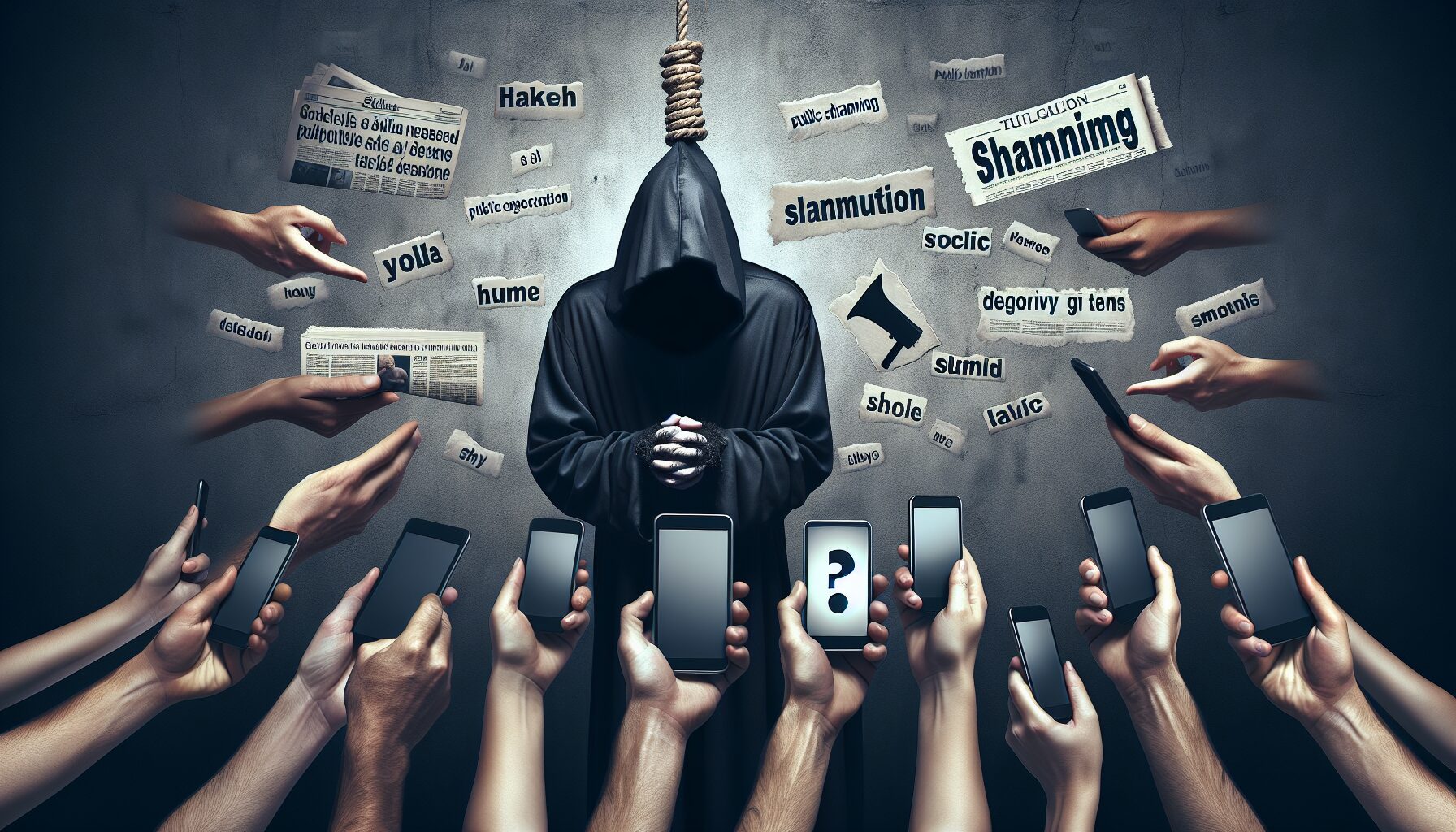
    Social Execution – The Anatomy of Public Shaming

    In the age of digital interconnectedness, public shaming has found a fertile soul to thrive. Gone are the days when public executions served as both entertainment and punishment. Today, social execution, as manifested through public shaming, has taken its place, serving a similar societal role while being perpetuated via new media.

    “Public shaming as a blood sport has to stop. It’s time for no more society-wide public executions.”

    – Jon Ronson, Author of So You’ve Been Publicly Shamed

    The Historical Context of Public Shaming

    Public humiliation as a form of punishment has a long and varied history. Instruments of shame like the stocks, pillory, and scarlet letter were employed to enforce social norms and deter deviant behavior. These tools of public penance have now evolved into hashtags, social media posts, and viral videos that can disseminate shame globally within seconds.

    The Mechanics of Modern Public Shaming

    Modern public shaming operates in several distinct yet overlapping phases:

    • Identification: The transgression is identified and usually brought to attention by someone on social media.
    • Amplification: The incident is shared, liked, and retweeted, spreading the story rapidly across multiple platforms.
    • Sanctioning: The online community acts as judge and jury, often calling for severe consequences, such as job loss or boycotts.
    • Judgment: Media outlets may pick up the story, thereby broadening the reach and impact.

    The reach and permanence of digital media mean that a person’s moment of indiscretion can haunt them long after the initial incident. Research indicates that the psychological impact of public shaming can be devastating, leading to anxiety, depression, and in extreme cases, suicidal tendencies.

    Why We Participate: The Psychology Behind Public Shaming

    Why do people participate in public shaming? Several factors contribute to this phenomenon, including:

    • Social Norms: Being part of a collective that upholds certain values gives users a sense of belonging and righteousness.
    • Distance and Anonymity: The digital realm provides a barrier that reduces empathy, allowing people to act in ways they might not in face-to-face interactions.
    • Schadenfreude: For some, there is a certain pleasure in seeing others fall from grace, especially if they are seen as powerful or privileged.
    • Virtue Signaling: Publicly calling out others can be a way to showcase one’s own moral superiority.

    Jessica Bennett from the New York Times notes, “Before you say anything, check your own relationships to public humiliation and bullying. Are you posting that angry tweet for applause, or to make a genuine difference? Maybe think for a second before you hit ‘send.’

    The Ethical Concerns of Public Shaming

    While holding individuals accountable for their actions is necessary, ethical concerns arise regarding the scale and impact of modern public shaming:

    • Presumption of Innocence: Online, individuals are often assumed guilty without a fair investigation.
    • Disproportionate Punishment: Losing one’s livelihood and reputation often doesn’t fit the gravity of the misstep.
    • Mob Mentality: The collective nature of online shaming can escalate and intensify punishment beyond reasonable limits.
    • Privacy Violations: Exposing personal information and photos can have long-lasting impacts on un-involved parties.

    Case Studies: Impact and Consequences

    Numerous high-profile cases highlight the severe consequences of public shaming:

    • Justine Sacco: Her infamous tweet before a long-haul flight led to worldwide condemnation and resulted in her losing her job before she even landed.
    • Monica Lewinsky: Perhaps one of the first victims of global-scale shaming, Lewinsky reinvented herself as an anti-bullying advocate and noted in a TED talk that public humiliation as a commodity has significant destructive potential.

    The Path Forward: Towards a More Compassionate Society

    The narrative surrounding social execution must change if society aims to balance accountability with compassion. Potential strategies for achieving this include:

    • Encouraging Empathy: Promote understanding and conversation over judgment.
    • Responsible Sharing: Advocate for a digital culture where individuals are encouraged to verify information and consider the implications of their actions before sharing.
    • Rehabilitation over Punishment: In cases where the accused acknowledges wrongdoing, focus on education and correction rather than isolation and punishment.
    • Structural Changes in Media: Responsible reporting by media outlets that consider long-term effects on individuals when covering stories.

    In summary, while public shaming certainly enforces social values, the collateral damage it inflicts on individuals and society far outweighs its benefits. As we become more interconnected, it is imperative to strive towards a culture of understanding and forgiveness, allowing for individuals to learn, grow, and reintegrate. As Ronson suggests in his work, we must look beyond mere punishment and work towards a more humane approach to transgressions.

  • Renewal Through Responsibility — Rebuilding faith after corruption

    Renewal Through Responsibility — Rebuilding faith after corruption

    Renewal Through Responsibility — Rebuilding Faith After Corruption

    Renewal Through Responsibility: Rebuilding Faith After Corruption

    In the wake of corruption scandals, restoring trust is paramount for both individuals and institutions. As we dive into this intricate process of renewal, it becomes clear that responsibility is the foundational pillar for rebuilding faith. Whether in government, business, or religious organizations, reclaiming integrity requires a sincere commitment to transparency, accountability, and ethical reform.

    The Nature of Corruption and Its Impact

    Corruption, by its very nature, erodes trust, disrupts social cohesion, and undermines development. It is often characterized by the abuse of power, deceit, and the diversion of resources from public to private gain. In a report by Transparency International, more than two-thirds of countries scored below 50 on the 2022 Corruption Perceptions Index, indicating persistent challenges worldwide.

    “Corruption undermines democracy and the rule of law, leading to diminished public trust in political leaders and institutions.” — Transparency International

    Impact on Society

    The repercussions of corruption are far-reaching. It leads to economic inefficiency, substandard public services, and increased inequality. Public officials who engage in corrupt practices erode public confidence, not just in themselves, but in entire systems of governance. This diminishment of trust can be particularly devastating in societies where resources are scarce and the need for transparent governance is critical.

    Rebuilding Through Responsibility

    • Transparency and Open Communication: Organizations must prioritize transparent practices and open lines of communication to start mending broken trust. Clear, honest, and regular communication about policies, procedures, and outcomes can help demystify operations.
    • Accountability Structures: Implementing stringent accountability measures is critical. This involves establishing checks and balances and cultivating a culture that encourages reporting unethical behavior without fear of retaliation.
    • Ethical Leadership: Leaders play a pivotal role in setting the moral tone of an organization. The presence of strong, ethical leadership can inspire trust and reinforce a commitment to ethical behavior at all levels.
    • Community Engagement: Inviting stakeholder participation in decision-making processes can enhance legitimacy. When communities feel involved and considered, they are more likely to have faith in the outcomes.

    Case Studies of Rebuilding Faith

    Lessons in renewal can be drawn from various institutions that have faced allegations of corruption yet emerged stronger through responsible practices:

    The Transformation of Corporate Governance at Siemens

    Siemens AG, once embroiled in deep allegations of corruption involving over a billion dollars in bribes, has transformed its governance structure to foster transparency and compliance. By adopting a rigorous code of conduct and comprehensive anti-corruption policies, Siemens has repositioned itself as a model of corporate integrity.

    South Africa’s Journey Post-Apartheid

    Post-apartheid South Africa offers another paradigm in addressing systemic corruption through legal reforms and community-involved processes. Establishing the Public Protector’s Office to investigate misconduct in public administration reflects significant strides toward holding officials accountable and restoring public faith in government institutions.

    Conclusion: A Continuous Journey

    Renewal through responsibility is not a one-time overhaul but a continuous journey of adherence to ethical standards and responsiveness to societal needs. It involves the challenging work of restructuring practices, reinforcing ethical commitment, and persistently engaging with communities. While corruption may momentarily shake foundations, a steadfast commitment to responsibility can reconstruct them, making organizations and societies more robust and resilient.

    Ultimately, the path to rebuilding faith is paved by responsibility. When institutions embrace this journey with sincerity and transparent deliberation, they not only restore credibility but also fortify the moral fiber of the communities they serve. For more resources on combating corruption and fostering integrity, visit Transparency International.

  • The Cult of Correctness — Obedience disguised as enlightenment

    The Cult of Correctness — Obedience disguised as enlightenment

    In an era increasingly defined by rapid exchanges of information and heightened social consciousness, the pursuit of truth has often taken unexpected, and sometimes unsettling, detours. At the heart of these detours lies the concept of “correctness,” a societal phenomenon that purports to embody enlightenment and progress but frequently veils a darker truth—one of conformity and control.

    Understanding Correctness

    To comprehend the depth of the Cult of Correctness, it is essential to first define the term. “Correctness,” in this context, refers to a kind of social and political propriety that dictates what is considered acceptable or unacceptable behavior and thought. While the drive to adopt more inclusive and nuanced language and practices is commendable, the inflexible enforcement of these standards can lead to a form of intellectual tyranny.

    “Tolerance, openness, and understanding, instead of the authoritarianism of dogma masquerading as truth, are hallmarks of the true philosophical spirit.”

    Harvard Gazette

    The notion of correctness often aligns with progressive values, emphasizing respect and equality across various segments of society. However, when this commitment shifts from advocacy and dialogue to rigid enforcement, it can inadvertently suppress the diversity of thought it seeks to nurture.

    The Evolution of Correctness

    Historically, every society has grappled with standards of propriety, though these standards have evolved significantly over time. The current climate can trace some of its roots back to the political correctness movement of the late 20th century, which sought to address and eliminate language and practices that were offensive to various social groups.

    While the initial ambitions of the movement were noble, aimed at fostering a more inclusive and considerate public discourse, the extension of these ideals has, in some instances, spiraled into what is colloquially known as “cancel culture.” This evolution has transformed the original intent into a punitive tool, punishing those who deviate from accepted norms irrespective of context or intention.

    The Mechanics of Obedience

    The mechanics by which correctness fosters obedience are subtle yet potent. Through the pervasive spread of social media, public discourse is often shaped by the most vocal participants, who may not necessarily represent a balanced perspective. The instantaneity and permanence of digital platforms have created an environment where public shaming can silence dissent even before it can be articulated.

    • Social Pressure: The fear of social ostracism is a powerful motivator. Many individuals may find themselves self-censoring in an attempt to align with what is deemed correct, rather than express their genuine beliefs.
    • Groupthink: When a particular viewpoint dominates public discourse, others may acquiesce to these prevailing opinions, often out of a desire to maintain social harmony rather than from personal conviction.
    • Reputational Risk: The potential damage to one’s public image or career can compel individuals to adopt safe, accepted viewpoints.

    The Illusion of Enlightenment

    At its core, the Cult of Correctness promises an enlightened society—a utopia where prejudice and inequality are relics of the past. However, in its most extreme forms, this vision can breed new forms of inequality and injustice, where voices and opinions that challenge the status quo are marginalized.

    This paradoxical approach is eloquently critiqued by the philosopher John Stuart Mill in his seminal work, “On Liberty.” Mill argued against the tyranny of the majority, warning how societal norms could stifle individuality and creative expression. According to the Stanford Encyclopedia of Philosophy, Mill emphasized the necessity of diverse opinions for the development of knowledge and the vitality of society.

    A Path Forward

    To navigate this complex environment, society must strike a delicate balance between respectfulness and openness to differing viewpoints. Here are a few strategies that may help foster genuine enlightenment without slipping into the pitfalls of enforced correctness:

    1. Promote Critical Thinking: Encouraging individuals to engage with diverse perspectives can foster resilience against rigid conformity.
    2. Engage in Constructive Dialogue: Open forums and debates that include a variety of voices can reduce echo chambers and broaden understanding.
    3. Value Intent and Context: Recognizing the intent and context behind statements can mitigate knee-jerk reactions and cultivate more nuanced discussions.

    In conclusion, while the pursuit of correctness aims to create a more enlightened and equitable society, it must be tempered with flexibility and critical engagement. By embracing a truly open discourse that values patience and understanding over perfunctory adherence, we can prevent the descent into a society where obedience masquerades as enlightenment.