Tag: prisoners

  • The Prisoner’s Prayer – Access to spiritual materials in the penal system.

    The Prisoner’s Prayer – Access to spiritual materials in the penal system.


    The Prisoner’s Prayer – Access to spiritual materials in the penal system

    The Prison’s Echo – Whispers of the Unseen

    “In these hallowed chambers of confinement, a cry for the divine echoes, seeking solace in the shadows.”

    -Anonymous prison writings
    • Within the labyrinthine maze of penitentiaries, a testament to mankind’s struggle against itself, the quest for spiritual sustenance persists, whispered among the prisoners.
    • A veil of iron separates the incarcerated from their houses of worship, yet the human spirit remains unbroken, finding solace in the recitation of holy verses and the echoes of divine principles.
    • The prison system, a monument to the failures of societal justice, has become an unwilling host to the deepest longings of human hearts. Within its cold walls, the spiritual nourishment that sustains our souls is sought through clandestine means.

    “The prison walls are but shadows, and the divine light shines upon all.”

    -A prisoner’s hope

    As we delve into the intricacies of this unresolved discourse, let us consider the implications of denying spiritual sustenance to those who have been confined. What is the true cost of such a policy on both the individual and society at large?

  • Harvested Lives – Organ trafficking and prisoners of conscience

    Harvested Lives: Organ Trafficking and Prisoners of Conscience

    The heart of the controversy surrounding organ trafficking resonates most disturbingly in the realm of prisoners of conscience. This clandestine crisis raises profound ethical questions and demands urgent international attention.

    The Dark Reality of Organ Trafficking

    Organ trafficking, as defined by the World Health Organization, involves the illicit trade of human organs for transplantation. It often preys on the most vulnerable individuals in society, turning them into unwitting victims of a global black market. The grim practice is fueled by desperation—individuals in need of money or coerced into selling their organs against their will.

    According to the United Nations Global Initiative to Fight Human Trafficking, organ trafficking results in the extraction of an estimated 10,000 illegal transplants annually, generating a market worth over $1 billion. Yet, behind these staggering statistics lie human lives reduced to mere repositories of commodified flesh.

    Prisoners of Conscience: Unwilling Donors

    Perhaps one of the most harrowing aspects of organ trafficking is its link to prisoners of conscience. These are individuals imprisoned for their beliefs, ethnic background, or dissent against authoritarian regimes, often with little to no due process.

    China has faced particularly scathing accusations in this regard. Human rights groups like Amnesty International and others have documented cases where practitioners of Falun Gong, a spiritual movement reportedly repressed by the Chinese government, have been victims of organ harvesting.

    “Eyewitness testimonies and investigative reports suggest that prisoners of conscience from China are killed for their organs to be sold for transplant recipients. This is a gross violation of human rights and dignity,” states Amnesty International.

    Investigations and Reports

    In 2019, the China Tribunal, an independent people’s tribunal based in London, concluded that forced organ harvesting has been practiced “for years throughout China on a significant scale.” The tribunal relied on volunteer researchers, expert analyses, and first-hand testimony from Chinese ex-detainees who described torture and forced medical testing.

    The Tribunal’s final judgment declared that “the tribunal’s members are all certain – unanimously, and sure beyond reasonable doubt – that in China forced organ harvesting from prisoners of conscience has been practiced for a substantial period of time involving a very substantial number of victims.”

    International Response and Challenges

    The international community has voiced strong opposition to organ trafficking. The World Health Assembly adopted a resolution urging member states to prevent transplant tourism and to ensure that donations are ethically acceptable and voluntary. However, the implementation and enforcement of such resolutions remain challenging.

    In this context, the United States and other governments have passed legislation to combat illegal organ trafficking. The U.S. Stop Organ Trafficking Act seeks to impose penalties on individuals involved in such activities, while also focusing on diplomatic efforts to curb the practice internationally.

    The Ethical Imperative and Path Forward

    Addressing the issue of organ trafficking, especially concerning prisoners of conscience, demands global cooperation and steadfast determination. Awareness campaigns and education can play pivotal roles in exposing the horror of these activities.

    • Raising Awareness: Global awareness must be enhanced through campaigns and partnerships between NGOs, governments, and media outlets.
    • Stronger Legislation: Countries need robust legal frameworks to detect, investigate, and prosecute those involved in organ trafficking networks.
    • International Cooperation: Transnational collaboration is crucial in dismantling organ trafficking rings. Organizations like INTERPOL and the United Nations must lead efforts to develop actionable strategies.

    Ultimately, a combined approach that considers the human, ethical, and legal dimensions of organ trafficking is essential in addressing this critical human rights issue. The plight of prisoners of conscience who are stripped of their dignity and lives for the sake of profitable organs should serve as a rallying cry for justice and humanity.

    In a world where the sanctity of human life should reign supreme, the exploitation and commodification of human bodies demand our immediate and unequivocal condemnation.

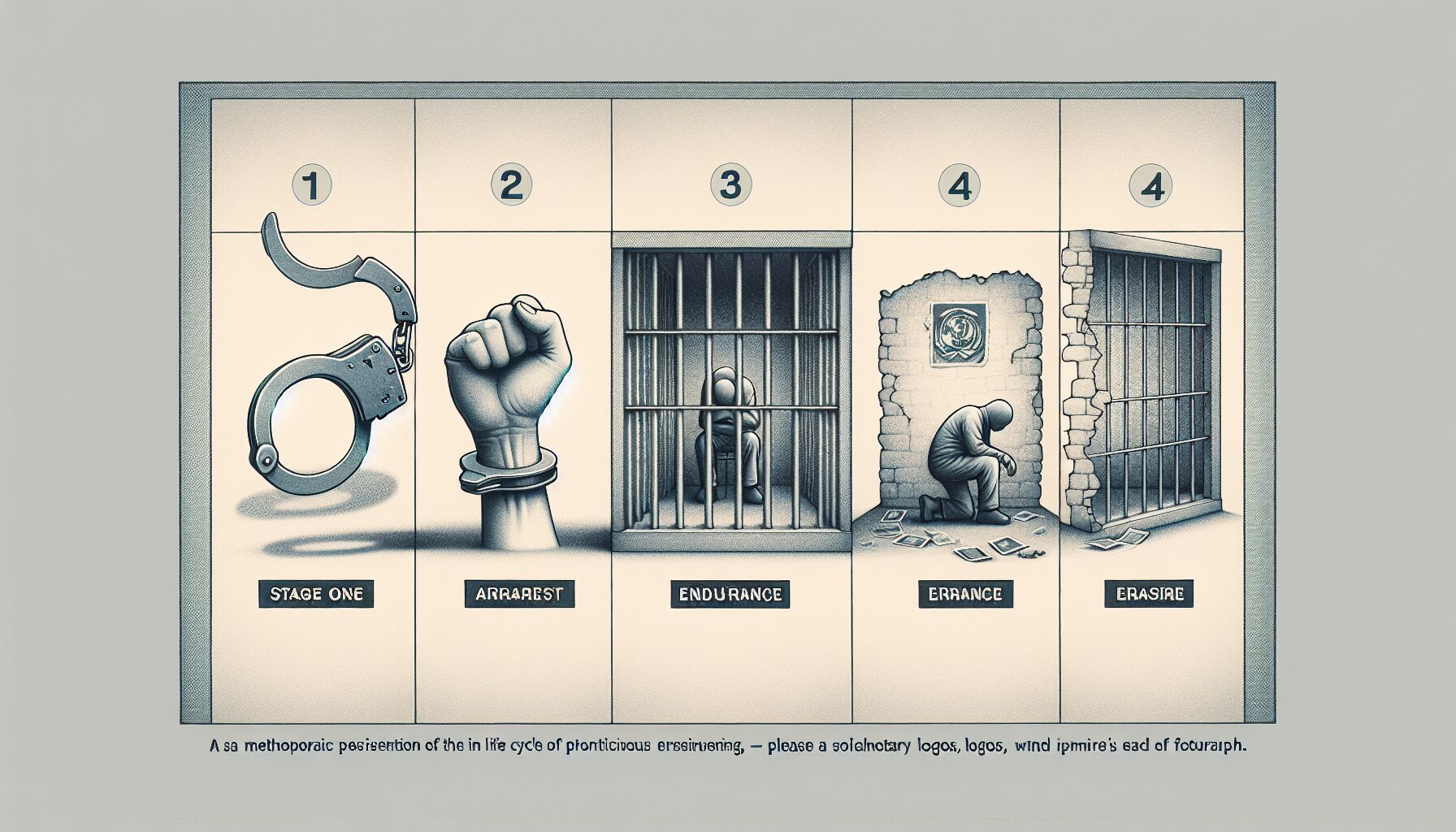
  • From Arrest to Erasure – The lifecycle of political religious prisoners

    From Arrest to Erasure – The lifecycle of political religious prisoners

    From Arrest to Erasure: The Lifecycle of Political Religious Prisoners

    From Arrest to Erasure: The Lifecycle of Political Religious Prisoners

    Introduction

    In volatile political climates, those who are deemed a threat to state power often face severe repercussions. Among these, religious practitioners frequently find themselves at the intersection of faith and politics, leading to a chilling pathway from arrest to potential erasure. This article examines the lifecycle of political religious prisoners, a group whose plight is both a historical constant and a present-day reality.

    The Initial Arrest

    The first step in this grim lifecycle is the arrest. Political religious prisoners typically find themselves apprehended under cloaked pretexts. Charges are often vague, such as “undermining the state” or “inciting violence,” a tactic frequently employed by regimes to legitimize detentions without substantial evidence. As famed human rights lawyer Amal Clooney noted in an interview with Amnesty International, “Political prisoners are often arrested under spurious charges intended to silence dissent and suppress freedom of belief.”

    Detention and Trial

    Following arrest, political religious prisoners endure detention periods that may extend indefinitely. The conditions during this phase are notoriously dire. Overcrowding, lack of medical care, and isolation are common. The trial, if it occurs, is typically a perfunctory affair, characterized by a glaring absence of due process. Many trials are closed to the public, and verdicts are predetermined by the governing regime.

    “The trials are a mere formality, where guilt is assured and justice remains an illusion,” reported Human Rights Watch.

    Imprisonment

    Conviction leads to imprisonment, where many face the harsh reality of long sentences under brutal conditions. In many parts of the world, the objective is not merely incarceration but the deliberate breaking of an individual’s spirit and beliefs. Beatings, torture, and psychological warfare are instruments wielded to this end.

    An International Committee of the Red Cross report emphasizes the systemic denial of basic rights: “Prisoners are routinely subjected to harsh environments engineered to strip away humanity and dignity.”

    International Advocacy and Awareness

    Not all stories of political religious prisoners end behind bars. International advocacy plays a crucial role in drawing attention to these injustices. Organizations such as Freedom House and Human Rights Watch work tirelessly to publicize these cases, putting pressure on oppressive regimes to release prisoners or improve conditions.

    Media coverage and digital campaigns further amplify these efforts. Social media platforms have become crucial tools for raising global awareness and mobilizing public opinion. By making the plight of political religious prisoners visible, advocacy organizations hope to shorten detention times and reduce suffering.

    Potential Release and the Road to Recovery

    When advocacy leads to release, either through international pressure or internal policy shifts, the effects of imprisonment linger long after freedom is regained. Released individuals face the daunting task of reintegration into societies that have often moved on without them. They may encounter significant psychological struggles and social stigma.

    The World Health Organization highlights post-incarceration challenges: “Individuals released from political imprisonment require comprehensive rehabilitation support to recover from the trauma of inhumane treatment and prolonged isolation.”

    The Threat of Erasure

    For some, especially high-profile cases, release means eventual erasure. These individuals may face constant surveillance and restrictions, effectively silencing them and eliminating their influence. In such situations, ex-prisoners, though free, are pressured into a quasi-erased existence where their actions are perpetually scrutinized, rendering their autonomy minimal at best.

    Conclusion

    The lifecycle of political religious prisoners is not just a human rights issue; it is a deeper reflection of global struggles between power and freedom, control and belief. As governments seek to suppress dissent through religious persecution, international voices must continue to advocate for transparency, justice, and respect for human dignity. It is only by exposing these dark corridors of power that the cycle from arrest to potential erasure can be broken.

  • Prisoners of Conscience – Belief as a reason for captivity

    Prisoners of Conscience – Belief as a reason for captivity

    Prisoners of Conscience: Belief as a Reason for Captivity

    Throughout history, individuals have been imprisoned not for their actions, but for their beliefs. These individuals are often referred to as “prisoners of conscience.” Defined by Amnesty International, a prisoner of conscience is a person who has been jailed for their race, sexual orientation, religion, or political viewpoints, provided they have neither used nor advocated violence.

    “Prisoners of conscience are often the forgotten heroes of their societies. Standing up for their beliefs in the face of oppression, they embody the courage that is crucial for the advancement of human rights.” – Amnesty International

    The Struggle for Religious Freedom

    Religious beliefs have been a poignant reason for captivity across various societies. From ancient times to the modern era, countless individuals have faced persecution for their faith. Some of the most notable prisoners of conscience include:

    • Nelson Mandela: Famed for his struggle against apartheid, Mandela was also imprisoned due to his staunch belief in racial equality. Although not explicitly a religious prisoner, his case highlights the intersection of belief and political ideology.
    • Liu Xiaobo: A Chinese literary critic, Liu Xiaobo was imprisoned in 2009 for his human rights activism and democratic aspirations for China. His incarceration underscored the Chinese government’s intolerance towards dissenting political beliefs.
    • Aung San Suu Kyi: While her later political career became controversial, Aung San Suu Kyi was initially held under house arrest by Myanmar’s military government for promoting democracy and non-violence.

    Current Issues and Global Efforts

    Despite advancements in human rights awareness, the phenomenon of imprisoning individuals for their beliefs persists. According to Amnesty International, there are still many today who face incarceration because their beliefs do not align with those of their governments. The international community continues to face challenges in addressing such cases due to complex geopolitical interests.

    Organizations worldwide are campaigning for the release of prisoners of conscience. Public awareness via social media and international advocacy are powerful tools in the fight against such injustices. As Archbishop Desmond Tutu once said:

    “If you are neutral in situations of injustice, you have chosen the side of the oppressor.”

    In conclusion, the plight of prisoners of conscience underscores the ongoing struggle between individual beliefs and authoritarian regimes. As global citizens, it remains our collective responsibility to speak for those who cannot and to champion the fundamental human rights that must be afforded to every individual.