Tag: prison

  • The Prisoner’s Prayer – Access to spiritual materials in the penal system.

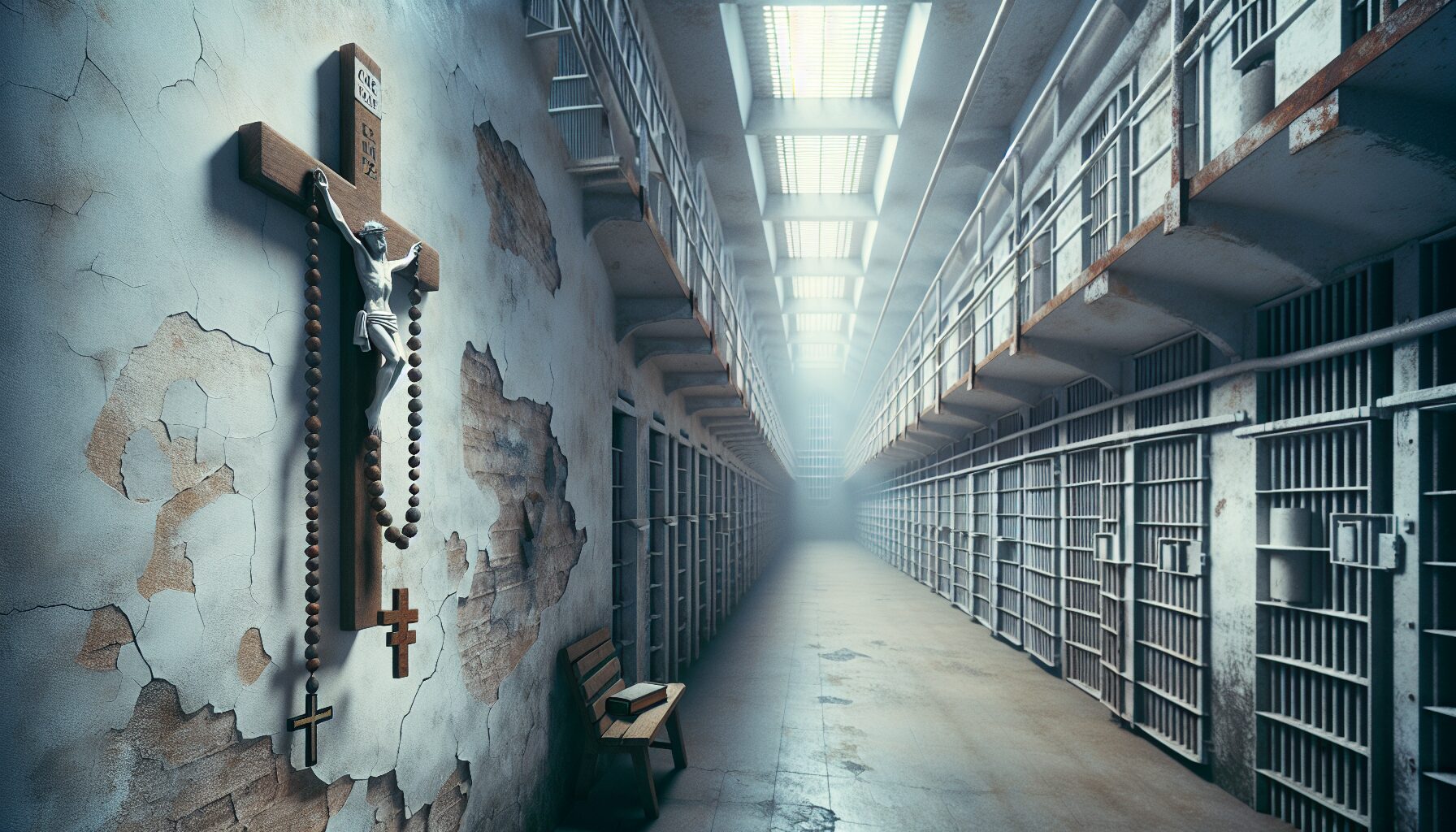
    The Prisoner’s Prayer – Access to spiritual materials in the penal system.


    The Prisoner’s Prayer – Access to spiritual materials in the penal system

    The Prison’s Echo – Whispers of the Unseen

    “In these hallowed chambers of confinement, a cry for the divine echoes, seeking solace in the shadows.”

    -Anonymous prison writings
    • Within the labyrinthine maze of penitentiaries, a testament to mankind’s struggle against itself, the quest for spiritual sustenance persists, whispered among the prisoners.
    • A veil of iron separates the incarcerated from their houses of worship, yet the human spirit remains unbroken, finding solace in the recitation of holy verses and the echoes of divine principles.
    • The prison system, a monument to the failures of societal justice, has become an unwilling host to the deepest longings of human hearts. Within its cold walls, the spiritual nourishment that sustains our souls is sought through clandestine means.

    “The prison walls are but shadows, and the divine light shines upon all.”

    -A prisoner’s hope

    As we delve into the intricacies of this unresolved discourse, let us consider the implications of denying spiritual sustenance to those who have been confined. What is the true cost of such a policy on both the individual and society at large?

  • Cells of Silence – Faith behind prison walls

    Cells of Silence – Faith behind prison walls

    Cells of Silence: Faith Behind Prison Walls

    In the heart of correctional facilities across the globe, where the clamor of bars clanging shut echoes through silent corridors, an unexpected force is quietly at work: faith. For many inmates, finding solace and purpose in spirituality proves transformative amidst confinement’s harsh realities.

    Faith as a Lifeline in Isolation

    Prison life, characterized by its restrictions and regimented routines, often leaves individuals yearning for a sense of hope and belonging. Religious practices within these institutions provide that spiritual anchor. As John Swinton, a professor of Practical Theology, aptly puts it, “Faith presents a pathway to rehabilitation and personal development. It offers prisoners a new narrative for their lives.”

    Inmates have access to chaplains, religious services, and spiritual texts, enabling them to explore or deepen their faith. A BBC feature on prison chaplaincy highlights how these spiritual guides act as mediators, carrying messages of hope and redemption where they are needed most.

    Multifaith Practices and Inclusion

    Prisons today recognize a variety of religious affiliations, from Christianity to Islam, Judaism, Buddhism, and Hinduism, ensuring that spiritual support is not a privilege of a few, but a right for many. This inclusive approach is exemplified in Louisiana’s Angola Prison, famously transformed by faith, where multiple faith-based programs coexist.

    • Christian Ministries: Weekly Bible studies and Sunday services offer an array of teachings and fellowship opportunities.
    • Islamic Services: Friday prayers and study sessions allow Muslim inmates to practice their faith in community.
    • Jewish Celebrations: The prison environment accommodates high holiday services and provides kosher meals.
    • Buddhist and Hindu Practices: Meditation sessions and spiritual discussions promote peace and introspection among the incarcerated.

    These multifaith engagements foster environments where tolerance and understanding can flourish, breaking the chain of intolerance and misunderstanding.

    Redemption and Rehabilitation Through Faith

    Redemption is a powerful motivator within the walls of a prison. Faith often acts as a catalyst for personal change, redirecting anger and resentment into positive outlets. The impact of faith-based rehabilitation programs is increasingly supported by studies indicating lower recidivism rates among participating inmates.

    “There was a time in prison when all I had was time to think, repent, and reflect. My faith taught me forgiveness,”

    a reformed inmate shared in an interview with The Guardian on the transformative power of spiritual education.

    Challenges and Criticisms

    Despite the benefits, faith-based interventions in prisons are not without critique. Skeptics argue that the intertwining of religion and rehabilitation risks coercive conversion rather than genuine spiritual progression. Critics emphasize the need for these programs to remain voluntary, ensuring that participation is free of external pressures.

    Furthermore, the debate around separation of church and state continues to fuel opinions on whether public funding should support religious programs in government facilities. However, proponents argue that faith’s restorative impact on inmates justifies its inclusion in correctional rehabilitation efforts.

    The Quiet Impact

    Perhaps the most profound impact of faith in prisons is the ripple effect it can have on prison culture itself. Individuals embracing spiritual principles often become peacemakers, mediators, and role models. By influencing their peers positively, they contribute to reducing violence and creating a sense of community and support inside the walls of confinement.

    In the Pennsylvania State Correctional Institution, the Redemption Project exemplifies these outcomes. These peer-led support groups enable men to reshape their identities responsibly and constructively, reinforcing how personal transformation can drive larger cultural shifts.

    Conclusion

    In a world where silence prevails, and hope is often the dimmest light, faith provides a bridge to redemption and rehabilitation. The role of spirituality in prisons is more than just a personal journey; it is a testament to the human spirit’s resilience. As these stories of transformation continue to emerge, they remind us that every soul has the potential to learn, grow, and change, even within a cell of silence.

  • From Temple to Prison Cell – The journey of persecuted believers

    From Temple to Prison Cell: The Journey of Persecuted Believers

    The practice of faith has often been a sanctified, personal journey for many throughout history. Yet for millions around the world, this journey is fraught with peril, fundamentally transformed into a constant struggle for survival. From the solemnity of temples to the harsh realities of prison cells, religious believers face persecution for their adherence to their faith.

    Historical Context

    Religious persecution is not a novel concept. The Acts of the Apostles in the Christian New Testament recounts the trials of early Christians. As stated in Acts 8:1, “A great persecution broke out against the church in Jerusalem, and all except the apostles were scattered throughout Judea and Samaria.” This scattering of believers is an early instance of a recurring theme across eras and geographies.

    Modern-Day Persecution

    Today, persecution continues unabated. According to a report by Open Doors USA, over 340 million Christians live in places where they experience high levels of persecution. The organization ranks countries like North Korea, Afghanistan, and Somalia as some of the most perilous places for Christians.

    • North Korea: Known for its extreme stance against religious activities, being found with a Bible can result in execution or life imprisonment.
    • Afghanistan: Converts to Christianity face severe repercussions, often forced into hiding.
    • Somalia: Christians are at constant risk of targeted execution by extremist groups.

    Voices of Hope

    Despite these challenges, the resilience of believers is profound. Organizations like the International Society for Human Rights observe that numerous individuals continue to participate in their faith under threat of persecution. As Jan Figel, former EU Special Envoy for the promotion of freedom of religion or belief, noted, “Faith is not to be imposed nor to be eliminated. It proposes.

    “The fundamental aim of all forms of persecution is the destruction of freedom, an essential human right.”

    Concluding Thoughts

    From the austerity of ancient temples to the bleak confines of modern prison cells, the journey of persecuted believers highlights their tenacity and enduring hope. The world must heed their stories, not only as tales of suffering but as testament to the indomitable spirit of faith amid adversity.

    For those who traverse this perilous path, their faith remains both a guiding light and an unwavering companion, illuminating even the darkest of prison cells.