Tag: physical

  • The Body as Evidence – Torture and coercion of spiritual detainees

    The Body as Evidence: Torture and Coercion of Spiritual Detainees

    The human body, in its vulnerable and expressive form, often becomes a canvas onto which the darkest ink of conflict and coercion is inscribed. When examining the history and persistence of torture and coercion, particularly of spiritual detainees, the body becomes the ultimate evidence—an undeniable ledger of attempted domination and control. Throughout history, many regimes have sought to subdue and manipulate individuals by targeting their physical presence, hoping to break the spirit by breaching the corporal boundaries.

    The Historical Context of Torture

    Torture has tragically been a part of human civilizations for millennia, used as a tool for achieving compliance, extracting information, and signaling power. The use of physical coercion can be traced back to ancient regimes and has evolved into a systematic procedure employed by various states:

    • Medieval Inquisition: One of history’s most notorious examples, the Inquisition, sought to root out heresy through judicial and ecclesiastical procedures that frequently involved torture. “There is no sin or crime which justified torture, except heresy,” noted the Dominican friar Bernard Gui, known for his role during the inquisitorial processes.
    • Colonial Exploitation: Colonized societies often faced brutal coercion, with the oppressors viewing indigenous beliefs and spiritual practices as inferior or threatening.
    • Modern Regimes: In the 20th century, numerous political regimes, such as those under Stalin or Pinochet, systematically used torture to silence dissent and control populations.

    Spiritual Detainees: Targets of a Different Kind

    Not all coercion aims to silence political dissent. Spiritual detainees often face persecution for their beliefs, seen as competing allegiances to the state or social order. This spiritual dimension adds a layer of complexity to the question of torture:

    • Religious Minorities: Many are subjected to physical coercion not only to suppress religious practice but also to force conversion or renunciation.
    • Conscientious Objectors: Individuals who refrain from participating in certain state-imposed actions due to religious beliefs are often penalized heavily, their bodies bearing testament to state retribution.
    • New Religious Movements: Often labeled as cults, these groups face disproportionate state intervention, with individuals coerced to abandon their spiritual paths.

    “Torture is an instrument to terrorize not only the body but the soul of a person,” said Amnesty International in their reports, highlighting the dual assault carried out on detainees.

    Methods of Coercion: The Physical and the Psychological

    The methods employed in the coercion of spiritual detainees are varied, often blending physical torture with psychological tactics designed to degrade and destabilize internal belief systems:

    • Physical Assault: Beatings, electric shocks, and other methods are used to instill fear and obedience.
    • Deprivation and Isolation: Tactics such as sleep deprivation and solitary confinement aim to break down mental resilience.
    • Threats and Humiliation: Destroying sacred objects or blaspheming symbols of faith increases psychological distress.
    • Forced Denunciation: Making detainees publicly renounce their faith serves as a powerful tool of public control.

    Legal and Ethical Implications

    The use of torture and coercion in violating spiritual freedom raises fundamental questions about legal and ethical standards:

    • Human Rights Laws: The United Nations Convention Against Torture explicitly prohibits torture, yet compliance and enforcement remain inconsistent across nations.
    • Ethical Dilemmas: Balancing state security and religious freedoms requires constant ethical vigilance; “A state that uses torture as policy cannot be trusted with the sham of national security as justification,” according to the Human Rights Watch.

    Survivors and Testimonies: The Body Tells All

    Survivors of torture often recount their experiences in narratives that not only convey physical pain but also the indelible emotional and spiritual scars left upon them:

    • Memoirs and Accounts: Personal testimonies, such as those by former detainees like Ngawang Sangdrol—imprisoned for leading peaceful demonstrations in Tibet—serve as powerful testimonies against torture.
    • Artistic Expression: Many survivors turn to art, using their bodies as artistic canvases to share their stories and to educate others about the impact of torture.

    “What the body remembers, the mind may forget,” a survivor poignantly remarked in a narrative published by The New York Times, underlining the lasting imprints of trauma.

    Conclusion: Ending the Cycle of Torture

    Efforts to end the use of torture must address both the legal frameworks that enable it and the societal attitudes that tolerate it. By spotlighting the narratives of the victims and the undeniable evidence of their bodies, the global community can work toward ensuring that faith and freedom coexist without coercion.

    The hope remains that through continued advocacy, education, and reform, the physical and spiritual autonomy of all individuals will be respected and preserved, allowing the human body to serve as evidence of resilience and hope rather than suffering and subjugation. As Article 5 of the Universal Declaration of Human Rights asserts, “No one shall be subjected to torture or to cruel, inhuman or degrading treatment or punishment.”

  • Invisible Chains – Psychological control in religious persecution

    Invisible Chains: Psychological Control in Religious Persecution

    The phenomenon of religious persecution has long employed not only physical but also psychological mechanisms to enforce conformity and stifle dissent. While physical coercion is often more visible, the subtle, insidious nature of psychological control operates through invisible chains, effectively snaring the minds of individuals and communities.

    The Nature of Psychological Control

    Psychological control in the context of religious persecution can manifest in various forms, including the manipulation of beliefs, the instillation of fear, and the indoctrination of self-policing behaviors. As George Orwell poignantly noted in his novel 1984, “The best books… are those that tell you what you know already.” This notion reflects how perpetrators exploit existing cultural and religious norms to solidify control.

    “The most potent weapon in the hands of the oppressor is the mind of the oppressed.”

    Steve Biko

    Mechanisms of Control

    • Fear and Intimidation: Fear is a powerful tool used to suppress dissent and maintain control. Threats of divine retribution or eternal damnation can be employed to terrify adherents into obedience.
    • Isolation: Persecution often includes isolating individuals from the broader community, which can exacerbate feelings of helplessness and ensure that persecuted individuals remain vulnerable and controllable.
    • Manipulation of Doctrine: Persecutors may manipulate religious texts, offering skewed interpretations that justify their actions and delegitimize the beliefs of others, thus creating an ideological rift.
    • Indoctrination and Propaganda: These methods often perpetuate certain narratives that demonize the ‘other’ and glorify the persecutors, maintaining a cycle of control through false realities.

    Combating Psychological Control

    To combat the psychological dimension of religious persecution, awareness and resilience-building are crucial. Education becomes a powerful emancipatory tool, lighting the way toward critical thinking and skepticism. Organizations like Amnesty International work tirelessly to raise awareness and support those suffering persecution worldwide, highlighting the humanitarian need to address psychological as well as physical safety.

    In conclusion, understanding the psychological control mechanisms at play in religious persecution reveals the extent of their reach and impact. By shining a light on these invisible chains, society takes a step closer to unshackling those who suffer under such regimes, fostering a world where freedom of belief and expression is truly respected and protected.

  • Invisible Persecution – Harm Without Bruises

    Invisible Persecution – Harm Without Bruises

    When we talk about persecution, the images that often come to mind are of overt physical violence, explicit threats, or evident discrimination. However, there exists a subtler form of persecution that, while lacking physical marks, can be just as damaging. This phenomenon, often termed “invisible persecution,” inflicts psychological wounds that may remain hidden but are deeply scarring.

    “Invisible persecution is a silent terror that bleeds into the fabric of victims’ daily lives, wearing down their sense of safety and worth.” – Dr. Anne Marshall, Clinical Psychologist

    Navigating the Silent Scourge

    Invisible persecution encompasses a range of behaviors and systemic tactics designed to isolate, undermine, and control individuals or groups. Here we explore its features and implications:

    • Microaggressions: Subtle, often unintentional, comments or actions that marginalize. While each instance may seem negligible, their cumulative effect is powerful. These can manifest in workplaces, schools, or social settings where offhand remarks or jokes target one’s identity, beliefs, or background.
    • Gaslighting: A tactic where the perpetrator manipulates the victim into questioning their reality. Chronic gaslighting erodes trust in one’s perception and sanity. Studies cited by Psychology Today illustrate the profound psychological impact of this mind-game.
    • Social Exclusion: The deliberate isolation or ostracization of an individual from a group. For many, especially those in tightly-knit communities, this can be devastating, leading to deep-seated loneliness and depression.

    The Invisible Bruises

    The consequences of invisible persecution are primarily psychological but no less severe than physical injuries. They include:

    1. Erosion of Self-Esteem: Persistent negative reinforcement or exclusion can lead to diminished self-worth.
    2. Anxiety and Depression: Victims may experience heightened anxiety, leading to increased vulnerability to mental illness.
    3. Distrust and Paranoia: Independence can be compromised as individuals struggle to trust their environment or personal relationships.

    “The scars left by invisible persecution are internal, yet they imprint themselves on every aspect of victims’ lives.” – Dr. Laura King, Sociologist

    The Role of Systemic Structures

    Invisible persecution often weaves itself into the broader societal framework, making it harder to pinpoint and combat:

    • Institutional Bias: Whether in employment, law enforcement, or healthcare, discrimination can be subtle yet systemic. Policies and practices may disproportionately disadvantage certain groups, from hiring discrimination to unequal medical treatment.
    • Cultural Norms: Standards and expectations often reinforce subtle persecution. Gender roles, racial stereotypes, and other societal norms can perpetuate discrimination under the guise of tradition.

    Combating Invisible Persecution

    Tackling invisible persecution requires a multi-layered approach:

    Awareness and Education

    • Educational programs can raise awareness about microaggressions, encouraging inclusivity and respect.
    • Training in identifying and addressing gaslighting and other manipulative behaviors can empower potential victims and bystanders to intervene constructively.

    Policy and Reform

    • Re-evaluating institutional policies and practices for latent biases helps create fairer, more inclusive environments.
    • Encouraging diverse representation at decision-making levels ensures broader perspectives and mitigates institutional bias.

    Support Systems

    • Mental health services should be accessible and equipped to address the unique needs of those experiencing invisible persecution.
    • Community-building initiatives can foster inclusivity and provide support networks for victims.

    Conclusion

    Invisible persecution may not always leave visible marks, but its impact is profound and far-reaching. Addressing it requires vigilance, empathy, and concerted effort from individuals, communities, and institutions alike. By acknowledging and confronting this silent epidemic, society can move towards greater equality and understanding.

    For more in-depth exploration of these issues, consider visiting resources like NAMI or Mental Health America where comprehensive support for mental health related to discrimination is available.

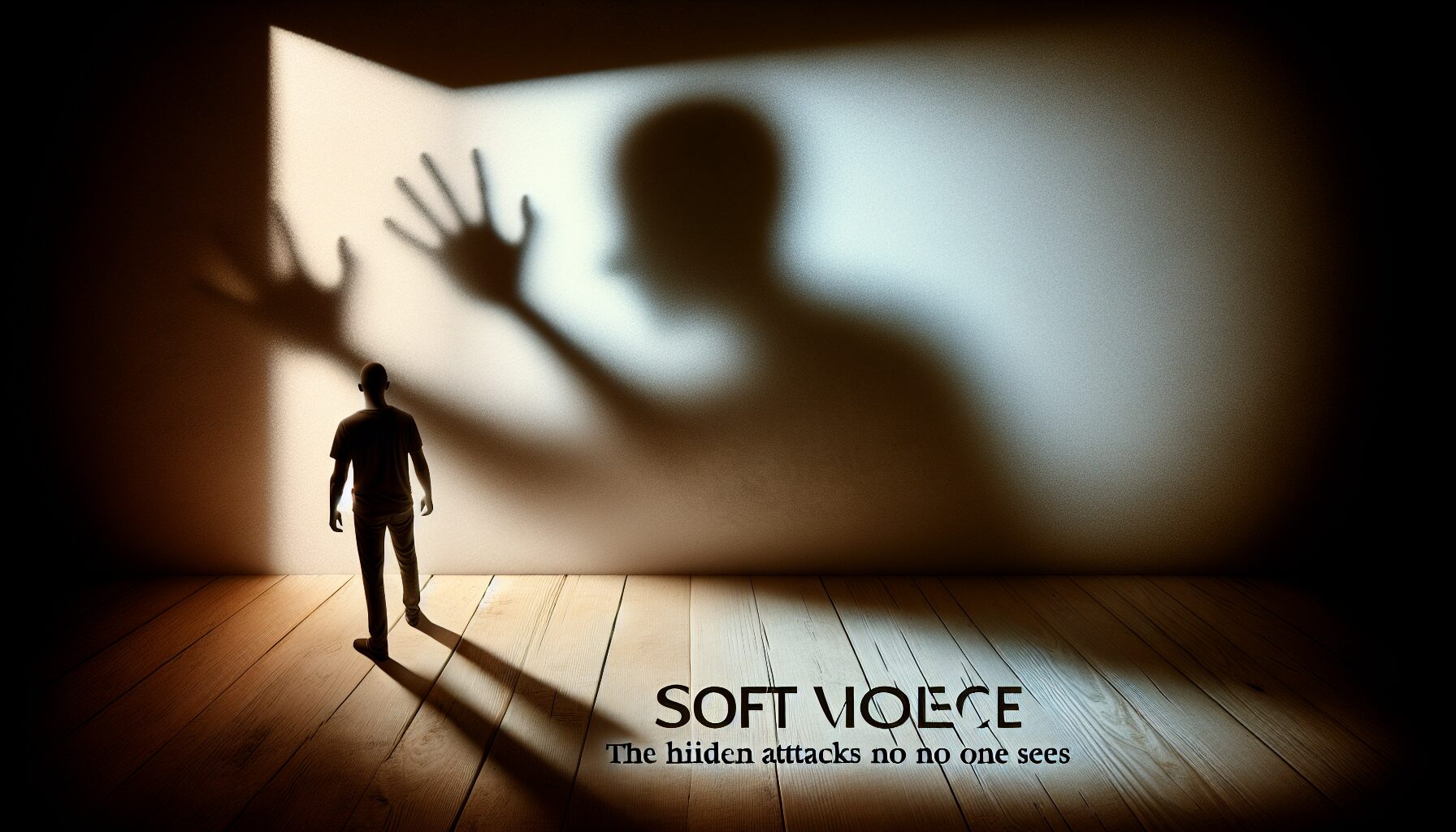
  • Soft Violence – The Hidden Attacks No One Sees

    Soft Violence – The Hidden Attacks No One Sees

    Soft Violence: The Hidden Attacks No One Sees

    In the shadows of everyday interactions, a subtle and often overlooked form of aggression lurks—soft violence. Unlike the physical blows that are more easily spotted and addressed, soft violence consists of nuanced, psychological attacks that manipulate and degrade their victims’ emotional and mental stability.

    Understanding Soft Violence

    Soft violence can best be described as a suite of behaviors that aim to silently undermine one’s self-esteem, confidence, and sense of reality. These behaviors include gaslighting, passive-aggression, silent treatment, and persistent criticism. According to renowned psychologist Paula E. Caplan, “Gaslighting produces anxiety, depression, and a variety of self-doubt in the victim.” (Psychology Today October 2019).

    Victims of soft violence often find themselves in a continuous loop of self-doubt and psychological disarray. The subtlety of these attacks makes them difficult to address and leaves many victims questioning the validity of their experiences.

    Common Forms of Soft Violence

    • Gaslighting: This involves making someone doubt their memories or perceptions through outright denial, manipulation, and lying.
    • Passive Aggression: This indirect expression of hostility can manifest as procrastination, feigned incompetence, or deliberate failure to complete tasks.
    • Silent Treatment: Using silence as a weapon to control or punish the victim.
    • Persistent Criticism: Constant, subtle put-downs that erode a person’s self-worth over time.

    The Impact of Soft Violence

    While it may not result in physical scars, soft violence leaves profound psychological impacts. Victims often experience chronic stress, anxiety, and depression. In the words of Dr. Deborah Khoshaba, “The scars that are suffered are deep and often ignored because they lack the physical manifestation.”

    Addressing Soft Violence

    To combat soft violence, awareness must be raised about its existence and consequences. Open dialogues about mental health and emotional abuse are crucial steps to empower victims and hold perpetrators accountable. Staging interventions or seeking professional guidance can provide the necessary support for those entangled in such toxic dynamics.

    “Emotional abuse is just as damaging as physical abuse, though it is often harder to recognize and comes with the excuse that it’s not really that bad.” — Cat Lantigua, Everyday Feminism (2015)

    By spotlighting these hidden attacks, society can foster a more supportive environment for victims, helping them reclaim their power and sense of self-worth.