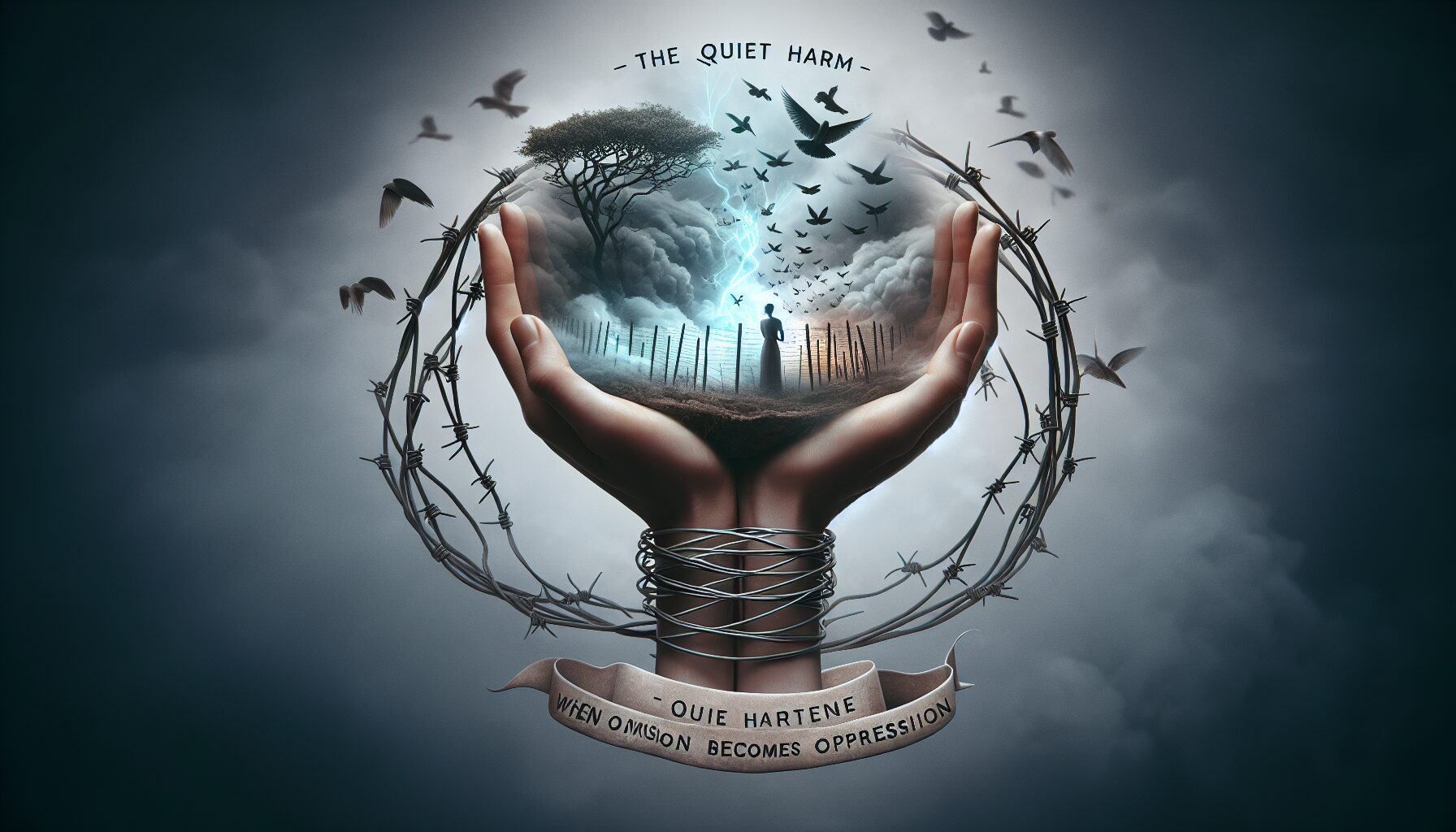
The Quiet Harm: When Omission Becomes Oppression
In the discourse on oppression, we often focus on explicit acts of discrimination, violence, and exclusion. However, there is an insidious form of oppression that often goes unnoticed—omission. The act of leaving out, ignoring, or underrepresenting individuals or groups can be just as damaging as any overt act of discrimination. This article explores how omissions, whether intentional or not, play a pivotal role in maintaining systems of oppression and what steps can be taken to counteract this quiet harm.
The Subtle Nature of Omission as Oppression
Omission manifests in various forms such as the erasure of minority voices in historical narratives, the lack of representation in media, or the exclusion of diverse perspectives in policymaking. These omissions perpetuate a dominant narrative while rendering others invisible, thus reinforcing structural inequalities.
The Erasure of History
Consider the historical portrayal of significant events. More often than not, history is written by the victors and those in power, leading to the marginalization of minority experiences and contributions. For example, the history of colonialism is frequently told from a Eurocentric perspective, ignoring the devastations faced by indigenous populations.
“Until the lions have their own historians, the history of the hunt will always glorify the hunter.” — Chinua Achebe
This selective historical narrative denies agency and voice to oppressed groups, thereby contributing to their continued marginalization and reinforcing a singular, often skewed narrative.
Media Representation Matters
Media plays a critical role in shaping cultural perceptions and societal norms. The underrepresentation or misrepresentation of marginalized groups in movies, television, and news perpetuates stereotypes and denies these groups a diverse and dynamic humanity.
- The Bechdel Test, introduced by Allison Bechdel, evaluates the representation of women in media based on whether two named women characters talk to each other about something other than a man. While simplistic, even this basic test is often failed, illustrating significant gender omissions.
- Studies show that LGBTQ+ individuals, people of color, and those with disabilities are vastly underrepresented in Hollywood and often pigeonholed into stereotype-laden roles. This omission not only skews public perception but also limits the aspirations of those who do not see themselves reflected in media.
The Impact of Omission in Policy and Education
Policies That Fail to Include
Policies that do not consider the needs and perspectives of all communities can inadvertently oppress through omission. For example, urban planning policies that overlook accessibility for individuals with disabilities limit their mobility and ability to participate fully in society.
Inclusive policymaking requires intentional efforts to understand the diverse needs of all community members. The absence of such efforts leads to a de facto oppression where only certain voices and needs are addressed, exacerbating existing disparities.
Educational Disparities
Education systems reflect and perpetuate societal values, and thus, they are pivotal in either challenging or reinforcing systemic oppression. Curriculum choices that omit significant cultural contributions from non-dominant groups implicitly suggest that these perspectives are unworthy of study.
“The function of education is to teach one to think intensively and to think critically. Intelligence plus character — that is the true goal of education.” — Martin Luther King Jr.
Educational omissions hinder critical thinking and an understanding of the diversity that shapes our world, resulting in generations ill-prepared to engage constructively with difference.
Addressing the Quiet Harm of Omission
Steps Toward Inclusivity
Recognizing omission as a form of oppression is the first step toward meaningful change. Efforts must be made at individual, institutional, and societal levels to address and rectify these omissions.
- Amplification of Voices: Platforms should be created and existing ones utilized to amplify marginalized voices. This includes efforts within media, literature, and public discourse.
- Inclusive Historical Narratives: Schools and educational institutions must review their curricula to include diverse perspectives, ensuring a more comprehensive understanding of history.
- Policy Reform: Policymakers should adopt a more inclusive approach, considering the varied impacts of legislation on all segments of the population, especially those at the intersections of multiple marginalities.
The Role of Allies and Advocates
Allies and advocates have a crucial role in combating the oppression of omission. By acknowledging their own privileges, actively listening to marginalized voices, and advocating for systemic change, allies can help shift the narrative toward one that is truly inclusive.
The work of allies also involves calling out omissions when observed, advocating for representation in all spheres, and supporting the platforms and movements led by those who have traditionally been sidelined.
Conclusion: Toward a More Just and Inclusive Society
Omission is a quiet, often silent form of harm that can lead to continued oppression if left unaddressed. By bringing attention to what’s left unsaid, society can begin to dismantle the structures that perpetuate inequality and foster a future where diversity is recognized and celebrated. The journey toward inclusivity is ongoing, requiring vigilance, commitment, and courage from all individuals and institutions alike.
“Injustice anywhere is a threat to justice everywhere.” — Martin Luther King Jr.
This call to action remains as relevant today as ever. Achieving a truly just society requires a conscious effort to recognize and rectify omissions, ensuring that all individuals and groups are seen, heard, and valued.