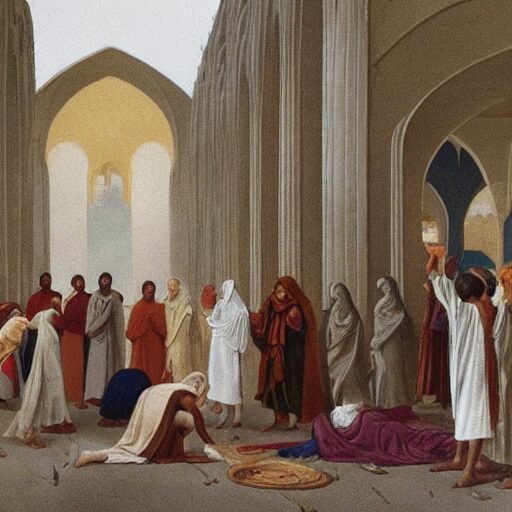
The Myth of Perfection — Why Divinizing Teachers Harms Truth
In classrooms around the world, teachers hold a position of considerable authority. They guide, mentor, and educate young minds, shaping the priorities and perspectives of future generations. However, the tendency to elevate educators to an almost divine status—the myth of perfection—can impede the pursuit of truth and the cultivation of a genuinely inquisitive spirit among students.
The Historical Foundation of Idealized Educators
The notion of the teacher as a paragon of virtue and knowledge has deep roots in history. Figures like Confucius and Socrates are often venerated as the exemplars of pedagogical excellence. Confucius’s teachings emphasized moral integrity as the foundation of education, while Socratic dialogue celebrated the endless pursuit of truth through questioning.
“Education breeds confidence. Confidence breeds hope. Hope breeds peace.” — Confucius
Though reverence for such figures is understandable, the uncritical idolization of contemporary teachers can result in significant drawbacks. It establishes unrealistic expectations and limits the capacity for educators themselves to learn and evolve within their roles.
The Psychological Implications of Idealization
When teachers are viewed as infallible, it can create a high-pressure environment for both educators and students. Teachers may feel compelled to maintain a facade of perfection, fearing that any admission of error will undermine their authority. This pressure can lead to stress and burnout, which are reaching alarming levels globally. A survey conducted by the National Education Association highlights that up to 90% of teachers reported feeling major stress from their roles.
- Student Impact: Students may hesitate to challenge ideas or question authority, fearing reprisal or belittlement, which stifles critical thinking and self-expression.
- Teacher Impact: Educators under the guise of perfection may avoid innovative methodologies, fearing failure or criticism.
Challenging Perfection for the Sake of Truth
One of the primary goals of education is to equip students with the skills to discern and pursue truth. This requires a culture that promotes questioning, dialogue, and the recognition of fallibility. As noted philosopher Karl Popper once expressed:
“Our knowledge can only be finite, while our ignorance must necessarily be infinite.” — Karl Popper
To embrace this philosophy, educational systems must encourage both teachers and students to engage in honest dialogues about uncertainty and mistakes. This approach fosters a more realistic and accessible model of learning, where errors are seen as steps toward greater understanding rather than deviations from a mythical standard of perfection.
Practical Steps Toward Balance
Transitioning from the myth of divine teachers to a model that appreciates human imperfection involves several practical approaches:
- Professional Development: Encourage continuous learning opportunities for teachers so that they view themselves as lifelong learners alongside their students.
- Cultural Shift: Cultivate an educational culture that values questioning and acknowledges errors as part of the learning process.
- Open Communication: Foster an environment where students feel comfortable questioning and debating ideas without fear of reprisal.
- Transparent Assessment: Implement assessment techniques that reflect growth and inform instruction rather than simply measuring against a fixed standard of perfection.
The Role of Critical Thinking
A critical thinking ethos in education may contribute the most to demystifying the unrealistic image of the perfect teacher. Encouraging students to analyze, evaluate, and synthesize information not only aids personal development but also decentralizes the notion of an all-knowing educator. As noted by educational theorist John Dewey, true education cultivates growth in all aspects of a person, which can only occur in a questioning, open-ended environment:
“Education is not preparation for life; education is life itself.” — John Dewey
This perspective underscores the importance of dynamic interchange in educational settings where the exchange of ideas fosters mutual development.
Conclusion
The myth of the perfect, divine teacher impacts both educators and students negatively. It inhibits the dynamic exchange of ideas and the growth of critical thinking. By embracing the flawed reality of our shared human experience, we position education as a vibrant, adaptive journey—one marked not by mythic heroes of knowledge but by communities committed to exploring and understanding the infinite complexities of truth.
In this quest, educators are not just dispensers of knowledge but active participants in a broader conversation, one that thrives on curiosity, humility, and the greatest teacher of all—mistakes. By reshaping our perceptions, we open a myriad of possibilities where learning, in and outside the classroom, becomes an ever-evolving dialogue toward truth.