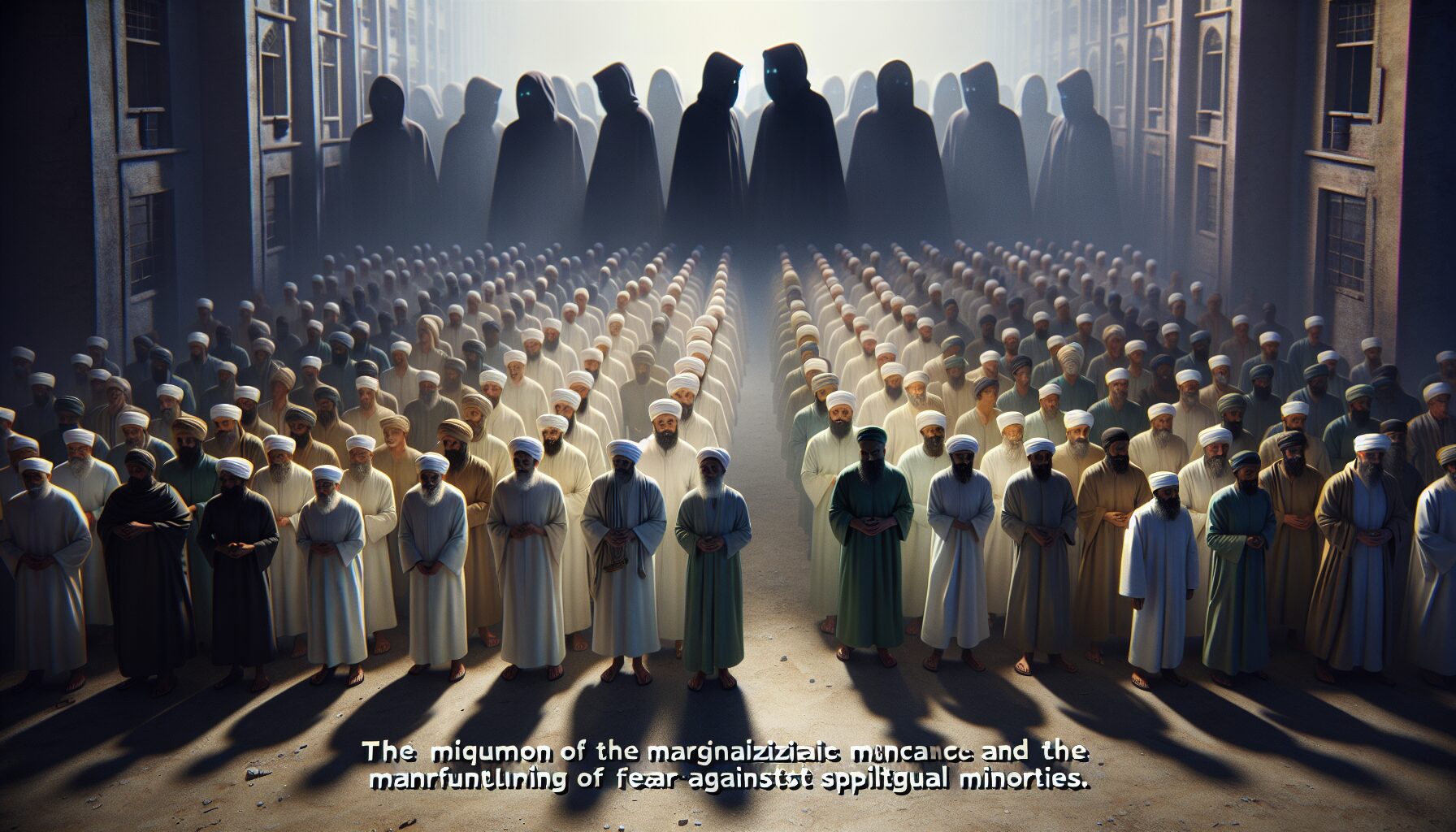
From Margins to Menace: Manufacturing Fear of Spiritual Minorities
Throughout history, spiritual minorities have often found themselves in precarious positions within mainstream society. These groups are frequently marginalized and, at times, portrayed as societal threats. This phenomenon raises important questions about the sources and perpetuation of fear towards spiritual minorities.
The marginalization of spiritual minorities is not a new occurrence. From early Christians in the Roman Empire to modern-day new religious movements, fear and misunderstanding have often fueled mistrust and persecution. But how does this fear arise, and what keeps it alive?
The Roots of Fear
At the heart of this fear is often a lack of understanding and the portrayal of these groups as ‘other.’ In his book, The Culture of Fear, sociologist Barry Glassner discusses how media and cultural narratives can amplify fear by exaggerating threats or focusing on sensational stories.[1]
“When we focus on fear, we produce more fear. And when we portray those who are different as threatening, we invite suspicion and discrimination,” explains Glassner.[2]
The Role of Media
The media plays a significant role in shaping public perception. Coverage often highlights the most extreme or controversial aspects of spiritual minorities, feeding into existing stereotypes. The case of the Waco siege in 1993, involving the Branch Davidians, is a prime example. Intense media scrutiny and sensationalized reporting painted the group in a violent light, reinforcing public fear.[3]
- Selective Coverage: Highlighting negative aspects while ignoring ordinary, peaceful practices.
- Insider vs. Outsider Narratives: Encouraging a sense of ‘us vs. them’ through biased storytelling.
The Impact on Society
Such narratives not only impact the targeted groups but also influence societal norms and policies. History has shown us that manufactured fear can lead to discrimination, social exclusion, and even violence. It underscores the need for a more nuanced understanding and reporting of spiritual minorities.
Moving Forward
As society becomes more interconnected, fostering understanding and dialogue is crucial. Recognizing and challenging the narratives that drive fear can lead to more inclusive communities. Encouraging critical media consumption and supporting diverse voices are steps toward breaking the cycle of fear.
In the words of cultural historian Karen Armstrong, “Compassion is the key.” Understanding and embracing spiritual diversity, rather than vilifying it, can help bridge divides and diminish unfounded fears.[4]