Tag: many

  • The Silent Majority – Why persecution often goes unnoticed

    The Silent Majority – Why persecution often goes unnoticed

    The Silent Majority: Why Persecution Often Goes Unnoticed

    In today’s hyper-connected world, where information travels at the speed of light and social media platforms boast billions of users, it is surprising how some voices remain unheard. The phenomenon of the “silent majority” frequently finds its roots in cultural, political, and social contexts, where overt persecution goes unnoticed by both the global community and local populations alike.

    Understanding the Silent Majority

    The term “silent majority” was popularized by U.S. President Richard Nixon in a 1969 speech, referring to the large swathe of Americans who did not publicly voice their opinions. However, this concept extends beyond the political landscape of 1960s America to encapsulate myriad groups worldwide suffering persecution in silence today.

    The Invisible Chains of Persecution

    • Societal Norms and Stigma: In many parts of the world, societal norms play a crucial role in silencing victims of persecution. People are conditioned to accept certain injustices as regular occurrences. According to a UNICEF report, gender-based violence and discrimination are often glossed over due to cultural acceptance, leaving victims unsupported and unseen.
    • Lack of Media Coverage: There is a concerning disparity in media coverage when it comes to issues affecting marginalized groups. Many persecutions aren’t considered “newsworthy,” especially if they occur in remote locations where journalistic access is limited. As noted by renowned journalist Christiane Amanpour, “Danger is not only in conflict zones; danger is also covering the forgotten stories.”

    The Role of Language in Silencing

    Language can serve as both a tool of oppression and a means of empowerment. In many instances, the language surrounding persecution is deliberately minimized to deprioritize victims’ experiences. George Orwell, in his seminal work “1984,” illustrated how language could be used to manipulate reality. Words like “collateral damage” or “ethnic cleansing” subtly downplay the human suffering involved.

    Barriers to Speaking Out

    • Fear of Reprisal: Fear of retaliation stops many from speaking out about their persecution. Whether from governmental bodies, communities, or even families, the threat of punishment keeps countless individuals silent.
    • Lack of Support Systems: In situations where structured support like legal aid or counseling is inaccessible, victims may feel they have no choice but to suffer in silence. As noted by Amartya Sen, “When people lack the ability to stand up for themselves, they sink into vulnerability and remain overlooked.”

    The Psychological Toll

    “In the end, we will remember not the words of our enemies, but the silence of our friends.” – Martin Luther King Jr.

    The psychological impact of bearing witness to or suffering from persecution while feeling voiceless can be profound. Depression, anxiety, and trauma are common consequences, further perpetuating the cycle of silence. A 2018 study published in the Lancet Psychiatry highlights the correlation between systemic oppression and mental health deterioration.

    Ways to Elevate Voices

    • Amplification: Social media and global connectivity offer unprecedented opportunities for advocacy. Amplifying the voices of the oppressed can bring international attention and pressure to bear on perpetrators.
    • Legal and Policy Reforms: Advocating for changes in laws and policies that overlook persecution can empower the silent majority to find their voice. This can be supported by global human rights organizations and local legislative bodies.
    • Education and Awareness: Education is a powerful tool that can challenge and change societal norms and stigmas. Initiatives to educate people on identifying and confronting persecution can build a more empathetic and proactive community.

    Conclusion

    The silent majority resides not in the shadows due to lack of will but often due to substantial barriers that obscure their plights. By focusing on inclusion, advocacy, and structural change, the world can begin to chip away at the mechanisms silencing so many. As we progress into the future, the challenge remains to ensure no voice is left unheard and no persecution goes unnoticed.
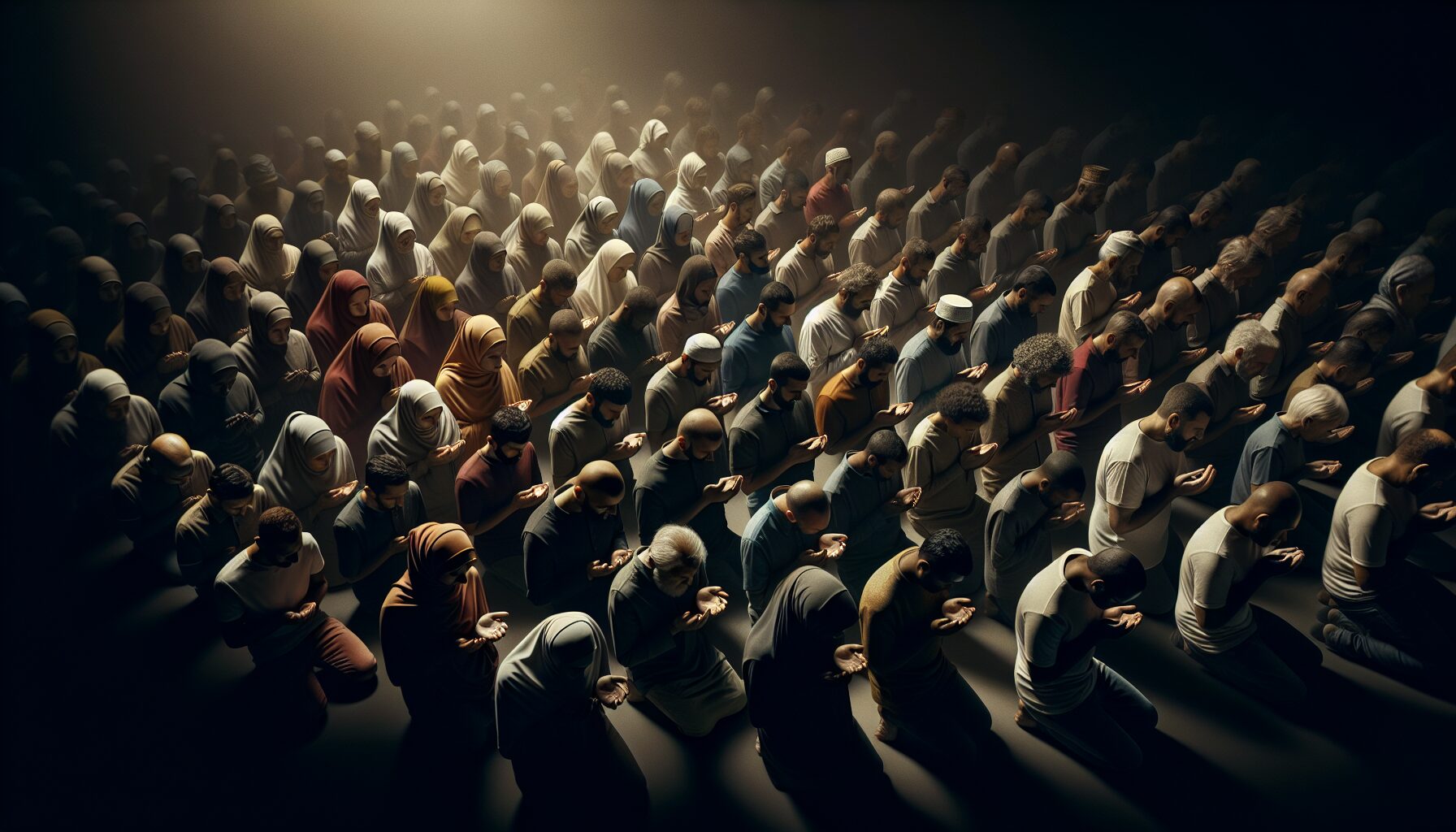

  • Praying in the Shadows – Everyday life under religious persecution

    Praying in the Shadows – Everyday life under religious persecution

    In many parts of the world, practicing one’s faith freely is a cherished right. Yet, for millions, exercising this freedom is fraught with danger. In these regions, religious persecution shadows everyday life, forcing individuals to worship in secrecy and live in constant fear.

    Globally, over 360 million Christians live in areas with high levels of persecution or discrimination, according to the Open Doors World Watch List 2022. This number represents just one faith tradition among many experiencing relentless suppression. From Asia to Africa, stories resound of believers who risk all to maintain their spiritual practices.

    The Reality of Persecution

    • Restricted Worship: In countries like North Korea and Afghanistan, religious assemblies are non-existent or heavily monitored. Gathering to worship can result in imprisonment or worse. “Every time we pray, it feels like defying the odds,” shares an anonymous Christian from Kabul.
    • Social Ostracism: Believers often face alienation from their communities. Individuals such as Rohingya Muslims in Myanmar experience systemic societal exclusion, which compounds their suffering with economic difficulties.
    • Violence and Displacement: In Nigeria, religious conflict has led to widespread violence, particularly against Christian communities in the north. This violence results in forced displacement, disrupting families and livelihoods.

    “Persecution against the Baha’is in Iran has spiked in recent months—driven by the government’s exponential rise in suppressive measures,” detailed a report from the Human Rights Watch.

    The Courage to Persevere

    Despite these hardships, many persecuted individuals find solace in their faith. Under the oppressive regimes, underground worship communities thrive, representing resilience and hope. In China, where the government strictly controls religious activities, the growth of unregistered “house churches” reflects a defiant commitment to faith.

    Efforts to alleviate these injustices often depend on international attention. Organizations advocate for increased awareness and pressure on offending governments to uphold religious freedoms. “Building a global movement is vital to protect these vulnerable populations,” says Amnesty International.

    The struggle for religious freedom is ongoing and demands a unified global response. By supporting these communities through advocacy and awareness, there is hope that one day, praying in the shadows will no longer be necessary.

  • The Ghost of the Group – How Old Doctrines Haunt the Mind

    The Ghost of the Group – How Old Doctrines Haunt the Mind

    The Ghost of the Group: How Old Doctrines Haunt the Mind

    In the vast constellation of human thought and culture, doctrines are akin to spectral entities—unseen yet influential, elusive yet enduring. Like ghosts inhabiting ancient halls, they whisper from the recesses of our minds, guiding, cajoling, sometimes even coercing. These old doctrines, shaped by the beliefs of bygone societies, continue to haunt us, weaving a complex tapestry of inherited perceptions and values.

    The Persistence of Ancient Beliefs

    Human societies across the ages have been organized around central ideas and beliefs, often codified into doctrines. These ideas, rooted in myth, religion, philosophy, or science, provide a framework through which communities understand their world. However, the residue of these doctrines does not dissipate easily. As Carl Jung once observed, “We do not solve our problems; we outgrow them. We add capacities and experiences that eventually make us stronger than the problems.” This sentiment highlights the subconscious influence of doctrines that pervades our collective psyche.

    Why Do Doctrines Haunt Us?

    • Deep-Rooted Tradition: Many doctrines are entwined with tradition. They shape societal norms and cultural customs, becoming so ingrained that they transition from taught texts to unspoken assumptions. Traditions endure over generations, creating an environment where deviation feels not just rebellious but heretical.
    • Fear of the Unknown: Doctrines offer comforting certainties in an uncertain world. They provide answers, however flawed, to existential questions. The fear of the unknown—of stepping into uncharted intellectual waters—compels many to cling to established beliefs.
    • Identity and Belonging: Doctrines often anchor our identity and our membership in a group. They dictate not only personal beliefs but also how one is perceived within a cultural group. To challenge them is to risk ostracism, which can be a powerful deterrent.

    Examples of Doctrines that Haunt

    • Religious Dogmas: Many religious doctrines, developed thousands of years ago, continue to influence modern societal norms and personal beliefs. This enduring influence can be both positive, as in the fostering of community values, and negative, when it impedes societal progress.
    • Philosophical Ideologies: Philosophical movements such as existentialism or utilitarianism have deeply impacted ethics, politics, and personal worldviews. The footprint of such ideologies can still be felt in modern discussions about morality and decision-making.
    • Cultural Norms: Beliefs about gender roles, family structures, and career paths rooted in past centuries often clash with contemporary values, creating tension and necessitating a reassessment of what traditions should persist.

    Freedom from the Ghosts

    The question then arises: how do we exorcise these ghosts or, at the very least, coexist peacefully with them? The answer lies in critical thinking and adaptability. According to philosopher Alfred North Whitehead, “Civilization advances by extending the number of important operations which we can perform without thinking about them.” Hence, part of our cultural evolution involves deeply questioning the ‘why’ behind entrenched beliefs.

    “A great many people think they are thinking when they are merely rearranging their prejudices.” — William James

    A Path Forward

    Confronting these intellectual specters involves several steps:

    • Education: Cultivating a mindset of lifelong learning that encourages the exploration of new ideas and the rejection of doctrinal rigidity.
    • Dialogue: Engaging in open conversations across different ideologies to foster understanding and movement beyond dogmatic thinking.
    • Reflection: Personal introspection to recognize areas where old doctrines may unduly influence choices or perceptions.

    These steps, while challenging, pave the way for a more enlightened and flexible worldview, enabling us to adapt to new realities and insights.

    Conclusion

    The ghosts of old doctrines, while a testament to our cultural heritage, also represent the constraints of outdated thinking. By acknowledging their presence and thoughtfully addressing their influence, we can transform these spectral guides from chains to stepping stones. Only then can we hope to chart a course through the labyrinth of modern existence, enriched by the wisdom of the past yet unfettered by its chains.

    For further reading on the intersection of self and society, consider exploring this article by Britannica on socialization.

  • Walking Without a Tribe – Life After Spiritual Displacement

    Walking Without a Tribe – Life After Spiritual Displacement

    In the stillness of the night, isolated from chants and communal murmurs, many individuals navigate the overwhelming world of spiritual displacement. This phenomenon, growing in societal consciousness, signifies a breaking away from established religious communities, often leading to a journey toward personal spiritual awakening but also a sense of profound loneliness.

    Understanding Spiritual Displacement

    Spiritual displacement can be defined as the disassociation or estrangement from a spiritual or religious community. Whether voluntary or involuntary, this severance brings with it numerous emotional and psychological challenges.

    “To feel, and even more so to reject belonging to a religious body is to grapple with feelings of alienation from what one might perceive as their spiritual heritage,” says Dr. Rachel Adams, a psychologist specializing in spiritual transitions.

    While some embrace this path willingly, many find themselves casualties of dogmatic discrepancies or ostracization by their congregations. This journey can be both daunting and liberating, as individuals strive to forge their spiritual paths outside the confines of tradition.

    The Emotional Impact of Leaving a Spiritual Community

    • Loss of Identity: For many, their religious community is more than just a group to which they belong—it often forms a core part of their identity. Withdrawing from it can feel like shedding one’s foundational layer.
    • Loneliness and Isolation: Leaving a spiritual tribe frequently results in a massive void of social connections. Shared beliefs and rituals are substituted by silence, prompting a desperate search for new communities or belief systems.
    • Fear and Uncertainty: The road of spiritual displacement is littered with challenges and uncertainties. Many grapple with fear—fear of the unknown, fear of judgment, and fear of losing one’s way entirely.

    Transforming Solitude into Self-Discovery

    While spiritual displacement is disorienting, it often serves as a catalyst for self-discovery and growth. Here are some of the positive aspects individuals have encountered:

    • Exploration of Personal Beliefs: Free from the strictures of organized religion, individuals have the opportunity to explore diverse spiritual ideologies, eventually constructing belief systems that resonate personally.
    • Greater Autonomy: The absence of communal constraints often fosters a sense of autonomy. Those displaced find freedom in the ability to seek and embrace truths on their own terms.
    • Deeper Empathy: Walking the path alone can lead to heightened empathy for others’ spiritual journeys. Understanding the spectrum of beliefs encourages compassion and tolerance.

    “The entire process of spiritual discovery and displacement, though painful, can uniquely qualify individuals to better understand the complexities of human belief,” notes Dr. Andrew Shults, an expert on religious sociology.

    Rebuilding Connections Outside of a Religious Framework

    Developing connections post-displacement can seem formidable; however, numerous avenues exist for individuals seeking to connect outside a traditional framework:

    • Community Groups: Many communities offer secular groups focused on spirituality, allowing those displaced to meet like-minded people and partake in shared activities.
    • Online Forums: Digital platforms boast myriad forums where people freely discuss spiritual beliefs without judgment or authoritative dogma, fostering connections.[1]
    • Secular Spirituality: Embracing secular practices, such as meditation, yoga, and nature walks, provides solace and community without religious affiliations.

    The Global Perspective: Spirituality Beyond Borders

    Recent data indicates a significant increase in individuals embracing spirituality independent of structured religion. According to a Pew Research Center study, many adults worldwide are turning towards spirituality without explicit religious affiliation. This underscores the growing trend of experiencing spirituality on an intrinsic level.

    “We are witnesses to a proliferation of spirituality uncoupled from religion. Many seek solace in spirituality that aligns with their values outside the rigid boundaries of organized faiths,” suggests Jess Chen, a cultural anthropologist.

    Conclusion

    Navigating life after spiritual displacement may initially appear daunting, yet it often unfolds into a liberating journey of self-exploration and community building. As traditional religious boundaries blur in an increasingly interconnected world, individuals are empowered to pursue spirituality that speaks to their essence.

    At its core, walking without a tribe is less about isolation and more about the potential for fostering new connections, learning to walk with renewed purpose, and finding solace as you construct meaning in your life without predefined borders.