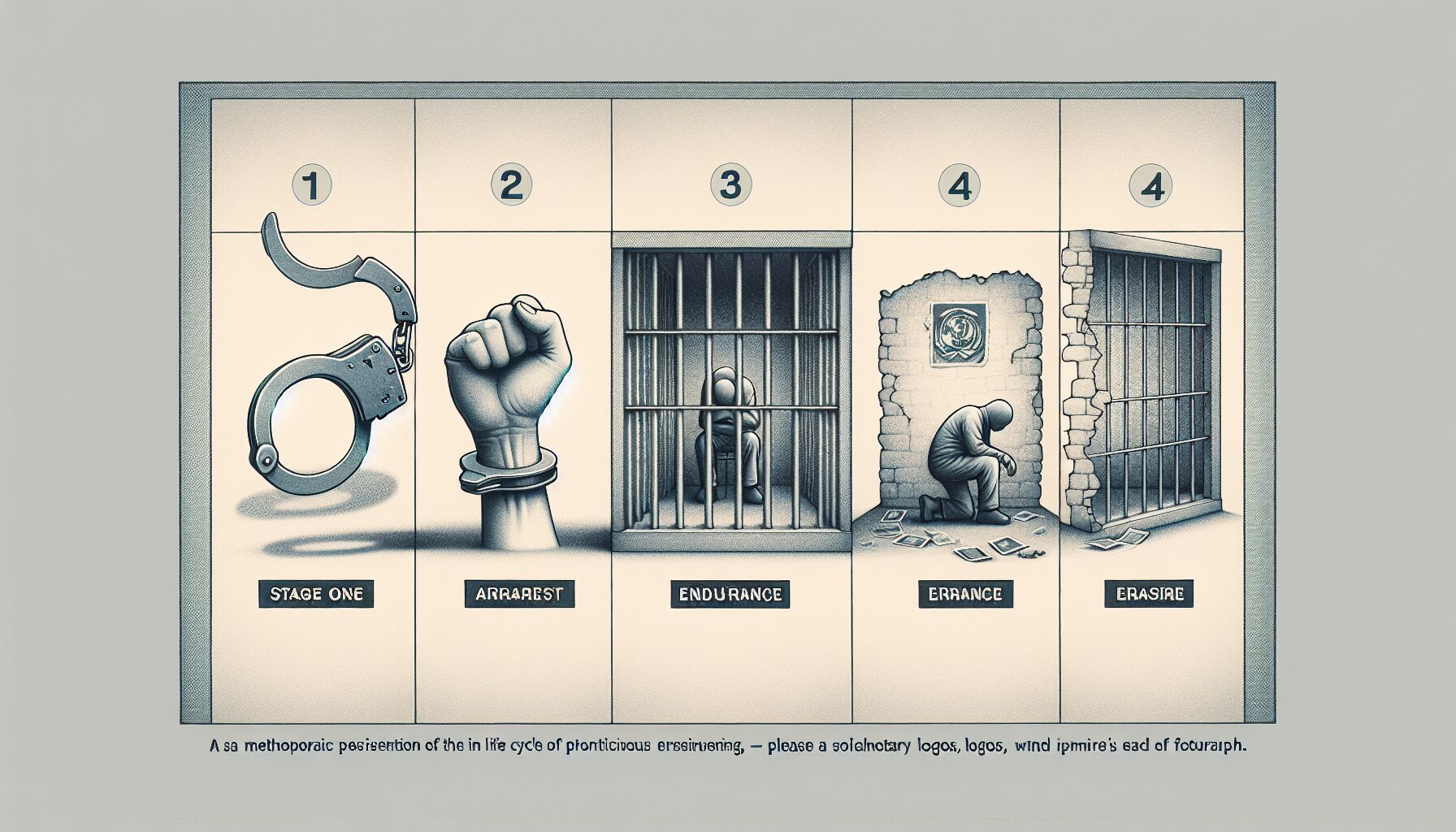
From Arrest to Erasure: The Lifecycle of Political Religious Prisoners
Introduction
In volatile political climates, those who are deemed a threat to state power often face severe repercussions. Among these, religious practitioners frequently find themselves at the intersection of faith and politics, leading to a chilling pathway from arrest to potential erasure. This article examines the lifecycle of political religious prisoners, a group whose plight is both a historical constant and a present-day reality.
The Initial Arrest
The first step in this grim lifecycle is the arrest. Political religious prisoners typically find themselves apprehended under cloaked pretexts. Charges are often vague, such as “undermining the state” or “inciting violence,” a tactic frequently employed by regimes to legitimize detentions without substantial evidence. As famed human rights lawyer Amal Clooney noted in an interview with Amnesty International, “Political prisoners are often arrested under spurious charges intended to silence dissent and suppress freedom of belief.”
Detention and Trial
Following arrest, political religious prisoners endure detention periods that may extend indefinitely. The conditions during this phase are notoriously dire. Overcrowding, lack of medical care, and isolation are common. The trial, if it occurs, is typically a perfunctory affair, characterized by a glaring absence of due process. Many trials are closed to the public, and verdicts are predetermined by the governing regime.
“The trials are a mere formality, where guilt is assured and justice remains an illusion,” reported Human Rights Watch.
Imprisonment
Conviction leads to imprisonment, where many face the harsh reality of long sentences under brutal conditions. In many parts of the world, the objective is not merely incarceration but the deliberate breaking of an individual’s spirit and beliefs. Beatings, torture, and psychological warfare are instruments wielded to this end.
An International Committee of the Red Cross report emphasizes the systemic denial of basic rights: “Prisoners are routinely subjected to harsh environments engineered to strip away humanity and dignity.”
International Advocacy and Awareness
Not all stories of political religious prisoners end behind bars. International advocacy plays a crucial role in drawing attention to these injustices. Organizations such as Freedom House and Human Rights Watch work tirelessly to publicize these cases, putting pressure on oppressive regimes to release prisoners or improve conditions.
Media coverage and digital campaigns further amplify these efforts. Social media platforms have become crucial tools for raising global awareness and mobilizing public opinion. By making the plight of political religious prisoners visible, advocacy organizations hope to shorten detention times and reduce suffering.
Potential Release and the Road to Recovery
When advocacy leads to release, either through international pressure or internal policy shifts, the effects of imprisonment linger long after freedom is regained. Released individuals face the daunting task of reintegration into societies that have often moved on without them. They may encounter significant psychological struggles and social stigma.
The World Health Organization highlights post-incarceration challenges: “Individuals released from political imprisonment require comprehensive rehabilitation support to recover from the trauma of inhumane treatment and prolonged isolation.”
The Threat of Erasure
For some, especially high-profile cases, release means eventual erasure. These individuals may face constant surveillance and restrictions, effectively silencing them and eliminating their influence. In such situations, ex-prisoners, though free, are pressured into a quasi-erased existence where their actions are perpetually scrutinized, rendering their autonomy minimal at best.
Conclusion
The lifecycle of political religious prisoners is not just a human rights issue; it is a deeper reflection of global struggles between power and freedom, control and belief. As governments seek to suppress dissent through religious persecution, international voices must continue to advocate for transparency, justice, and respect for human dignity. It is only by exposing these dark corridors of power that the cycle from arrest to potential erasure can be broken.