
Tag: life

  • The Exile’s Journal – Mapping Life Beyond the Group

    The Exile’s Journal – Mapping Life Beyond the Group

    Life beyond any tightly-knit group—be it a community, religious sect, or regional cult—can be a daunting experience. The transition from collective identity to individual autonomy is laden with challenges, yet it also gifts the wanderer with the potential for profound self-discovery and growth. This article explores the concept of exile and how individuals navigate the uncharted territories of life beyond the group.

    Understanding Exile

    The term “exile” often conjures images of banishment and isolation, yet it holds a broader meaning. According to Oxford Languages, an exile is “the state of being barred from one’s native country.” However, in a metaphorical sense, it can also mean distancing oneself from an integral part of one’s identity or community.

    “Exile is not a time-out from community; it is a precursor to a new way of living,” says writer Terry Tempest Williams in her book When Women Were Birds: Fifty-Four Variations on Voice.

    Steps to Mapping a New Life

    • Embrace Solitude: Solitude can be frightening, but it offers a rare chance to hear one’s inner voice. Meditative practices or long solitary walks can guide an exiled person into deeper introspection.
    • Seek Understanding: Re-evaluating past affiliations is crucial. Author and psychologist Dr. Harriet Lerner advises, “Ask yourself if the fear of the new is holding you back more than the safety of the old.”
    • Forge New Connections: Stepping out into the world makes room for new relationships that can flourish beyond the old dynamics. Joining interest-based clubs or support groups can be a nurturing ground for such friendships.
    • Redefine Identity: Crafting a fresh self-concept requires embracing change. Creative endeavors like journaling or art can offer expressive avenues to redefine one’s identity.

    The Potential for Growth

    Exile might initially feel like a loss, but it can transform into empowerment. Author Isabel Allende offers a poignant perspective: “Exile is a force that breaks us out of our usual perspectives and opens us to vast new realms of experience.”

    In crafting new narratives and building new habits, exiles carve pathways to their authentic selves. Breaking free from the constraints of enforced unity offers them distinctive vantage points from which to view the world—and comprise the complex, individual maps of life beyond the group.
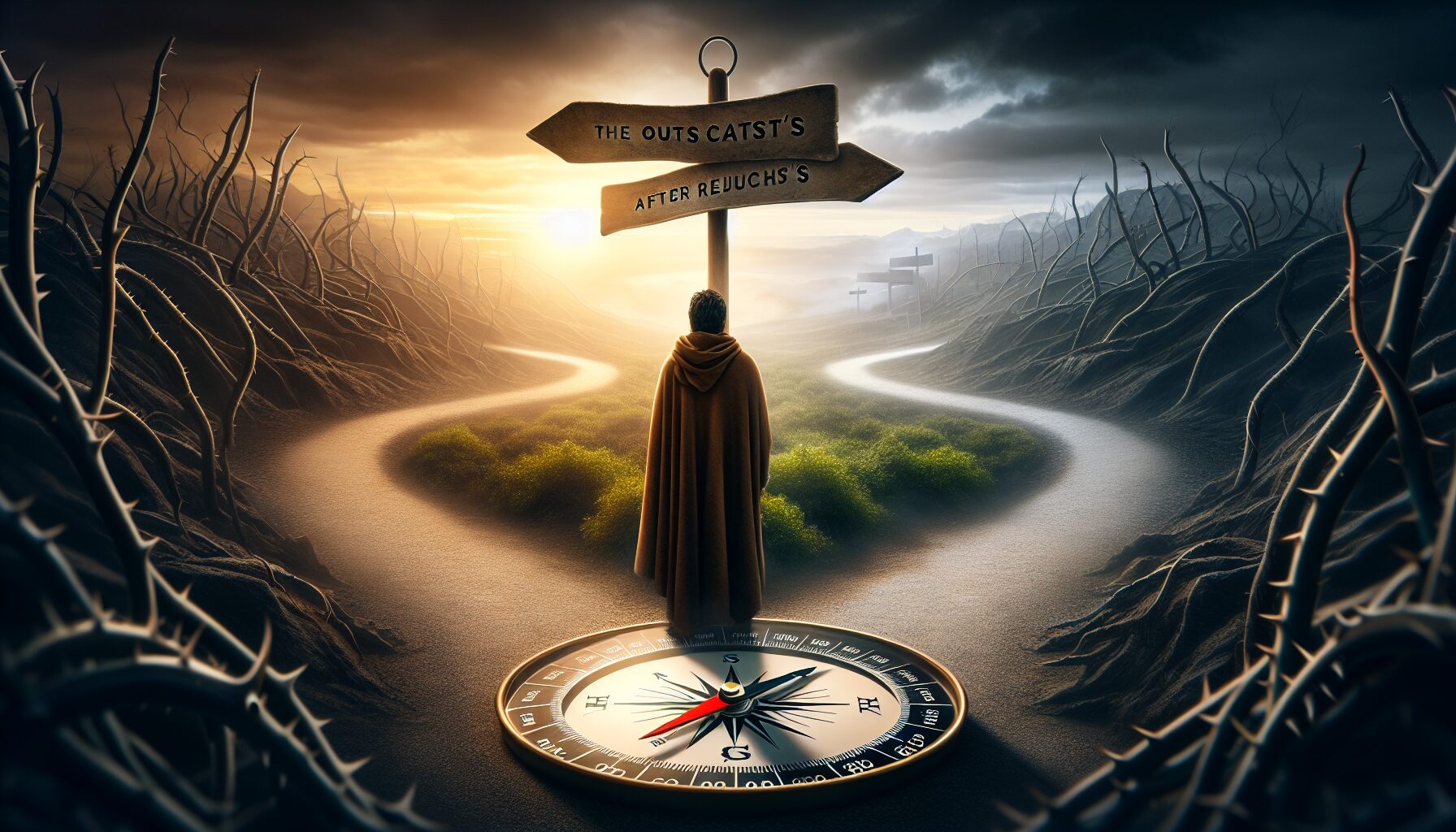

  • The Outcast’s Compass – Reorienting Life After Rejection

    The Outcast’s Compass – Reorienting Life After Rejection

    Rejection is an inescapable part of life, often leaving us feeling alienated and lost. Yet, it can also serve as a compass, guiding us towards new directions and growth. Embracing rejection can lead to profound personal transformation and a deeper understanding of oneself.

    Understanding the Nature of Rejection

    Everyone experiences rejection in some form, whether it be in relationships, careers, or social circles. It often brings about feelings of inadequacy and self-doubt. As psychologist Guy Winch notes, “Rejection destabilizes our ‘Need to Belong’, temporarily disturbing our emotional balance.” ([source](https://www.psychologytoday.com)). Understanding that rejection is a universal experience can help mitigate its initial sting.

    Using Rejection as a Catalyst for Self-Discovery

    • Reflect on the Experience: Take time to understand why the rejection happened and what it reveals about your desires and goals. Self-reflection can illuminate aspects of ourselves that were previously hidden.
    • Realign Your Goals: Rejection often indicates that a particular path may not be right at the present moment. Use this opportunity to reassess your goals and clarify what truly matters to you.
    • Seek Growth Opportunities: As Steve Jobs famously said, “You can’t connect the dots looking forward; you can only connect them looking backward.” ([source](https://news.stanford.edu)). When faced with rejection, focus on learning and growing, as hindsight often reveals the true value of these experiences.

    Building Resilience Amidst Rejection

    Rejection also serves as a powerful tool for building resilience. Embracing this mindset means facing rejection with a positive outlook and understanding that it can fuel future success. Strengthening resilience allows us to recover more quickly from setbacks.

    Finding Community and Connection

    Isolation often accompanies rejection, but it is essential to seek support from others who have faced similar experiences. Connecting with supportive friends or joining groups with shared interests can provide a sense of belonging and camaraderie.

    Our deepest fear is not that we are inadequate. Our deepest fear is that we are powerful beyond measure.” — Marianne Williamson

    In conclusion, while rejection may momentarily derail us, it also presents a unique opportunity to recalibrate and forge new paths. By embracing rejection as a compass, we discover our true potential and the path to self-discovery, resilience, and connection.

  • The Desert Path – How Isolation Can Become Sacred

    The Desert Path – How Isolation Can Become Sacred

    Isolation often conjures images of loneliness or abandonment, but throughout history, deserts have been viewed as places of profound spiritual significance. These arid landscapes, commonly perceived as desolate, offer unique opportunities for introspection and transformation.

    The Spiritual Significance of Deserts

    Deserts have long been the cradle of spiritual awakening. Many religious figures, from Moses to Jesus to Muhammad, have sought solace and divine insight in the quietude of the desert. This tradition underscores the belief that isolation in such barren landscapes can strip away distractions and connect individuals to a higher purpose.

    “The desert holds an allure exactly because it seems opposed to life. Within it lies the essence that nothingness can still provide everything.” – Laura Kasischke, poet and novelist.

    Connecting With the Self

    Modern spiritual seekers often turn to deserts to find themselves. With no one around to influence thoughts and decisions, individuals can confront their true selves. This solitude allows for a reevaluation of life’s goals and priorities, offering a chance to realign with one’s personal values.

    • Meditation and Reflection: The stillness of the desert facilitates deep meditation and reflection, providing a blank canvas for the mind to explore its depths.
    • Break from Noise: Away from the urban cacophony, the desert offers a break from societal pressures, allowing for a genuine exploration of inner thoughts.

    Environmental Connections

    Despite their harsh conditions, deserts are ecosystems teeming with life that has adapted to extreme circumstances. This resilience symbolizes potential for personal growth amidst adversity. The desert teaches adaptability and resilience, essential traits for personal and spiritual development.

    • Resilience of Flora and Fauna: Observing how life thrives under challenging conditions can inspire similar perseverance in humans.
    • Interconnectedness: The simple yet intricate ecosystem of the desert highlights the beauty of interconnected life even in isolation.

    A Sacred Space for Rebirth

    Venturing into the desert is often described as a journey of transformation. The absence of structures and conveniences found in populated areas leaves individuals with raw nature and their own thoughts. It is in this stark environment that many have experienced profound epiphanies, emerging renewed and enlightened.

    “What makes the desert beautiful is that somewhere it hides a well.” – Antoine de Saint-Exupéry, aviator and author.

    In conclusion, the desert path is a sacred journey not just through geography, but into the depth of one’s soul. By embracing isolation, individuals often find the most meaningful connections—with themselves, their spirituality, and the natural world.