Tag: fear

  • Why Groups Fear Difference – The Threat of the Unpredictable

    Why Groups Fear Difference – The Threat of the Unpredictable

    Throughout history, humanity has displayed a profound fear of difference. This apprehension, deeply rooted in human psychology and sociology, manifests in various forms, from cultural and racial intolerance to political resistance against ideological diversity. At its core, this fear is often driven by the threat of the unpredictable.

    The Psychology Behind the Fear of Difference

    Humans are innately social creatures, and our survival has long depended on forming cohesive groups. These bonds generate a sense of security that is deeply intertwined with familiarity. According to psychologist Henri Tajfel and his Social Identity Theory, people inherently categorize themselves and others into groups. This categorization shapes our identities by fostering in-group loyalty and often delineating out-group opposition.

    “The more we place value on the in-group, the more we tend to discriminate against the out-group,” says Tajfel, illuminating why unfamiliarity often sees its way to distrust and fear.

    The Role of the Unpredictable

    Difference introduces a variable into an otherwise predictable environment, challenging the norm and imposing the notion of the ‘unknown.’ Evolutionarily, predictability equates to safety. Our ancestors thrived by avoiding the uncertain, the unexplored; thus, modern humans carry forward a vestigial inclination to steer clear from unpredictability.

    • Adaptation and Survival: The unknown is a potential threat. Evolutionarily, avoiding unpredictability favored survival. An unrecognized animal could have meant danger, much as an unknown group or practice might be perceived as potentially harmful today.
    • Loss of Control: Groups fear what they cannot control. A lack of understanding can lead to helplessness, which is psychologically unsettling.
    • Cognitive Dissonance: Seeing differences can create a dissonance in what individuals know about their own culture and others’, often causing discomfort and fear.

    Researchers Fiske and Neuberg found that “unpredictability invoked by perceived differences often leads to increased negative evaluations of out-group members, as these are regarded as threatening” (Source).

    Cultural and Political Implications

    Cultural and political landscapes are often drawn along lines of difference, with unpredictability fueling division and conflict. Understanding this fear within political entities can reveal the mechanisms behind xenophobia or resistance to immigration policies.

    • Racial and Ethnic Tensions: Differences become the basis of discrimination and fear, leading to phenomena such as segregation and ethnocentrism.
    • Political Ideologies: Political divisions often exacerbate the fear of difference. Here, unpredictability breaches not only beliefs and values but also challenges power structures.
    • Religious Intolerance: Religious beliefs flourished within communities over centuries. New doctrines or radical interpretations are more often seen as unpredictable and hence feared rather than embraced.

    A Pew Research Center study on religious intolerance noted that “societies with high levels of religious diversity and freedom display less religiously motivated conflict” (Pew Research Center, source). This suggests that embracing diversity can mitigate the fear of difference by fostering familiarity and understanding.

    Overcoming the Fear of Difference

    Awareness and education are pivotal in overcoming the fear of the unpredictable. As individuals and communities understand and accept diversity, the fear that fuels prejudice begins to wane.

    • Education: Educational programs promoting multicultural understanding can reduce prejudice and fear. Comprehensive curricula enable students to grasp the benefits of diversity.
    • Dialogue and Interactions: Creating dialogue and shared experiences between different groups can dismantle myths and fears. These interactions facilitate empathy and understanding.
    • Policy and Integration: Supportive policies that promote inclusion and integration reinforce the societal benefits of diverse perspectives.

    Jacqueline Nelson, a sociologist known for her work on multiculturalism, once stated, “When people of varied backgrounds find common ground, they can shift from fearing the unknown to embracing it as an opportunity for growth” (source).

    Conclusion

    The fear of difference and the threat of the unpredictable are deeply ingrained in societal and individual psyches. However, recognizing and understanding these fears allows for the potential transformation of society from a state of division to one of inclusion and growth. Embracing difference not only fosters richer communities but also broadens horizons, ultimately strengthening human connections and resilience against uncertainty.

  • The Puppet Strings – Emotional Hooks That Keep People Bound

    The Puppet Strings – Emotional Hooks That Keep People Bound

    In the intricate dance of human emotions, certain strings can subtly keep us tethered to unhealthy situations, toxic relationships, or unfulfilling paths. Often referred to as emotional hooks, these are powerful tools that can manipulate our decisions, influence our perceptions, and keep us bound in ways that are not always immediately obvious.

    Understanding Emotional Hooks

    • Guilt: Often referred to as an internal emotional anchor, guilt can make us feel responsible for someone else’s happiness or failures. It keeps us in a cycle of trying to “fix” the situation.
    • Fear: Whether it’s fear of the unknown, fear of change, or fear of confrontation, this emotion can be a compelling reason to stay put, even when the situation is undesirable.
    • Hope: One of the most insidious hooks, hope can make us cling to “what might be” instead of facing “what is.” It convinces us that change is just around the corner.

    The Psychology Behind the Hooks

    Dr. Melanie Greenberg, a well-known psychologist, states, “Emotional hooks play on our deepest fears and desires by engaging the limbic system, which is responsible for our emotional reactions.” This interplay of brain chemistry and emotional response underscores how deeply ingrained these hooks can become in our psyches.

    “The chains of habit are too weak to be felt until they are too strong to be broken.” – Samuel Johnson

    This quote perfectly encapsulates how emotional hooks operate. Initially, these hooks might seem benign or even positive, but over time, they can form chains that are hard to break.

    Breaking Free

    • Acknowledge the Hook: The first step to freedom is recognizing that you are hooked. This requires honesty with oneself and often the help of self-reflection or a trusted confidante.
    • Reframe Your Perspective: Challenge the thoughts and beliefs that keep the hook in place. Cognitive behavioral therapy techniques can be particularly effective here.
    • Seek Support: Professional counseling or support groups can provide guidance, perspective, and the strength needed to sever these emotional ties.

    The key to liberation lies in awareness and deliberate action. By understanding the nature of emotional hooks and developing strategies to overcome them, individuals can reclaim their autonomy and re-establish healthy emotional boundaries.

    For further reading on emotional intelligence and how to manage emotional hooks, visit Psychology Today.

  • The Closed Circle – Why Some Groups Fear the Outside

    The Closed Circle – Why Some Groups Fear the Outside

    The Closed Circle: Why Some Groups Fear the Outside

    In a rapidly globalizing world, where information and ideas transcend borders at the speed of light, the persistence of closed groups can appear puzzling. Yet, for many of these communities, insularity serves as a protective mechanism against a variety of perceived threats to their cultural heritage, economic survival, and collective identity.

    Preservation of Cultural Identity

    One of the primary reasons groups may choose to remain closed off from the broader world is the desire to preserve their cultural identity. As Dr. Sarah Thompson, a cultural anthropologist at the University of Cambridge, notes, “For many communities, especially those with a rich and distinctive cultural heritage, openness can lead to a dilution of tradition.” The fear of losing language, religious practices, and traditional customs to the influences of modernity can compel communities to build proverbial walls around themselves.

    Examples of such communities include the Amish in the United States or certain indigenous tribes worldwide, who strictly regulate their interactions with outsiders. These groups have often meticulously developed guidelines that dictate the extent to which they will engage with external entities.

    Economic Survival

    Economic factors also play a significant role in why some groups opt for insulation. For groups with limited resources, opening up to external competition can pose a risk to their very livelihoods. An enclosed system can often sustain a small community more effectively than one exposed to the volatility of global markets. As highlighted in an article from The Economist, small-scale economies often thrive in isolation where the balance of supply and demand remains relatively stable.

    Collective Security

    Security concerns, whether physical, social, or psychological, also contribute to the fear of the outside for many groups. Outsiders can be perceived as threats that bring potential violence, criminal activity, or social unrest. This sentiment is expressed by historical precedent, where invasions and colonization have left indelible marks on the collective memories of societies.

    “Closed societies often emerge from the scars of historical traumas, seeking solace in what’s familiar while warding off what’s unknown,” says Jonathan Arliss, a historian specializing in post-colonial studies.

    The View from Inside

    While from an outsider’s perspective, such insularity can seem like fear or paranoia, it often stems from a rational evaluation of potential threats. The decision to remain closed is frequently a strategic one—born from centuries of evolving experiences and challenges. Understanding the dynamics of these decisions requires a sensitive and respectful examination of each community’s unique history and values.

    In the end, open dialogue, mutual respect, and measured engagement may pave the way for bridging divides, allowing closed communities to experience the benefits of outside interaction without sacrificing their core values.

  • When Love Turns Conditional – Emotional Blackmail in Communities

    When Love Turns Conditional – Emotional Blackmail in Communities

    In the intricate tapestry of human relationships, love is often celebrated as an unconditional force. However, lurking in the shadows of community interactions and personal relationships lies the more complex and sinister phenomenon of emotional blackmail, where affection becomes conditional. This subtle form of manipulation can be both pervasive and damaging, altering the dynamics within families, social groups, and wider communities.

    Understanding Emotional Blackmail

    According to Dr. Susan Forward, author of “Emotional Blackmail: When the People in Your Life Use Fear, Obligation, and Guilt to Manipulate You”, emotional blackmail is characterized by the use of “fear, obligation, and guilt,” tactics powerful enough to bend even the most stalwart individuals.

    “Blackmailers know how to make you feel like you owe them something. They have an uncanny ability to use our fear of upsetting them, our sense of obligation, and our feeling of guilt as a weapon against us.”

    In communities, these tactics may present themselves subtly. Perhaps it’s the volunteer group where members feel pressured to comply with excessive demands out of fear of being ostracized, or within families where compliance is extracted through threats of withdrawal of love and support.

    Signs of Conditional Love

    • Withholding Affection: The individual may threaten or actually withhold love and warmth until certain demands are met.
    • Playing the Victim: Constant reiteration of past sacrifices or emotional injuries can be leveraged to elicit compliance.
    • Intimidation: Subtle threats of emotional withdrawal or more overt intimidation techniques that enforce compliance under duress.

    The impact of these behaviors is profound, leading to internalized stress, diminished self-esteem, and an unbalanced power dynamic that can fracture community cohesiveness.

    How Communities Foster Emotional Blackmail

    It’s not just individuals who perpetrate emotional blackmail. Communities themselves can become breeding grounds for such behavior. In closely-knit communities where reputation and social standing are paramount, individuals may find themselves coerced into actions against their will, fearing social isolation.

    • Cultural Expectations: Norms and traditions that dictate behavior can create an environment ripe for manipulation.
    • Groupthink: The phenomenon where a group makes faulty decisions based on the pressure it places on members to conform can lead to emotional manipulation.
    • Peer Pressure: The desire to belong to a group may outweigh personal values, leading individuals to submit to emotional manipulation.

    Communities often unwittingly perpetuate cycles of emotional blackmail through shared narratives and pressure to conform, which can leave little room for personal dissent or individual expression.

    Breaking the Cycle

    To break free from the cycle of emotional blackmail, awareness and communication are key. Here are some ways individuals and communities can combat this:

    • Self-awareness: Recognize the signs of emotional manipulation and understand your own susceptibility to these tactics.
    • Setting Boundaries: Establish clear and healthy boundaries, asserting the right to prioritize one’s own needs without guilt.
    • Community Dialogues: Encourage open communication and dialogue within communities to address concerns and grievances robustly.
    • Education: Promote and engage in educational initiatives that discuss the negative effects of emotional manipulation.

    Dr. Robert Firestone, a clinical psychologist, emphasizes, “It takes courage to confront emotional blackmail, but without addressing it, individuals and communities remain trapped in a cycle of fear and obligation that stifles true connection.”

    “Commitment to combating emotional manipulation starts with understanding the legitimate power of sincerity and vulnerability as tools for authentic interaction,” Dr. Firestone notes.

    The Path to Authentic Love

    True love and connection must move beyond obligation and fear into realms of genuine care and respect. By recognizing and addressing emotional blackmail at both individual and community levels, we take an essential step towards nurturing healthier, more supportive environments where empathy and authenticity can flourish.

    By fostering authentic connections and understanding the deeper dynamics of our relationships, communities can break free from the manipulative clutches of conditional love, paving a path towards a more inclusive and loving future.

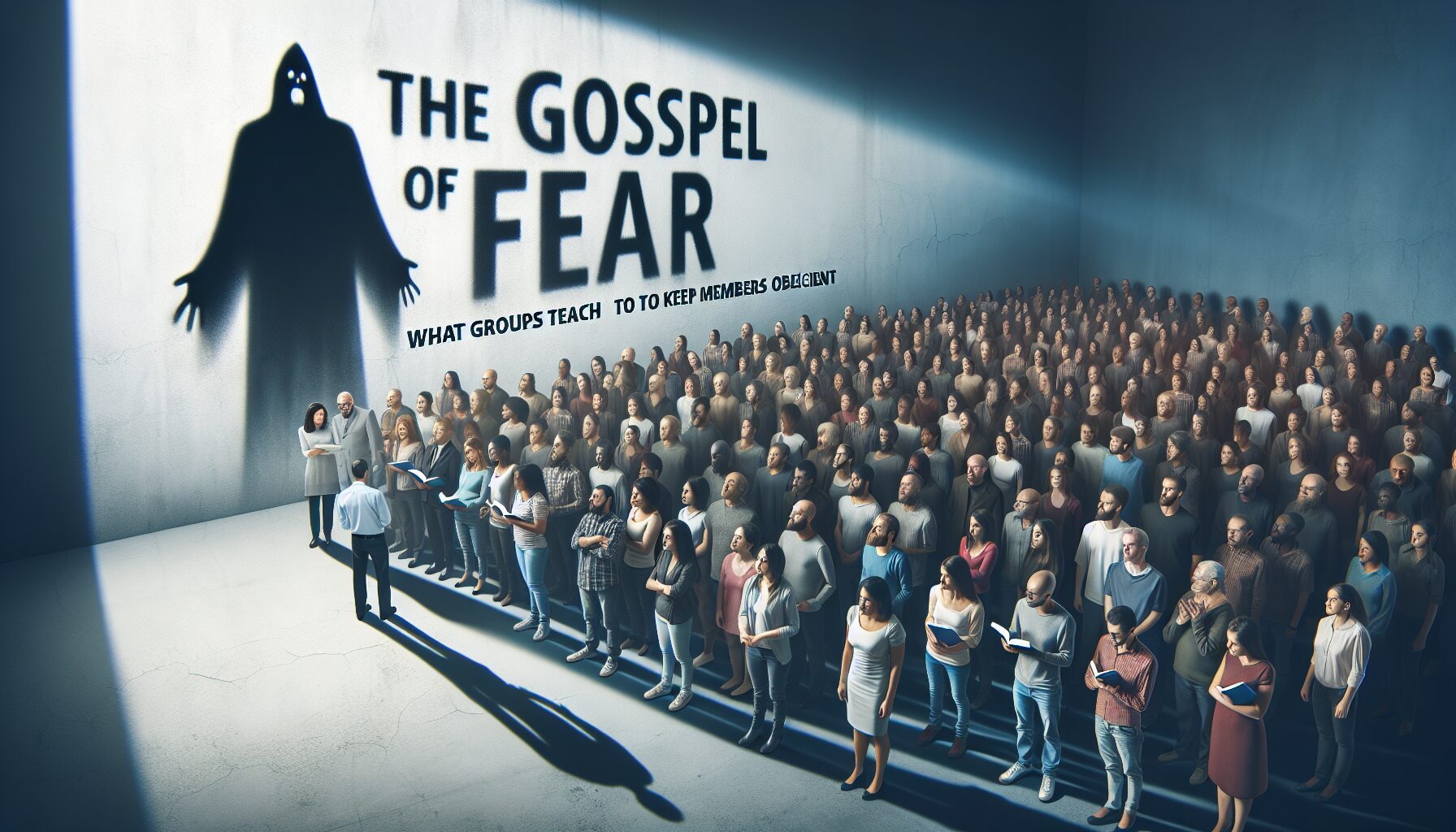
  • The Gospel of Fear – What Groups Teach to Keep Members Obedient

    The Gospel of Fear – What Groups Teach to Keep Members Obedient

    The Gospel of Fear: What Groups Teach to Keep Members Obedient

    Throughout history, groups—from religious sects to cults—have wielded fear as a powerful tool to ensure the obedience of their members. Fear, as a psychological mechanism, can hold sway over a person’s mind, compelling them to adhere to beliefs and practices they may not otherwise follow. But what exactly do these organizations preach to keep their members in line?

    The Foundation of Fear

    The use of fear by groups often begins with the establishment of a fundamental belief system that clearly distinguishes insiders from outsiders. Karl Popper, an influential philosopher, explained this dichotomy in his works: “It is impossible to speak in such a way that you cannot be misunderstood.” Groups leverage this idea by creating a narrative where being misunderstood or diverging from the established path results in dire consequences.

    Apocalyptic Predictions

    Many groups utilize fear by forecasting impending doom if members fail to comply with prescribed doctrines or commandments. Apocalyptic narratives often serve as a motivator for adherence. For instance, Christian eschatology has been a means through which certain religious groups keep followers in line through fear of the end times. In a 2018 Pew Research Study, it was found that a notable percentage of Americans believe in the biblical apocalypse, which illustrates the power and reach of these beliefs.

    Fear of Excommunication and Isolation

    The threat of excommunication or community isolation is another form of fear utilized by groups. This method plays on the human fear of loneliness and exclusion. Scriptures and doctrines are often cited to justify the cutting off of ties. A notable example can be seen in Jehovah’s Witnesses, where the practice of shunning members who dissent serves as a stark warning to maintain conformity, as documented by a BBC article.

    Fear of the Supernatural

    Fear of the supernatural and divine punishment is another tactic. Many religions preach that deviation from the set beliefs and practices will result in eternal damnation or other supernatural retributions. This notion is vividly present in various fundamentalist religious groups where hellfire and divine wrath are recurrent themes in teachings and sermons.

    “Men fear thought as they fear nothing else on earth — more than ruin, more even than death.” – Bertrand Russell

    The Cycle of Fear and Control

    • Cognitive Dissonance: Fear can lead to cognitive dissonance, where individuals perform mental gymnastics to align their fears with their beliefs. This phenomenon makes it difficult for members to critically analyze the doctrines they follow.
    • Continual Surveillance: Groups maintain constant oversight to ensure compliance, often instilling the belief that a higher power or the group itself monitors thoughts and actions.
    • Fear of the “Other”: Xenophobia and the demonization of those outside the group strengthen internal cohesion by creating a fear of external threats.

    The Role of Charismatic Leaders

    Charismatic leaders are adept at exploiting fear to maintain control. By presenting themselves as the only path to salvation or truth, these leaders reinforce members’ fears of what lies beyond the group’s teachings. Historian Margaret Thaler Singer, in her work “Cults in Our Midst”, explores how charisma paired with fear can culminate in intense loyalty and obedience.

    The Path Forward: Education and Awareness

    Understanding the dynamics of fear within groups is imperative for both current members and those studying these organizations. Awareness and education about these fear tactics can be powerful tools in resisting undue influence. Emphasizing critical thinking, fostering community, and seeking supportive interventions can dismantle the control that fear exerts.

    In conclusion, fear is a profound and practical instrument used by groups to maintain obedience among their members. From supernatural threats to social seclusion, these groups exploit fear to insulate members from outside influences and independent thought. Recognizing these tactics is the first step in escaping their grasp and forging a path toward intellectual and emotional autonomy.

  • Surviving the Inner Court – Psychological Toll of Being Always Judged

    Surviving the Inner Court – Psychological Toll of Being Always Judged

    Surviving the Inner Court – Psychological Toll of Being Always Judged

    Surviving the Inner Court – Psychological Toll of Being Always Judged

    In today’s hyper-connected world, the sensation of being perpetually judged can feel like an added appendage, an unavoidable presence in our everyday lives. Whether it’s the social media posts that spotlight our daily activities or the workplace environments demanding constant performance, being under scrutiny has become more pervasive than ever. This phenomenon, often described as living under the watchful eye of an ‘inner court,’ has profound psychological implications.

    Understanding the ‘Inner Court’ Phenomenon

    The term ‘inner court’ serves as a metaphor for an unseen panel of judges that exists within our minds, constantly evaluating our actions, decisions, and even our thoughts. This internalization of judgment can be traced back to various social and cultural pressures exacerbated by modern digital interactions.

    The Psychological Impact

    • Anxiety: The pervasive fear of being judged or criticized can lead to heightened anxiety. As Dr. Maureen Johnson, a psychologist specializing in social anxiety, notes, “The need to present an ideal version of ourselves often leads to chronic stress and anxiety, which can diminish one’s sense of self-worth.”
    • Depression: Excessive judgment, whether real or perceived, can lead to feelings of inadequacy and hopelessness, contributing to depression. According to a study published in The Journal of Clinical Psychology, individuals who consistently perceive themselves as being judged are more prone to depressive episodes.
    • Impaired Social Functioning: Constant self-monitoring can hinder genuine social interactions, as individuals may become overly concerned with how they are perceived rather than engaging in authentic communications.
    • Decision Paralysis: The fear of making the ‘wrong’ choice in the eyes of the inner court can lead to decision-making paralysis. The pressure to meet perceived expectations often results in overthinking and delays in action.

    Bertrand Russell, a renowned philosopher, once remarked:

    “To fear love is to fear life, and those who fear life are already three parts dead.”

    This highlights how living under constant judgment can strip away the vibrancy and spontaneity of life, replacing them with fear and trepidation.

    Social Media and the Amplification of Judgment

    The rise of social media platforms has acted as a catalyst, amplifying the inner court’s influence. Users are bombarded with curated images and stories that set unrealistic standards. According to a report by the Pew Research Center, nearly 70% of adults in the United States use some form of social media, which significantly impacts their self-perception.

    Dr. Linda Hooper, a researcher at the University of Michigan, asserts, “Social media presents an idealized world, which can skew our understanding of reality. This comparison game adds to the pressure of being constantly judged, often to detrimental effects.”

    Coping Mechanisms and Responses

    • Mindfulness and Meditation: Engaging in mindfulness practices can help individuals become more aware of the present moment and reduce the influence of internal judgments. Meditation has been shown to decrease stress and increase resilience.
    • Cognitive Behavioral Therapy (CBT): This therapeutic approach helps individuals reframe negative thinking patterns, focusing on defeating the inner critic and reducing the inner court’s influence.
    • Limiting Social Media Exposure: Setting boundaries for social media usage can help mitigate the feeling of being constantly judged and promote a healthier self-image.
    • Engagement in Physical Activities: Physical exercise is known to release endorphins, which act as natural mood lifters, helping to alleviate stress and anxiety.

    Conclusion

    While the sensation of living under constant judgment is a growing phenomenon in modern society, it is essential to recognize actionable strategies to cope with this pressure effectively. By engaging in activities that promote mental and emotional well-being and fostering environments that prioritize authenticity over perfection, it is possible to alleviate the psychological toll of the inner court.

    Ultimately, understanding that perfection is an illusion and embracing our imperfections as a part of the human experience can liberate us from the shackles of the inner court, offering a pathway to a more fulfilling and authentic life.

  • Fear as a Ruler – How Leaders Maintain Power Through Threats

    Fear as a Ruler – How Leaders Maintain Power Through Threats

    Throughout history, fear has been an omnipresent force manipulated by rulers to consolidate and maintain power. From emperors and kings to modern-day autocrats, the strategic deployment of fear, whether through implicit threats or overt violence, has been a time-tested tool used to control subject populations. This article delves deep into how leaders exploit fear, the psychological mechanisms at play, and the historical examples that illustrate this pervasive strategy.

    The Psychology of Fear

    Before exploring the methods employed by leaders, it is essential to understand the psychological foundation of fear. As noted by psychologist John B. Watson, fear is an “emotion aroused by impending danger, evil, pain, etc., whether the threat is real or imagined.” This primal emotion triggers a fight-or-flight response, compelling individuals to avoid perceived threats at all costs. Leaders, aware of this instinctual reaction, use fear to shape behavior and ensure compliance.

    Research in neuropsychology suggests that fear can significantly alter decision-making processes. When individuals are gripped by fear, they are more likely to accept decisions and policies they would otherwise oppose. This dynamic is precisely what many leaders count on when harnessing fear as a tool of rule.

    Historical Precedents of Rule by Fear

    • The Roman Empire: The Roman rulers were masters of instilling fear through power displays and brutal demonstrations of authority. The crucifixion of slaves and rebels not only served as punishment but also as a deterrent to others who might challenge the status quo.
    • Stalin’s USSR: Joseph Stalin’s regime is one of the 20th century’s quintessential examples of ruling through fear. The Great Purge eliminated millions perceived as threats, instilling widespread paranoia and compliance among the population and political elite. Historian Robert Conquest writes, “Fear was induced so deep that it became the reflexive response to political and even social life.”
    • Nazi Germany: Adolf Hitler used a combination of propaganda and the SS (Schutzstaffel) terror to build and sustain a culture of fear. The Gestapo’s surveillance and punitive measures kept the populace in check by ensuring that opposition seemed futile.

    Methods of Instilling Fear

    Leaders employ various methods to ingratiate fear within society. These methods often combine psychological manipulation, legal tools, and physical force. Below are some common tactics:

    • Propaganda: By controlling the narrative, leaders can amplify perceived threats or create enemies out of dissenters. In George Orwell’s “1984,” the omnipresent threat of “Big Brother” serves to keep civilians under constant watch, convincing them that resistance is futile.
    • Public Punishments: Serving both as a spectacle and a warning, public punishment demonstrates the consequences of defiance. The public executions during the French Revolution’s Reign of Terror were not mere punishment but a mechanism to instill fear in citizens.
    • Surveillance: The knowledge that “someone is watching” can be a powerful deterrent. Modern technology has amplified this method, with mass surveillance tactics reminiscent of Philip K. Dick’s warning: “Living is keeping your eye on the possibility of disaster.”
    • Legal Manipulation: Laws designed to restrict freedoms in the guise of national security are often tools of fear. Such laws can suppress dissent and restrict free speech, thus promulgating an environment of fear and uncertainty.

    Modern-Day Manifestations

    While ancient and early 20th-century examples may seem distant, the strategy of ruling by fear is alive in contemporary politics. The psychological understanding of fear, combined with technological advancements, provides a nuanced toolkit for modern leaders:

    • North Korea: The Kim family regime’s tight control over information and the brutal treatment of those considered disloyal is a textbook case of maintaining power through fear. Public executions and labor camps serve as stark reminders of the regime’s zero tolerance for dissent.
    • China: While China presents a less brutal picture, its sophisticated surveillance state helps maintain tight control over its citizens. The recent establishment of a social credit system emphasizes control through monitoring and restricting individuals’ movements based on “trustworthiness.”
    • Russia: Vladimir Putin’s Russia is said to deploy a combination of legal threats, media dominance, and subtle intimidation to suppress opposition. According to the journalist Masha Gessen, the environment under Putin reflects “a fear of standing apart from the masses,” compelling compliance through cultural conditioning.

    The Effects and Consequences

    The dominant atmosphere of fear can keep populations subdued, but it also comes with unintended consequences. Fear invariably leads to a breakdown in trust—both in government institutions and within communities. The suppression of dissent stunts intellectual growth and innovation, as individuals become hesitant to express novel ideas that might be perceived as subversive.

    Furthermore, a regime built solely on fear is precarious and brittle. It’s a phenomenon the historian Hannah Arendt described in her analysis of totalitarianism, observing that “fear and isolation breed an environment where no one stands out, creating a façade of stability that can collapse when pressure mounts.”

    Overcoming the Strategy of Fear

    If fear can be a tool of control, knowledge and courage can be its antidotes. Encouraging an informed populace that questions rather than cowers is essential. Historic changes have occurred when collective bravery faced down fear-mongering; the Fall of the Berlin Wall is a quintessential example. As Václav Havel aptly stated, “The kind of hope I often think about… is, I believe, a state of mind, not of the world. Either we have hope within us or we don’t, and it is a dimension of the soul.”

    Ultimately, while rulers may lean on fear as a method of consolidating power, history teaches us that the human spirit, with its resilience and capacity for courage, finds ways to transcend fear. The stories of those who rise above fear continue to inspire and demonstrate that though fear may serve as a ruler, it does not have to be an eternal one.

  • Sacred Cowardice — When fear of dissent replaces honesty

    Sacred Cowardice — When fear of dissent replaces honesty

    Sacred Cowardice: When Fear of Dissent Replaces Honesty

    Throughout history, societies have shaped sacred narratives that offer cohesion and identity. However, these narratives sometimes demand adherence without question. This is the terrain where sacred cowardice thrives, where fear of dissent replaces the courage required for honesty. Understanding this phenomenon is critical in an era that increasingly venerates authenticity.

    The Nature of Sacred Cowardice

    At its core, sacred cowardice is the reluctance to question established norms due to a fear of social or personal repercussions. It is an abdication of intellectual and ethical responsibility where maintaining harmony overrides speaking truthfully. Social commentator Christopher Hitchens once quipped, “The essence of the independent mind lies not in what it thinks, but in how it thinks.” (Goodreads). This underscores the importance of critical thinking, which is often sacrificed on the altar of conformity.

    Historical and Cultural Precedents

    History is replete with instances where sacred cowardice has prevailed. Consider the case of the Galileo Affair—Galileo’s advocacy for the heliocentric model was met with fierce opposition, not due to scientific dissent, but because it threatened the orthodoxy of the Catholic Church at the time.

    “In questions of science, the authority of a thousand is not worth the humble reasoning of a single individual.” – Galileo Galilei

    This single instance illustrates how fear of dissent can suppress factual truth, allowing sacred narratives to persist despite evidence to the contrary.

    The Anatomy of Fear

    • Social Ostracism: Chief among the fears prompting sacred cowardice is the fear of being cast out. Humans are innately social creatures; exclusion from the collective can create profound psychological distress.
    • Institutional Penalties: In many workplaces and societal structures, dissent can lead to punitive measures. The threat of losing one’s job, status, or peace can stifle even the most righteous objection.
    • Self-Censorship: Sometimes, the most insidious form of censorship is the one we impose on ourselves. This internal blockade can stifle discourse before it ever reaches the outside world.

    Consequences of Avoiding Dissent

    When fear dominates, it leads to a stagnant culture where innovation and progress are stifled. The unwillingness to confront uncomfortable truths nurtures mediocrity and injustice. Philosopher John Stuart Mill warned against this when he said, “The peculiar evil of silencing the expression of an opinion is, that it is robbing the human race… Those who dissent from the opinion, still more than those who hold it.” (Molloy College).

    Breaking the Cycle of Cowardice

    Overcoming sacred cowardice requires fostering environments that value dissent and critical thought. Here are some steps that can be taken:

    • Encouraging Open Dialogue: Cultures that reward honest dialogue stimulate progress. Allowing space for debate without fear of reprisal encourages innovation.
    • Valuing Diverse Opinions: The inclusion of varied perspectives enriches the decision-making process. It is crucial to create platforms where different views can be expressed and considered.
    • Education Reform: Curriculum focused on critical thinking and reasoning equips future generations to challenge sacred norms without fear.

    Conclusion

    Sacred cowardice is not merely a personal shortfall but a societal affliction. Fear of dissent should not eclipse the pursuit of truth and honesty. In a world increasingly interwoven with complex challenges, it is paramount that individuals and institutions summon the courage to confront inconvenient truths. By doing so, we better position ourselves to overcome stagnation and aim for enlightened progress.

    Ultimately, the journey away from sacred cowardice is a collective endeavor that requires not only introspection but also systemic change. In echoing the courage to dissent, society creates a space where honesty prevails, paving the way for genuine progress and true human flourishing.

  • Systems That Cannot Repent — Why spiritual institutions resist correction

    Systems That Cannot Repent — Why spiritual institutions resist correction

    In a world where change is the only constant, spiritual institutions often stand as bastions of tradition and continuity. Their resilience and adherence to established doctrines can provide stability in times of turmoil and uncertainty. However, these same characteristics can sometimes render spiritual institutions resistant to correction, leaving them seemingly incapable of repentance. This begs the question: why do these systems struggle to embrace change?

    Inherent Inflexibility in Doctrine

    One of the primary reasons spiritual institutions resist correction lies in their foundational doctrines. Many religious teachings are rooted in ancient texts considered infallible by adherents. This permanence, while offering a clear guidance, also creates an inherent inflexibility. According to scholar Karen Armstrong, author of The Case for God, “Religions must strive, and usually with some success, to create a countercultural ideology that resists change.”

    Institutional Power Dynamics

    A significant barrier to repentance is the power structure within these institutions. Leadership often concentrates in the hands of a few, who may view change as a threat to their authority. The historian and theologian Diarmaid MacCulloch has noted, “Religious institutions, like all organizations, can develop a form of institutional conservatism where self-preservation becomes the main priority.” This status quo bias means admitting to past mistakes can be seen as undermining authority, thereby being fiercely resisted.

    Fear of Divisive Consequences

    Spiritual institutions also fear the divisive consequences of acknowledging and correcting past wrongs. Given that their communities are often bound tightly by shared beliefs, leaders may worry that admitting fault could fracture unity. This fear was echoed by Reza Aslan, a renowned religious scholar, in his book No god but God, where he explains, “For an institution whose authority is derived entirely from divine sanction, repentance can be seen as not merely admitting fault, but risking the very legitimacy of its existence.”

    The Role of Continued Dialogue

    In the face of these challenges, continued dialogue remains crucial for spiritual institutions to evolve meaningfully. Opening channels for discussion allows a safe space for communities to explore necessary changes without the immediate fear of upheaval. Facilitating these conversations can lead to gradual, considered corrections that may eventually lead to genuine repentance.

    Ultimately, the resistance to correction within spiritual institutions is complex and multifaceted. While entrenched doctrines, power dynamics, and fear play significant roles, proactive dialogue remains a beacon of hope for these systems to embrace change while continuing to offer the stability they’ve provided to countless generations.

  • The False Consensus — Agreement built on fear of exile

    The False Consensus — Agreement built on fear of exile

    The False Consensus: Agreement Built on Fear of Exile

    Group dynamics and human psychology are intricate, often leading individuals to conform to perceived majority views. This phenomenon, known as the false consensus effect, occurs when individuals overestimate the degree to which their beliefs are normal within a group. It often emerges from a fear of social exclusion, pushing people to conform rather than express their true beliefs.

    Understanding the False Consensus Effect

    The false consensus effect was first described by social psychologists Ross, Greene, and House in 1977. In their seminal study, they conducted a series of experiments demonstrating how people tend to assume that others share their beliefs and behaviors far more than is actually the case (Ross, et al., 1977). This overestimation of commonality leads to a skewed perception of social norms.

    “We do not see things as they are, we see them as we are.” — Anaïs Nin

    The Mechanisms of Fear and Conformity

    Fear of being alienated or rejected by the group can inhibit individuals from expressing dissenting opinions. Social identity theory suggests that group membership is a key part of individuals’ self-concept. As such, people conform to avoid the psychological distress associated with social exclusion.

    Conformity Studies:

    • Solomon Asch’s Conformity Experiments: These pivotal studies revealed how social pressure from a majority group could influence an individual to conform, even when the consensus was clearly incorrect.
    • Stanley Milgram’s Obedience Study: Although primarily about obedience, this study also indicated the lengths individuals might go to stay aligned with perceived authority or majority, underscoring the fear of isolation.

    The Impact of the False Consensus Effect

    The false consensus effect has far-reaching implications in various areas, including decision-making, politics, and organizational behavior:

    • Decision-Making: Individuals in a group might not voice innovative ideas if they falsely believe these ideas are not widely supported, hindering creativity and problem-solving.
    • Politics: Political groups often operate under the illusion of wide support within their rank, which can lead to echo chambers and polarization in societies.
    • Business and Organizations: In workplaces, the false consensus effect can stifle dissent and lead to poor decision-making that does not reflect the views of all stakeholders.

    Breaking the Cycle

    To counteract the false consensus effect, individuals and groups can take proactive steps:

    • Encourage Open Dialogue: Fostering an environment where diverse opinions are valued and encouraged helps reduce the false perception of consensus.
    • Awareness Training: Educating individuals about cognitive biases, such as the false consensus effect, can empower them to critically evaluate perceived norms.
    • Promote Diverse Groups: By ensuring diversity in age, gender, ideology, and background, organizations can counteract the tendency towards false consensus through exposure to different perspectives.

    Cognitive psychologist Richard Nisbett emphasizes, “We all suffer from cognitive biases, but by being aware of them, we can start to think more clearly and make better decisions.”

    Conclusion

    The false consensus effect represents a significant barrier to authentic communication and decision-making, often stemming from the fear of social exile. Being aware of this psychological phenomenon allows individuals and groups to foster more inclusive environments. By actively challenging the assumption that most others agree with us, we pave the way for richer, more productive discussions and decisions.

    Understanding the dynamics of the false consensus effect is crucial in an increasingly interconnected world. Encouraging diversity of thought and promoting open communication can help society progress beyond the limitations imposed by fear-driven conformity.