Tag: enforced

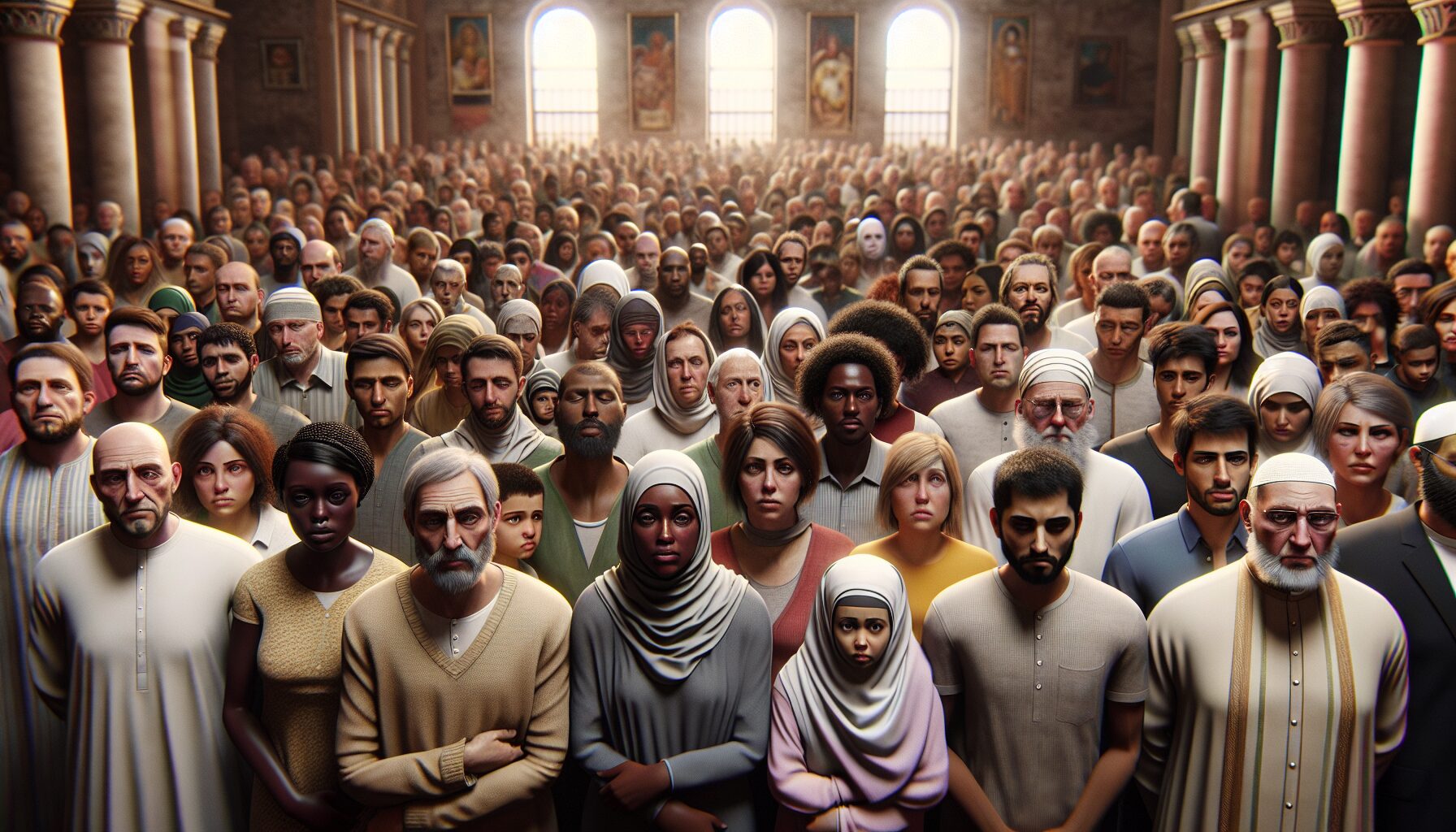
  • Beneath the Doctrine – The Human Cost of Enforced Belief

    Beneath the Doctrine – The Human Cost of Enforced Belief

    In a world where diversity of thought is celebrated, the enforcement of rigid belief systems can have profound and often detrimental effects on individuals and societies. The forceful imposition of ideologies not only stifles personal freedoms but also leaves scars on the social fabric that can take generations to heal.

    The Allure and Pitfalls of Uniformity

    Throughout history, the quest for uniformity in belief has been a hallmark of many regimes and institutions. The promise of a cohesive society is alluring, yet it often comes at the cost of individual expression and critical thought. George Orwell, in his seminal work 1984, warned of a future where “War is peace, freedom is slavery, and ignorance is strength”—a society so deeply entrenched in ideological conformity that truth becomes mutable.

    While Orwell’s vision is extreme, the subtler forms of enforced beliefs can be just as damaging. Brené Brown, a renowned researcher, and author, once noted,

    “The irony is that we attempt to disown our difficult stories to appear more whole or more acceptable. But our wholeness—even our wholeheartedness—actually depends on the integration of all of our experiences, including the falls.”

    This integration is hindered in environments where divergent thinking is suppressed.

    The Psychological Burden

    Enforced belief systems often lead to significant psychological distress. The pressure to conform can result in anxiety, depression, and a loss of sense of self. Individuals stuck in such systems may experience cognitive dissonance—a mental conflict arising from holding contradictory beliefs—which can further exacerbate mental health issues.

    Studies have shown that individuals in high-pressure environments where specific ideologies are mandated often face a “crisis of identity.” According to a study by the American Psychological Association, individuals who feel their personal beliefs are under threat often experience heightened stress levels, impacting both mental and physical health.

    Societal Consequences

    The human cost of enforced beliefs extends beyond individual repercussions. Societies that enforce rigid doctrine often find themselves divided as they fail to embrace the rich tapestry of diverse perspectives. This can lead to social unrest, as those who feel marginalized or oppressed eventually push back against the system.

    Moreover, innovation and progress are stunted in environments where creativity and critical thinking are discouraged. A society that does not question its foundational beliefs risks stagnation, unable to adapt and thrive in a rapidly changing world.

    Towards a More Inclusive Future

    To mitigate the human cost of enforced belief, it is imperative to foster environments that value and respect diversity of thought. Encouraging dialogue and understanding can help bridge divides and facilitate healing. Societal progress hinges on the ability to embrace the plurality of experiences and perspectives that humanity offers.

    As we move forward, the challenge lies in balancing collective societal goals with individual freedoms—ensuring that no one is left behind in the march towards progress.

  • The Illusion of Unity — When oneness is enforced

    The Illusion of Unity — When oneness is enforced

    In a world increasingly obsessed with the idea of unity, the concept of enforced oneness seems appealing. Imagine a society where everyone thinks alike, believes in the same doctrines, and works seamlessly towards common goals. However, beneath this facade of seamless unity lies a complicated reality. The illusion of unity can often stifle individuality, suppress diversity, and ultimately undermine the very essence of human creativity and progress.

    The Appeal of Oneness

    The idea of unity resonates deeply in human societies, largely because it offers a vision of harmony and cooperation. Unity promises to eradicate divisions, whether they be political, racial, religious, or economic. This is often captured by leaders and thinkers keen on promoting a stable, coherent narrative that galvanizes communities and nations.

    “Unity is strength… when there is teamwork and collaboration, wonderful things can be achieved,” said poet and playwright Mattie Stepanek.

    On a superficial level, enforced unity could seem to simplify societal complexities, reducing friction and fostering collective success. However, the cracks in this veneer become apparent when unity is used not as a natural convergence of ideas but as a forced conformity imposed by authority.

    Enforcing Oneness: Power and Control

    History offers numerous examples where enforced unity was used as a tool for control rather than cooperation. Totalitarian regimes often impose a strict uniformity under the guise of unity. In these scenarios, unity is not organic but demanded, prosecuted through force and propaganda.

    • Nazi Germany: The regime under Adolf Hitler demanded absolute conformity to its ideology. Different thoughts, cultures, and people deemed ‘other’ were brutally suppressed.
    • Stalinist Soviet Union: The state pursued unity through enforced collectivization and suppression of dissent. Ideological uniformity was strictly maintained, often with lethal consequences.
    • North Korea: Today, the state imposes a rigid unity by controlling all aspects of life, ensuring that deviation from the state’s narrative is not possible.

    These examples underscore how unity, when enforced, becomes a mechanism for control, exploiting the guise of cohesion to eliminate diversity and dissent.

    The Cost of Enforced Unity

    When unity is enforced rather than naturally developed, the cost is high. The suppression of diversity and dissent stifles creativity, innovation, and progress. Societies thrive on the diversity of thought — it is the friction between different ideas that sparks creativity and innovation. Enforced unity eliminates the friction, leaving a dull, static narrative where growth is stagnated.

    “Our ability to reach unity in diversity will be the beauty and the test of our civilization,” as rightly stated by Mahatma Gandhi, emphasizing that diversity should be celebrated, not suppressed.

    Moreover, enforced unity often leads to a climate of fear and mistrust. People develop a sense of suspicion, ever wary of their neighbors and colleagues who may denounce them for non-conformity. The society becomes a theatrical play, where everyone wears a facade to survive, extinguishing true expressions of self.

    Navigating Towards Genuine Unity

    Attaining genuine unity involves nurturing an environment where diversity is not only tolerated but embraced. A society that encourages dialogue and dispute, listens to dissent, and is willing to evolve stands a better chance at fostering a true sense of unity.

    • Education and Dialogue: Empower individuals through education and open dialogue, fostering critical thinking and the ability to engage with opposing viewpoints constructively.
    • Inclusive Policies: Implement inclusive policies that celebrate and protect diversity — be it cultural, religious, or ideological.
    • Community Engagement: Bolster community engagement through participatory democratic practices, where every voice matters and contributes to the narrative.

    The path to genuine unity is a journey of embracing differences, building mutual respect, and fostering collaboration across diversity. It’s about creating a safe space for discussing differences and finding common ground amid diversity.

    Conclusion

    The illusion of unity, when oneness is enforced, is a dangerous mirage that distracts from and even threatens the rich tapestry of human society. The aspiration for harmony and collective progress is noble, yet it should never come at the cost of individuality, freedom, and the diverse expression that we inherently hold.

    To move towards genuine unity, societies must cherish diversity and nurture an environment where differences lead to dialogue and innovation. Only then can we achieve a unity that is real, sustainable, and empowering — one that reflects the intricacies of human existence and the multitude of voices that shape it.