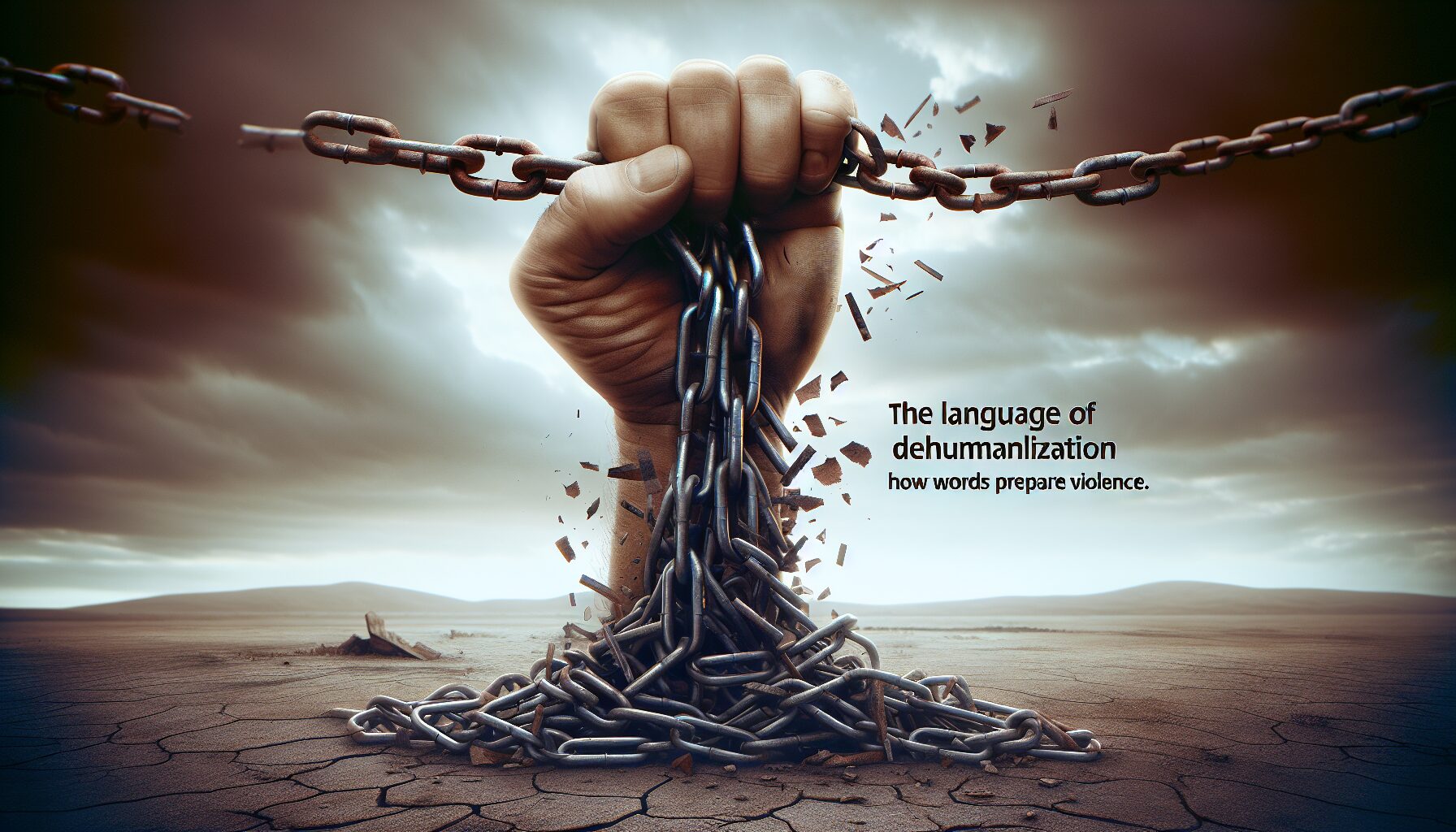
The Language of Dehumanization: How Words Prepare Violence
Throughout history, the words we choose have often paved the way for actions, setting the tone for both collaboration and conflict. The power of language lies not only in its ability to inform and persuade but also in its potential to dehumanize and incite violence. Examining the mechanisms behind this linguistic phenomenon is vital in understanding how societies can fall into cycles of aggression.
The Mechanisms of Dehumanization
Dehumanization is the psychological process of demonizing the enemy, making them seem less than human and hence not worthy of humane treatment. This is often a precursor to violence, as it lowers the innate moral inhibitions that people have towards harming others. Language plays an integral role in this process.
- Name-calling and Labeling: The first step in dehumanization often involves the use of derogatory labels. Such terms reduce individuals to undesirable stereotypes. For instance, the Rwandan genocide saw the use of the term “cockroaches” to describe the Tutsi population, effectively reducing them to vermin in the eyes of Hutu extremists.
- Metaphors and Euphemisms: Using metaphors and euphemisms can mask the brutality of acts of violence. This can be seen in military jargon—terms like “collateral damage” or “neutralizing the target” which sterilize the reality of destruction and death.
- Narratives of Threat: Language that frames others as existential threats can galvanize support for preemptive aggression. Adolf Hitler’s rhetoric of the ‘Jewish threat’ in pre-World War II Germany mobilized a nation leading to horrific atrocities.
Historical Examples of Linguistic Dehumanization
History is replete with instances where language laid the groundwork for widespread violence. A classic example is the 20th-century totalitarian regimes, which often relied heavily on propaganda to justify their actions.
- Nazi Germany: The Nazis mastered the art of propaganda, making extensive use of vilifying language. Joseph Goebbels, the Minister of Propaganda, used media to inculcate the German public with anti-Semitic sentiment. A quote from historian Ian Kershaw illustrates this well:
“The success of Nazi propaganda simply shows how easily people can be manipulated when fear and distance are created between groups.”
- Rwanda: The Rwandan genocide was preceded by a period of intense media campaigns. Radio broadcasts referred to Tutsis as “inyenzi,” or cockroaches, contributing heavily to the dehumanization that enabled violence. According to a BBC report, the use of language that evokes fear and disgust played a key role in persuading ordinary citizens to commit acts of unspeakable violence against their neighbors.
The Psychological Impact of Dehumanizing Language
The psychological impact of such dehumanizing language cannot be underestimated. It erodes empathy and creates an ‘us versus them’ mentality. Research from The Journal of Personality and Social Psychology indicates that exposure to dehumanizing terms leads individuals to perceive out-groups as less human, reducing empathy and moral restraint.
Such exposure also desensitizes people to violence, making atrocities seemingly acceptable or justified. This is evident in modern-day conflicts where both sides use inflammatory language to describe their opponents, thus perpetuating cycles of violence and mistrust.
Modern-day Implications of Dehumanizing Rhetoric
In the age of digital communication, the speed at which such rhetoric can spread poses a significant challenge. Social media platforms have become conduits for dehumanizing language, often allowing it to reach a global audience within seconds.
To combat this, experts like technology critic Anil Dash emphasize the role of platforms in moderating content and educating users about the impact of their language. In his words, “We must hold platforms accountable for the role they play in amplifying this kind of harmful rhetoric.”
Conclusion: The Call for Conscious Language
The language used to describe others is not just a matter of semantics—it has the power to catalyze action, foster peace, or spur violence. Recognizing the role of dehumanizing language in preparing societies for violence is the first step toward breaking this vicious cycle. Ensuring that we choose words carefully, promoting inclusive narratives, and fostering empathy can create societies resilient against the siren call of dehumanization.
Ultimately, becoming conscious of the language we use is crucial in striving toward a more harmonious and understanding world.