Tag: communities

  • Faith as Resistance – Spiritual groups that refuse to disappear

    Faith as Resistance – Spiritual groups that refuse to disappear

    Faith as Resistance: Spiritual Groups That Refuse to Disappear

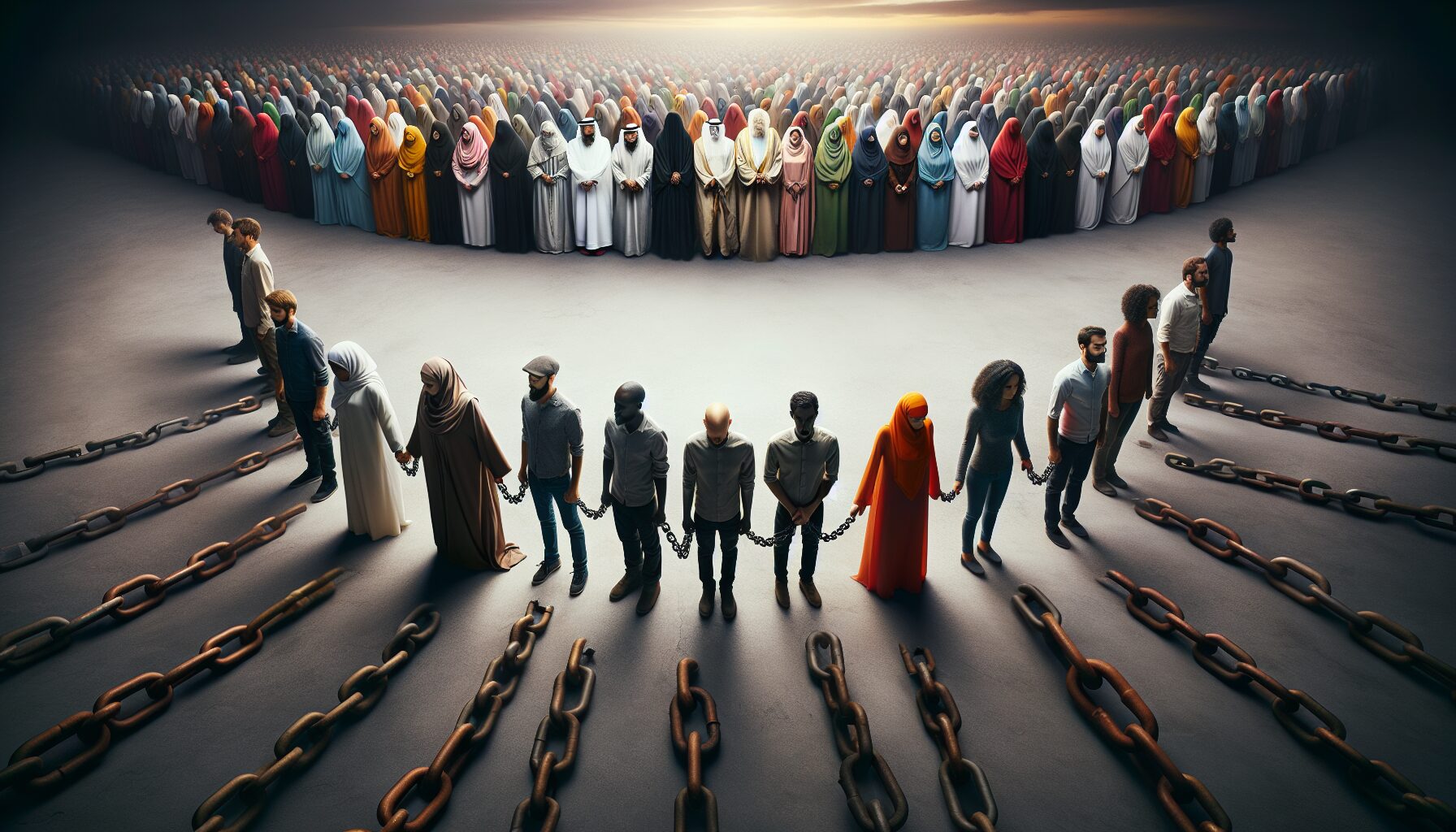
    In a world increasingly driven by technology and rapid societal changes, some spiritual groups continue to assert their presence and relevance amidst the noise. These spiritual communities often embody a form of quiet resistance, standing firm in their beliefs and practices despite external pressures. This article explores how various spiritual groups are persisting and thriving in modern times.

    A Historical Perspective

    Throughout history, spirituality has been both a source of solace and a catalyst for resistance. Religious and spiritual groups have long played pivotal roles in movements for social change. The Civil Rights Movement, for instance, was heavily influenced by the teachings of Christian doctrine, with leaders like Martin Luther King Jr. emphasizing the importance of faith in the struggle for equality.

    “Faith is taking the first step even when you don’t see the whole staircase.”

    — Martin Luther King Jr.

    From the Quakers, who were instrumental in the abolition of slavery, to the Sufis, whose mystical teachings often served as a counterbalance to rigid doctrinal interpretations, spirituality has frequently been intertwined with progressive societal shifts.

    Modern Spiritual Movements

    In contemporary times, several spiritual groups are resisting cultural assimilation and asserting their identity through intentional practice. Below are a few notable examples:

    • The Amish: Known for their simple living, refusal of modern technology, and community-centric life, the Amish population in the United States has been growing. According to a Pew Research study, the Amish community has nearly doubled in size in the past two decades. By living according to their Anabaptist faith, they resist the fast-paced change of modern society.
    • Tibetan Buddhists: Despite facing significant challenges, particularly from political forces in their homeland, Tibetan Buddhists keep their traditions alive through global communities. The preservation of their spiritual practices is a form of cultural resistance and identity affirmation.
    • The Rastafarians: Emerging in the 1930s in Jamaica, Rastafarianism combines Christian elements, Pan-African ideology, and a strong cultural identity. As stated in the work of Leonard Barrett, author of “The Rastafarians”, the movement persists as a testament to cultural resilience.

    Institutional and Grassroots Support

    Many spiritual groups survive and even thrive due to both institutional support and grassroots efforts. Initiatives such as interfaith dialogue platforms and cultural heritage sites serve as resources for spiritual communities to learn, grow, and maintain their traditions.

    • Interfaith Coalitions: Projects such as The Parliament of the World’s Religions promote understanding and cooperation among diverse faiths. The Parliament serves as a critical organization in fostering peace and improving the visibility of smaller religious groups.
    • Cultural Heritage Sites: UNESCO’s efforts to protect traditional religious sites reinforce the cultural significance of these spaces. As an example, the listing of Buddhist temples in Nepal ensures both preservation and worldwide recognition.

    Digital Adaptation and Global Reach

    Many religious and spiritual groups have embraced digital platforms to expand their reach and impact. Churches offering online services, meditation apps promoting mindfulness, and social media engagement provide fertile grounds for these communities to grow. According to a Pew Research Center survey, a significant number of people access religious teachings online, showing a blend of traditional faiths with modern technology.

    “While religion always changes, we are living through a massive expansion of religious creativity,”

    — Stephan Pickard, Australian theologian.

    This digital shift allows spiritual groups to reach new audiences, inviting participation from those who might not have engaged in a traditional setting.

    Challenges and Opportunities

    Despite their resilience, spiritual communities face significant challenges, including secularization, political pressures, and demographic shifts. However, these challenges also present opportunities for growth and reinterpretation of beliefs.

    • Secularization: As secular values become more prominent, religious groups are pushed to articulate their relevance in a modern context. This can lead to engaging dialogues and critical reflections within these communities about their roles and teachings.
    • Political Pressures: Religious groups often face scrutiny and opposition from governmental authorities. However, these challenges can unite communities in a common cause, reinforcing their spiritual and cultural identities.

    The Future of Spiritual Resistance

    Looking ahead, the resilience of these spiritual groups will likely depend on their ability to balance tradition with modernity, fostering connections both within and outside their borders. Organizations like The Guardian predict that religious innovations might lead the way to more harmonious coexistence.

    Ultimately, the persistence of spiritual communities illustrates how deeply human beings value their cultural and spiritual heritages. Through careful adaptation and unwavering resistance, these groups continue to light the path for future generations.

    By continuing to stand firm in their beliefs, these spiritual communities play an integral role in maintaining cultural diversity and fostering a deeper understanding across global societies. Their message of faith as a form of resistance is as relevant now as ever.

  • Sacred Targets – Why spiritual communities are singled out by the state

    Sacred Targets: Why Spiritual Communities Are Singled Out by the State

    Throughout history, spiritual communities have often found themselves under the scrutiny of state powers. From ancient times to the modern era, governments have maintained a complex relationship with these groups, sometimes promoting them, at other times, seeking to control or suppress them. This article explores why spiritual communities often become focal points of state attention and regulation.

    The Historical Context

    The relationship between church and state is a tale as old as civilization itself. In ancient Egypt, the Pharaohs were considered divine rulers, blending spiritual authority with political power. Similarly, in medieval Europe, kings and emperors ruled by divine right, and the Catholic Church wielded significant influence over state matters.

    “Religion is the sigh of the oppressed creature, the heart of a heartless world, and the soul of soulless conditions. It is the opium of the people.”
    Karl Marx

    Karl Marx’s observation underscores the power spiritual communities can hold. They offer solace and a sense of belonging, which can be particularly appealing in turbulent times. For the state, such influence can be seen as a double-edged sword—an opportunity for social stability or a threat to political control.

    Why Spiritual Communities Are Singled Out

    There are several reasons why states may single out spiritual communities:

    • Social Influence: Faith-based organizations often wield significant influence over their followers. Mass assemblies, rituals, and religious fervor can mobilize large groups, which may threaten state authority or societal norms.
    • Economic Power: Many spiritual communities control vast resources. From the land holdings of medieval monasteries to the modern-day megachurches, economic power translates to social influence, which the state may seek to regulate.
    • Ideological Conflict: When the teachings or beliefs of a group challenge the dominant ideology, whether it be secularism, capitalism, or a particular political doctrine, the state may view them as a threat that needs to be neutralized.
    • Security Concerns: Governments may regulate or surveil religious groups under the pretext of ensuring national security, fearing extremism, or subversion.

    Case Studies

    The Persecution of the Early Christians

    In the Roman Empire, Christians were persecuted for their refusal to worship the emperor and the Roman gods. Their rapidly growing numbers and the secretive nature of their meetings aroused suspicion and hostility from the Roman authorities.

    “If the Tiber reaches the walls, if the Nile does not rise to the fields, if the sky does not move or the earth yes, if there is famine, if there is plague, the cry at once arises: ‘The Christians to the lion!’”
    Tertullian, Apology

    The Tibetan Buddhists and the Chinese State

    Since China’s annexation of Tibet in 1950, there has been an ongoing conflict between the Chinese government and Tibetan Buddhists. To this day, Tibetan spiritual practices and expressions of political autonomy are often suppressed.

    The Council on Foreign Relations notes that the Chinese government controls religious affairs and has subjected the populace to assimilation policies, seeing the Dalai Lama and Tibetan Buddhism as a threat to their control.

    Modern Surveillance in the Name of Security

    In today’s digital age, several countries have implemented surveillance measures targeting spiritual communities. Religious gatherings are often monitored under the guise of preventing terrorism, leading to debates over privacy and religious freedom.

    For example, in the United States, post-9/11 legislation expanded the state’s powers to monitor Muslim communities. This policy has prompted ongoing discussions about the balance between security and civil liberties.

    The Role of the Internet and Social Media

    The rise of the internet and social media has further complicated state-religion dynamics. On the one hand, these platforms provide spiritual communities with powerful tools to spread their message, mobilize followers, and exert influence across borders. On the other hand, they offer states new means of surveillance and regulation.

    Nina K. Berman, writing in Social Media & Society, points out that digital spaces have become battlegrounds for religious expression and state control.

    Concluding Thoughts

    The state’s focus on spiritual communities is a complex interplay of control, fear, and respect. These groups can act as bastions of social cohesion and moral guidance, making them both allies and threats to government powers. As we move deeper into the 21st century, finding a balance between religious freedom and state interests will be crucial for peaceful coexistence.

    Ultimately, the ongoing dialogue between the sacred and secular worlds shapes cultural, social, and political landscapes worldwide. Understanding this relationship helps us appreciate the nuanced role spiritual communities play in our societies.


  • Praying in the Shadows – Everyday life under religious persecution

    Praying in the Shadows – Everyday life under religious persecution

    In many parts of the world, practicing one’s faith freely is a cherished right. Yet, for millions, exercising this freedom is fraught with danger. In these regions, religious persecution shadows everyday life, forcing individuals to worship in secrecy and live in constant fear.

    Globally, over 360 million Christians live in areas with high levels of persecution or discrimination, according to the Open Doors World Watch List 2022. This number represents just one faith tradition among many experiencing relentless suppression. From Asia to Africa, stories resound of believers who risk all to maintain their spiritual practices.

    The Reality of Persecution

    • Restricted Worship: In countries like North Korea and Afghanistan, religious assemblies are non-existent or heavily monitored. Gathering to worship can result in imprisonment or worse. “Every time we pray, it feels like defying the odds,” shares an anonymous Christian from Kabul.
    • Social Ostracism: Believers often face alienation from their communities. Individuals such as Rohingya Muslims in Myanmar experience systemic societal exclusion, which compounds their suffering with economic difficulties.
    • Violence and Displacement: In Nigeria, religious conflict has led to widespread violence, particularly against Christian communities in the north. This violence results in forced displacement, disrupting families and livelihoods.

    “Persecution against the Baha’is in Iran has spiked in recent months—driven by the government’s exponential rise in suppressive measures,” detailed a report from the Human Rights Watch.

    The Courage to Persevere

    Despite these hardships, many persecuted individuals find solace in their faith. Under the oppressive regimes, underground worship communities thrive, representing resilience and hope. In China, where the government strictly controls religious activities, the growth of unregistered “house churches” reflects a defiant commitment to faith.

    Efforts to alleviate these injustices often depend on international attention. Organizations advocate for increased awareness and pressure on offending governments to uphold religious freedoms. “Building a global movement is vital to protect these vulnerable populations,” says Amnesty International.

    The struggle for religious freedom is ongoing and demands a unified global response. By supporting these communities through advocacy and awareness, there is hope that one day, praying in the shadows will no longer be necessary.

  • Rise of the Scapegoat – How Outsiders Become Symbols

    Rise of the Scapegoat – How Outsiders Become Symbols

    The concept of the scapegoat has roots deeply entrenched in ancient mythology, religious rituals, and societal practices. From isolated tribes to modern-day societies, the notion of casting blame onto an outsider or a minority serves as a coping mechanism, a means to unite the majority against a common ‘other.’ This article delves into how and why outsiders so frequently become symbols of societal tensions and conflicts.

    Origins of the Scapegoat

    The term “scapegoat” originates from the Jewish Day of Atonement ceremony, described in the Book of Leviticus (16:8-10). During this ritual, a goat was symbolically burdened with the sins of the people before being driven into the wilderness, hence removing guilt from the community.

    “Aaron shall lay both his hands on the head of the live goat and confess over it all the wickedness and rebellion of the Israelites—all their sins—and put them on the goat’s head. He shall send the goat away into the wilderness in the care of someone appointed for the task.”

    — Leviticus 16:21-22, NIV Bible

    Mythological Foundations

    Scapegoating appears in different forms across various cultures. For instance, the ancient Greek myth of Oedipus reflects the tragic consequences of scapegoating. In Oedipus’ case, the plague upon Thebes was lifted when he, uncovered as the cause of its calamities due to patricide and incest, was sent into exile. Such narratives reflect the intricate dynamics of guilt and sacrificial expulsion where an individual bears the collective burdens of their community’s transgressions.

    Psychological Implications

    Renowned psychiatrist Sigmund Freud and his successor René Girard explored the psychology behind scapegoating. Freud discussed the concept of “projection,” where individuals & communities displace their own undesirable traits onto another person or group. Girard took this further in his “mimetic theory,” which argues that human desires are imitative and can lead to rivalry and violence, ultimately resolved through scapegoating.

    “Men fight precisely because they desire the same things… Desire always appears as spontaneous, autonomous and innocent. It simultaneously conceals its own violence and confers a falsely positive character on the violence it engenders.”

    — René Girard, Author of “Violence and the Sacred”

    The Role of Fear and Uncertainty

    Historically, during periods of uncertainty and fear—such as plagues, economic downturns, or political instability—outsiders often become scapegoats. The Spanish Influenza outbreak of 1918 is a poignant example. Immigrants and minority classes were often blamed for the spread of the disease, illustrating how societal stress can pinpoint blame onto those seen as ‘different’ or ‘other’ without scientific backing.

    In more contemporary contexts, the COVID-19 pandemic reiterated similar patterns. Misguided blame towards specific ethnicities or international travelers reflects the perennial human tendency to simplify complicated issues by attributing fault to distinct groups.

    Contemporary Scapegoating and Its Consequences

    Today, scapegoating remains an insidious part of politics and society. Nationalism often capitalizes on creating a scapegoat to fortify group identity and justify exclusionary policies. The use of rhetoric against outsiders—whether they be immigrants, political adversaries, or minority religious groups—is not merely a throwback to antiquated practices but an ongoing reality.

    The impact of scapegoating can be devastating, leading to discrimination, social unrest, and even violence. Consider the plight of Rohingya Muslims in Myanmar or the rise in hate crimes against Asian communities during global health crises. These instances underscore scapegoating’s potential to escalate from speech into systemic oppression or violence.

    Countering the Scapegoat Phenomenon

    • Education: Teaching critical thinking and empathy can help dismantle irrational fears and misconceptions about ‘the other.’
    • Dialogue: Encouraging conversation between diverse groups fosters understanding and diminishes the space for scapegoating narratives.
    • Policy: Implementing and enforcing anti-discrimination laws can provide a framework for protecting vulnerable communities and holding perpetrators accountable.

    Efforts to overcome scapegoating should also involve acknowledging historical wrongs and striving to rectify past injustices. Vibrant, inclusive communities thrive on understanding rather than division, offering a more peaceful and equitable coexistence as the ultimate antidote to the scapegoat phenomenon.

    Conclusion

    The rise of the scapegoat as a symbol of collective human tension underscores both our primal instincts to unite against perceived threats and the capacity for progress through enlightened understanding. While scapegoating addresses immediate psychological needs, it ultimately serves as a poor substitute for genuine resolution and growth. Reflecting on these patterns invites a collective striving towards justice and unity, dismantling centuries-old narratives and forging a new, inclusive path for future generations.

  • The Unwelcome Prophet – Voices Communities Refuse to Hear

    The Unwelcome Prophet – Voices Communities Refuse to Hear

    Throughout history, prophets have been pivotal figures, bearing messages that resonate with the cultural and spiritual undercurrents of their times. Yet, not all prophets are embraced with open arms. Many find themselves ostracized, their truths too uncomfortable to hear. This phenomenon of the unwelcome prophet continues to intrigue and challenge communities around the world.

    The Historical Context of Prophets

    Prophets are often seen as visionaries, equipped with deep insight and foresight. They are advisors, warning of impending doom or urging moral and ethical transformations. In ancient times, figures like Jeremiah rose to prominence, yet their predictions of exile and destruction led to resistance and rejection. As the Book of Jeremiah states:

    “From the thirteenth year of Josiah son of Amon king of Judah down to this very day, twenty-three years—the word of the LORD has come to me and I have spoken to you again and again, but you have not listened.” (Jeremiah 25:3)

    This resistance to listening is a recurrent theme: society is often not ready to hear unsettling truths, preferring instead to cling to the comfort of the status quo.

    Modern-Day Prophets and Their Challenges

    In today’s world, voices that herald uncomfortable truths are often met with skepticism or hostility. The reasons for this are varied:

    • Disruption of Norms: Contemporary prophets might challenge societal norms, economic practices, or political systems. Figures like Greta Thunberg have emerged as prophetic voices in the fight against climate change. Her straightforward, uncompromising stance acts as a wake-up call. Thunberg once declared, “I want you to panic… I want you to act as if the house was on fire.” (World Economic Forum) Her message, while urgent and necessary, faces resistance from individuals and corporations unwilling to modify behaviors or incur financial losses.
    • Rejection of Message: Sometimes, it’s not the messenger but the message that is unwelcome. Many communities refuse to acknowledge the reality of systemic injustices or environmental crises. Prophet-like figures who challenge racial inequalities or demand accountability for environmental degradation often face backlash.
    • Fear of Change: Change is inherently daunting and can threaten the established power structures within a community. Prophetic voices advocating for radical change might be seen as threatening to those in positions of privilege or authority.

    Case Studies: Prophets in Modern Contexts

    Several figures in recent history exemplify the role of the unwelcome prophet:

    • Martin Luther King Jr.: Though celebrated today, during his lifetime, King was a polarizing figure. He advocated for civil rights through nonviolent resistance, a message that threatened entrenched systems of racial discrimination. His famous I Have a Dream speech serves as a foundational text for equality, yet at the time, it was met with both profound admiration and fierce opposition.
    • Rachel Carson: The author of Silent Spring, Carson warned of the dangers of pesticide overuse. Her work is considered groundbreaking, igniting the modern environmental movement, but was initially dismissed and attacked by chemical companies and government agencies.

    Why Communities Resist Prophetic Voices

    Several psychological and sociological factors contribute to the resistance against prophetic voices:

    • Cognitive Dissonance: When a prophetic message conflicts with individuals’ beliefs or lifestyles, it creates discomfort, which people strive to eliminate, often by rejecting the new information.
    • Groupthink: As communities strive for consensus, dissenting prophetic voices are discouraged or suppressed to maintain harmony and group identity.
    • Fear of Uncertainty: Prophets often call for change without offering immediate clear solutions, leading people to fear the unknown more than the discomfort of current realities.

    Listening to Unwelcome Prophets: A Path Forward

    To truly benefit from the voices of prophets, communities must develop mechanisms for embracing change and dissent:

    • Encouraging Open Dialogue: Creating platforms for discussion allows communities to explore prophetic messages without fear of repercussions.
    • Building Resilience: Training communities to better handle uncertainty and change increases their openness to prophetic insights.
    • Educating for Critical Thinking: Cultivating an environment where questioning and critical analysis are valued can help mitigate resistance.

    Ultimately, the voices of prophets—whether ancient or contemporary—serve as the conscience of society. Listening to them, albeit challenging, is vital for constructing a more just, equitable, and aware world. As history has demonstrated, unwelcome prophets often hold the keys to necessary transformation, urging communities to broaden their horizons and face truths that may initially be unsettling but ultimately liberatory.

  • The Myth of Unity – How Harmony Hides Abuse

    The Myth of Unity – How Harmony Hides Abuse

    In many communities and social settings, the call for unity is often emphasized as a means to maintain peace and harmony. It’s a concept lauded in families, workplaces, religious congregations, and even nations. After all, who wouldn’t want to belong to a group where cohesion and support are paramount? However, beneath the surface of such unity lies a potential pitfall: the masking of abuse and misconduct. This article explores how the pursuit of harmony can sometimes serve as a convenient cloak for abusive behavior.

    Unity as a Cultural Ideal

    Throughout history, unity has been a celebrated ideal. From the Bible’s emphasis on the collective strength of the faithful in passages like “How good and pleasant it is when God’s people live together in unity” (Psalm 133:1), to modern political slogans that rally for national cohesion, unity is presented as an undisputed virtue.

    The problem arises when this ideal transforms into a doctrine, one that mandates conformity over confrontation. Journalist and author Malcolm Gladwell suggests that while group solidarity is important, “It has its limits, especially when interpreting situations involving potential wrongdoing.” (New Yorker)

    The Pressure to Conform

    In environments where harmony is prioritized, individuals often face immense pressure to conform. This pressure can discourage dissent and enable a culture where harmful behaviors are overlooked for the sake of preserving “peace.” Consideration for unity can reactionary downplay the voices of those who are harmed, effectively silencing them.

    • Fear of Ostracism: Within tightly knit groups, the fear of being labeled as disruptive or not a “team player” may cause individuals to stay silent about injustices.
    • The Culture of Denial: Communities may deny issues within their ranks to preserve a pristine image of solidarity.

    “The silence of others in the group can make victims doubt their own experiences,” says Dr. Tanya Brown, a psychologist specializing in group dynamics. “It creates an environment where emotional and psychological abuse can thrive unnoticed.” (Psychology Today)

    The Role of Authority

    Abusive behavior often persists under the guise of maintaining harmony when those in authority manipulate the values of unity. This manipulation can occur in various forms:

    • Abusive Leadership: Leaders may coerce followers into obedience, using the threat of disruption as a means to maintain control.
    • Selective Support: Authority figures may selectively enforce rules, punishing those who speak out, while protecting those who toe the line.

    “True unity should never require the sacrifice of individual well-being,” asserts organizational consultant Linda Babcock. “Leaders must be vigilant against the misuse of ‘team spirit’ as a veil for misconduct.” (Harvard Business Review)

    Examples Across Contexts

    Abuse hidden behind the myth of unity is not confined to any one type of organization. It can be observed in diverse realms such as:

    • Religious Institutions: Reports of scandals within major religious organizations often reveal not just individual wrongdoers, but a systematic silencing of victims under the guise of protecting the institution’s unity.
    • Corporate Environments: Employees may be discouraged from speaking out against toxic work cultures to keep a semblance of harmony.
    • Family Structures: In certain familial settings, maintaining the family’s image is prioritized over the wellbeing of its members, leading to closed discussions about abuse.

    The Path Forward: Reimagining True Unity

    While the pitfalls are grave, communities can steer towards a healthier environment by redefining unity itself. True unity is characterized by the ability to embrace diversity of thought and handle conflicts constructively. This reimagining involves:

    1. Encouraging Open Dialogue: Create spaces where members can voice concerns without fear of retaliation or exclusion.
    2. Valuing Transparency: Adopt transparent practices that make it difficult to hide abusive behavior.
    3. Empowering Individuals: Promote individual awareness of rights and encourage empowerment to resist conformity.

    In the words of social advocate Maya Angelou, “Unity that honors progress and accountability is unity that lasts.” (Goodreads) True unity welcomes dissent as an opportunity for growth rather than seeing it as a threat to order.

    Conclusion

    The myth of unity, when left unchecked, can be a powerful tool for concealing abuse and discouraging truth. By dissecting our values and embracing a more nuanced understanding of unity, communities can foster environments that are both harmonious and just. It is in this balance between unity and individual integrity where transparency, safety, and true belonging can thrive.

  • The Circle of Blame – How Communities Create Enemies

    The Circle of Blame – How Communities Create Enemies

    In a world increasingly connected by digital platforms yet starkly divided by ideologies, the phenomenon of communities creating enemies out of perceived “others” is more pertinent than ever. This process, often fueled by misunderstanding, ignorance, and fear, creates a vicious circle that perpetuates conflict and alienation.

    The Dynamics of Othering

    Othering is a universal social occurrence where communities define themselves by distancing from groups they perceive as different. According to Sociology Today, this demarcation is not inherently negative but becomes problematic when it fosters hostility and prejudice. It’s an ancient instinct of tribalism manifesting in contemporary society, amplified by media and political rhetoric. Dr. Lisa Barrett, a renowned psychologist, describes this impulse as “a survival mechanism gone awry,” where identifying threats outside our group provided safety for our ancestors.

    The Role of Media and Politics

    The media often plays a central role in this cycle by reinforcing stereotypes and sensationalizing conflicts. In an article by BBC News, it is noted that “media outlets, driven by the chase for higher ratings, sometimes exaggerate differences to capture audience attention.” Politics, too, thrives in this environment, where leaders gain momentum by rallying support against a common enemy, real or imagined. This was evident in the polarizing general elections of several democratic nations recently.

    Breaking the Cycle

    To dismantle this cycle, communities must foster communication and empathy. Encouraging nuanced media literacy and critical thinking can help individuals question and challenge the narratives they consume. Educational systems can equip the younger generation with tools to discern between open dialogue and propaganda. As Civic Engagement Analyst Marta Santos suggests, “Building bridges starts with shared experiences, which can break down preconceived notions and humanize the ‘enemy.’”

    “In delegitimizing others, we delegitimize ourselves.” — Nelson Mandela

    The Path Forward

    Communities worldwide are beginning to see the value in coalescing past differences. Initiatives such as cultural exchange programs and interfaith dialogues are proving instrumental in this transformation. By recognizing our shared humanity, replacing blame with understanding, and practicing collective introspection, societies can redefine what it means to live together in peace.

    The mission is clear: break the circle of blame, and move forward with compassion and unity. While this path is fraught with challenges, it offers a promising road to a more inclusive and harmonious world.

  • Spiritual Exoskeleton – Defenses Built Under Persecution

    Spiritual Exoskeleton – Defenses Built Under Persecution

    Spiritual Exoskeleton: Defenses Built Under Persecution

    In times of adversity, humanity’s natural instinct is to guard itself, not only physically but spiritually as well. The concept of the spiritual exoskeleton emerges as an emotional and psychological defense mechanism built during periods of persecution. Just as a physical exoskeleton provides protection and structure to certain animals, a spiritual one fortifies and shields individuals against external threats and internal turmoil.

    The Historical Context of Spiritual Perseverance

    Throughout history, communities have faced persecution on the grounds of religion, belief systems, and ideologies. The Spanish Inquisition and the oppression of early Christians in Rome highlight how deeply-rooted faith and communal support structures become bastions of strength during turbulent times.

    “If you want to find the secrets of the universe, think in terms of energy, frequency, and vibration,” said Nicola Tesla. His insight reflects the resonance within spiritual communities that endure persecution — they draw strength from collective energies and shared faith.

    Core Components of a Spiritual Exoskeleton

    Just as an architectural marvel rests on its foundational pillars, the spiritual exoskeleton relies on key components that underpin its strength:

    • Faith and Belief: The cornerstone of any spiritual defense. During the Jewish diaspora, for example, the unwavering belief in cultural and religious traditions provided a resilient backbone. Believers find solace and direction in sacred texts and teachings that bolster their spirits.
    • Community Support: In times of persecution, communities often rally together to provide mutual support and encouragement. This unity was evident during the Civil Rights Movement, where faith leaders played crucial roles.
    • Rituals and Traditions: These serve as critical methods of enduring and overcoming hardship. Rituals offer structure, a sense of normalcy, and connection to ancestry.
    • Personal Practices: Mindfulness, meditation, and prayer fortify individuals, acting as a shield against external stressors. These practices foster internal peace and resilience.

    Psychological Underpinnings of Spiritual Armour

    The psychological perspective on why spiritual beliefs offer such profound solace during persecution is deeply rooted in its capacity to provide meaning and purpose, as per research by the American Psychological Association. A well-integrated belief system often aligns with deeper constructs of identity, allowing individuals and groups to endure formidable hardships.

    According to Victor Frankl, a Holocaust survivor and psychiatrist, “Those who have a ‘why’ to live, can bear with almost any ‘how’.” This sentiment captures the essence of spiritual armor—it is the ‘why’ that offers purpose and navigates individuals through grueling circumstances.

    Modern Parallels and Spiritual Resilience

    The concept of a spiritual exoskeleton extends to modern-day situations. Take, for instance, the Uyghur Muslims in Xinjiang, China, who face cultural and religious persecution. According to reports from Human Rights Watch, despite severe repression, their commitment to faith practices remains indomitable. Similarly, the racial and socio-political unrest in many countries has seen communities harness spiritual strength to fight for justice and equality.

    The digital age has also redefined community building and spiritual practice. While traditionally, places of worship served as physical locations for people to gather, the internet has now allowed for spiritual bonding across borders. Virtual congregations and online prayer groups have emerged as new forms of spiritual solidarity, demonstrating that the essence of community transcends physical limitations.

    Challenges and Critiques of a Spiritual Exoskeleton

    Despite its benefits, there are critiques and challenges surrounding the concept of a spiritual exoskeleton. Detractors argue that reliance on spiritual defenses might sometimes predispose individuals to ignore practical solutions. Moreover, in situations where external persecution evolves into systemic discrimination, spiritual resilience alone may not suffice to navigate the socio-political landscape adequately.

    “Faith is taking the first step even when you don’t see the whole staircase,” said Martin Luther King Jr.. This notion underscores the delicate balance between spiritual conviction and pragmatic action.

    Conclusion

    The spiritual exoskeleton is a powerful metaphor for the resilience, strength, and comfort that individuals and communities derive in the face of adversity. It underscores the profound human capability to transcend immediate circumstances through faith, community, and personal spiritual practices. While facing persecution, propelled by the fortifying elements of their spiritual exoskeleton, people not only survive but often emerge profoundly transformed.

    Understanding and nurturing this spiritual armor may not necessarily halt adversities, but it reinforces an indomitable spirit, inspiring generations to persist through trials with dignity and hope.

  • The Closed Circle – Why Some Groups Fear the Outside

    The Closed Circle – Why Some Groups Fear the Outside

    The Closed Circle: Why Some Groups Fear the Outside

    In a rapidly globalizing world, where information and ideas transcend borders at the speed of light, the persistence of closed groups can appear puzzling. Yet, for many of these communities, insularity serves as a protective mechanism against a variety of perceived threats to their cultural heritage, economic survival, and collective identity.

    Preservation of Cultural Identity

    One of the primary reasons groups may choose to remain closed off from the broader world is the desire to preserve their cultural identity. As Dr. Sarah Thompson, a cultural anthropologist at the University of Cambridge, notes, “For many communities, especially those with a rich and distinctive cultural heritage, openness can lead to a dilution of tradition.” The fear of losing language, religious practices, and traditional customs to the influences of modernity can compel communities to build proverbial walls around themselves.

    Examples of such communities include the Amish in the United States or certain indigenous tribes worldwide, who strictly regulate their interactions with outsiders. These groups have often meticulously developed guidelines that dictate the extent to which they will engage with external entities.

    Economic Survival

    Economic factors also play a significant role in why some groups opt for insulation. For groups with limited resources, opening up to external competition can pose a risk to their very livelihoods. An enclosed system can often sustain a small community more effectively than one exposed to the volatility of global markets. As highlighted in an article from The Economist, small-scale economies often thrive in isolation where the balance of supply and demand remains relatively stable.

    Collective Security

    Security concerns, whether physical, social, or psychological, also contribute to the fear of the outside for many groups. Outsiders can be perceived as threats that bring potential violence, criminal activity, or social unrest. This sentiment is expressed by historical precedent, where invasions and colonization have left indelible marks on the collective memories of societies.

    “Closed societies often emerge from the scars of historical traumas, seeking solace in what’s familiar while warding off what’s unknown,” says Jonathan Arliss, a historian specializing in post-colonial studies.

    The View from Inside

    While from an outsider’s perspective, such insularity can seem like fear or paranoia, it often stems from a rational evaluation of potential threats. The decision to remain closed is frequently a strategic one—born from centuries of evolving experiences and challenges. Understanding the dynamics of these decisions requires a sensitive and respectful examination of each community’s unique history and values.

    In the end, open dialogue, mutual respect, and measured engagement may pave the way for bridging divides, allowing closed communities to experience the benefits of outside interaction without sacrificing their core values.

  • Faith Under Siege – What Belief Looks Like When Attacked

    Faith Under Siege – What Belief Looks Like When Attacked

    The endurance of faith under extreme circumstances has long been a testament to the resilience of the human spirit. Throughout history and in contemporary settings, the trials faced by communities of belief reflect a steadfastness that transcends the mere dogmas or rituals of any single religion. Instead, these moments highlight universal themes of identity, perseverance, and hope.

    Historical Context

    Religious persecution is as ancient as religion itself. From the early Christians facing the lions in Roman arenas to Jewish communities enduring pogroms in Eastern Europe, faith under siege has often evoked profound personal and collective transformations. Take, for instance, the words of Nelson Mandela, who once remarked:

    “Your freedom and mine cannot be separated.”

    His sentiment speaks not only to political liberation but also the spiritual freedom that religions often promise their adherents. Mandela, during his own trials in prison, reportedly found solace in a higher belief system that transcended his immediate circumstances.

    Modern-Day Examples

    In the contemporary world, faith communities face both old and new challenges. Consider the plight of Uyghur Muslims in China, where reports indicate ongoing suppression of religious practices. The United Nations has raised concerns over alleged “re-education camps” aimed at eradicating cultural and religious identity. A New York Times article highlights the gravity of the situation, quoting former detainees who described being forced to renounce their faith.

    Similarly, in Myanmar, Rohingya Muslims have faced systematic violence and displacement. The international community has frequently heard heart-wrenching accounts from refugees recounting how their homes were burned and their families attacked simply for espousing a belief system seen as “other.”

    Personal Stories of Resilience

    Stories of persecution are met with tales of remarkable courage. For many, faith is not just a system of belief but a source of inner strength during times of crisis.

    • The Dalai Lama – Forced to flee Tibet in 1959 following China’s invasion, the Dalai Lama has lived in exile ever since. Despite the loss of his homeland and the suppression of Tibetan Buddhism, he continues to teach and preach about the power of compassion and forgiveness.
    • Mahatma Gandhi – Through his unwavering belief in nonviolence, Gandhi transformed the Indian independence movement into a spiritual quest. His faith in the innate goodness of humanity and the divine inspired millions to resist oppression through nonviolent means.

    The Psychological Impact

    Psychologically, faith serves as a buffer against despair. In his book Man’s Search for Meaning, Viktor Frankl, a Holocaust survivor, wrote about finding purpose through suffering. He observed that those who maintained a sense of meaning or faith in something larger than themselves were more likely to survive the horrors of concentration camps.

    Frankl’s insights illustrate a broader truth: belief systems provide structure and hope amidst chaos. In a world where uncertainty often reigns, faith offers individuals a stable foundation upon which to rebuild their lives after trauma.

    Interfaith Solidarity

    The siege on faith does not occur in isolation. More often than not, it acts as a call to action for interfaith solidarity. Various organizations and alliances across the globe work tirelessly to support persecuted communities. The Amnesty International campaign for religious freedom is one such example, defending the rights of individuals to worship freely, regardless of geography or circumstance.

    The Internet – A Double-Edged Sword

    In today’s digital age, the internet acts as both a potential tool for repression and a platform for unity. While repressive regimes may use technology to monitor or suppress religious expression, the same technology empowers oppressed believers to connect globally. Social media platforms allow for the organization of global campaigns and provide a voice to the voiceless.

    Conclusion

    The battle for faith in the face of adversity is not merely a struggle against external forces but a testament to the unyielding spirit of human belief. Whether it is in ancient history or our modern world, faith’s endurance under siege inspires the ongoing pursuit of justice, freedom, and understanding. In the words of Martin Luther King Jr., “Faith is taking the first step even when you don’t see the whole staircase.”

    Faith, at its core, is an act of bravery. It is a quiet yet powerful assertion of identity in a world often hostile to difference, reminding us that in the fight for justice and peace, belief and hope are never truly vanquished.