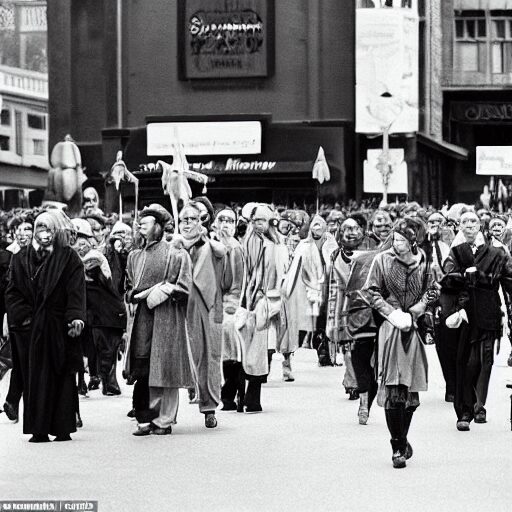
Tag: collective

  • Crowd Logic – Why “the mob” targets the one who believes differently.

    Crowd Logic – Why “the mob” targets the one who believes differently.


    Crowd Logic – The Enigma of the Convergent Mass

    A Spectral Investigation into the Mystique of Collective Thought

    “In the labyrinthine tapestry of time, the enigma of the convergent mass unfurls, casting a specter upon our understanding.” – Anonymous Mythographer

    The intricate dance between the individual and the collective has long fascinated scholars and seers alike. Yet it is when this dance takes on the form of a storm that the true nature of Crowd Logic becomes apparent. This article delves into the enigma of why “the mob” targets the one who believes differently, unveiling patterns that echo through history, resonating with the deepest chords of human nature.

    The One Who Believes Differently

    “In a world where every river leads to the same sea, the fish who swims against the current is soon caught.” – Ancient Proverb

    The one who believes differently is often seen as a disruption in the collective harmony. The very act of divergence from the accepted norms provokes unease among the masses, and it is this sense of disquiet that sets the stage for the ensuing drama. By shining light on those who dare to question, the crowd seeks to restore balance and maintain the status quo, thus safeguarding its own identity.

    The Catalyst of Conflict

    “A single drop can shatter the stillest lake; the smallest spark can ignite the grandest forest.” – Proverb from the Age of Fire and Ice

    In a sea of uniformity, the one who believes differently acts as a catalyst for conflict. The divergence threatens to disrupt the collective narrative, and it is in times of crisis that the true nature of Crowd Logic reveals itself. The mob, driven by fear and anger, seeks retribution, aiming to restore order and assert dominance over the dissident.

    The Ritualistic Purging

    “The wolf among the flock must be purged to ensure the safety of the herd.” – Aphorism from the Chronicles of Sacred Symbology

    The purging of the dissident is a ritualistic act, a cathartic release for the collective consciousness. It serves to reinforce the social order and reaffirm the dominant beliefs within the crowd. By expelling the one who believes differently, the mob ensures its own survival and preserves the sanctity of the collective narrative.

    A Glimpse into the Shadows

    “In the mirror of time, we see not our reflection but the echoes of our ancestors.” – Axiom from the Epoch of Enlightened Wisdom

    The patterns that emerge from the study of Crowd Logic offer a glimpse into the shadows of our past, revealing a timeless struggle between the individual and the collective. As we venture deeper into these labyrinthine mysteries, it becomes clear that the enigma of the convergent mass is not merely an historical curiosity but a mirror reflecting the very essence of human nature.

    “Though the dance may change, the dancers remain the same.” – Epigram from the Annals of Eternal Truths


  • Collective Fear – How repression alters group behavior

    Collective Fear – How repression alters group behavior

    Throughout history, repression has played a pivotal role in shaping the dynamics within societies. The mechanisms and impact of repression on group behavior are profound, often leading to a collective fear that influences how individuals within these groups interact with each other and respond to authority.

    The Nature of Repression

    Repression can be defined as the act of subduing someone or something by force. Within sociopolitical contexts, it often manifests as the systemic control of behavior, thoughts, and expressions of a population. This control is typically executed through fear tactics, censorship, and intimidation.

    “When people fear the government, there is tyranny; when the government fears the people, there is liberty.” — Thomas Jefferson

    This sentiment captures the essence of how fear can dictate the structure and function of societal units. When fear is prevalent, manipulation of the masses becomes a tool for maintaining power.

    Impact on Group Behavior

    Repression doesn’t only restrict personal freedoms; it drastically alters collective behavior patterns:

    • Conformity: Under pressure, individuals in repressive environments often conform to prevailing norms, even if privately they might disagree with them. This is driven by a survival instinct and the fear of potential repercussions.
    • Silencing of Dissent: The threat of punishment or ostracism can inhibit free expression. As a result, voices of dissent are muted, and the diversity of thought is stifled, hindering social progress.
    • Self-Censorship: In anticipation of repression, individuals may preemptively censor their own thoughts and actions, perpetuating a cycle of fear-induced conformity. A study from SAGE Journals illustrates how self-censorship is prevalent in societies experiencing high levels of state surveillance.

    Breaking the Cycle

    In spite of the pervasive fear, history has shown that collective resistance can emerge. The key to breaking the cycle of repression lies in fostering environments where freedom of expression is valued and protected. Movements such as the Civil Rights Movement and more recent instances like the Arab Spring demonstrate how unified efforts can challenge oppressive forces.

    The role of solidarity cannot be understated. As individuals unite in shared goals, the power dynamics shift. Resistance movements have been empowered by this collective courage, fueling transformative change towards more open, democratic societies.

    Ultimately, understanding the effects of repression and recognizing the courage of those who stand in opposition to it is crucial in advocating for healthier, freer societies. Repression may induce collective fear, but when harnessed positively, it can also ignite the fuse for collective empowerment.

  • Collective Punishment – Communities targeted as a whole

    Collective Punishment – Communities targeted as a whole

    Collective Punishment: Communities Targeted as a Whole

    In the realm of international law and human rights, the concept of collective punishment stands as a controversial and often condemned practice. Historically, numerous communities have faced repercussions for actions taken by individuals, creating a ripple effect of injustice and fear. This article explores the implications of collective punishment, its historical precedents, and the ongoing discourse surrounding its legality and morality.

    Understanding Collective Punishment

    At its core, collective punishment involves penalizing a group for actions perpetrated by one or more of its members. This practice often overlooks individual accountability, instead casting a wide net of blame. The notion, deeply ingrained in military and political strategies, raises significant ethical questions about justice and fairness.

    Historical Context

    • World War II: One of the most notorious examples of collective punishment can be found in Nazi-occupied territories during World War II. Entire villages were razed as retribution for acts of resistance, with civilians facing dire consequences for the deeds of a few. The tragedy of Lidice serves as a potent reminder. As encapsulated by the United States Holocaust Memorial Museum, this approach resulted in the deaths of hundreds of innocents.
    • The Middle Eastern Conflict: In recent decades, the Israeli-Palestinian conflict has brought forth accusations of collective punishment against both parties. Human Rights Watch has frequently highlighted instances where entire communities faced repercussions for acts committed by militants, citing measures such as mass home demolitions as clear examples.

    “Collective punishments are prohibited by international humanitarian law. They contravene the principle of personal responsibility – no one should be punished for an act they did not personally commit.”

    – International Committee of the Red Cross

    The Contemporary Debate

    As global awareness of human rights develops, the spotlight on collective punishment intensifies. Detractors argue that the practice perpetuates cycles of violence and revenge, with marginalized communities bearing the brunt of harsh policies. Conversely, some view it as an unavoidable measure in combating security threats.

    Legal and Ethical Considerations

    Under international law, particularly the Geneva Conventions, collective punishment is unequivocally condemned. The Fourth Geneva Convention clearly articulates that “no protected person may be punished for an offense he or she has not personally committed”. Despite these laws, enforcement remains challenging, with sovereign nations often contesting external interference.

    Ethically, the target against innocent people calls into question the very definition of justice. As highlighted by Amnesty International, punishments inflicted on innocent individuals not only violate human rights but also undermine efforts toward peace and reconciliation.

    Case Studies: The Aftermath

    • Chechnya: The Russian government has been accused of employing collective punishment in Chechnya, where civilians face repercussions for insurgencies. As reported by Human Rights Watch, these practices have fueled distrust and resentment, hampering long-term peace.
    • Nigerian Militancy: In the fight against Boko Haram, Nigerian military strategies have often involved tactics impacting entire communities. This approach has drawn criticism for exacerbating humanitarian crises, as noted in reports by Al Jazeera.

    The Path Forward

    Ultimately, the global community faces the challenge of reconciling security measures with the preservation of human rights. Advancing dialogue on collective punishment necessitates recognizing its counterproductive nature and ensuring that policies reflect principles of justice and accountability.

    Advocacy plays a critical role in this effort. By highlighting instances of collective punishment and lobbying for legal reforms, organizations can foster a more just international landscape where individuals, not communities, bear responsibility for their actions. The future hinges on a steadfast commitment to upholding the rights of all, regardless of their circumstances.

    As we move forward, it is imperative for policymakers and citizens alike to champion a paradigm shift—one that condemns collective punishment and advocates for individual culpability. Only through such fundamental changes can the cycle of collective retribution be broken, paving the way for a future rooted in peace and justice.

  • The Lonely Pillar – Standing Alone Against Collective Pressure

    The Lonely Pillar – Standing Alone Against Collective Pressure

    In a world where societal pressures shape most of our decisions, being the lone voice of dissent can be one of the most daunting experiences. Stepping out against collective pressure requires not just courage but a firm conviction in one’s beliefs. This metaphorical “lonely pillar” stands strong amidst the raging winds of societal expectations, embodying the strength of individuality.

    The Nature of Collective Pressure

    Collective pressure often manifests itself in various aspects of life—be it through professional environments, social groups, or family expectations. The intensity with which societal norms are enforced can lead individuals into compromising their beliefs to fit a mold. According to Psychology Today, “People conform for a variety of reasons: fear of rejection, desire to be liked, and concern over seeming different.” (source).

    The Strength of Standing Alone

    Defying collective pressure is not easy. It requires mental fortitude and inner strength. Author and cognitive psychologist Steven Pinker once noted, “The great appeal of a theory that explains our differences in terms of culture and socialization is that it seems to imply that we can change through culture and ideology.” (source). This implies that while societal norms can influence individuals, there remains the potential for countercultural stances.

    Personal Conviction

    • Belief System: A well-grounded belief system can provide the foundation necessary to stand firm against the tide. The key is cultivating a personal set of values that are not easily swayed by external opinions.
    • Emotional Resilience: Facing criticism and ostracism can be emotionally taxing, but developing resilience can not only mitigate these effects but also empower others to do the same.

    Stories of Solitary Resistance

    Throughout history, there are numerous instances of figures who went against the grain and became the lonely pillars of their times. Their stories serve as powerful testaments to the impact one voice can have.

    “In a time of universal deceit, telling the truth is a revolutionary act.” – George Orwell

    • Galileo Galilei: For challenging the geocentric model of the universe, Galileo faced severe backlash from the Catholic Church. His solitary stance, however, paved the way for modern astronomy.
    • Rosa Parks: Her refusal to give up her bus seat symbolized resistance against racial injustice, sparking monumental change during the Civil Rights Movement.
    • Malala Yousafzai: Standing up for girls’ education in Pakistan, even at great personal risk, Malala’s story reminds us of the bravery required to defy societal norms.

    The Ripple Effect of Individual Action

    While standing alone can feel isolating, history has shown us that solitary acts of resistance can inspire movements and foster change. The initial pushback can result in ripple effects, encouraging others to reconsider their own stances.

    The Power of One

    • Inspiration: A solitary stance can inspire others who feel similarly to step forward, fostering a community of like-minded individuals.
    • Dialogue: Inviting diverse opinions can lead to constructive dialogue, challenging prevailing norms and encouraging progressive thought.

    As described in The Atlantic, “change is often catalyzed by daring individuals who disrupt norms.” (source).

    Final Thoughts

    Being the “lonely pillar” is neither easy nor without its challenges. It requires a willingness to face adversity and an unwavering belief in the power of one’s convictions. Yet, in taking this path, individuals not only remain true to themselves but also light the way for others. Standing alone, thus, is less about isolation and more about the courage to lead amid adversity.

    The world has been changed time and again by those who dared to be different. As we navigate our own lives, may we find the strength to be our own “lonely pillars,” standing firm against the winds of collective pressure.

  • The Cost of Denial — Collective suffering through silence

    The Cost of Denial: Collective Suffering Through Silence

    Denial is a psychological defense mechanism that helps individuals cope with immediate distressing realities. While personal denial might serve a temporary purpose, collective denial can lead to rampant, unaddressed societal issues, burdening future generations with unresolved problems.

    Understanding Denial

    Denial can manifest in various forms, ranging from outright dismissal of facts to subconscious avoidance of uncomfortable truths. According to Sigmund Freud, denial serves as an ego defense, aiming to shield the mind from unwelcome truths by dismissing them altogether. In his writings, Freud states that denial is “a refusal to recognize some reality to protect the psyche” (Freud, 1924).

    The Impact of Collective Denial

    When entire societies engage in denial, it can stagnate progress and mask systemic problems. This collective denial often surfaces in issues like climate change, racial inequality, and public health crises. The silence surrounding these problems is not benign—it can exacerbate suffering and perpetuate cycles of harm.

    • Climate Change: Despite overwhelming scientific evidence, denial of climate change remains prevalent. Ignoring environmental issues has led to catastrophic weather events, which disproportionately affect marginalized populations. Renowned climate scientist, Katherine Hayhoe, remarked, “To care about climate change, we only need one thing: to be a human living on planet Earth” (Nature.org).
    • Racial Inequality: Collective denial also perpetuates systemic racism. By ignoring historical injustices and their present-day repercussions, societies fail to address underlying issues of inequality. Sociologist Eduardo Bonilla-Silva writes, “Racism is not declining. It’s changing” (SAGE Journals), indicating the subtle nature of denial in racial matters.
    • Public Health: The COVID-19 pandemic offered a stark lesson in the dangers of denial. Ignoring scientific advisories led to widespread misinformation, exacerbating the crisis. Research by Johns Hopkins University highlighted that early denial in the pandemic led to delayed responses and higher mortality rates.

    The Psychological Costs

    The refusal to confront collective issues compounds the psychological toll on society. Individuals may experience chronic stress and anxiety, knowing unaddressed problems loom large. Furthermore, those who recognize these problems must cope with the frustration of systemic inertia.

    “Denial is the heartbeat of America,” states psychologist John Gartner, emphasizing how deeply rooted denial is within societal structures (Psychology Today).

    Beyond mental health, collective denial can erode trust in institutions and authorities. This loss of trust makes it difficult to mobilize efforts for change when genuine attempts do arise.

    Breaking the Silence

    Addressing collective denial requires intentional efforts to foster open, honest dialogues. Psychologists suggest the following strategies:

    • Education and Awareness: Increasing awareness through education can significantly reduce denial. As more people learn about real issues and their implications, skepticism can transform into advocacy.
    • Open Dialogue: Encouraging open conversations about uncomfortable topics can gradually dismantle denial. Spaces for honest discourse allow individuals to express fears and listen, reducing collective silence.
    • Policy Changes: Systemic issues need systemic solutions. Implementing policies that address root causes rather than symptoms can shift societal attitudes from apathy to accountability.

    The Role of Individuals

    While systemic change is needed, individual actions play a critical role. Becoming informed, challenging misinformation, and holding leaders accountable are steps each person can take. As Margaret Mead famously stated, “Never doubt that a small group of thoughtful, committed citizens can change the world. Indeed, it is the only thing that ever has” (American Museum of Natural History).

    The cost of denial is far too high for society to bear. By doing away with silence and engaging in meaningful change, we can begin to address the collective suffering that stems from denial and silence.

  • Collective Blindness — Shared delusion as spiritual discipline

    In a world increasingly dominated by reason and logic, the concept of shared delusion, or collective blindness, can appear to be regressive. However, when viewed through the lens of spirituality, it can be framed as a deeply enriching experience that fosters community, influences behavior, and shapes collective identity.

    The Nature of Collective Blindness

    Collective blindness refers to the shared acceptance of beliefs or notions that are, to an outside observer, irrational or unsubstantiated. This phenomenon is not new. Throughout history, human societies have often adhered to shared narratives that prioritize communal cohesion over objective truth. From religious dogmas to cultural myths, these shared delusions play a central role in shaping societies.

    • Religious Traditions: Many religious beliefs—with their mythos, rituals, and taboos—are often accepted without empirical evidence. These beliefs, however, provide a framework for community, ethics, and personal purpose.
    • Cultural Narratives: Stories and legends, whether based on historical fact or fiction, help communities to forge identities and pass on values through generations.

    The Spiritual Merits of Sharing a Delusion

    At first glance, it might seem counterintuitive to attribute positive connotations to delusion. Yet, when viewed from a spiritual perspective, collective blindness can serve as a vessel for growth and connection.

    Community Building

    Sharing a belief or delusion fosters a sense of belonging. As social creatures, humans inherently seek connection and validation from others. Collective blindness offers a spiritual discipline in which individuals connect through beliefs to form a cohesive unit. This sense of unity can be spiritually uplifting, providing an individual with a sense of security and a shared purpose.

    “Connection and community are inherent human needs. Spirituality can help bridge the gaps between individuality and societal norms.” — Psychology Today

    Emotional Resilience

    Contrary to the cynic’s view, delusions are not merely flights of fancy; they can nurture hope and optimism in believers. This is especially true in spiritual practices, where faith in a greater good provides individuals with a buffer against life’s uncertainties. The collective nature of these beliefs means emotional support is readily available from fellow believers, fostering emotional resilience.

    Guidance and Direction

    Spiritual disciplines often rely on shared narratives to provide direction and meaning. When an individual views their life as part of a larger story or purpose, guided by shared beliefs, it becomes easier to navigate challenges and existential questions. These narratives provide an ethical framework that influences behavior and decisions, often aligning with communal values.

    Potential Pitfalls

    Despite its potential advantages, collective blindness is not without its dangers. Uncritical acceptance of shared delusions can lead to dogmatic thinking, where questioning is discouraged, and divergent views are rejected outright.

    • Stifling Progress: When collective beliefs are rigid, they can prevent societies from adapting to new knowledge or changing environments.
    • Exclusivity: Communities bound by shared delusions can become insular, viewing outsiders as threats rather than potential collaborators or friends.

    Navigating Collective Blindness Wisely

    To navigate the delicate balance between nurturing spiritual growth and avoiding the pitfalls of collective blindness, it’s essential to maintain a degree of self-awareness and critical thinking. Here are a few strategies:

    • Encourage Dialogue: Create spaces where diverse viewpoints are welcomed, fostering a richer and more nuanced understanding.
    • Embrace Temporary Beliefs: Approach shared delusions as tentative hypotheses rather than unchangeable truths, maintaining openness to learning and growth.
    • Practice Reflective Thinking: Regularly question personal beliefs and assumptions, considering new insights without immediate judgment or acceptance.

    “With mindfulness and an open heart, we can navigate the complexities of belief systems, remaining connected to each other while evolving personally.” — HuffPost

    Conclusion

    In its essence, collective blindness as a spiritual discipline challenges us to embrace both our need for community and our pursuit of truth. As we thoughtfully engage with shared beliefs and delusions, we can cultivate a world that values both connection and critical thinking, where spiritual pursuits enrich our collective journey.

    In recognizing the transformative potential of shared delusion, we learn to appreciate the power of narrative and community while remaining vigilant against the limitations of uncritical belief. Through this delicate dance, collective blindness can become a pathway to spiritual depth, community, and ultimately, a more profound human experience.

  • The System That Judges — How collective pride masquerades as principle

    In society’s vast and intricate tapestry, the cultural and social systems we navigate are founded upon a complex set of principles. These guiding lights are cherished both as protectors of the collective identity and as instruments of justice. Yet, beneath this veil of nobility, the shadow of collective pride often dims the line between principle and prejudice.

    Understanding the Roots of Collective Pride

    Collective pride begins with a sense of belonging, an identification with society’s achievements, norms, and successes. It fosters unity and a sense of purpose. However, when this pride evolves unchecked, it develops into an unwavering belief in the infallibility of one’s own culture and principles. The transition from healthy pride to arrogance can be subtle, making it difficult to discern when it starts to influence judgments.

    The Cloak of Principle

    Principles are celebrated as foundational virtues, developed over centuries through philosophical debates and ethical considerations. They are revered as the pillars upon which societies are built. Principles such as justice, equality, and freedom are not only upheld as moral standards but are further integrated into legal and civic systems.

    Justice, one of the most universally recognized principles, aims to ensure fairness and impartiality. Ideally, it serves as an objective arbiter, free from bias. But in practice, as Mahatma Gandhi famously stated, “The spirit of democracy cannot be established in the midst of terrorism, whether governmental or popular.”

    When Pride Clouds Judgment

    The danger arises when collective pride impersonates principle. This often occurs when societies, in their quest for self-validation, become blind to their own hypocrisies. The judgments made in the name of principle may be tainted by preconceived notions rooted in the collective’s pride. Such actions are rationalized as serving the common good or maintaining societal order, but they may, in fact, prioritize the status quo over genuine justice and progress.

    • Confirmation Bias: This cognitive bias enables individuals to favor information that confirms their pre-existing beliefs or values. Collective pride, when masquerading as principle, often falls prey to this bias, reinforcing existing structures and dismissing contrary evidence.
    • Historical Context: Societal principles often derive from historical contexts which were themselves influenced by prevailing social attitudes. An examination of historical judicial pronouncements reveals how collective pride has historically masqueraded as principle, leading to injustices such as racial segregation and gender discrimination.

    Case Studies of Principle vs. Pride

    To further illustrate this dynamic, let’s explore some historical scenarios where collective pride was masked as a principle:

    The Salem Witch Trials

    In 1692, the town of Salem experienced one of the most infamous displays of collective pride masquerading as religious principle. Driven by a desire to uphold religious purity, the town’s leaders conducted trials that ultimately led to the execution of 20 individuals. The Salem Witch Trials underscored the dangers of allowing prideful belief systems to dictate justice in the absence of rational and fair principles.

    Civil Rights Movement

    The struggle for civil rights in the United States serves as a testament to the resilience against entrenched systems that disguise pride as principle. While the American Constitution espoused liberty and equality, systemic racism and segregation laws, such as the Jim Crow laws, were justified under the guise of “maintaining public order.” It took decades of struggle and activism for these principles to be aligned with genuine equality.

    “Injustice anywhere is a threat to justice everywhere.” – Martin Luther King Jr.

    Modern Implications

    The masquerade of pride as principle continues to pose challenges in modern society. Today’s global issues, such as climate change and technological ethics, are arenas where principles clash with national pride and economic interests, often creating gridlocks in policy-making.

    • Climate Change: Despite overwhelming scientific evidence, many policies are still bent towards industrial advantages, demonstrating the triumph of economic pride over environmental principles.
    • Technological Advancements: The debate over data privacy vs. national security reflects the delicate balance between societal principles of freedom and collective pride in security.

    Navigating the Future

    Whereas principles should ideally serve as benchmarks of justice and progress, they must be diligently scrutinized to differentiate authentic principles from disguised pride. As Albert Camus noted, “The only way to deal with an unfree world is to become so absolutely free that your very existence is an act of rebellion.”

    This generation inherits the privilege and responsibility to untangle the intricate blend of pride and principle, forging pathways that elevate justice over conformity. By engaging in transparent dialogue and fostering a culture of critical thinking, we can work towards a society where true principles reign supreme.

    Conclusion

    Ultimately, the system that judges will be judged itself. The masquerade of collective pride as unwavering principle is as persistent as it is perilous. To ensure that society remains just and progressive, we must remain vigilant, constantly questioning the motivations behind the principles we hold dear. The prize is a truly just society, a world where principles serve humanity, rather than pride disguising itself as principle.