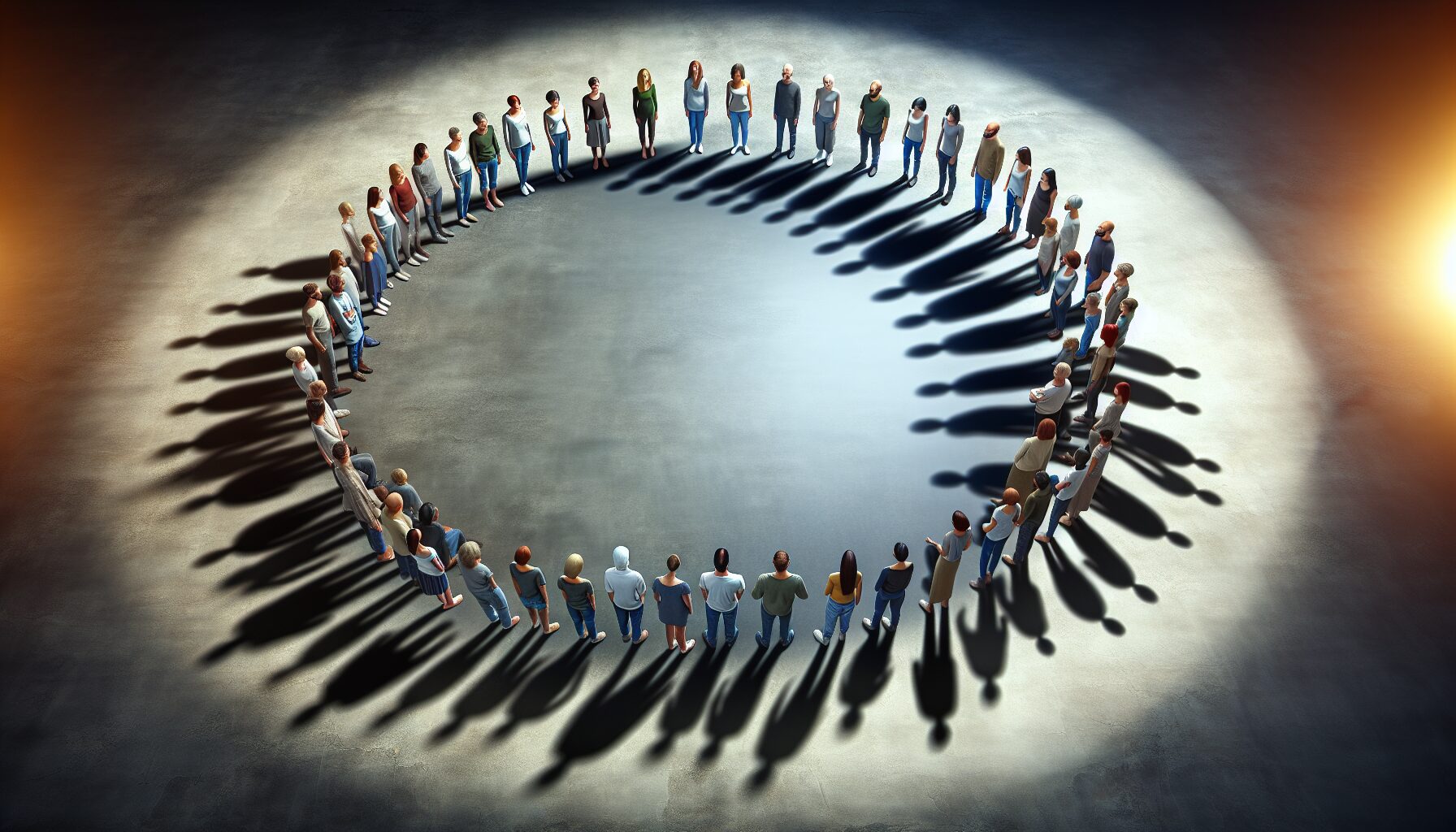
In a world increasingly connected by digital platforms yet starkly divided by ideologies, the phenomenon of communities creating enemies out of perceived “others” is more pertinent than ever. This process, often fueled by misunderstanding, ignorance, and fear, creates a vicious circle that perpetuates conflict and alienation.
The Dynamics of Othering
Othering is a universal social occurrence where communities define themselves by distancing from groups they perceive as different. According to Sociology Today, this demarcation is not inherently negative but becomes problematic when it fosters hostility and prejudice. It’s an ancient instinct of tribalism manifesting in contemporary society, amplified by media and political rhetoric. Dr. Lisa Barrett, a renowned psychologist, describes this impulse as “a survival mechanism gone awry,” where identifying threats outside our group provided safety for our ancestors.
The Role of Media and Politics
The media often plays a central role in this cycle by reinforcing stereotypes and sensationalizing conflicts. In an article by BBC News, it is noted that “media outlets, driven by the chase for higher ratings, sometimes exaggerate differences to capture audience attention.” Politics, too, thrives in this environment, where leaders gain momentum by rallying support against a common enemy, real or imagined. This was evident in the polarizing general elections of several democratic nations recently.
Breaking the Cycle
To dismantle this cycle, communities must foster communication and empathy. Encouraging nuanced media literacy and critical thinking can help individuals question and challenge the narratives they consume. Educational systems can equip the younger generation with tools to discern between open dialogue and propaganda. As Civic Engagement Analyst Marta Santos suggests, “Building bridges starts with shared experiences, which can break down preconceived notions and humanize the ‘enemy.’”
“In delegitimizing others, we delegitimize ourselves.” — Nelson Mandela
The Path Forward
Communities worldwide are beginning to see the value in coalescing past differences. Initiatives such as cultural exchange programs and interfaith dialogues are proving instrumental in this transformation. By recognizing our shared humanity, replacing blame with understanding, and practicing collective introspection, societies can redefine what it means to live together in peace.
The mission is clear: break the circle of blame, and move forward with compassion and unity. While this path is fraught with challenges, it offers a promising road to a more inclusive and harmonious world.