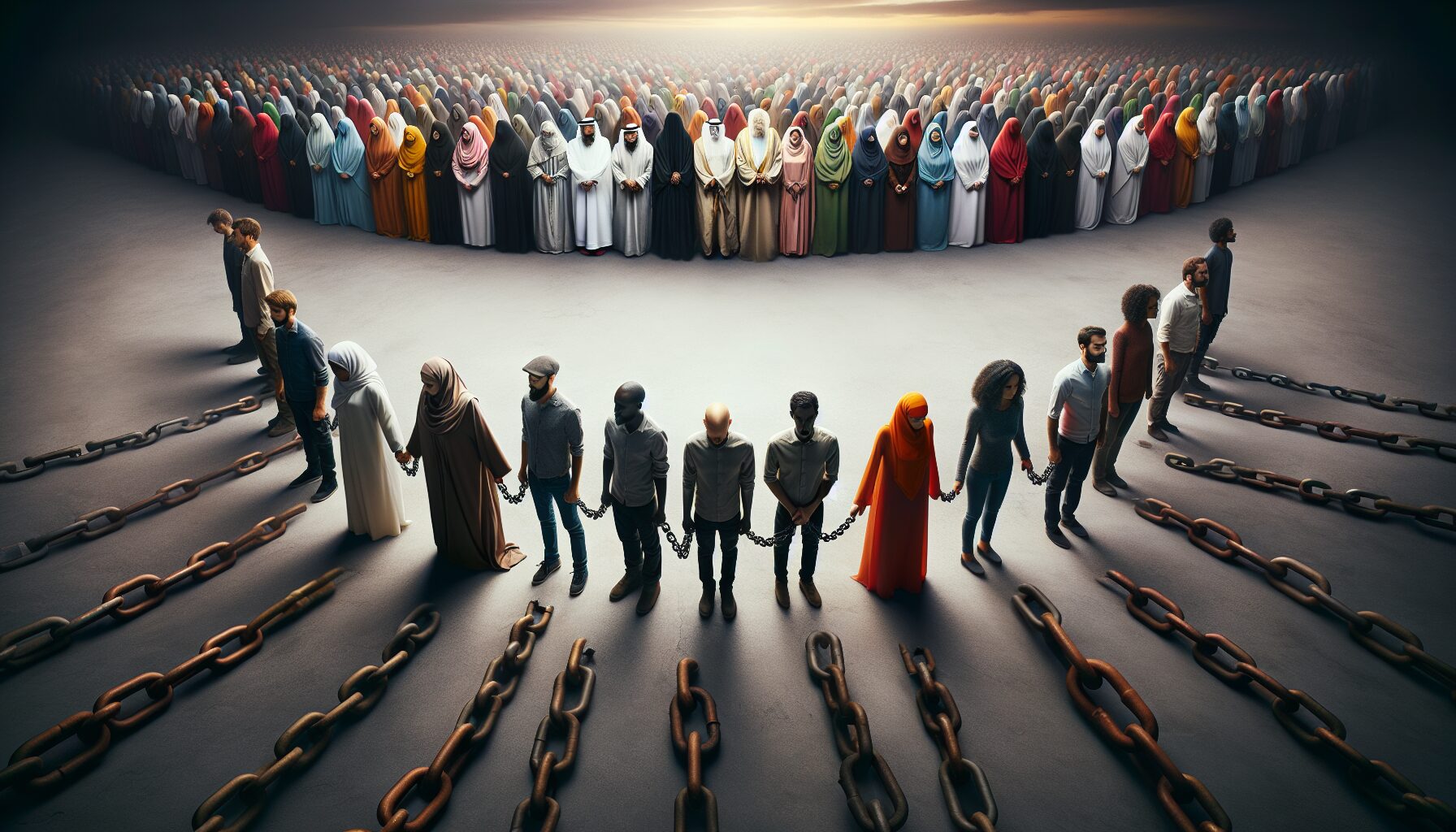
Solidarity or Silence: Choices Facing Persecuted Believers
In a world where freedom of belief is a fundamental right, millions of individuals still face severe persecution for their faith. The dilemma they face is one of solidarity or silence—to stand firm and unite with others under shared beliefs or to remain silent for the sake of safety and survival. This article delves into the choices facing persecuted believers, exploring the implications and the courage it takes to maintain faith under duress.
The Context of Religious Persecution
According to the Open Doors USA, over 360 million Christians live in places where they experience high levels of persecution and discrimination. Other religious communities face similar challenges. This persecution takes many forms, from societal discrimination to state-sponsored oppression, and it often forces believers to choose between solidarity and silence.
A Historical Perspective
“Throughout history, religious persecution has been a dark backdrop against which the human spirit’s resilience and tenacity are tested.”
The persecution of religious communities is not a modern phenomenon. Historical records, like those of the early Christians under Roman rule or Jewish communities throughout medieval Europe, illustrate recurring cycles of faith-driven repression.
Solidarity: The Choice to Unite
For many believers, standing in solidarity with their communities provides strength and resilience. By uniting, persecuted believers can maintain their cultural identity and collectively oppose repression, ensuring that their faith survives beyond oppression.
- Cohesion and Support: Being part of a faith community offers emotional and material support. This unity creates safe spaces where believers can practice their faith openly and support each other’s struggles.
- Advocacy and Awareness: Unified voices can raise global awareness, prompting international advocacy and intervention. Organizations like Human Rights Watch document abuses and advocate for these communities, amplifying their voices worldwide.
Solidarity, however, comes with profound risks. As noted by The Guardian:
“Aligning with religious communities in the face of persecution often attracts even more severe crackdown, leading to arrests or worse.”
Silence: The Strategy of Survival
In contrast, some believers choose the path of silence as a means of survival. This strategy involves concealing one’s faith or practicing in clandestine environments, prioritizing personal safety over public expression.
- Safety First: By maintaining a low profile, individuals can avoid arrest, detainment, or violence, allowing them to survive under oppressive regimes.
- Quiet Resilience: For some, practicing their faith privately can sustain their spiritual life without the added peril of public exposure.
Yet, choosing silence is in itself a profound inner conflict for many believers:
“Adopting silence feels akin to denying one’s faith, carrying an emotional weight that can be as burdensome as overt persecution.”
The Global Response
Internationally, there is an increasing call to action against religious persecution. Efforts to support persecuted believers include diplomatic pressures, sanctions against oppressive regimes, and asylum programs for those fleeing severe persecution. The U.S. Commission on International Religious Freedom (USCIRF) actively monitors religious freedoms worldwide, influencing U.S. policy to better protect religious minorities.
Global advocacy also focuses on empowering these communities to organize and speak out, but with careful strategic consideration to avoid exacerbating their vulnerabilities.
A Complex Choice
The choice between solidarity and silence is complex, with no one-size-fits-all solution. Each choice carries inherent risks and rewards, determined by the socio-political context and personal circumstances.
- For some, solidarity offers a sense of purpose and community, an opportunity to make injustices visible at a global scale.
- For others, silence is a necessary shield, allowing them to live another day, hoping circumstances will eventually change.
Conclusion
As the international community reflects on its role in protecting the freedom of belief, it remains crucial to respect the individual choices of persecuted believers—inspiring both solidarity and the right of survival through silence. By understanding and supporting these choices, the world can work towards a future where freedom of belief is not a cause for persecution but a celebrated component of the human tapestry.
Real change requires a concerted effort, uniting global powers and grassroots activists alike, to dismantle the systems that perpetuate religious oppression. Ultimately, solidarity with oppressed believers, whether through shared voices or respectful silence, remains a noble pursuit in the quest for universal human rights.