Tag: behavior

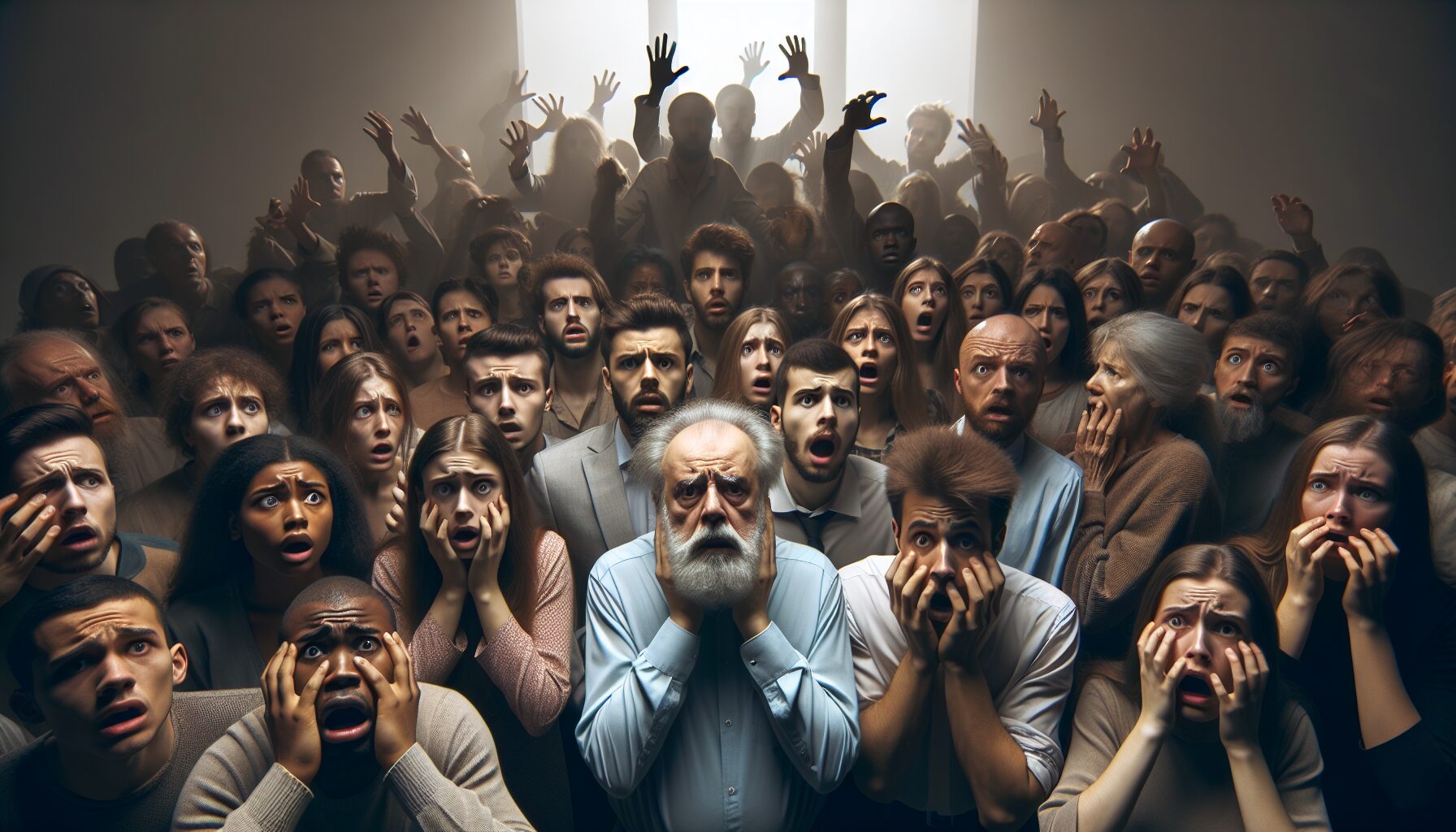
  • Collective Fear – How repression alters group behavior

    Collective Fear – How repression alters group behavior

    Throughout history, repression has played a pivotal role in shaping the dynamics within societies. The mechanisms and impact of repression on group behavior are profound, often leading to a collective fear that influences how individuals within these groups interact with each other and respond to authority.

    The Nature of Repression

    Repression can be defined as the act of subduing someone or something by force. Within sociopolitical contexts, it often manifests as the systemic control of behavior, thoughts, and expressions of a population. This control is typically executed through fear tactics, censorship, and intimidation.

    “When people fear the government, there is tyranny; when the government fears the people, there is liberty.” — Thomas Jefferson

    This sentiment captures the essence of how fear can dictate the structure and function of societal units. When fear is prevalent, manipulation of the masses becomes a tool for maintaining power.

    Impact on Group Behavior

    Repression doesn’t only restrict personal freedoms; it drastically alters collective behavior patterns:

    • Conformity: Under pressure, individuals in repressive environments often conform to prevailing norms, even if privately they might disagree with them. This is driven by a survival instinct and the fear of potential repercussions.
    • Silencing of Dissent: The threat of punishment or ostracism can inhibit free expression. As a result, voices of dissent are muted, and the diversity of thought is stifled, hindering social progress.
    • Self-Censorship: In anticipation of repression, individuals may preemptively censor their own thoughts and actions, perpetuating a cycle of fear-induced conformity. A study from SAGE Journals illustrates how self-censorship is prevalent in societies experiencing high levels of state surveillance.

    Breaking the Cycle

    In spite of the pervasive fear, history has shown that collective resistance can emerge. The key to breaking the cycle of repression lies in fostering environments where freedom of expression is valued and protected. Movements such as the Civil Rights Movement and more recent instances like the Arab Spring demonstrate how unified efforts can challenge oppressive forces.

    The role of solidarity cannot be understated. As individuals unite in shared goals, the power dynamics shift. Resistance movements have been empowered by this collective courage, fueling transformative change towards more open, democratic societies.

    Ultimately, understanding the effects of repression and recognizing the courage of those who stand in opposition to it is crucial in advocating for healthier, freer societies. Repression may induce collective fear, but when harnessed positively, it can also ignite the fuse for collective empowerment.

  • The Moral Minimum — The false comfort of “not too bad”

    The Moral Minimum — The false comfort of “not too bad”

    In an era where ethical considerations are increasingly prominent in both corporate and personal decision-making, the concept of the “moral minimum” emerges as a crucial pivot point. What does it mean to just meet the baseline of ethical behavior, and why is settling for the moral minimum a false comfort?

    Defining the Moral Minimum

    At its core, the moral minimum refers to meeting the least strict threshold of ethical behavior to remain acceptable within societal norms. This minimum often aligns with legal requirements or basic moral principles, allowing individuals and organizations to function without inviting overt criticism.

    • Legal Compliance: Many equate ethical behavior with compliance. If it’s legal, it’s deemed ethical.
    • Social Norms: Actors in society may follow widely accepted behaviors to avoid social backlash.
    • Basic Awareness: A fundamental awareness of right and wrong often constitutes the moral minimum for personal conduct.

    “The relationship between legal and ethical is at times elusive. Legal standards are specific, while ethical standards are often more ambiguous, subjective, and abstract.” – Markkula Center for Applied Ethics

    The Seduction of “Not Too Bad”

    Meeting the moral minimum gives rise to a concept best captured by “not too bad.” When actions align with this minimal threshold, they inherently shield individuals and organizations with a buffer against more significant moral scrutiny.

    Common Justifications

    • Comparative Justification: By comparing oneself to worse behaviors, mediocrity in ethical standings appears relatively benign.
    • Past Behavior Justification: Historical integrity or adherence to bare minimum standards can falsely justify questionable current actions.
    • Collective Responsibility: Group consensus that meets only the minimum absolves individual push for higher ethical standards.

    Real-world Implications

    Across various domains, setting the moral minimum as the benchmark instead of reaching for moral excellence can have destructive consequences.

    Corporate Ethics

    Consider the realm of corporate governance. Companies focused merely on complying with regulations rather than embedding ethics into their core can cultivate toxic environments.

    “Building an ethical culture begins at the top with leaders who think and act beyond compliance.” – Harvard Business Review

    Environmental Stewardship

    Environmental initiatives often seem to stall at meeting regulatory requirements. However, as climate change escalates, such minimal efforts may prove too late.

    “The window for limiting global warming by scaling up low-carbon energy is narrowing.” – IPCC Report

    Moral Minimum in Personal Ethics

    On a personal level, navigating life with a “not too bad” mantra not only invites complacency but also potentially stifles moral growth. Individuals who brush aside more profound moral imperatives risk losing their moral fiber.

    The Incremental Slippery Slope

    • Indifference: Consistently choosing the moral minimum can morph into apathy over time.
    • Compromise: Moral compromises that start small may encourage progressive drift into graver ethical territory.
    • Influence: Personal ethical stagnation in moral development influences peers, promulgating a culture of moral mediocrity.

    Confronting Complacency: The Way Forward

    To transcend beyond the moral minimum, individuals and organizations need a reinvigorated focus on moral leadership and ethical vitality.

    Embracing Ethical Excellence

    • Proactive Ethical Evaluation: Constantly assess actions against higher ethical standards, transcending legalities to encompass broader moral implications.
    • Moral Education: Emphasizing ethical education over mere compliance training molds future leaders with a focus on what’s right rather than what is required.
    • Cultural Shifts: Cultivate environments where aspiring beyond the minimum becomes the norm, incentivizing ethical excellence.

    Conclusion

    The false comfort of the moral minimum lies in its effectiveness at providing superficial solace without instigating meaningful progress. The real challenge and ultimate opportunity lie in breaking free from this comfortable zone, raising our ethical consciousness, and striving towards moral excellence.

    “If we want to create a world that is not only technologically advanced but also enhances well-being, ethical considerations must be at the core of decision-making in the 21st century.” – Carnegie Council for Ethics in International Affairs

    True ethical progress requires a shift from apathetic acceptance of “not too bad” and embracing a proactive journey towards ethical excellence in every aspect of life.