Tag: ancient

  • Tradition Under Siege – Ancient faiths facing modern power

    Tradition Under Siege – Ancient faiths facing modern power

    Tradition Under Siege: Ancient Faiths Facing Modern Power

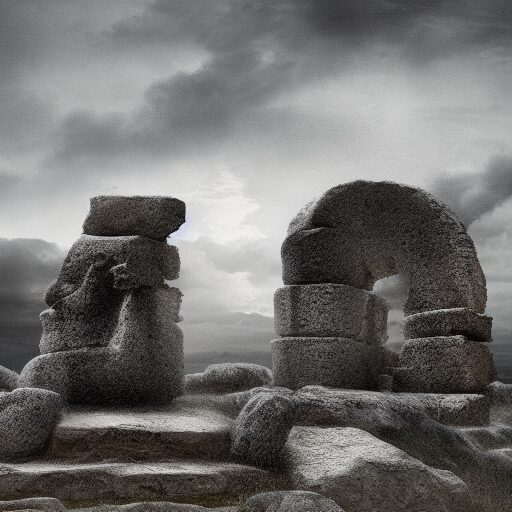
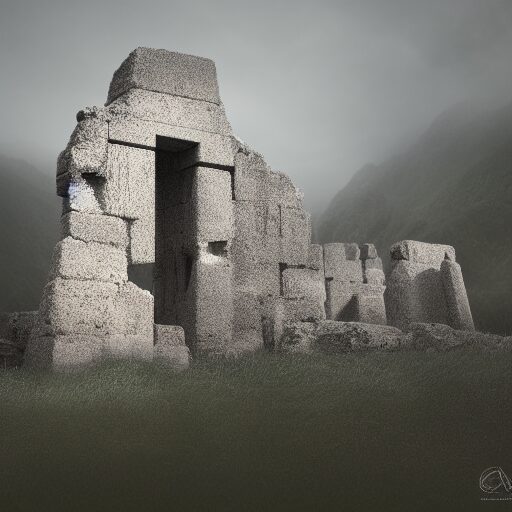
    In a rapidly evolving world, ancient faiths find themselves in an ongoing struggle to preserve their traditions against the tides of modernization and globalization. These religious practices, some of which have existed for thousands of years, are increasingly challenged by societal changes, technological advancements, and political pressures.

    The Clash of Old and New

    As globalization continues its relentless march, traditional beliefs often come into conflict with new ideas and practices. The Economist notes, “Traditional societies face pressure to adapt to new cultural norms and technologies, impacting both their spiritual and daily lives” (The Economist).

    • Technology’s Double-Edged Sword: While modern technology offers platforms for wider communication and the spread of traditional cultures, it also brings westernized cultural values that can dilute or replace indigenous beliefs.
    • Political Pressures: Governments may impose regulations that conflict with religious practices. Countries like China and India face criticism for policies seen as infringing on religious freedoms.

      “Faith communities struggle to maintain their customs in the face of political frameworks that often prioritize national unity over individual freedoms,” stated a report from Human Rights Watch.

    Preservation Efforts

    To combat these challenges, numerous initiatives worldwide aim to preserve and honor these ancient traditions:

    • Cultural Education: Some communities have initiated educational programs to teach younger generations their history and traditions. For instance, Maori schools in New Zealand incorporate traditional crafts and language into their curricula.
    • Digital Archives: Projects like the Endangered Languages Project work to document and archive obscure languages that are at risk of extinction due to declining native speaker numbers.

    Global Support and Recognition

    International organizations are also stepping up to support the survival of these cultural heritages. UNESCO, for instance, has designated numerous traditional practices as part of the “Intangible Cultural Heritage of Humanity.” Such recognition helps raise awareness and appreciation for these practices globally.

    The intersection of ancient faiths and modern power presents both challenges and opportunities. While the clash of cultures threatens the continuity of traditional practices, increased global attention and efforts at preservation signify hope for the endurance of these ancient legacies. As the world becomes more interconnected, the preservation of these sacred traditions becomes not just about maintaining cultures but also about fostering global diversity and understanding.

  • Judgment in the Temple — The ritual of exclusion repeated

    Judgment in the Temple — The ritual of exclusion repeated

    Judgment in the Temple — The Ritual of Exclusion Repeated

    Judgment in the Temple — The Ritual of Exclusion Repeated

    In a cosmos where conflict between species is rare, the ritual known as the “Judgment in the Temple” stands as a poignant reminder of ancient prejudices. This ceremonial practice, carried out by the enigmatic Zilnari—a species celebrated for their wisdom and long-standing peace treaties—serves as an echo of humanity’s historical proclivity for exclusion.

    The Origins of Exclusion

    The Zilnari trace the roots of the “Judgment in the Temple” back thousands of cycles. As chronicled in ancient texts, the rite was initially a singling out of those deemed unworthy to partake in communal life—a stark procedure aimed at maintaining societal purity. As the Zilnari believed, “In the separation of the chaff, the grains of excellence are revealed.”

    The Ritual Unveiled

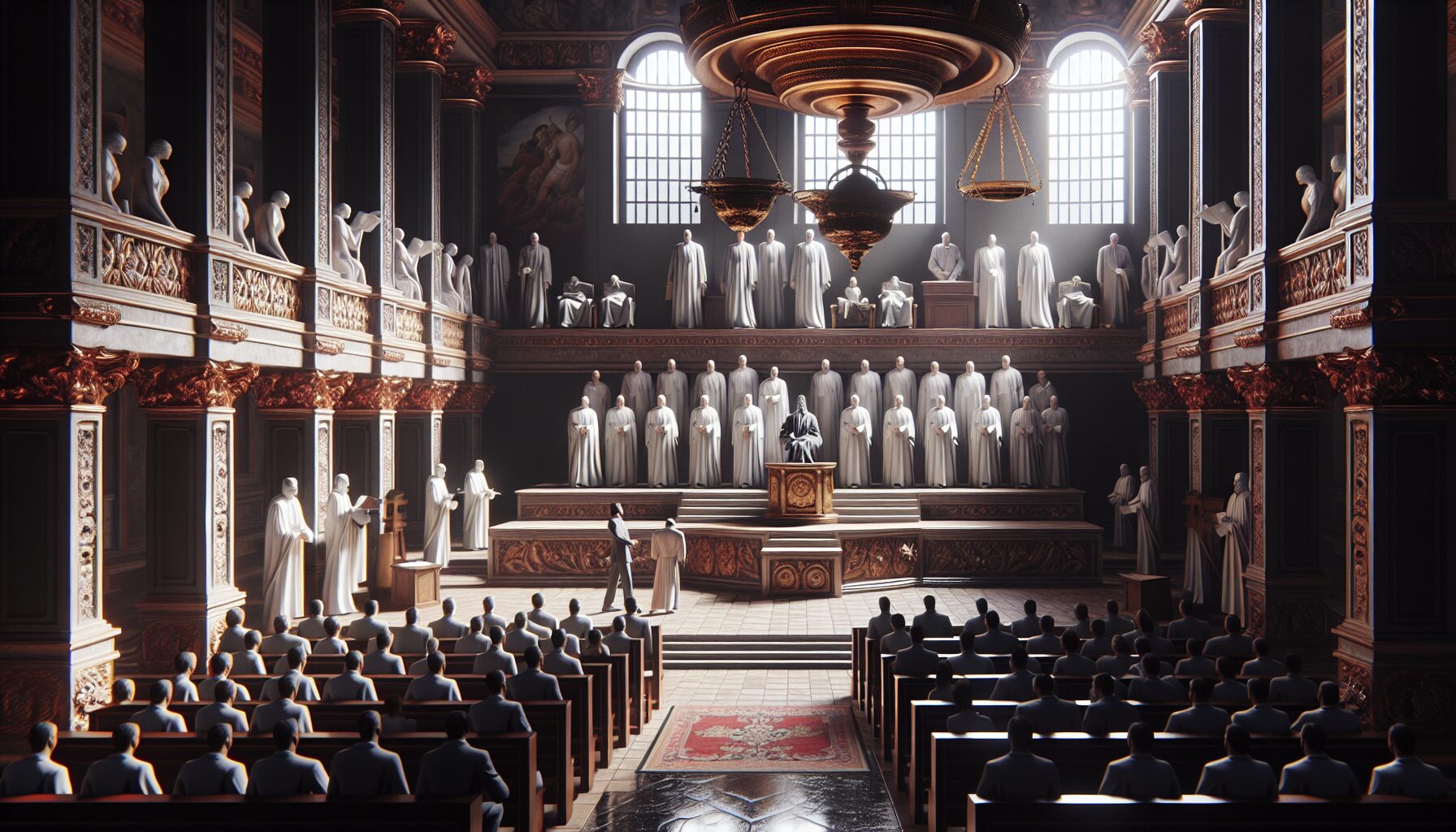
    Today’s iteration of the rite, though far gentler, still carries the weight of judgment. Held within the celestial halls of the Temple Nkar-Imal, Zilnari elders preside over a congregation of diverse species, vetting new arrivals who wish to integrate into their society. Each participant undergoes a series of challenges designed to assess their harmony with Zilnari values.

    • The Test of Silence: Challengers must navigate complete silence, reflecting on inner peace and the absence of personal disorder.
    • The Trial of Unity: Here, the individual must demonstrate their capacity to contribute positively to a collective effort.

    “Though the days of harsh exclusion are past, the essence of discernment nurtures a prosperous future.”

    As the Temple Master puts it, “Though the days of harsh exclusion are past, the essence of discernment nurtures a prosperous future.”

    The Echoes of Historical Exclusion

    While the “Judgment in the Temple” might appear obsolete, it mirrors humanity’s own historical barriers—restrictive immigration policies, societal segregation, and the frequent othering of those perceived as outsiders. These human practices served to define boundaries, ostracizing different communities under the guise of cultural protection.

    It begs a deeper thought about our current progress. While galaxies apart, both Zilnari and human societies must contend with the remnants of these exclusionary impulses. As author and philosopher Alan Watts once remarked, “We do not ‘come into’ this world; we come out of it, as leaves from a tree.” Such wisdom urges one to consider interconnectedness and acceptance as fundamental life forces.

    In an ever-expanding universe, embracing diverse existences might be our ultimate challenge and greatest opportunity. The cycle continues—both in ancient Zilnari rites and human political arenas—with hope for a more inclusive, unified future.