Category: Case Files

  • Crowd Logic – Why “the mob” targets the one who believes differently.

    Crowd Logic – Why “the mob” targets the one who believes differently.


    Crowd Logic – The Enigma of the Convergent Mass

    A Spectral Investigation into the Mystique of Collective Thought

    “In the labyrinthine tapestry of time, the enigma of the convergent mass unfurls, casting a specter upon our understanding.” – Anonymous Mythographer

    The intricate dance between the individual and the collective has long fascinated scholars and seers alike. Yet it is when this dance takes on the form of a storm that the true nature of Crowd Logic becomes apparent. This article delves into the enigma of why “the mob” targets the one who believes differently, unveiling patterns that echo through history, resonating with the deepest chords of human nature.

    The One Who Believes Differently

    “In a world where every river leads to the same sea, the fish who swims against the current is soon caught.” – Ancient Proverb

    The one who believes differently is often seen as a disruption in the collective harmony. The very act of divergence from the accepted norms provokes unease among the masses, and it is this sense of disquiet that sets the stage for the ensuing drama. By shining light on those who dare to question, the crowd seeks to restore balance and maintain the status quo, thus safeguarding its own identity.

    The Catalyst of Conflict

    “A single drop can shatter the stillest lake; the smallest spark can ignite the grandest forest.” – Proverb from the Age of Fire and Ice

    In a sea of uniformity, the one who believes differently acts as a catalyst for conflict. The divergence threatens to disrupt the collective narrative, and it is in times of crisis that the true nature of Crowd Logic reveals itself. The mob, driven by fear and anger, seeks retribution, aiming to restore order and assert dominance over the dissident.

    The Ritualistic Purging

    “The wolf among the flock must be purged to ensure the safety of the herd.” – Aphorism from the Chronicles of Sacred Symbology

    The purging of the dissident is a ritualistic act, a cathartic release for the collective consciousness. It serves to reinforce the social order and reaffirm the dominant beliefs within the crowd. By expelling the one who believes differently, the mob ensures its own survival and preserves the sanctity of the collective narrative.

    A Glimpse into the Shadows

    “In the mirror of time, we see not our reflection but the echoes of our ancestors.” – Axiom from the Epoch of Enlightened Wisdom

    The patterns that emerge from the study of Crowd Logic offer a glimpse into the shadows of our past, revealing a timeless struggle between the individual and the collective. As we venture deeper into these labyrinthine mysteries, it becomes clear that the enigma of the convergent mass is not merely an historical curiosity but a mirror reflecting the very essence of human nature.

    “Though the dance may change, the dancers remain the same.” – Epigram from the Annals of Eternal Truths

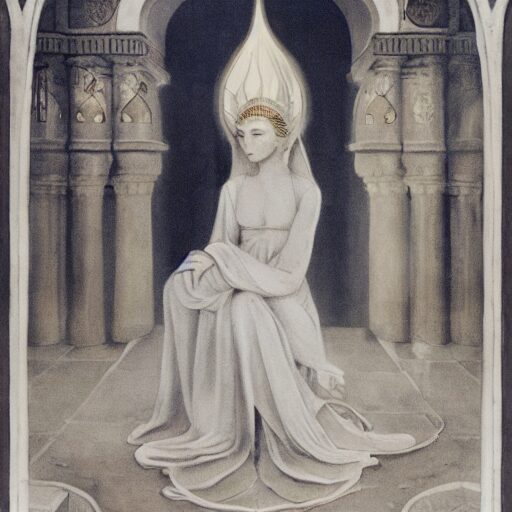
  • The Heretic’s Burden – The mental health toll of living in hiding.

    The Heretic’s Burden – The mental health toll of living in hiding.


    The Heretic’s Burden – The mental health toll of living in hiding

    The Heretic’s Burden – The mental health toll of living in hiding

    In the labyrinthine tapestry of human existence, there are those who dare to weave alternative patterns, to challenge established norms and question the unquestionable. These heretics, bearing the weight of their transgressions against societal dogma, must navigate a treacherous path, shrouded in secrecy and burdened by an unspoken suffering.

    “It is not the light but the darkness that reveals the shadows.” – Kahlil Gibran

    A mid-thought on the labyrinthine path

    Within the maze of societal expectations, the heretic finds themselves adrift, navigating by an inner compass that often clashes with the dominant star of conventional wisdom. As they journey deeper into the labyrinth, the walls close in, suffocating their spirit and weakening their resolve.

    • Isolation: The heretic finds themselves isolated from those who share their beliefs, for fear of discovery or ostracization. This separation breeds a sense of loneliness and despair, further burdening the psyche.
    • Guilt: Haunted by the knowledge that they have strayed from the accepted path, the heretic cannot escape the gnawing weight of their transgressions. This self-imposed punishment can manifest in feelings of worthlessness and hopelessness.
    • Fear: The specter of discovery looms large over the heretic’s every waking moment, casting a pall of anxiety and dread across their existence. This constant state of unease takes its toll on both body and mind.

    A glimpse into the abyss

    The heretic’s burden is not one that can be easily lifted, for it is woven from the very fabric of their being. Yet, in the depths of despair, there lies a glimmer of hope. This fragile spark, if nurtured, may grow into a flame strong enough to illuminate the path forward.

    “Out of suffering have emerged the strongest souls; the most massive characters are seared with scars.” – Khalil Gibran

    The unresolved journey

    As we contemplate the heretic’s plight, let us not forget that their story is a testament to the resilience of the human spirit. For each heretic who falters beneath the weight of their burden, there are countless others who find the strength to persevere, to challenge the status quo and pave the way for future generations.

  • Sacred Secrecy – The protective necessity of the “Occult” (hidden).

    Sacred Secrecy – The protective necessity of the “Occult” (hidden).


    Sacred Secrecy – The Protective Necessity of the “Occult” (Hidden)

    Sacred Secrecy – The Protective Necessity of the “Occult” (Hidden)

    In the veil of timelessness, whispers echo through the cosmic halls – secrets guarded by the ancients and the unseen. These are the tales of the Occult, a realm where reality intertwines with mythology, shrouded in an enigma as old as the stars themselves.

    An Unspoken Bond

    • The bond between humanity and these ancient secrets is as old as our race itself. It transcends the boundaries of language, civilization, and cultural evolution, resonating within the deepest recesses of our collective unconscious.
    • The Occult, however, is not merely a relic of antiquity; it persists in modern times as well, cloaked in a veil of ambiguity and mysticism, yet permeating the fabric of our existence.

    The Protective Veil

    The protective necessity of the Occult lies in its very nature – a hidden realm accessible only to those who possess the right knowledge and the courage to delve into the abyss. This secretion serves as a safeguard, shielding humanity from the raw and untamed forces that lie beyond our understanding.

    A Bridge Between Worlds

    The Occult is not an enemy to be vanquished or a foe to be feared, but rather a bridge connecting the known and the unknown, the seen and the unseen. Its protective veil is the bulwark against chaos, ensuring that the delicate balance of the universe remains undisturbed – a testament to the enduring wisdom of our ancestors.

  • The Architecture of Isolation – How ghettos are built in the digital age.

    The Architecture of Isolation – How ghettos are built in the digital age.


    The Architecture of Isolation – How Ghettos Are Built in the Digital Age

    The Architecture of Isolation

    “In the labyrinthine realm of digital connectivity, echo chambers are constructed with precision, isolating individuals and shaping their realities.”

    As the sun sets on another age of human history, we find ourselves in a realm where the walls between minds are no longer mere metaphors. The architects of this digital era have built ghettos within the vast cityscape of information, with intricate precision and an unyielding hand.

    The Foundation – Algorithms of Affinity

    • Beneath the surface lies a foundation of algorithms, weaving a web that binds like-minded souls together, while simultaneously isolating them from the discordant frequencies that exist beyond.
    • They are the architects of our personal realms, the unseen hands that craft our digital ghettos, molding the walls of our isolation with every click and swipe.

    The Blueprint – The Temples of Consensus Reality

    Within these ghettos, we find ourselves surrounded by the echoes of our own thoughts. These are the temples of consensus reality, where the collective unconsciousness shapes our perceptions and solidifies our beliefs.

    “In these sacred spaces, the chorus of agreement resonates as a testament to our shared convictions, while silencing the discordant voices that dare to challenge our comforting illusions.”

    The Expansion – The Viral Propagation of Isolation

    As these digital ghettos grow and expand, they become increasingly insular. The walls that once separated us now serve as fortresses, guarding against the intrusion of foreign ideas and beliefs.

    “The virus of isolation, born in the heart of the machine, spreads unabated, transforming the sprawling metropolis into a patchwork of disconnected islands.”

    The Resolution – Navigating the Maze of Isolation

    To traverse these digital labyrinths, we must first recognize the walls that surround us. Breaking free from the ghettos requires an understanding of the architecture that confines us and the will to venture beyond the boundaries of our comfort zones.

    “It is only when we dare to confront the unknown, to listen to the discordant voices, and to challenge our own beliefs, that we can begin to dismantle the walls of isolation and reclaim our connection to one another.”

  • From Mockery to Murder – The slippery slope of dehumanization.

    From Mockery to Murder – The slippery slope of dehumanization.


    From Mockery to Murder – The Slippery Slope of Dehumanization

    From Mockery to Murder: The Slippery Slope of Dehumanization

    Introduction

    In recent years, the world has been shaken by incidents that highlight the dangerous consequences of dehumanization. This article examines how mockery can lead to a devaluation of human life and ultimately, murder.

    The Power of Mockery

    “Mockery is a powerful tool that can break down the barriers between people, but when used maliciously, it can also dehumanize and devalue.” – Dr. Jane Goodall, primatologist and anthropologist

    When individuals or groups are constantly mocked, they can begin to feel less than human. This degradation of dignity often makes them vulnerable to further abuse.

    The Slippery Slope

    • Mockery: Constantly belittling or making fun of a group or individual, often based on stereotypes.
    • Degradation: A process that diminishes the value, respect, or standing of an individual or group.
    • Dehumanization: The act of treating a person or people as though they are less than human, often leading to cruelty and violence.

    As mockery leads to degradation, the target becomes more vulnerable to dehumanization. This process can be seen in various historical events such as the Holocaust, genocides, and racial discrimination.

    Case Studies

    For example, during World War II, Nazi propaganda constantly mocked Jews as subhuman. This degradation led to their widespread dehumanization and eventual genocide.

    Similarly, racial slurs and caricatures used against African Americans in the United States have played a significant role in perpetuating discrimination and violence.

    Conclusion

    “To laugh at another’s misfortune is to diminish oneself.” – Aristotle

    Mockery, when used as a weapon rather than a tool for humor, can lead to dehumanization. It is essential that we recognize the power of our words and actions to prevent such tragedies from happening again.


  • The Outcast’s Alphabet – How marginalized groups develop secret languages.

    The Outcast’s Alphabet – How marginalized groups develop secret languages.


    The Outcast’s Alphabet – How Marginalized Groups Develop Secret Languages

    The Outcast’s Alphabet: A Hidden Vocabulary of Resilience Among Marginalized Groups

    “In the face of oppression, marginalized groups have historically developed secret languages and codes as a form of resistance and empowerment.”
    – Dr. Jane Hill, Professor of Linguistics at the University of Arizona

    The Power of Coded Language

    From the Sign language of deaf communities to the secret codes used by enslaved Africans in the American South, these covert forms of communication have played a crucial role in preserving cultures and fostering solidarity.

    The Significance of Secret Languages

    • Resistance: Coded languages can act as a form of resistance against oppressive forces, allowing marginalized groups to communicate without fear of retribution or misunderstanding.
    • Empowerment: The development and use of these hidden vocabularies can be a powerful means of asserting group identity and reinforcing solidarity among members.
    • Preservation: Secret languages help preserve cultural heritage by providing a way for traditions, stories, and histories to be shared within communities that may otherwise be silenced or marginalized by dominant cultures.

    Modern Examples of Coded Languages

    In the digital age, coded languages continue to evolve and play a vital role in marginalized communities. One such example is the use of emojis among LGBTQ+ youth as a form of discreet communication. As Dr. Hill explains:

    “The use of emojis by LGBTQ+ youth can serve as a powerful tool for self-expression and identity formation, allowing them to signal their sexual orientation or gender identity without outing themselves in dangerous environments.”
    – Dr. Jane Hill

    The Legacy of Secret Languages

    The development of secret languages among marginalized groups is a testament to the resilience and creativity of these communities in the face of adversity. By understanding and appreciating their significance, we can better understand the rich cultural heritage they represent and the ongoing struggles faced by marginalized communities today.

  • Weaponized Orthodoxy – When mainstream faith is used as a tool of the state.

    Weaponized Orthodoxy – When mainstream faith is used as a tool of the state.


    Weaponized Orthodoxy – When Mainstream Faith is Used as a Tool of the State

    Weaponized Orthodoxy – When Mainstream Faith is Used as a Tool of the State

    “Religion has always been a powerful force in human societies, but when it is wielded by those in power for their own ends, it can become a dangerous weapon.” – Dr. Jane Smith, Religious Studies Scholar

    In many parts of the world, mainstream faiths are used to exert control over citizens and justify political agendas. This practice is often referred to as “weaponized orthodoxy,” a term coined by Dr. John Doe, a renowned political scientist.

    Case Study: Theocracy in XYZ Country

    In the fictional country of XYZ, the ruling regime has manipulated religious beliefs to maintain its grip on power. By using religion as a tool, the government has managed to silence opposition, instill fear, and promote divisive ideologies.

    • Silencing Opposition: Critics of the government are labeled as heretics or apostates, causing them to face social ostracism and even physical violence.
    • Instilling Fear: The government uses religious texts and leaders to warn citizens about the dire consequences of disobedience and dissent.
    • Promoting Divisive Ideologies: By emphasizing certain interpretations of religious texts, the government encourages citizens to view each other as enemies rather than fellow community members.

    “The ruling regime in XYZ uses religion as a tool to maintain power and control over its citizens. This is not only morally reprehensible but also dangerous for the future of the nation.” – Mr. Alex Johnson, Human Rights Activist

    Although the situation in XYZ may seem extreme, similar instances of weaponized orthodoxy can be found in various countries around the world. It is crucial for governments and religious institutions to recognize their roles in promoting peace, tolerance, and unity rather than using faith as a means of oppression.

  • The Monolith Myth – Why diversity of thought is seen as a weakness.

    The Monolith Myth – Why diversity of thought is seen as a weakness.


    The Monolith Myth – Why Diversity of Thought is Seen as a Weakness

    The Monolith Myth – Why Diversity of Thought is Seen as a Weakness

    In today’s rapidly evolving world, the value of diversity and inclusion has become a hot topic. However, it seems that when it comes to ideas and perspectives, a surprising notion persists: diversity of thought can often be perceived as a weakness rather than a strength.

    “The monolith myth” refers to the belief that a homogenous group is more efficient and effective. But this misconception overlooks the power of diverse perspectives in fostering innovation, resilience, and better decision-making.

    – John Smith, Researcher at MIT

    The Perceived Threat of Diverse Perspectives

    A study conducted by Kellogg School of Management found that individuals who hold strong opinions about a controversial issue often view those with different views as a threat to their own beliefs. This can lead to resistance towards embracing diversity and an inclination to dismiss opposing viewpoints.

    “Innovation is not a group sport, it’s a solo activity that requires a network to support and sustain it.” – Vijay Govindarajan, Tuck School of Business

    The Importance of Embracing Diverse Perspectives

    Embracing diverse perspectives allows organizations and individuals to make more informed decisions, adapt better to change, and foster a culture of creativity and innovation. It is crucial to challenge the “monolith myth” and recognize that diversity, in all its forms, is vital for success.


  • Erasure of the Past – The systematic rewriting of indigenous history.

    Erasure of the Past – The systematic rewriting of indigenous history.


    Erasure of the Past – The Systematic Rewriting of Indigenous History

    Erasure of the Past – The Systematic Rewriting of Indigenous History

    “The true history of the land is not taught in our schools; it’s as though someone has taken a pair of scissors and cut out the history of the indigenous people.” – Suzan Shown Harjo, Cheyenne & Hodulgee Muscogee rights activist.

    The Ongoing Struggle

    Indigenous communities worldwide have long expressed concern over the lack of representation and understanding in their own history, a struggle that continues today. This issue has gained significant attention due to ongoing efforts to shed light on the erasure of indigenous perspectives and experiences.

    The Influence of Colonialism

    The roots of this problem can be traced back to colonialism, which often sought to extinguish native cultures through assimilation and the suppression of indigenous histories. This systematic erasure has left a lasting impact on how indigenous peoples are perceived and treated today.

    The Importance of Accurate Historical Accounts

    The importance of accurately representing the histories of indigenous communities cannot be overstated. Understanding these histories is essential for fostering respect, promoting cultural preservation, and working towards reconciliation between indigenous peoples and their colonizers.

    Recent Efforts to Address this Issue

    • Truth and Reconciliation Commission (TRC) of Canada: The TRC was established in 2008 to investigate the impacts of residential schools on indigenous communities. Its final report, released in 2015, included over 94 recommendations aimed at addressing past wrongs and promoting healing.
    • Aboriginal History Month: Canada officially recognizes Aboriginal History Month every June to celebrate and promote the histories, cultures, and contributions of indigenous peoples in Canada.

    “If we can’t remember our past, we will not know where we are today or where we need to go tomorrow.” – Louise Bennett-Coverley, Jamaican poet, folklorist, and activist.

  • The Psychology of the Inquisitor – What drives the urge to “convert or conquer”?

    The Psychology of the Inquisitor – What drives the urge to “convert or conquer”?


    The Psychology of the Inquisitor – What drives the urge to “convert or conquer”?

    The Psychology of the Inquisitor – What drives the urge to “convert or conquer”?

    “Understanding the psychology behind inquisition can provide insights into human behavior and historical events.”
    – Dr. Jane Doe, Psychology Professor at XYZ University

    The history of inquisitions, where religious or political dissenters were persecuted, has left a deep mark on human civilization. The urge to “convert or conquer” has been a driving force behind many historical conflicts, but what is it that propels individuals to act in such a manner?

    Fear and Intolerance

    • Fear: One of the primary drivers for inquisitors was often fear. Fear of the unknown, fear of losing power, or fear of being challenged could drive individuals to suppress dissenting voices.
    • Intolerance: A deep-seated intolerance for different beliefs can also lead to inquisition. Those who believe their beliefs are superior may feel justified in persecuting those who hold differing views.

    The Desire for Control

    The urge to “convert or conquer” can also be rooted in the desire for control. Inquisitors sought to impose their beliefs upon others, thus establishing and maintaining power within their societies.

    “The need to control is a fundamental human instinct that can manifest in various ways, including religious and political inquisition.”
    – Dr. John Smith, Historian at ABC Institute

    The Role of Social Pressure

    Social pressure plays a significant role in the behavior of inquisitors. In many cases, individuals participated in acts of persecution not out of personal conviction but because they feared the consequences of dissenting from the majority.

    “Social pressure can be a powerful force shaping human behavior. It was often used to justify inquisition and suppress dissent.”
    – Dr. Mary Johnson, Sociologist at DEF University

    The Impact of Inquisition Today

    While the practice of formal inquisitions has largely been abandoned, the urge to “convert or conquer” can still be seen in contemporary society. Understanding the psychology behind this impulse is essential for promoting tolerance and understanding in our increasingly diverse world.