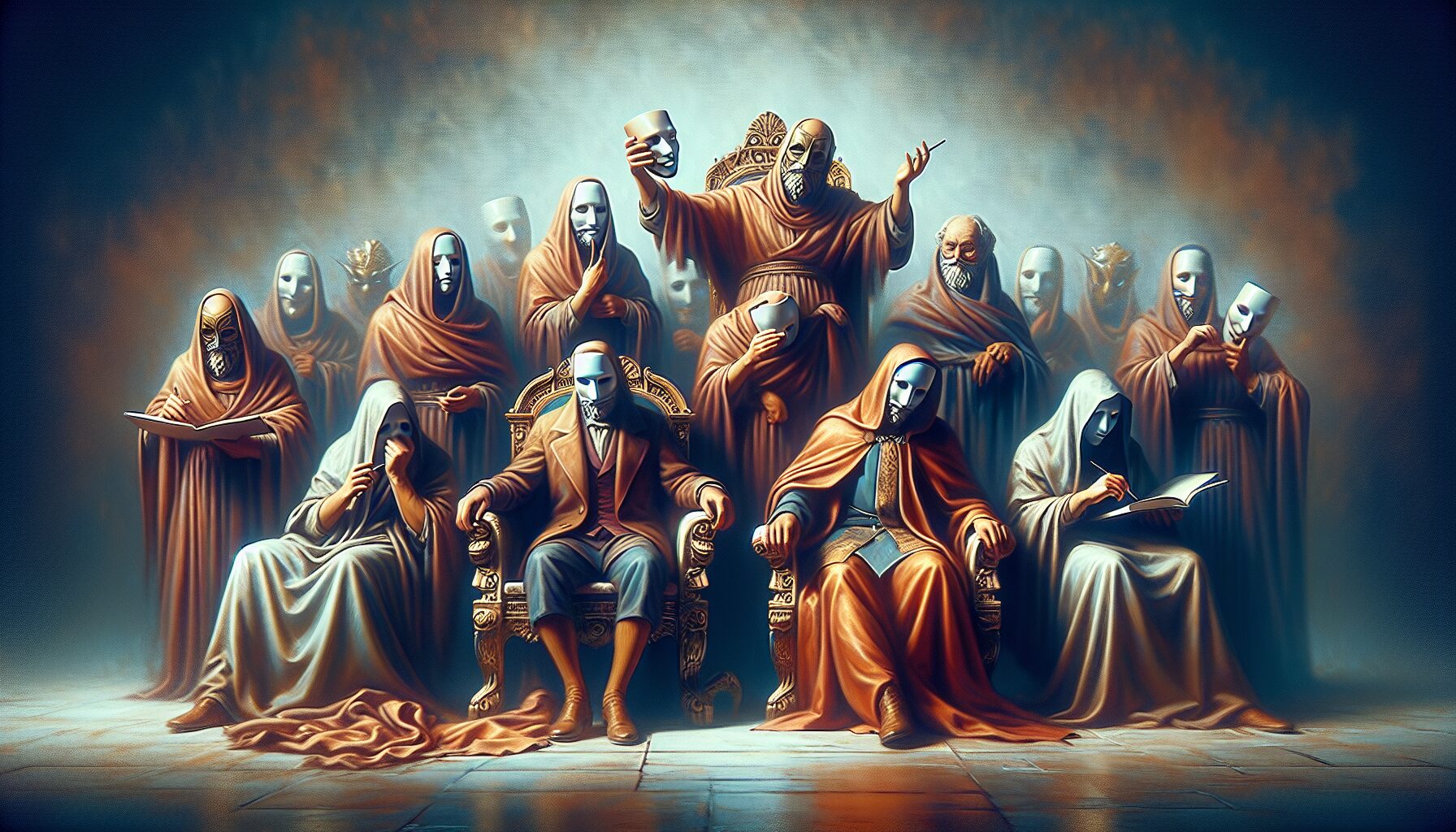
In a world increasingly saturated with information, the lines between genuine wisdom and the pretense of authority often blur, especially when personages in positions of power leverage their status to project insight they might not possess. The false prophets of power are those who don the cloak of wisdom, misleading their followers with the allure of authority rather than the substance of truth.
The Illusion of Expertise
Authority often masquerades as expertise, exploiting the cognitive bias known as the Dunning-Kruger effect. This principle suggests that individuals with limited knowledge in a domain can overestimate their competence. As people ascend to positions of power, surrounded by echoes of their own perceived intellect, they may begin to see themselves as wise simply by virtue of their authority.
“We are all born ignorant, but one must work hard to remain stupid.” – Benjamin Franklin
What Franklin’s incisive observation underscores is the labor of genuine wisdom: consistent learning, questioning, and reflection, none of which are facilitated by blind adherence to authority. Meanwhile, audiences, entranced by power, often fail to challenge these false prophets, allowing the masquerade to continue unchallenged.
The Cost of Unquestioned Authority
- Innovation Stagnation: When authority is mistaken for wisdom, it often stifles innovation. True creativity requires an environment where ideas compete on merit rather than the weight of the source.
- Risk Aversion: Individuals and organizations may shy away from necessary risks, accepting established power as the safest route, thus hindering progress.
- Critical Thinking Erosion: The illusion of wisdom projected by authority can corrode critical thinking. When opinions replace inquiry, the pursuit of truth is derailed.
Challenging the Status Quo
In the words of Noam Chomsky:
“Nobody is going to pour truth into your brain. It’s something you have to find out for yourself.”
Chomsky’s words serve as a rallying cry for a more discerning and skeptical approach to the authorities that attempt to guide our perceptions. To free ourselves from the spell of artifice, we need to foster environments where ideas are valued over titles, and where questioning is as crucial as conforming.
Authority can either enlighten or entrap. The challenge lies in discerning between the voices that speak from a place of genuine wisdom and those that merely echo the resonance of their titles. As we navigate a complex world, understanding this distinction may be the first step toward hearing truth amid the clamor.