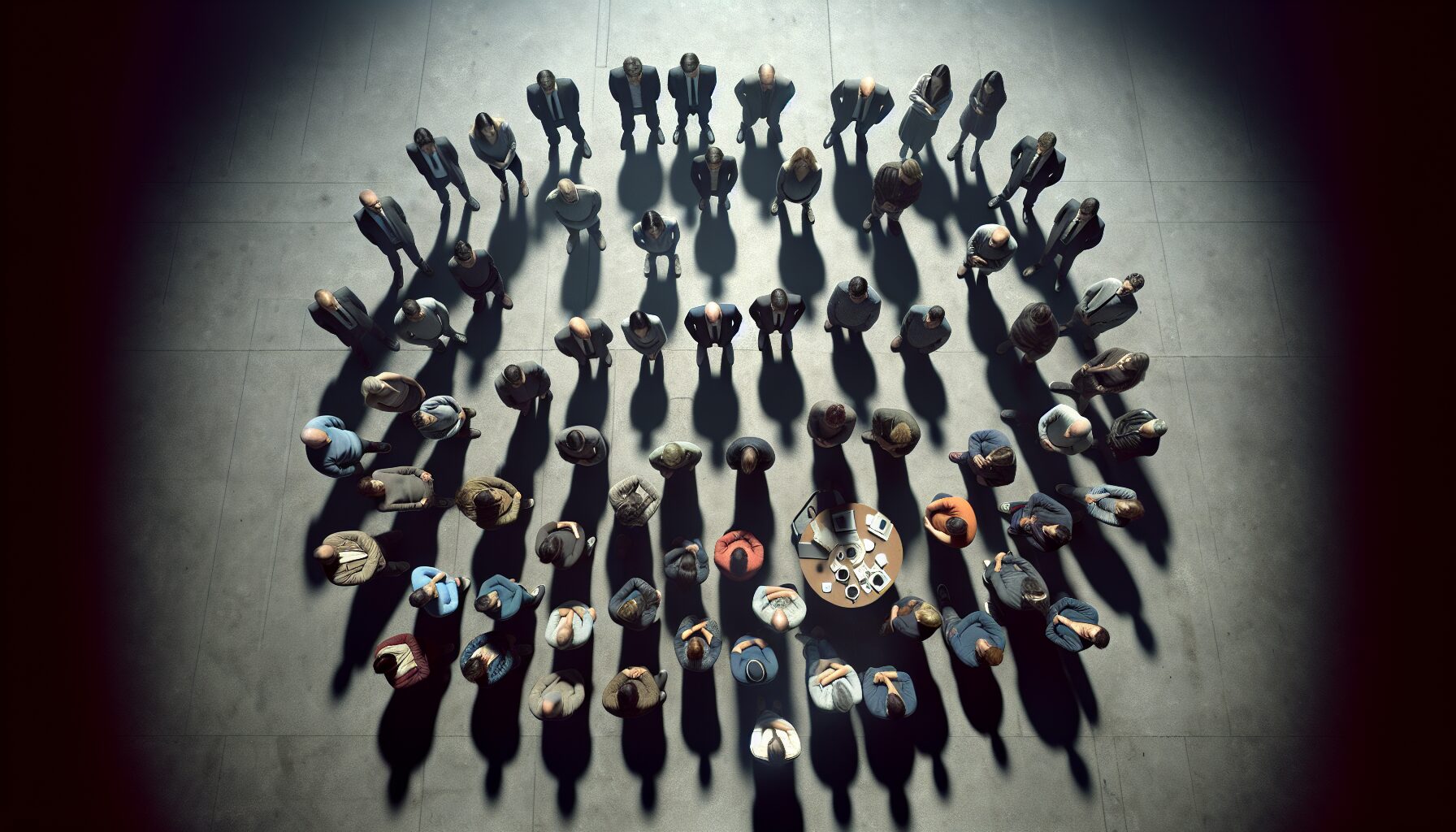
In the intricate and often shadowy world of high-control groups, surveillance is not merely a tool but a cornerstone of maintaining power and conformity. These groups, often characterized by rigid hierarchies and unyielding dogmas, rely on a variety of surveillance methods to ensure members adhere to prescribed norms. The omnipresent gaze serves as both a deterrent and a method of reinforcing control, creating an environment where conformity is synonymous with survival.
The Mechanics of Surveillance
High-control groups employ a range of surveillance techniques to exert influence over their members:
- Physical Surveillance: Direct oversight through designated enforcers or monitors who keep a close eye on individuals’ behaviors and interactions.
- Technological Monitoring: Utilization of technology such as cameras, recording devices, and digital tracking to monitor activities and communications.
- Peer Surveillance: Encouraging members to report on each other’s behavior, fostering an atmosphere of mistrust and paranoia.
These methods are not only designed to catch deviations but also to instill the belief that one is always being observed, even when alone. Dr. Arthur D. Goldsmith, in his analysis on the psychological impacts of continuous surveillance, notes,
“The mere perception of being watched can lead to self-censorship, heightened stress, and a distorted sense of reality. It molds behavior to fit the observer’s expectations, often at the expense of personal identity.”
The Psychological Toll
The impact of constant monitoring is profound. Members of high-control groups frequently experience a range of psychological effects:
- Anxiety and Paranoia: The continuous threat or belief of surveillance can lead to heightened anxiety, where individuals feel perpetually on edge.
- Erosion of Trust: As members are encouraged to monitor and report on each other, trust erodes, isolating individuals within the group.
- Identity Suppression: Under the watchful eye of surveillance, individuals often suppress their authentic selves in favor of the persona desired by the group.
In “Surveillance Studies: An Overview,” scholar David Lyon explains,
“Surveillance is a foundational means of control in modern societies, reshaping interactions and the very notion of privacy.”
This reshaping is even more pronounced in high-control groups where every action is scrutinized.
Surveillance and Obedience
The ultimate goal of surveillance within these groups is absolute obedience. By consistently reminding members of their watched status, leaders effectively quash dissent and encourage a homogenized adherence to ideology. The fear of being caught in an act of defiance, coupled with potential punitive measures, ensures compliance.
Moreover, this culture of surveillance creates an environment ripe for exploitation. Leaders can manipulate surveillance data to fabricate evidence of non-compliance, further tightening their grip on power. As noted by author and cult expert Steven Hassan, “Surveillance allows leaders to create an atmosphere of fear and control, where members are too intimidated to question or challenge authority.”
Breaking Free from Surveillance
Escaping the cycle of surveillance in high-control groups is challenging but not impossible. The process often involves:
- Awareness and Education: Understanding the mechanisms of surveillance and its psychological impacts is the first step towards liberation.
- Establishing External Support: Building networks outside the group provides emotional and psychological support necessary to break free.
- Reclaiming Personal Agency: Actively seeking to rediscover and assert one’s identity separate from the group’s influence.
Leaving a high-control group involves managing the fear and doubt instilled by pervasive surveillance, but with resilience and support, individuals can regain control over their lives.
Conclusion
The weight of being watched in high-control groups is a heavy burden, crafting an intricate web of fear, conformity, and control. While the surveillance mechanisms employed are diverse, their goal remains singular: maintaining power over individuals. Recognizing this oppressive surveillance is crucial for empowering those within to reclaim their autonomy. Only through awareness, support, and the courage to challenge these constraints can members hope to see beyond the shadows cast by the unyielding gaze of high-control surveillance.